Species · Flowering plants
Canada Honewort Cryptotaenia canadensis
The scientific name of the Canada Honewort is Cryptotaenia canadensis. It is a species of flowering plant in the family Apiaceae (umbellifer), order Apiales.
- Scientific name
- Cryptotaenia canadensis (L.) DC.
- Common name
- Canada Honewort
- Genus
- Cryptotaenia
- Family
- Apiaceae (Umbellifer)
- Order
- Apiales
- Class
- Magnoliopsida
- Recorded in
- 6 countries
- Name status
- accepted in the Catalogue of Life

Overview
Canada honewort is a flowering plant with the scientific name Cryptotaenia canadensis (L.) DC., in the family Apiaceae, order Apiales and class Magnoliopsida. It is native to the eastern United States and eastern Canada. Its young leaves and stems can be eaten as boiled greens or used as a parsley-like seasoning, and its roots can be cooked and eaten.
Written 26 November 2026 from the sources listed below. Each statement was checked against the passage it cites; statements that could not be supported were removed.
Habitat
Canada honewort is native to the eastern United States and eastern Canada.[1][2]
Uses
The young leaves and stems can be boiled and eaten as greens or used as a parsley-like seasoning.[3][4]
The roots can be cooked and eaten.[5]
Classification of the Canada Honewort
| Kingdom | Plantae |
|---|---|
| Subkingdom | Pteridobiotina |
| Phylum | Tracheophyta |
| Class | Magnoliopsida |
| Order | Apiales |
| Family | Apiaceae (Umbellifer) |
| Subfamily | Apioideae |
| Tribe | Oenantheae |
| Genus | Cryptotaenia (Honewort) |
| Species | Cryptotaenia canadensis (L.) DC. |
Where the Canada Honewort is found
Checklists and occurrence records place Cryptotaenia canadensis in 6 countries across Asia, Europe, North America and South America. GBIF holds 15,307 georeferenced records of it.
Countries where it is native or its origin is not stated
Countries where it has been introduced
Regions and cities with the most records
- Pennsylvania, United States 1,936
- Illinois, United States 852
- Wisconsin, United States 837
- Ohio, United States 659
- Minnesota, United States 623
- Virginia, United States 609
- Ontario, Canada 579
- Maryland, United States 540
- Indiana, United States 475
- New York, United States 453
- McLean, United States 432
- North Carolina, United States 407
- Bethesda, United States 404
- Arlington, United States 401
- Michigan, United States 399
- Potomac, United States 395
- Idylwood, United States 391
- Tysons, United States 383
- West Falls Church, United States 383
- Mount Pleasant, United States 374
- Baileys Crossroads, United States 373
- Foggy Bottom, United States 371
- Merrifield, United States 370
- Adams Morgan, United States 368
- Golden Triangle, United States 367
- Downtown DC, United States 363
- Central 14th Street / Spring Road, United States 360
- Columbia Heights, United States 358
- North Bethesda, United States 358
- Silver Spring, United States 358
- Quebec, Canada 357
- Shaw, United States 357
- Washington, United States 357
- Mount Vernon Triangle, United States 354
- Brightwood, United States 353
- Petworth, United States 352
8 more countries have a few records outside this range
These countries hold a few records of Cryptotaenia canadensis but lie outside the range the checklists give for it. Such records are often zoo or garden specimens, museum material or vagrants, so the species is not counted as occurring there.
Range as the checklists state it
E-Austria [I]; Denmark [I]; Vietnam [I]; Hawaii [I] (Kauai [I], Oahu [I], Molokai [I], West Maui [I], Hawaii Isl. [I]); Canada (Manitoba, New Brunswick, Ontario, Québec); USA (Alabama, Arkansas, Connecticut, District of Columbia, Delaware, Florida, Georgia, Iowa, Illinois, Indiana, Kansas, Kentucky, Louisiana, Massachusetts, Maryland, Maine, Michigan, Minnesota, Missouri, Mississippi, North Carolina, North Dakota, Nebraska, New Hampshire, New Jersey, New York, Ohio, Oklahoma, Pennsylvania, Rhode Island, South Carolina, South Dakota, Tennessee, Texas, Virginia, Vermont, Wisconsin, West Virginia); Peru [I]
A number beside a place is its count of GBIF occurrence records. A place without a number comes from a checklist alone. Records show where a species has been observed or collected, which can include escapes and vagrants.
Common names
English
- Canada Honewort
- Mitsuba
- Honewort
- Umbelweed
- White Chervil
- Wild Chervil
Names in 4 other languages
- Finnish
- kanadanyrttiputki
- French
- cryptoténie du Canada
- Polish
- kryptotenia kanadyjska
- Swedish
- kanadapersilja
Synonyms
15 other scientific names have been used for this species and are now treated as synonyms of Cryptotaenia canadensis.
- Chaerophyllum canadense (L.) Pers.
- Chaerophyllum canadense (L.) Crantz
- Cicuta perennans Walter
- Conopodium canadense (L.) W.D.J.Koch
- Conopodium canadense (L.) Kouh
- Cyrtospermum trifoliatum Raf. ex DC.
- Deeringia canadensis (L.) Kuntze
- Deringa canadensis (L.) Kuntze
- Mesodiscus proliferus Raf.
- Mesodiscus simplex Raf.
- Myrrhis canadensis (L.) Gaertn.
- Myrrhis ternata Moench
- Scandix ternata Moench
- Sison canadense L.
- Sium canadense (L.) Lam.
Related species
-
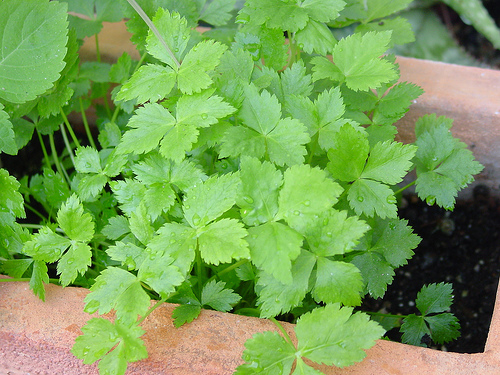 Japanese HonewortCryptotaenia japonica
- Flahault's CryptotaeniaCryptotaenia flahaultii
- Cryptotaenia africana
- Cryptotaenia calycina
- Cryptotaenia polygama
- Cryptotaenia thomasii
-
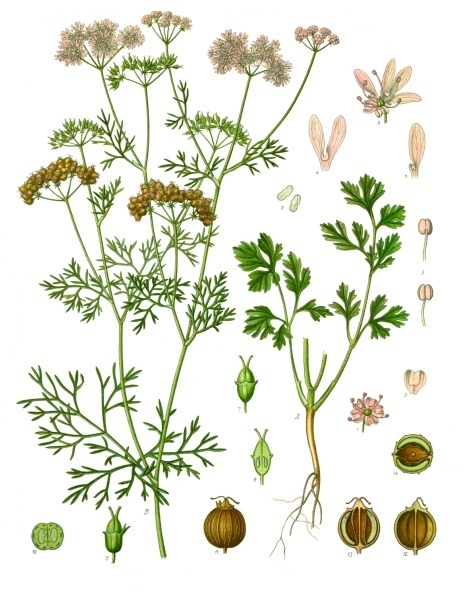 CorianderCoriandrum sativum
-
 Poison HemlockConium maculatum
Compare
Questions and answers
What is the scientific name of the Canada Honewort?
The scientific name of the Canada Honewort is Cryptotaenia canadensis. Written with its author, the full name is Cryptotaenia canadensis (L.) DC..
Which family does the Canada Honewort belong to?
Cryptotaenia canadensis belongs to the family Apiaceae, in the order Apiales and the class Magnoliopsida.
Where is the Canada Honewort found?
Checklists and occurrence records place Cryptotaenia canadensis in 6 countries, including Canada.
What other names does the Canada Honewort have?
Cryptotaenia canadensis is also known in English as Mitsuba, Honewort, Umbelweed, White Chervil and Wild Chervil.
Is honewort edible?
Yes. The young leaves and stems can be boiled and eaten as greens or used as a parsley-like seasoning. The roots can also be cooked and eaten.[4][5]
What is the Honewort plant?
Canada honewort is a flowering plant with the scientific name Cryptotaenia canadensis (L.) DC. It belongs to the family Apiaceae, order Apiales and class Magnoliopsida.[6]
Sources
Passages the profile rests on
- This species is native to the eastern United States and eastern Canada. Source passage: “native to the eastern United States and eastern Canada.” — English Wikipedia
- This species occurs natively in the eastern United States and eastern Canada. Source passage: “native to the eastern United States and eastern Canada.” — English Wikipedia
- The young leaves and stems of this species are suitable for use as a boiled green or seasoning. Source passage: “Its young leaves and stems can be used as a boiled green or seasoning similar to parsley.” — English Wikipedia
- The young leaves and stems can be boiled and eaten as greens or used as a parsley-like seasoning. Source passage: “Its young leaves and stems can be used as a boiled green or seasoning similar to parsley.” — English Wikipedia
- The roots of this species can be cooked and eaten. Source passage: “The parsnip like roots can be cooked and eaten.” — English Wikipedia
- The scientific species name is Cryptotaenia canadensis (L.) DC. Source passage: “Species. Cryptotaenia canadensis (L.)DC.” — florida.plantatlas.usf.edu
Data
- Catalogue of Life, 2026-10-16 XR cc by
- Global Biodiversity Information Facility CC BY 4.0
- Wikidata CC0
- GeoNames CC BY 4.0
- Wikimedia Commons per image; credit shown with each image
- Within the Catalogue of Life, this name comes from Synonymic Checklists of the Vascular Plants of the World cc by
References
- DC. Coll. Mém. 5 (Mém. Fam. Ombell.): 42, et Prodr. [A.P. de Candolle] 4: 119 (1829). where the name was published
This species in other databases
- Catalogue of Life 322XH
- Wikidata Q15570245
- iNaturalist 129021
- World Flora Online wfo-0000628502
- GRIN 12534
Page built on 28 November 2026. See how the catalog is made and all sources and licences.
Cite this page
ScientificNames.org. (2026). Cryptotaenia canadensis (Canada Honewort). Retrieved November 28, 2026, from https://scientificnames.org/species/cryptotaenia-canadensis
“Cryptotaenia canadensis (Canada Honewort).” ScientificNames.org, 2026, scientificnames.org/species/cryptotaenia-canadensis. Accessed 28 Nov. 2026.
ScientificNames.org. “Cryptotaenia canadensis (Canada Honewort).” Accessed November 28, 2026. https://scientificnames.org/species/cryptotaenia-canadensis.
@misc{scientificnames_cryptotaenia_canadensis_canada_honewort,
  author = {{ScientificNames.org}},
  title = {Cryptotaenia canadensis (Canada Honewort)},
  year = {2026},
  url = {https://scientificnames.org/species/cryptotaenia-canadensis},
  note = {Accessed 2026-11-28}
}