Species · Insects
Cystomastacoides kiddo
Cystomastacoides kiddo has no English name on record in the checklists used here. It is a species of insect in the family Braconidae (braconids), order Hymenoptera. The name dates from 2013.
- Scientific name
- Cystomastacoides kiddo Quicke & Butcher, 2013
- Genus
- Cystomastacoides
- Family
- Braconidae (Braconids)
- Order
- Hymenoptera
- Class
- Insecta
- Name status
- accepted in the Catalogue of Life
Overview
The species is recorded from Thailand. It has conspicuously blue compound eyes, a shiny yellow head with three distinct white pits, and black-striped appendages.
Written 26 November 2026 from the sources listed below. Each statement was checked against the passage it cites; statements that could not be supported were removed.
Appearance
The wasp has a pale-brown yellow body. Its head has a protruding anterior end with well-developed transverse striation, and its shiny yellow surface bears three distinct white pits.[1][2][3]
Its compound eyes are conspicuously blue. The tips and sides of its appendages have transverse black stripes, and its two antennae are entirely black.[4][5][6]
Its wings have almost entirely transparent, whitish membranes and predominantly brown-yellow venation. Its forewings are larger than its hindwings.[7][8]
Its body excluding the antennae measures 9 mm in length, and its forewings measure 8 mm. Its antennae can reach 12 mm in length.[9][10][11]
Habitat
The female holotype was discovered in Thung Salaeng Luang National Park, Phetchabun Province, Thailand.[12]
Diet
Its larvae consume the bodies of their insect hosts from the inside.[13]
Behaviour
The species is an obligate parasitoid that uses other insects as hosts for egg deposition. Females use a long, syringe-like ovipositor to inject eggs into host bodies.[14][15]
The larvae kill their hosts by consuming them internally.[16]
Reproduction and life cycle
Females deposit their eggs inside the bodies of other insects, including moth caterpillars. The eggs develop into larvae inside the host's body.[17][18]
The larvae eventually emerge from the host and become adult wasps.[19]
Similar species
The species belongs to a genus containing four species. It is the only recorded species of its genus in Thailand.[20][21]
Classification of Cystomastacoides kiddo
| Kingdom | Animalia |
|---|---|
| Phylum | Arthropoda |
| Subphylum | Hexapoda |
| Class | Insecta (Insect) |
| Order | Hymenoptera (Ants) |
| Suborder | Apocrita (Ants) |
| Infraorder | Terebrantes |
| Superfamily | Ichneumonoidea |
| Family | Braconidae (Braconids) |
| Subfamily | Rogadinae (Mummy Wasps) |
| Tribe | Rogadini |
| Genus | Cystomastacoides |
| Species | Cystomastacoides kiddo Quicke & Butcher, 2013 |
Origin of the name. Etymology. Named after the character Beatrice Kiddo in the Quentin Tarantino ' Kill Bill' films because of the deadly biology to the host.
This name was added to the Catalogue of Life from a contributing dataset by automated merging and has not yet been reviewed by its editors.
Related species
- Cystomastacoides coxalis
-
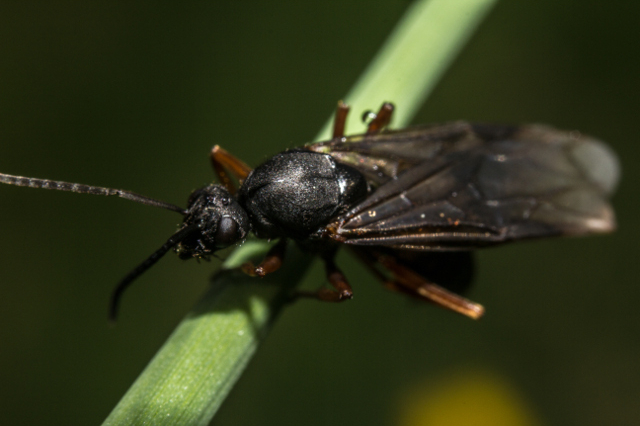
 Tomato Hornworm Parasitoid WaspCotesia congregata
-
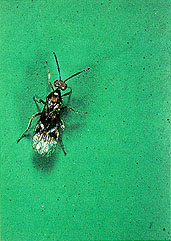
 Cabbage White Parasitoid WaspCotesia glomerata
-
 Habrobracon hebetor
-
 Ladybird Parasitoid WaspDinocampus coccinellae
-
 Aleiodes shakirae
- Aleiodes gaga
- Microgaster godzilla
Compare
Questions and answers
Where was Cystomastacoides kiddo discovered?
The female holotype was discovered in Thung Salaeng Luang National Park, Phetchabun Province, Thailand.[12][22]
Where is the species recorded?
It is recorded from Thailand and is the only recorded species of its genus in Thailand.[23][20]
How does Cystomastacoides kiddo reproduce?
Females inject eggs into the bodies of other insects, including moth caterpillars, using a long, syringe-like ovipositor. The eggs develop into larvae inside the host, and the larvae eventually emerge as adult wasps.[15][17][18][19]
What does the species name refer to?
The name refers to Beatrix Kiddo, a character in the film Kill Bill. The species was named after her because of similarities in behaviour and coloration, and its yellow-and-black-striped appendages were associated with her jumpsuit.[24][25][26]
When was the species scientifically described?
Its scientific description was published on 19 May 2013 by Donald L. J. Quicke and Buntika Areekul Butcher.[27]
Sources
Passages the profile rests on
- The wasp has a pale-brown yellow body. Source passage: “The body of Cystomastacoides kiddo is pale-brown yellow in colour.” — English Wikipedia
- Its head has a protruding anterior end with well-developed transverse striation. Source passage: “The anterior end of the head is protruding and with well-developed transverse striation.” — English Wikipedia
- Its head surface is shiny yellow and bears three distinct white pits. Source passage: “The surface of the head (mesosoma) is shiny yellow with three distinct white pits.” — English Wikipedia
- Its compound eyes are conspicuously blue. Source passage: “A pair of compound eyes on the head are conspicuously coloured in blue.” — English Wikipedia
- The tips and sides of its appendages have transverse black stripes. Source passage: “The tips and sides of the appendages are transversely striped in black” — English Wikipedia
- Its two antennae are entirely black. Source passage: “These antennae are black throughout their length.” — English Wikipedia
- Its wings have almost entirely transparent, whitish membranes and predominantly brown-yellow venation. Source passage: “The wing membrane is almost entirely transparent (hyaline) and whitish, while the wing venation is mostly brown-yellow.” — English Wikipedia
- Its forewings are larger than its hindwings. Source passage: “The fore wings are larger” — English Wikipedia
- Its body excluding the antennae measures 9 mm in length. Source passage: “The body, excluding the antennae, is 9 mm long.” — English Wikipedia
- Its forewings measure 8 mm in length. Source passage: “The fore wings are larger and measure 8 mm in length.” — English Wikipedia
- Its antennae can reach 12 mm in length. Source passage: “The two antennae are exceptionally long compared to the rest of the body, measuring up to 12 mm.” — English Wikipedia
- The female holotype was discovered in Thung Salaeng Luang National Park, Phetchabun Province, Thailand. Source passage: “Cystomastacoides kiddo was described from a female holotype which was discovered from Phetchabun Province, Thung Salaeng Luang National Park, Kaeng Wang Nam Yen, Thailand.” — English Wikipedia
- Its larvae consume the bodies of their insect hosts from the inside. Source passage: “The larvae require food such that they eat the host from the inside out and kill the host” — English Wikipedia
- The species is an obligate parasitoid that uses other insects as hosts for egg deposition. Source passage: “It is an obligate parasitoid and it preys on other insects for depositing the eggs.” — English Wikipedia
- Females use a long, syringe-like ovipositor to inject eggs into host bodies. Source passage: “The female has a long syringe-like ovipositors, using which it injects its eggs into the host body.” — English Wikipedia
- The larvae kill their hosts by consuming them internally. Source passage: “they eat the host from the inside out and kill the host” — English Wikipedia
- Females deposit their eggs inside the bodies of other insects, including moth caterpillars. Source passage: “As all other braconids, the female lays its eggs inside the body of other insects, such as moth caterpillar” — English Wikipedia
- The eggs develop into larvae inside the host's body. Source passage: “Inside the body of the host, the eggs develop into larvae.” — English Wikipedia
- The larvae eventually emerge from the host and become adult wasps. Source passage: “subsequently eating their way out to become adult wasps.” — English Wikipedia
- It is the only recorded species of its genus in Thailand. Source passage: “It is one of the four species under the genus Cystomastacoides, and the only species in Thailand.” — English Wikipedia
- The species belongs to a genus containing four species. Source passage: “It is one of the four species under the genus Cystomastacoides” — English Wikipedia
- The species was described from a female holotype. Source passage: “Cystomastacoides kiddo was described from a female holotype” — English Wikipedia
- The species is recorded from Thailand. Source passage: “The species was found during a 2006–2008 insect collection programme in Thailand.” — English Wikipedia
- The species name refers to Beatrix Kiddo, a character in the film Kill Bill. Source passage: “The name is derived from the character Beatrix Kiddo from the 2003 film Kill Bill” — English Wikipedia
- The species was named after Beatrix Kiddo because of similarities in its behaviour and coloration. Source passage: “because of their resemblance in action and colour.” — English Wikipedia
- The yellow-and-black-striped appendages were associated with Beatrix Kiddo's jumpsuit. Source passage: “thus a resemblance to Kiddo's jumpsuit.” — English Wikipedia
- Its scientific description was published on 19 May 2013 by Donald L. J. Quicke and Buntika Areekul Butcher. Source passage: “The scientific description was published on 19 May 2013 by Donald L. J. Quicke of the Natural History Museum, London, and Buntika Areekul Butcher of the Chulalongkorn University, Thailand.” — English Wikipedia
- The species was discovered during the TIGER insect-sampling programme conducted in 25 Thai national parks between 2006 and 2008. Source passage: “The specimen was collected as part of the TIGER (Thailand Inventory Group for Entomological Research) programme of sampling insects in 25 national parks in Thailand between 2006 and 2008.” — English Wikipedia
Data
- Catalogue of Life, 2026-10-16 XR cc by
- Wikidata CC0
- Within the Catalogue of Life, this name comes from iNaturalist Taxonomy cc by
References
- Quicke, Donald L. J., M. Alex Smith, Jan Hrcek & Buntika A. Butcher. 2013. Cystomastacoides van Achterberg (Braconidae, Rogadinae): first host record and descriptions of three new species from Thailand and Papua New Guinea. Journal of Hymenoptera Research 31: 65-78. Link where the name was published
This species in other databases
Page built on 27 November 2026. See how the catalog is made and all sources and licences.
Cite this page
ScientificNames.org. (2026). Cystomastacoides kiddo. Retrieved November 27, 2026, from https://scientificnames.org/species/cystomastacoides-kiddo
“Cystomastacoides kiddo.” ScientificNames.org, 2026, scientificnames.org/species/cystomastacoides-kiddo. Accessed 27 Nov. 2026.
ScientificNames.org. “Cystomastacoides kiddo.” Accessed November 27, 2026. https://scientificnames.org/species/cystomastacoides-kiddo.
@misc{scientificnames_cystomastacoides_kiddo,
  author = {{ScientificNames.org}},
  title = {Cystomastacoides kiddo},
  year = {2026},
  url = {https://scientificnames.org/species/cystomastacoides-kiddo},
  note = {Accessed 2026-11-27}
}