Species · Birds
Visayan Pygmy Babbler Dasycrotapha pygmaea
The scientific name of the Visayan Pygmy Babbler is Dasycrotapha pygmaea. It is a species of bird in the family Zosteropidae (white-eye), order Passeriformes. The name dates from 1896.
- Scientific name
- Dasycrotapha pygmaea (Ogilvie-Grant, 1896)
- Common name
- Visayan Pygmy Babbler
- Genus
- Dasycrotapha
- Family
- Zosteropidae (White-eye)
- Order
- Passeriformes
- Class
- Aves
- Red List category
- NT Near Threatened
- Recorded in
- 1 country
- Name status
- accepted in the Catalogue of Life

Overview
Dasycrotapha pygmaea is endemic to the Philippine islands of Leyte and Samar. It has predominantly dark reddish-brown plumage, a gray chest, and a blackish throat and face with fine white streaking.
Written 27 November 2026 from the sources listed below. Each statement was checked against the passage it cites; statements that could not be supported were removed.
Appearance
The Visayan Pygmy Babbler has predominantly dark reddish-brown plumage, a gray chest, and a blackish throat and face with fine white streaking. Its eyes are dull orange, while its bill and legs are slaty gray.[1][2]
It has darker, smokier plumage than the Mindanao Pygmy Babbler.[3]
The Visayan Pygmy Babbler is described as a small bird species.[4]
Habitat
The species inhabits tropical moist lowland and montane forests. It occurs in both primary and secondary forests.[5][6]
It has been recorded at elevations between 100 and 1,100 meters above sea level.[7]
Diet
The species is presumed to feed on small insects and possibly small fruits.[8]
Behaviour
Its vocalization consists of a series of jumbled twittering sounds.[9]
Individuals have been observed joining mixed-species flocks while foraging in the middle and lower forest canopy.[10]
Reproduction and life cycle
Individuals with enlarged gonads have been recorded in breeding condition during April and May. This recorded breeding period is consistent with the general breeding season of Philippine forest birds.[11][12]
Conservation
The Visayan Pygmy Babbler has been assessed as Near Threatened. Its population is continuing to decline because of habitat loss.[13][14]
Illegal logging, land conversion, and slash-and-burn practices are identified as causes of habitat loss affecting the species.[15]
The species occurs in Samar Island Natural Park, a protected area in the Philippines. Protection there is described as lax despite its designation as a national park, and illegal logging and habitat encroachment continue within the protected area.[16][17][18]
Further surveys in suitable habitat, particularly in Leyte, have been proposed to improve understanding of the species' range. Enforcement of laws against illegal logging in its habitat has also been proposed as a conservation action.[19][20]
The species was most recently assessed for the IUCN Red List in 2024.[21]
Similar species
The Visayan Pygmy Babbler was formerly considered conspecific with the Mindanao Pygmy Babbler under the common name Pygmy Babbler. The Visayan Pygmy Babbler has darker, smokier plumage than the Mindanao Pygmy Babbler.[22][3]
Classification of the Visayan Pygmy Babbler
| Kingdom | Animalia |
|---|---|
| Phylum | Chordata |
| Subphylum | Vertebrata |
| Infraphylum | Gnathostomata |
| Parvphylum | Osteichthyes |
| Megaclass | Tetrapoda |
| Class | Aves (Bird) |
| Order | Passeriformes (Passerine) |
| Family | Zosteropidae (White-eye) |
| Genus | Dasycrotapha (Pygmy Babblers) |
| Species | Dasycrotapha pygmaea (Ogilvie-Grant, 1896) |
Where the Visayan Pygmy Babbler is found
Checklists and occurrence records place Dasycrotapha pygmaea in 1 country. GBIF holds 113 georeferenced records of it.
Countries
Regions and cities with the most records
A number beside a place is its count of GBIF occurrence records. A place without a number comes from a checklist alone. Records show where a species has been observed or collected, which can include escapes and vagrants.
Common names
English
- Visayan Pygmy Babbler
- Visayan Pygmy-Babbler
Names in 21 other languages
- Arabic
- ثرثار قزم بيساياني
- Catalan
- timalí nan de les illes Visayas
- Chinese
- 短尾侏穗鹛, 維沙揚侏穗鶥
- Croatian
- prugastoprsi drozak
- Danish
- Samar Dværgkrattimalie
- Dutch
- Samardwergboomtimalia
- Esperanto
- samara zosteropo
- French
- Timalie de Samar, Zostérops de Samar
- German
- Koboldbrillenvogel, Koboldbuschtimalie
- Japanese
- ビサヤモリチメドリ
- Lithuanian
- samarinis miškinis plepys
- Norwegian
- pygménålrygg
- Norwegian Bokmål
- pygmenålrygg
- Polish
- cierniofilipinek samarski
- Portuguese
- timali-pigmeu-das-visayas, zaragateirinho-das-vissaias
- Russian
- Висаянская пестроголовка, Висаянский стахирис
- Slovak
- kujutan trpasličí
- Spanish
- Timalí pigmeo
- Swedish
- samarglasögonfågel, samarträdtimalia
- Turkish
- Visayas Küçük Gözlükçüsü
- Ukrainian
- баблер самарський, окулярець самарський
Synonyms
6 other scientific names have been used for this species and are now treated as synonyms of Dasycrotapha pygmaea.
- Dasycrotapha plateni pygmaea Ogilvie-Grant, WR, 1896
- Mixornis plateni Bourns, FS; Worcester, DC, 1894
- Stachyris plateni pygmaea Ogilvie-Grant, WR, 1896
- Stachyris pygmaea Ogilvie-Grant, WR, 1896
- Sterrhoptilus pygmaeus Ogilvie-Grant, WR, 1896
- Zosterornis pygmaeus Ogilvie-Grant, WR, 1896
Related species
-
 Flame-templed BabblerDasycrotapha speciosa
-
 Mindanao Pygmy BabblerDasycrotapha plateni
-
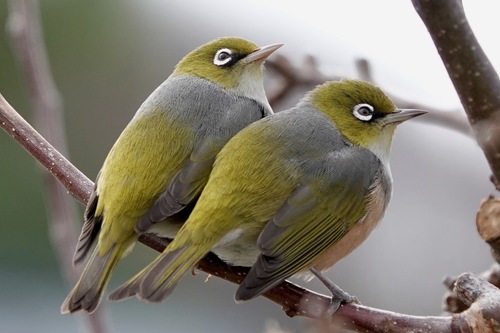 SilvereyeZosterops lateralis
-
 Warbling White-eyeZosterops japonicus
-
 Indian White-eyeZosterops palpebrosus
-
 White-chested White-eyeZosterops albogularis
-
 Bonin White-eyeApalopteron familiare
-
 Bridled White-eyeZosterops conspicillatus
Compare
Questions and answers
What is the scientific name of the Visayan Pygmy Babbler?
The scientific name of the Visayan Pygmy Babbler is Dasycrotapha pygmaea. Written with its author, the full name is Dasycrotapha pygmaea (Ogilvie-Grant, 1896).
Which family does the Visayan Pygmy Babbler belong to?
Dasycrotapha pygmaea belongs to the family Zosteropidae, in the order Passeriformes and the class Aves.
Where is the Visayan Pygmy Babbler found?
Checklists and occurrence records place Dasycrotapha pygmaea in 1 country: Philippines.
What is the conservation status of the Visayan Pygmy Babbler?
The IUCN Red List category recorded for Dasycrotapha pygmaea is Near Threatened (NT).
What other names does the Visayan Pygmy Babbler have?
Dasycrotapha pygmaea is also known in English as Visayan Pygmy-Babbler.
Where is the Visayan Pygmy Babbler found?
It is endemic to the Philippine islands of Leyte and Samar. It occurs in Samar Island Natural Park and has been documented along the Ulot River Transect in Samar, Philippines.[23][16][24]
What type of habitat does the species occupy?
It inhabits tropical moist lowland and montane forests, including primary and secondary forests, at elevations between 100 and 1,100 meters above sea level.[5][6][7]
What does the Visayan Pygmy Babbler eat?
It is presumed to feed on small insects and possibly small fruits.[8]
When does the Visayan Pygmy Babbler breed?
Individuals with enlarged gonads have been recorded in breeding condition during April and May.[11]
Sources
Passages the profile rests on
- The species has predominantly dark reddish-brown plumage, a gray chest, and a blackish throat and face with fine white streaking. Source passage: “It has primarily dark reddish-brown plummage with a gray chest and blackish throat and face, all with fine white streaking.” — English Wikipedia
- Its eyes are dull orange, while its bill and legs are slaty gray. Source passage: “It has dull orange eyes with slaty gray bill and legs.” — English Wikipedia
- The Visayan Pygmy Babbler has darker, smokier plumage than the Mindanao Pygmy Babbler. Source passage: “It is differentiated by a darker smoky plumage compared to the reddish-brown Mindanao pygmy babbler.” — English Wikipedia
- The Visayan Pygmy Babbler is described as a small bird species. Source passage: “It is a small species of bird found in the lowland forest of Leyte and Samar.” — English Wikipedia
- The species inhabits tropical moist lowland and montane forests. Source passage: “Its natural habitats are tropical moist lowland forests and or tropical moist montane forests.” — English Wikipedia
- The species occurs in both primary and secondary forests. Source passage: “This bird is found in primary and secondary forest from 100 to 1,100 meters above sea level..” — English Wikipedia
- The species has been recorded at elevations between 100 and 1,100 meters above sea level. Source passage: “This bird is found in primary and secondary forest from 100 to 1,100 meters above sea level..” — English Wikipedia
- The species is presumed to feed on small insects and possibly small fruits. Source passage: “Its diet is presumed to be small insects and possibly small fruits.” — English Wikipedia
- Its vocalization consists of a series of jumbled twittering sounds. Source passage: “Its call is described as a series of jumbled twittering.” — English Wikipedia
- Individuals have been observed joining mixed-species flocks while foraging in the middle and lower forest canopy. Source passage: “They have been observed to join mixed species flocks foraging through the middle-storey and lower cannopy.” — English Wikipedia
- Individuals with enlarged gonads have been recorded in breeding condition during April and May. Source passage: “Birds found in breeding condition with enlarged gonads in April and May” — English Wikipedia
- Its recorded breeding period in April and May is consistent with the general breeding season of Philippine forest birds. Source passage: “which is in line with the general breeding season of Philippine forest birds.” — English Wikipedia
- The Visayan Pygmy Babbler has been assessed as Near Threatened. Source passage: “It has been assessed as Near-threatened by the International Union for Conservation of Nature” — English Wikipedia
- The species' population is continuing to decline because of habitat loss. Source passage: “with the population continuing to decline due to habitat loss” — English Wikipedia
- Illegal logging, land conversion, and slash-and-burn practices are identified as causes of habitat loss affecting the species. Source passage: “due to habitat loss from illegal logging, land-conversion and slash-and-burn.” — English Wikipedia
- The species occurs in Samar Island Natural Park, a protected area in the Philippines. Source passage: “It is present in a protected area in the Samar Island Natural Park.” — English Wikipedia
- Protection in Samar Island Natural Park is described as lax despite its designation as a national park. Source passage: “While this area is listed as a national park, protection is lax” — English Wikipedia
- Illegal logging and habitat encroachment continue within the protected area where the species occurs. Source passage: “and illegal logging and habitat encroachment are still rampant.” — English Wikipedia
- Further surveys in suitable habitat, particularly in Leyte, have been proposed to improve understanding of the species' range. Source passage: “further surveys in suitable habitat especially in Leyte to better understand its range” — English Wikipedia
- Enforcement of laws against illegal logging in the species' habitat has been proposed as a conservation action. Source passage: “and enforcement of laws on illegal loggers in its habitat.” — English Wikipedia
- The species was most recently assessed for the IUCN Red List in 2024. Source passage: “Visayan Pygmy Babbler Dasycrotapha pygmaea has most recently been assessed for The IUCN Red List of Threatened Species in 2024.” — iucnredlist.org
- The Visayan Pygmy Babbler was formerly considered conspecific with the Mindanao Pygmy Babbler under the common name Pygmy Babbler. Source passage: “It was conspecific with the Mindanao pygmy babbler under the common name of "pygmy babbler".” — English Wikipedia
- The Visayan Pygmy Babbler is endemic to the Philippine islands of Leyte and Samar. Source passage: “The Visayan pygmy babbler (Dasycrotapha pygmaea) is a bird species endemic to the Philippines on the islands of Leyte and Samar.” — English Wikipedia
- The species has been documented along the Ulot River Transect in Samar, Philippines. Source passage: “18 Mar 2023. Ulot River Transect, SINP, Samar, Philippines.” — ebird.org
Data
- Catalogue of Life, 2026-10-16 XR cc by
- Global Biodiversity Information Facility CC BY 4.0
- Wikidata CC0
- GeoNames CC BY 4.0
- Wikimedia Commons per image; credit shown with each image
- Within the Catalogue of Life, this name comes from The Integrated Taxonomic Information System cc0
This species in other databases
Page built on 27 November 2026. See how the catalog is made and all sources and licences.
Cite this page
ScientificNames.org. (2026). Dasycrotapha pygmaea (Visayan Pygmy Babbler). Retrieved November 27, 2026, from https://scientificnames.org/species/dasycrotapha-pygmaea
“Dasycrotapha pygmaea (Visayan Pygmy Babbler).” ScientificNames.org, 2026, scientificnames.org/species/dasycrotapha-pygmaea. Accessed 27 Nov. 2026.
ScientificNames.org. “Dasycrotapha pygmaea (Visayan Pygmy Babbler).” Accessed November 27, 2026. https://scientificnames.org/species/dasycrotapha-pygmaea.
@misc{scientificnames_dasycrotapha_pygmaea_visayan_pygmy_babbler,
  author = {{ScientificNames.org}},
  title = {Dasycrotapha pygmaea (Visayan Pygmy Babbler)},
  year = {2026},
  url = {https://scientificnames.org/species/dasycrotapha-pygmaea},
  note = {Accessed 2026-11-27}
}