Species · Flowering plants
Sweet Dattock Detarium microcarpum
The scientific name of the Sweet Dattock is Detarium microcarpum. It is a species of flowering plant in the family Fabaceae (bean), order Fabales.
- Scientific name
- Detarium microcarpum Guill. & Perr.
- Common name
- Sweet Dattock
- Genus
- Detarium
- Family
- Fabaceae (Bean)
- Order
- Fabales
- Class
- Magnoliopsida
- Red List category
- LC Least Concern
- Recorded in
- 20 countries
- Name status
- accepted in the Catalogue of Life

Overview
Sweet Dattock is a small tree or shrub in the family Fabaceae, order Fabales and class Magnoliopsida. It grows naturally in the drier regions of West and Central Africa, occurring in countries from Benin to Sudan. It has grey bark, dark green leaves and fibrous, single-seeded fruits measuring 4–6 centimetres in diameter.
Written 26 November 2026 from the sources listed below. Each statement was checked against the passage it cites; statements that could not be supported were removed.
Appearance
The tree has relatively smooth, greyish-brown bark with small cracks and dark green leaves measuring 8–12 centimetres. Its fruits are fibrous, single-seeded berries measuring 4–6 centimetres in diameter.[1][2][3]
Habitat
Sweet Dattock grows naturally in the drier regions of West and Central Africa. It commonly occurs in wooded savannahs, savannahs, semi-cleared dry forests and fallow land.[4][5]
The species commonly grows on shallow, stony and lateritic soils, particularly on hills. It can also grow in sandy or hard soils with high iron content and tolerates drought, heat and infertile growing conditions.[6][7][8]
It grows in areas receiving approximately 600–1000 millimetres of annual rainfall.[9]
Diet
The fruits are eaten raw or cooked, and their pulp is commonly processed into flour. The seed kernels are used in egusi soup or cooked and eaten as vegetables.[10][11]
The leaves and flowers are consumed as condiments or vegetables.[12]
Behaviour
Sweet Dattock sheds its leaves in November and produces new leaves in March.[13]
Reproduction and life cycle
Sweet Dattock flowers during the rainy season, generally between July and September or November. Its main flowering period lasts no more than eight days.[14][15]
The species bears fruit between September and January or May.[16]
The species reproduces through seeds or vegetative propagation. Vegetative propagation occurs through coppice regeneration and suckering from stumps or roots.[17][18]
It can also be propagated using rooted cuttings and grafting with scions from mature trees. Seeds require scarification to overcome dormancy before planting and can remain in storage at an ambient temperature of 26 °C for five years.[19][20][21]
Uses
Seed flour is traditionally used as an emulsifying, flavouring and thickening ingredient in cakes, bread, couscous, baby food and local beer.[22]
The roots, stems, bark, leaves and fruits are used in traditional medicine to treat various ailments. Traditional medical practitioners use the species to treat diabetes, malaria, wounds, inflammation and cancer.[23][24]
The leaves are used for roof thatching. The seeds are dried and made into necklaces or ground into fragrance, while the roots are used to prepare mosquito repellent.[25][26][27]
The hardwood is used in construction and carpentry because of its hardness and resistance to moisture, weathering and pests. The wood is also used as fuel and charcoal because it ignites quickly.[28][29]
The leaves and roots are used in treatments for farm animals.[30]
Conservation
Extensive fruit collection, uncontrolled tree cutting, overgrazing and bushfires threaten Sweet Dattock. Natural germination is hindered by bushfires and dry spells.[31][32]
Similar species
Detarium senegalense grows in dry forest, whereas Sweet Dattock grows in dry savannah. Detarium macrocarpum grows in humid forest habitats, unlike the dry-savannah habitat of Sweet Dattock.[33][34]
Classification of the Sweet Dattock
| Kingdom | Plantae |
|---|---|
| Subkingdom | Pteridobiotina |
| Phylum | Tracheophyta |
| Class | Magnoliopsida |
| Order | Fabales |
| Family | Fabaceae (Bean) |
| Genus | Detarium |
| Species | Detarium microcarpum Guill. & Perr. |
Where the Sweet Dattock is found
Checklists and occurrence records place Detarium microcarpum in 20 countries across Africa. GBIF holds 9,104 georeferenced records of it.
Countries
- Benin 7,123
- Burkina Faso 512
- Cameroon 133
- Central African Republic 47
- Chad 279
- Equatorial Guinea
- Gabon 4
- Gambia 4
- Ghana 95
- Guinea 24
- Guinea-Bissau 21
- Ivory Coast 191
- Liberia 4
- Mali 179
- Niger 36
- Nigeria 283
- Senegal 71
- Sierra Leone 5
- Sudan 3
- Togo 90
Regions and cities with the most records
- Alibori, Benin 2,069
- Atakora, Benin 1,473
- Borgou, Benin 1,261
- Donga, Benin 731
- Zou, Benin 678
- Tanguiéta, Benin 449
- Atlantique, Benin 447
- Zé, Benin 425
- Collines, Benin 315
- Toukountouna, Benin 305
- Matéri, Benin 236
- Allada, Benin 202
- Bassila, Benin 124
- Kalalé, Benin 122
- Djougou, Benin 117
- Kandi, Benin 100
- Natitingou, Benin 99
- Cobly, Benin 93
- Centre-Ouest, Burkina Faso 92
- Koulikoro, Mali 88
- Kaduna State, Nigeria 85
- North, Cameroon 81
- Sikasso, Mali 81
- Zinvié, Benin 77
- Logone Oriental, Chad 76
- Bafilo, Togo 74
- Kopargo, Benin 71
- Bougouni, Mali 70
- Katsina State, Nigeria 69
- Péhonko, Benin 67
- Est, Burkina Faso 64
- Banikoara, Benin 62
- Bembèrèkè, Benin 61
- Mandoul, Chad 61
- Mono, Benin 59
- Parakou, Benin 59
A number beside a place is its count of GBIF occurrence records. A place without a number comes from a checklist alone. Records show where a species has been observed or collected, which can include escapes and vagrants.
Common names
English
- Sweet Dattock
- Tallow Tree
Names in 3 other languages
- Arabic
- ديتار صغير الثمار
- French
- Petit Detar
- bam
- Ntamajalan
Related species
-
 DattocktreeDetarium senegalense
- Detarium macrocarpum
- Detarium beurmannianum
-
 PeanutArachis hypogaea
-
 LiquoriceGlycyrrhiza glabra
-
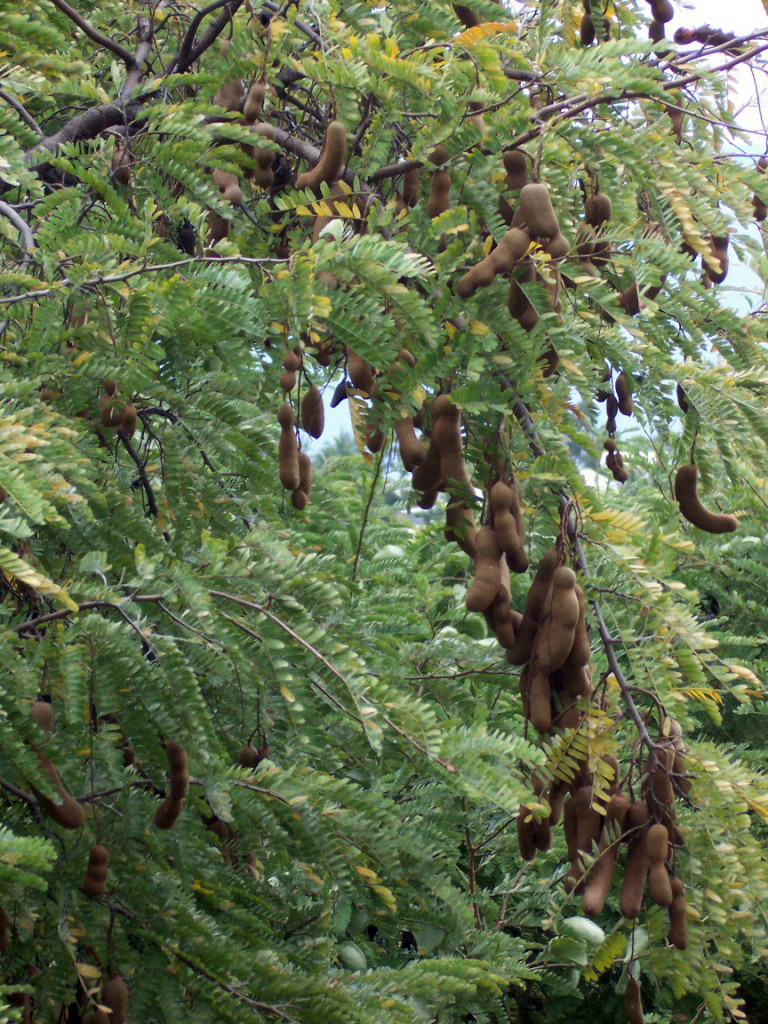 TamarindTamarindus indica
-
 ChickpeaCicer arietinum
-
 SoybeanGlycine max
Compare
Questions and answers
What is the scientific name of the Sweet Dattock?
The scientific name of the Sweet Dattock is Detarium microcarpum. Written with its author, the full name is Detarium microcarpum Guill. & Perr..
Which family does the Sweet Dattock belong to?
Detarium microcarpum belongs to the family Fabaceae, in the order Fabales and the class Magnoliopsida.
Where is the Sweet Dattock found?
Checklists and occurrence records place Detarium microcarpum in 20 countries, including Benin, Burkina Faso, Nigeria, Chad, Ivory Coast and Mali.
What is the conservation status of the Sweet Dattock?
The IUCN Red List category recorded for Detarium microcarpum is Least Concern (LC).
What other names does the Sweet Dattock have?
Detarium microcarpum is also known in English as Tallow Tree.
Are tallow trees good for anything?
Sweet Dattock has several uses. Its seed flour is used in food preparation, its hardwood is used in construction, carpentry, fuel and charcoal, and its roots, bark, leaves and fruits are used in traditional medicine.[22][23][28][29]
What is Detarium senegalese?
Detarium senegalense is a species that grows in dry forest, whereas Sweet Dattock (Detarium microcarpum) grows in dry savannah.[33]
Sources
Passages the profile rests on
- The tree has grey, fractured bark and dark green leaves measuring 8–12 centimetres. Source passage: “The tree's fractured grey bark and dark green 8–12 cm leaves make it easy to identify.” — pmc.ncbi.nlm.nih.gov
- The bark is relatively smooth and greyish-brown, with small cracks. Source passage: “A grayish-brown color covers the bark, which is rather smooth but is covered in small cracks” — pmc.ncbi.nlm.nih.gov
- Its fruits are fibrous, single-seeded berries measuring 4–6 centimetres in diameter. Source passage: “it produces its berries and nectar which are 4 to 6 cm in diameter, delicious, fibrous, and one seeded” — pmc.ncbi.nlm.nih.gov
- The species grows naturally in the drier regions of West and Central Africa. Source passage: “grows naturally in the drier regions of West and Central Africa.” — English Wikipedia
- The species commonly occurs in wooded savannahs, savannahs, semi-cleared dry forests and fallow land. Source passage: “It is most common in wooded savannahs or savannahs, semi-cleared dry forest areas and fallows” — English Wikipedia
- The species is commonly found on shallow, stony and lateritic soils, particularly on hills. Source passage: “mainly found on shallow, stony and lateritic soils, often on hills” — English Wikipedia
- The species can grow in sandy or hard soils with high iron content. Source passage: “growing in sandy or hard soils with high iron content.” — English Wikipedia
- The species tolerates drought, heat and infertile growing conditions. Source passage: “Detarium microcarpum is heat and drought tolerant and capable of thriving on infertile sites.” — English Wikipedia
- The species grows in areas receiving approximately 600–1000 millimetres of annual rainfall. Source passage: “in regions with an annual rainfall of 600–1000 mm.” — English Wikipedia
- The fruits are eaten raw or cooked, and their pulp is commonly processed into flour. Source passage: “The fruit can be eaten raw or cooked, but for the most part, its pulp is transformed into flour.” — English Wikipedia
- The seed kernels are used in egusi soup or cooked and eaten as vegetables. Source passage: “Its seed kernels are added to egusi soup, or are cooked and eaten as vegetables.” — English Wikipedia
- The leaves and flowers are consumed as condiments or vegetables. Source passage: “The leaves are used as a condiment or vegetables, as are its flowers.” — English Wikipedia
- The tree sheds its leaves in November and produces new leaves in March. Source passage: “in November; the tree sheds its leaves and produces new leaves in March.” — English Wikipedia
- The species flowers during the rainy season, generally between July and September or November. Source passage: “It flowers during the rainy season (July to September/November)” — English Wikipedia
- The main flowering period lasts no more than eight days. Source passage: “the main flowering period only lasts up to 8 days.” — English Wikipedia
- The species bears fruit between September and January or May. Source passage: “It bears fruit from September – January/May” — English Wikipedia
- The species can reproduce through seeds or vegetative propagation. Source passage: “Propagation of this species may be vegetative or from seed.” — English Wikipedia
- Vegetative propagation occurs through coppice regeneration and suckering from stumps or roots. Source passage: “by coppice regeneration and suckering from stumps or roots” — English Wikipedia
- The species can also be propagated using rooted cuttings and grafting with scions from mature trees. Source passage: “as well as propagation by rooted cuttings and grafting using scions from mature trees.” — English Wikipedia
- The seeds require scarification to overcome dormancy before planting. Source passage: “The seed must be scarified to break dormancy before being planted” — English Wikipedia
- Seeds can remain in storage at an ambient temperature of 26 °C for five years. Source passage: “The seeds of D. microcarpum can be stored at ambient temperature (26 °C) for 5 years.” — English Wikipedia
- Seed flour is traditionally used as an emulsifying, flavouring and thickening ingredient in cakes, bread, couscous, baby food and local beer. Source passage: “The seed flour is a traditional emulsifying, flavouring and thickening agent used to prepare cakes, bread, couscous, baby food and local beer.” — English Wikipedia
- The roots, stems, bark, leaves and fruits are used in traditional medicine to treat various ailments. Source passage: “Medicinal properties are in the roots, stems, bark, leaves and fruits to treat ailments including tuberculosis, meningitis and diarrhea.” — English Wikipedia
- Traditional medical practitioners use the species to treat diabetes, malaria, wounds, inflammation and cancer. Source passage: “Traditional medical practitioners employ Detarium microcarpum as a treatment for diabetes, malaria, wounds, inflammation, and even cancer.” — pmc.ncbi.nlm.nih.gov
- The leaves are used for roof thatching. Source passage: “leaves being used to thatch roofs” — English Wikipedia
- The seeds are dried and made into necklaces or ground into fragrance. Source passage: “seeds dried and made into necklaces or are ground and used as a fragrance” — English Wikipedia
- Roots are used to prepare mosquito repellent. Source passage: “mosquito repellent prepared from the roots.” — English Wikipedia
- The hardwood is used in construction and carpentry because of its hardness and resistance to moisture, weathering and pests. Source passage: “Hardness, as well as its moisture, weathering and pest resistance makes it useful for construction and carpentry.” — English Wikipedia
- The wood is used as fuel and charcoal because it ignites quickly. Source passage: “It lights quickly making it high-quality fuel wood and charcoal.” — English Wikipedia
- Leaves and roots are used in treatments for farm animals. Source passage: “Leaves and roots are also used to treat farm animals.” — English Wikipedia
- Extensive fruit collection, uncontrolled tree cutting, overgrazing and bushfires threaten the species. Source passage: “Extensive fruit collection, uncontrolled tree cutting, overgrazing and bushfires pose a threat to the species.” — English Wikipedia
- Natural germination is hindered by bushfires and dry spells. Source passage: “Natural germination is hampered by bush fires and dry spells” — English Wikipedia
- Detarium senegalense grows in dry forest, whereas Detarium microcarpum grows in dry savannah. Source passage: “D. microcarpum grows in dry savanna, while Detarium senegalense grows in the dry forest” — English Wikipedia
- Detarium macrocarpum grows in humid forest habitats, unlike the dry-savannah habitat of Detarium microcarpum. Source passage: “Detarium macrocarpum grows in humid forest.” — English Wikipedia
Data
- Catalogue of Life, 2026-10-16 XR cc by
- Global Biodiversity Information Facility CC BY 4.0
- Wikidata CC0
- GeoNames CC BY 4.0
- Wikimedia Commons per image; credit shown with each image
- Within the Catalogue of Life, this name comes from The World Checklist of Vascular Plants (WCVP): Fabaceae cc by
References
- Fl. Seneg. Tent.: 271 (1832) where the name was published
This species in other databases
- Catalogue of Life 6CNPB
- Wikidata Q5265586
- iNaturalist 139189
- World Flora Online wfo-0000166421
- GRIN 411953
Page built on 27 November 2026. See how the catalog is made and all sources and licences.
Cite this page
ScientificNames.org. (2026). Detarium microcarpum (Sweet Dattock). Retrieved November 27, 2026, from https://scientificnames.org/species/detarium-microcarpum
“Detarium microcarpum (Sweet Dattock).” ScientificNames.org, 2026, scientificnames.org/species/detarium-microcarpum. Accessed 27 Nov. 2026.
ScientificNames.org. “Detarium microcarpum (Sweet Dattock).” Accessed November 27, 2026. https://scientificnames.org/species/detarium-microcarpum.
@misc{scientificnames_detarium_microcarpum_sweet_dattock,
  author = {{ScientificNames.org}},
  title = {Detarium microcarpum (Sweet Dattock)},
  year = {2026},
  url = {https://scientificnames.org/species/detarium-microcarpum},
  note = {Accessed 2026-11-27}
}