Species · Molluscs
Spotted Top Snail Diloma aethiops
The scientific name of the Spotted Top Snail is Diloma aethiops. It is a species of mollusc in the family Trochidae (top shells), order Trochida. The name dates from 1791.
- Scientific name
- Diloma aethiops (Gmelin, 1791)
- Common name
- Spotted Top Snail
- Genus
- Diloma
- Family
- Trochidae (Top Shells)
- Order
- Trochida
- Class
- Gastropoda
- Environment
- marine
- Recorded in
- 2 countries
- Name status
- accepted in the Catalogue of Life

Overview
Diloma aethiops is endemic to New Zealand and commonly inhabits rocky intertidal areas. It has a thick, blackish shell marked with yellow or white dots along its ribs.
Written 27 November 2026 from the sources listed below. Each statement was checked against the passage it cites; statements that could not be supported were removed.
Appearance
The shell is thick, solid, imperforate and shaped like a depressed cone. It is blackish, with yellow or white dots along its ribs, and has a relatively flattened conical spire with a pointed apex.[1][2][3]
The shell has five whorls with prominent spiral ridges. The ridges are nodulous, with three on the penultimate whorl, and the spaces between them have spiral striations.[4][5][6]
The body whorl is depressed and angled at its outer edge. Its underside has approximately five coarsely granulated spiral ridges.[7][8]
The shell aperture is strongly oblique. The outer lip is blackish at its edge, followed by a nacreous layer and an opaque white inner lining, with a slight notch where it meets the shell periphery.[9][10][11]
The columella is oblique, nearly straight, flat and opaque white, with a nacreous backing. The underside of the animal's foot is yellow with a brown stripe around its outline, and the rear has yellowish-white markings.[12][13][14]
The shell measures between 15 and 30 millimetres.[15]
Habitat
The species commonly inhabits rocky intertidal areas and occurs on exposed rock surfaces in rocky intertidal habitats. It also occurs along semi-exposed coasts.[16][17][18]
In harbours and estuaries, the species occurs on hard-packed mud among empty bivalve shells.[19]
Classification of the Spotted Top Snail
| Kingdom | Animalia |
|---|---|
| Phylum | Mollusca |
| Class | Gastropoda (Gastropod) |
| Subclass | Vetigastropoda |
| Order | Trochida |
| Superfamily | Trochoidea |
| Family | Trochidae (Top Shells) |
| Subfamily | Monodontinae |
| Genus | Diloma |
| Species | Diloma aethiops (Gmelin, 1791) |
Where the Spotted Top Snail is found
Checklists and occurrence records place Diloma aethiops in 2 countries. GBIF holds 2,388 georeferenced records of it.
Countries
Regions and cities with the most records
- Lower Hutt, New Zealand 382
- Karori, New Zealand 354
- Wellington, New Zealand 354
- Wainuiomata, New Zealand 344
- Auckland, New Zealand 267
- New Lynn, New Zealand 244
- Avondale, New Zealand 242
- Mount Eden, New Zealand 238
- Remuera, New Zealand 230
- Porirua, New Zealand 227
- Mangere, New Zealand 206
- Otahuhu, New Zealand 198
- Wellington Region, New Zealand 188
- Otara, New Zealand 167
- Papatoetoe, New Zealand 166
- Auckland, New Zealand 127
- Christchurch, New Zealand 114
- Manukau City, New Zealand 112
- Canterbury, New Zealand 101
- Southland, New Zealand 97
- New Plymouth, New Zealand 93
- Manurewa, New Zealand 89
- Upper Hutt, New Zealand 86
- Dunedin, New Zealand 64
- Tauranga, New Zealand 40
- Paraparaumu, New Zealand 39
- Otago, New Zealand 35
- Takanini, New Zealand 34
- Northland, New Zealand 28
- Waikato Region, New Zealand 24
- Marlborough, New Zealand 22
- Chatham Islands, New Zealand 17
- Bay of Plenty, New Zealand 16
- Taranaki Region, New Zealand 16
- Tasman District, New Zealand 16
- West Coast, New Zealand 15
A number beside a place is its count of GBIF occurrence records. A place without a number comes from a checklist alone. Records show where a species has been observed or collected, which can include escapes and vagrants.
Common names
English
- Spotted Top Snail
- Scorched Monodont
- Spotted Top Shell
Names in 1 other language
- Māori
- Waikako, maihi
Synonyms
5 other scientific names have been used for this species and are now treated as synonyms of Diloma aethiops.
- Anisodiloma lugubre (Gmelin, 1791)
- Monodonta reticularis W. Wood, 1828
- Trochus lugubris Gmelin, 1791
- Trochus reticularis W. Wood, 1828
- Turbo aethiops Gmelin, 1791
Related species
-
 Diloma ZelandicaDiloma zelandicum
-
 Mudflat Top ShellDiloma subrostratum
-
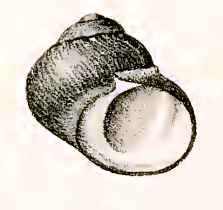 Bluish Top ShellDiloma nigerrimum
-
 Knobbed Top SnailDiloma bicanaliculatum
-
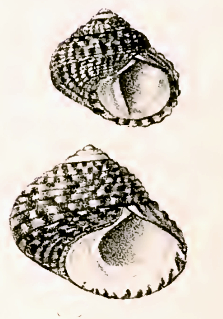 Wavy TopDiloma concameratum
- Diloma samoaense
-
 Diloma radula
- Diloma durvillaea
Compare
Questions and answers
What is the scientific name of the Spotted Top Snail?
The scientific name of the Spotted Top Snail is Diloma aethiops. Written with its author, the full name is Diloma aethiops (Gmelin, 1791).
Which family does the Spotted Top Snail belong to?
Diloma aethiops belongs to the family Trochidae, in the order Trochida and the class Gastropoda.
Where is the Spotted Top Snail found?
Checklists and occurrence records place Diloma aethiops in 2 countries: New Zealand and Australia.
What other names does the Spotted Top Snail have?
Diloma aethiops is also known in English as Scorched Monodont and Spotted Top Shell.
Where is the Spotted Top Snail found?
The species is endemic to New Zealand.[20]
What is the habitat of the Spotted Top Snail?
It inhabits rocky intertidal areas, exposed rock surfaces and semi-exposed coasts. In harbours and estuaries, it occurs on hard-packed mud among empty bivalve shells.[16][17][18][19]
How large is the shell?
The shell measures between 15 and 30 millimetres.[15]
Sources
Passages the profile rests on
- The shell is thick, solid, imperforate and shaped like a depressed cone. Source passage: “The thick, solid, imperforate shell has a depressed conical shape.” — English Wikipedia
- The shell is blackish and has yellow or white dots along its ribs. Source passage: “It is blackish, dotted upon the ribs with yellow or white.” — English Wikipedia
- The shell has a relatively flattened conical spire with a pointed apex. Source passage: “The conic spire is more or less depressed with an acute apex.” — English Wikipedia
- The shell has five whorls with prominent spiral ridges. Source passage: “The five whorls are spirally strongly ridged.” — English Wikipedia
- The shell ridges are nodulous, with three on the penultimate whorl. Source passage: “The ridges are nodulous and number three on the penultimate whorl.” — English Wikipedia
- The spaces between the shell ridges have spiral striations. Source passage: “The interstices are spirally striate.” — English Wikipedia
- The body whorl is depressed and angled at its outer edge. Source passage: “The body whorl is depressed, angulate at the periphery, and concentrically lirate below.” — English Wikipedia
- The underside of the body whorl has approximately five coarsely granulated spiral ridges. Source passage: “The lirae are coarsely granulose, about 5 in number.” — English Wikipedia
- The shell aperture is strongly oblique. Source passage: “The aperture is very oblique.” — English Wikipedia
- The outer lip is blackish at its edge, followed by a nacreous layer and an opaque white inner lining. Source passage: “The outer lip is edged with blackish, then nacreous, and lined with opaque white” — English Wikipedia
- The outer lip has a slight notch where it meets the shell periphery. Source passage: “the thickening slightly notched at the place of the periphery.” — English Wikipedia
- The columella is oblique, nearly straight, flat and opaque white, with a nacreous backing. Source passage: “The oblique columella is nearly straight, flat, opaque white and backed by nacreous.” — English Wikipedia
- The underside of the animal's foot is yellow with a brown stripe around its outline. Source passage: “The foot is yellow below, with a brown stripe round the contour” — English Wikipedia
- The rear of the animal's foot has yellowish-white markings. Source passage: “with touches of yellowish-white behind” — English Wikipedia
- The shell measures between 15 and 30 millimetres. Source passage: “The size of the shell varies between 15 mm and 30 mm.” — English Wikipedia
- The species commonly inhabits rocky intertidal areas. Source passage: “It is common to abundant in rocky intertidal areas” — English Wikipedia
- The species occurs on exposed rock surfaces in rocky intertidal habitats. Source passage: “where it is the only trochid found on open rock surfaces” — English Wikipedia
- The species also occurs along semi-exposed coasts. Source passage: “and semi-exposed coasts.” — English Wikipedia
- In harbours and estuaries, the species occurs on hard-packed mud among empty bivalve shells. Source passage: “In harbours or estuaries it often occurs with D. subrostrata on hard packed mud among empty bivalve shells.” — English Wikipedia
- The species is endemic to New Zealand. Source passage: “This species is endemic to New Zealand.” — English Wikipedia
Data
- Catalogue of Life, 2026-10-16 XR cc by
- Global Biodiversity Information Facility CC BY 4.0
- Wikidata CC0
- GeoNames CC BY 4.0
- Wikimedia Commons per image; credit shown with each image
- Within the Catalogue of Life, this name comes from World Register of Marine Species cc by
References
- https://www.marinespecies.org/aphia.php?p=taxdetails&id=546856 where the name was published
This species in other databases
Page built on 27 November 2026. See how the catalog is made and all sources and licences.
Cite this page
ScientificNames.org. (2026). Diloma aethiops (Spotted Top Snail). Retrieved November 27, 2026, from https://scientificnames.org/species/diloma-aethiops
“Diloma aethiops (Spotted Top Snail).” ScientificNames.org, 2026, scientificnames.org/species/diloma-aethiops. Accessed 27 Nov. 2026.
ScientificNames.org. “Diloma aethiops (Spotted Top Snail).” Accessed November 27, 2026. https://scientificnames.org/species/diloma-aethiops.
@misc{scientificnames_diloma_aethiops_spotted_top_snail,
  author = {{ScientificNames.org}},
  title = {Diloma aethiops (Spotted Top Snail)},
  year = {2026},
  url = {https://scientificnames.org/species/diloma-aethiops},
  note = {Accessed 2026-11-27}
}