Species · Mammals
Hairy-legged Vampire Bat Diphylla ecaudata
The scientific name of the Hairy-legged Vampire Bat is Diphylla ecaudata. It is a species of mammal in the family Phyllostomidae (new world leaf-nosed bats), order Chiroptera. The name dates from 1823.
- Scientific name
- Diphylla ecaudata Spix, 1823
- Common name
- Hairy-legged Vampire Bat
- Genus
- Diphylla
- Family
- Phyllostomidae (New World Leaf-nosed Bats)
- Order
- Chiroptera
- Class
- Mammalia
- Red List category
- LC Least Concern
- Recorded in
- 14 countries
- Name status
- accepted in the Catalogue of Life

Overview
The Hairy-legged Vampire Bat (Diphylla ecaudata) is a mammal in the family Phyllostomidae and order Chiroptera. It has been documented in Belize, Bolivia, Brazil, Colombia, Costa Rica, Ecuador, El Salvador, Guatemala, Honduras, Mexico, Nicaragua, Panama, Peru, and Venezuela. It feeds primarily on the blood of birds and has soft, long fur and no tail.
Written 26 November 2026 from the sources listed below. Each statement was checked against the passage it cites; statements that could not be supported were removed.
Appearance
The Hairy-legged Vampire Bat has relatively large body proportions and sooty-brown fur. Its fur is soft and long, with dark brown coloring on the back and lighter coloring on the underside.[1][2][3]
Its ears are short and rounded, and its snout is short and pug-shaped. It has a narrow, hairy interfemoral membrane, a greatly reduced nose-leaf, and no tail.[4][5][6][7]
Its middle upper incisors are larger than its canines, while its outer upper incisors are very small.[8]
Habitat
The species primarily inhabits tropical and subtropical forestlands. It occurs in both moist forested environments and arid open areas.[9][10]
Its daytime roosting sites include caves, mine tunnels, hollow trees, and abandoned buildings. Caves are its usual daytime retreats, and it sometimes shares cave roosts with other bat species.[11][12][13]
Diet
The Hairy-legged Vampire Bat feeds on blood from warm-blooded vertebrates, primarily birds. Documented food sources include domestic chickens, humans, and cattle.[14][15][16]
It uses heat sensors on its nose to locate areas of prey skin with blood close to the surface. Its feeding process typically takes approximately 30 minutes, and an adult can consume approximately five teaspoons of blood during a feeding.[17][18][19]
Its saliva contains an anticoagulant that allows blood to continue flowing from the bite wound.[20]
Behaviour
The species generally roosts alone or in groups of no more than 12 individuals. Individuals can recognize other colony members through their voices and smells.[21][22]
Individuals can share regurgitated blood with socially bonded roost mates. They groom one another and assist other bats in need.[23][24]
The species is shy and readily takes flight when disturbed by humans.[25]
Reproduction and life cycle
The species is reproductively active throughout the year. Females are capable of becoming pregnant at approximately one year of age and normally carry one embryo.[26][27][28]
Gestation lasts approximately five and a half months according to one species account. Females usually give birth to a single offspring, although one female captured in Chiapas, Mexico, carried two nearly full-term embryos.[29][30][31]
Pups are born with their eyes open and deciduous teeth. They begin fledging at approximately 57 days of age.[32][33]
Young may continue nursing and obtaining regurgitated blood from their mothers until approximately 223 days old.[34]
Conservation
The Hairy-legged Vampire Bat is classified as Least Concern by the IUCN. Its widespread distribution and tolerance of different habitats are cited as reasons for this classification.[35][36]
The species is not included on federal or state lists of species of concern in the United States.[37]
Uses
An anticoagulant produced in the species' saliva has been used as a blood-thinning drug to treat heart attacks and strokes in humans.[38]
Similar species
The Hairy-legged Vampire Bat resembles the common vampire bat in appearance.[39]
Classification of the Hairy-legged Vampire Bat
| Kingdom | Animalia |
|---|---|
| Phylum | Chordata |
| Subphylum | Vertebrata |
| Infraphylum | Gnathostomata |
| Parvphylum | Osteichthyes |
| Megaclass | Tetrapoda |
| Class | Mammalia (Mammal) |
| Subclass | Theria |
| Infraclass | Eutheria |
| Order | Chiroptera (Bat) |
| Suborder | Yangochiroptera |
| Superfamily | Noctilionoidea |
| Family | Phyllostomidae (New World Leaf-nosed Bats) |
| Subfamily | Desmodontinae (Vampire Bats) |
| Tribe | Diphyllini (Hairy-legged Vampire Bats) |
| Genus | Diphylla (Hairy-legged Vampire Bats) |
| Species | Diphylla ecaudata Spix, 1823 |
Where the Hairy-legged Vampire Bat is found
Checklists and occurrence records place Diphylla ecaudata in 14 countries across North America and South America. GBIF holds 1,593 georeferenced records of it.
Countries
- Belize 8
- Bolivia 14
- Brazil 538
- Colombia 63
- Costa Rica 8
- Ecuador 16
- El Salvador 50
- Guatemala 65
- Honduras 53
- Mexico 697
- Nicaragua 12
- Panama 11
- Peru 41
- Venezuela 17
Regions and cities with the most records
- Puebla, Mexico 113
- Yucatán, Mexico 108
- Chiapas, Mexico 92
- Tamaulipas, Mexico 72
- Veracruz, Mexico 67
- Rio Grande do Norte, Brazil 61
- Pernambuco, Brazil 58
- Espírito Santo, Brazil 57
- Ciudad Mante, Mexico 52
- San Luis Potosí, Mexico 48
- São Paulo, Brazil 43
- Rio de Janeiro, Brazil 41
- Córdoba, Mexico 40
- Minas Gerais, Brazil 38
- Campeche, Mexico 32
- Castelo, Brazil 29
- Jalpatagua, Guatemala 29
- Jutiapa, Guatemala 29
- Jutiapa, Guatemala 29
- Querétaro, Mexico 25
- Acari, Brazil 23
- Barra da Tijuca, Brazil 23
- Cordovil, Brazil 23
- Duque de Caxias, Brazil 23
- Leblon, Brazil 23
- Rocinha, Brazil 23
- Vidigal, Brazil 23
- Apodi, Brazil 22
- Botafogo, Brazil 22
- Catete, Brazil 22
- Estácio, Brazil 22
- Freguesia, Brazil 22
- Ipanema, Brazil 22
- Niterói, Brazil 22
- Rio de Janeiro, Brazil 22
- Santa Teresa, Brazil 22
Range as the checklists state it
Middle America
North America
South America
A number beside a place is its count of GBIF occurrence records. A place without a number comes from a checklist alone. Records show where a species has been observed or collected, which can include escapes and vagrants.
Common names
English
- Hairy-legged Vampire Bat
Names in 12 other languages
- Czech
- upír ptačí
- Dutch
- Ruigpootvampier
- Finnish
- pikkuvampyyri
- French
- Vampire à pattes velues
- German
- Kammzahnvampir
- Italian
- Vampiro senza coda
- Japanese
- ケアシチスイコウモリ
- Norwegian Bokmål
- Kortørevampyr
- Polish
- Wampirek sierścionogi
- Portuguese
- Morcego-vampiro-de-pernas-peludas
- Russian
- Мохноногий вампир
- Spanish
- Vampiro pata peluda, Vampiro peludo
Subspecies and varieties
- Diphylla ecaudata centralis subspecies
- Diphylla ecaudata ecaudata subspecies
Related species
-
 Common Vampire BatDesmodus rotundus
-
 Honduran White BatEctophylla alba
-
 Spectral BatVampyrum spectrum
-
 Big-eared Woolly BatChrotopterus auritus
-
 Seba's Short-tailed BatCarollia perspicillata
-
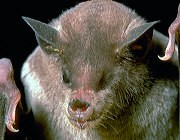 Lesser Long-nosed BatLeptonycteris yerbabuenae
-
 Wrinkle-faced BatCenturio senex
-
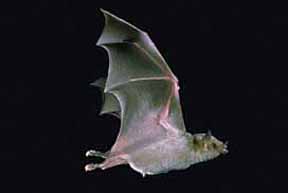 Greater Long-nosed BatLeptonycteris nivalis
Compare
Questions and answers
What is the scientific name of the Hairy-legged Vampire Bat?
The scientific name of the Hairy-legged Vampire Bat is Diphylla ecaudata. Written with its author, the full name is Diphylla ecaudata Spix, 1823.
Which family does the Hairy-legged Vampire Bat belong to?
Diphylla ecaudata belongs to the family Phyllostomidae, in the order Chiroptera and the class Mammalia.
Where is the Hairy-legged Vampire Bat found?
Checklists and occurrence records place Diphylla ecaudata in 14 countries, including Mexico, Brazil, Guatemala, Colombia, Honduras and El Salvador.
What is the conservation status of the Hairy-legged Vampire Bat?
The IUCN Red List category recorded for Diphylla ecaudata is Least Concern (LC).
What do hairy legged vampire bats eat?
They feed on blood from warm-blooded vertebrates, primarily birds. Documented food sources include domestic chickens, humans, and cattle.[14][15][16]
What habitat do vampire bats live in?
The Hairy-legged Vampire Bat primarily inhabits tropical and subtropical forestlands, including moist forested environments and arid open areas. It usually roosts in caves during the day, but also uses mine tunnels, hollow trees, and abandoned buildings.[9][10][11][12]
Sources
Passages the profile rests on
- The hairy-legged vampire bat has relatively large body proportions and sooty-brown fur. Source passage: “A relatively large, sooty-brown bat with no tail” — depts.ttu.edu
- Its back fur is dark brown, whereas its underside fur is lighter. Source passage: “The fur on its back is dark brown, while the fur on its ventral surface is lighter in color.” — English Wikipedia
- Its fur is soft and long. Source passage: “Its fur is soft and long.” — English Wikipedia
- The species has a narrow, hairy interfemoral membrane. Source passage: “a narrow, hairy interfemoral membrane” — depts.ttu.edu
- Its ears are short and rounded, and its snout is short and pug-shaped. Source passage: “short, rounded ears; and a short, pug-nosed snout.” — depts.ttu.edu
- The species lacks a tail. Source passage: “as its species name indicates, it lacks a tail.” — English Wikipedia
- Its nose-leaf is greatly reduced compared with those of other leaf-nosed bats. Source passage: “Its nose-leaf is greatly reduced in size relative to other leaf-nosed bats.” — English Wikipedia
- Its middle upper incisors are larger than its canines, while its outer upper incisors are very small. Source passage: “the middle upper incisors larger than the canines; the outer incisors very small” — depts.ttu.edu
- The species primarily inhabits tropical and subtropical forestlands. Source passage: “Diphylla ecaudata is primarily an inhabitant of tropical and subtropical forestlands.” — animaldiversity.org
- It occurs in both moist forested environments and arid open areas. Source passage: “They can be found in both mesic, forested and arid, open areas.” — animaldiversity.org
- Its daytime roosting sites include caves, mine tunnels, hollow trees, and abandoned buildings. Source passage: “During the daytime these bats roost in caves, mine tunnels, hollow trees, or abandoned buildings” — animaldiversity.org
- Caves are its usual daytime retreats. Source passage: “Its daytime retreat is normally a cave” — depts.ttu.edu
- It sometimes shares cave roosts with other bat species. Source passage: “which it may share with other species of bats” — depts.ttu.edu
- The species feeds on blood from warm-blooded vertebrates, primarily birds. Source passage: “The food of Diphylla ecaudata is the blood of warm-blooded vertebrates, mainly birds” — depts.ttu.edu
- Domestic chickens are among its documented food sources. Source passage: “mainly birds, including domestic chickens.” — depts.ttu.edu
- It has also been documented feeding on the blood of humans and cattle. Source passage: “it will feed on the blood of mammals, including humans and cattle.” — English Wikipedia
- It uses heat sensors on its nose to locate areas of prey skin with blood close to the surface. Source passage: “Through the use of heat sensors on their nose, these vampire bats can seek an area of the prey's skin where there is a good amount of blood close to the surface.” — animaldiversity.org
- Its feeding process typically takes approximately 30 minutes. Source passage: “The feeding process usually takes about a half an hour.” — animaldiversity.org
- An adult can consume approximately five teaspoons of blood during a feeding. Source passage: “An adult may consume about 5 teaspoons of blood” — animaldiversity.org
- Its saliva contains an anticoagulant that allows blood to continue flowing from the bite wound. Source passage: “An anticoagulant in the saliva allows blood to flow freely from the wound.” — animaldiversity.org
- It generally roosts alone or in groups of no more than 12 individuals. Source passage: “They roost either alone or in small groups of 12 or less.” — animaldiversity.org
- Individuals can recognize other colony members through their voices and smells. Source passage: “By learning to recognize other bats in a colony through voice and smell” — animaldiversity.org
- Individuals can share regurgitated blood with socially bonded roost mates. Source passage: “A bat can beg for food and another bat who has built a strong bond with that bat will regurgitate blood for it to eat” — animaldiversity.org
- Individuals groom one another and assist other bats in need. Source passage: “Diphylla ecaudata groom each other and help other bats in need.” — animaldiversity.org
- The species is shy and readily takes flight when disturbed by humans. Source passage: “These bats are shy, quick to take flight, and seem to rapidly vacate roosts once they have been disturbed by humans” — animaldiversity.org
- The species is reproductively active throughout the year. Source passage: “This species seems to be reproductively active throughout the year.” — depts.ttu.edu
- Females normally carry one embryo. Source passage: “The number of embryos per female is normally one” — depts.ttu.edu
- Females are capable of becoming pregnant at approximately one year of age. Source passage: “Females are capable of becoming pregnant at approximately one year of age.” — English Wikipedia
- One female captured in Chiapas, Mexico, carried two nearly full-term embryos. Source passage: “one female captured on 8 July in Chiapas, Mexico, contained two nearly full-term (crown–rump length 34 mm) embryos.” — depts.ttu.edu
- Gestation lasts approximately five and a half months according to one species account. Source passage: “at gestation length of approximately 5.5 months.” — English Wikipedia
- Females usually give birth to a single offspring. Source passage: “Females give birth to usually only one young, called a pup.” — English Wikipedia
- Pups are born with their eyes open and deciduous teeth. Source passage: “Pups are born with their eyes open and a set of deciduous teeth.” — English Wikipedia
- Pups begin fledging at approximately 57 days of age. Source passage: “Pups will fledge at approximately 57 days old” — English Wikipedia
- Young may continue nursing and obtaining regurgitated blood from their mothers until approximately 223 days old. Source passage: “up until approximately 223 days of age.” — English Wikipedia
- The species is classified as Least Concern by the IUCN. Source passage: “The hairy-legged vampire bat is listed as least concern by the IUCN” — depts.ttu.edu
- Its widespread distribution and tolerance of different habitats are cited as reasons for its Least Concern classification. Source passage: “as it is widespread, relatively tolerant to a range of habitats” — depts.ttu.edu
- The species is not included on federal or state lists of species of concern in the United States. Source passage: “It does not appear on the federal or state lists of concerned species” — depts.ttu.edu
- An anticoagulant produced in the species' saliva has been used as a blood-thinning drug to treat heart attacks and strokes in humans. Source passage: “The saliva has been used as a blood-thinning drug to treat heart attacks and strokes in humans” — animaldiversity.org
- The hairy-legged vampire bat resembles the common vampire bat in appearance. Source passage: “It is similar in appearance to the common vampire bat.” — English Wikipedia
Data
- Catalogue of Life, 2026-10-16 XR cc by
- Global Biodiversity Information Facility CC BY 4.0
- Wikidata CC0
- GeoNames CC BY 4.0
- Wikimedia Commons per image; credit shown with each image
- Within the Catalogue of Life, this name comes from The Integrated Taxonomic Information System cc0
References
- Sim. Vespert. Brasil. p.68 where the name was published
- Hall, & Raymond, E. (1981). The Mammals of North America, Vols. I and II, 2nd Ed.
- Banks, R. C., R. W. McDiarmid, and A. L. Gardner. (1987). Checklist of Vertebrates of the United States, the U.S. Territories, and Canada. Resource Publication, No. 166.
- Wilson, Don E., and DeeAnn M. Reeder, eds. (1993). Mammal Species of the World: A Taxonomic and Geographic Reference, 2nd Ed., 3rd Printing.
- Wilson, Don E., and F. Russell Cole. (2000). Common Names of Mammals of the World.
- Simmons, Nancy B. / Wilson, Don E., and DeeAnn M. Reeder, eds. (2005). Order Chiroptera. Mammal Species of the World: A Taxonomic and Geographic Reference, 3rd Ed., Vols. 1 & 2.
- Wilson, D. E., and R. A. Mittermeier, eds. (2019). Handbook of the Mammals of the World. Vol. 9: Bats.
This species in other databases
Page built on 27 November 2026. See how the catalog is made and all sources and licences.
Cite this page
ScientificNames.org. (2026). Diphylla ecaudata (Hairy-legged Vampire Bat). Retrieved November 27, 2026, from https://scientificnames.org/species/diphylla-ecaudata
“Diphylla ecaudata (Hairy-legged Vampire Bat).” ScientificNames.org, 2026, scientificnames.org/species/diphylla-ecaudata. Accessed 27 Nov. 2026.
ScientificNames.org. “Diphylla ecaudata (Hairy-legged Vampire Bat).” Accessed November 27, 2026. https://scientificnames.org/species/diphylla-ecaudata.
@misc{scientificnames_diphylla_ecaudata_hairy_legged_vampire_bat,
  author = {{ScientificNames.org}},
  title = {Diphylla ecaudata (Hairy-legged Vampire Bat)},
  year = {2026},
  url = {https://scientificnames.org/species/diphylla-ecaudata},
  note = {Accessed 2026-11-27}
}