Species · Flowering plants
Nigerian Satinwood Distemonanthus benthamianus
The scientific name of the Nigerian Satinwood is Distemonanthus benthamianus. It is a species of flowering plant in the family Fabaceae (bean), order Fabales.
- Scientific name
- Distemonanthus benthamianus Baill.
- Common name
- Nigerian Satinwood
- Genus
- Distemonanthus
- Family
- Fabaceae (Bean)
- Order
- Fabales
- Class
- Magnoliopsida
- Red List category
- LC Least Concern
- Recorded in
- 12 countries
- Name status
- accepted in the Catalogue of Life

Overview
Distemonanthus benthamianus grows in high forests in West and Central Africa. It has a straight trunk, pinnately compound leaves with 7–10 leaflets and indehiscent pods.
Written 26 November 2026 from the sources listed below. Each statement was checked against the passage it cites; statements that could not be supported were removed.
Habitat
Nigerian satinwood grows in high forests in West and Central Africa. It occurs in the forest regions of Tropical West and Central Africa.[1][2]
Appearance
The tree has a straight trunk that can occasionally be slightly sinuous. Fairly spreading buttress roots develop at its base, and the trunk can remain free of branches for up to 20 metres.[3][4][5]
The bark is brown to reddish brown. The leaves are pinnately compound, with 7–10 leaflets and leaf blades that have an ovate to elliptical outline.[6][7][8]
The tree produces indehiscent pods. It can reach a height of 40 metres and a trunk diameter of 90 centimetres.[9][10][11]
Uses
Parts of the root are used as chewing sticks for dental hygiene in some parts of Nigeria. Traditional health practitioners use bark extracts to treat cases of diarrhea.[12][13]
The wood is used to produce decorative veneers and for joinery. The mature heartwood has moderate resistance to fungi.[14][15]
Similar species
Nigerian satinwood is sometimes confused with Pericopsis laxiflora because of similar morphological features.[16]
Classification of the Nigerian Satinwood
| Kingdom | Plantae |
|---|---|
| Subkingdom | Pteridobiotina |
| Phylum | Tracheophyta |
| Class | Magnoliopsida |
| Order | Fabales |
| Family | Fabaceae (Bean) |
| Genus | Distemonanthus |
| Species | Distemonanthus benthamianus Baill. |
Where the Nigerian Satinwood is found
Checklists and occurrence records place Distemonanthus benthamianus in 12 countries across Africa. GBIF holds 1,262 georeferenced records of it.
Countries
- Benin 80
- Cameroon 213
- Equatorial Guinea 9
- Gabon 552
- Ghana 75
- Guinea 131
- Ivory Coast 43
- Liberia 57
- Nigeria 61
- Republic of the Congo 7
- Sierra Leone 26
- Togo 8
Regions and cities with the most records
- Nzérékoré Region, Guinea 129
- Estuaire, Gabon 107
- Ogooué-Ivindo, Gabon 101
- Ogooué-Lolo, Gabon 100
- South, Cameroon 90
- Haut-Ogooué, Gabon 49
- Woleu-Ntem, Gabon 46
- Collines, Benin 42
- South-West, Cameroon 34
- Libreville, Gabon 31
- Moyen-Ogooué, Gabon 30
- Nimba, Liberia 28
- Owendo, Gabon 27
- Kumba, Cameroon 26
- Makokou, Gabon 26
- Mbanga, Cameroon 26
- New Yekepa, Liberia 25
- Oyam, Gabon 25
- Kribi, Cameroon 23
- Western North, Ghana 22
- Moanda, Gabon 20
- Ébolowa, Cameroon 19
- Northern Province, Sierra Leone 16
- Adjaouèrè, Benin 13
- Delta, Nigeria 13
- Grand Gedeh County, Liberia 13
- Plateau, Benin 13
- Zwedru, Liberia 13
- Borgou, Benin 12
- Centre, Cameroon 12
- Pobé, Benin 12
- Ughelli, Nigeria 11
- Montagnes, Ivory Coast 9
- Bono, Ghana 8
- East, Cameroon 8
- Donga, Benin 7
A number beside a place is its count of GBIF occurrence records. A place without a number comes from a checklist alone. Records show where a species has been observed or collected, which can include escapes and vagrants.
Common names
English
- Nigerian Satinwood
- Yellow Satinwood
Names in 4 other languages
- Chinese
- 兩蕊蘇木
- Finnish
- anjarapuu
- Slovak
- dvojtyčinkovec Benthamov
- Swedish
- movingui
Synonyms
One other scientific name has been used for this species and is now treated as a synonym of Distemonanthus benthamianus.
- Distemonanthus laxus Oliv.
Related species
-
 PeanutArachis hypogaea
-
 LiquoriceGlycyrrhiza glabra
-
 TamarindTamarindus indica
-
 ChickpeaCicer arietinum
-
 SoybeanGlycine max
-
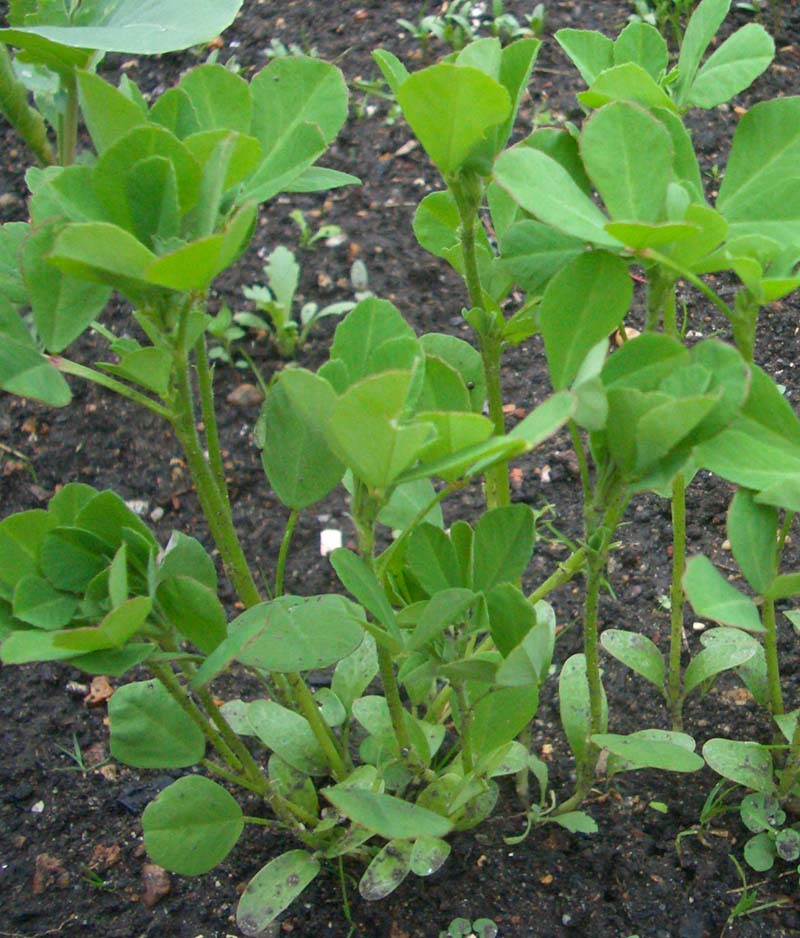 FenugreekTrigonella foenum-graecum
-
 RooibosAspalathus linearis
-
 Broad BeanVicia faba
Compare
Questions and answers
What is the scientific name of the Nigerian Satinwood?
The scientific name of the Nigerian Satinwood is Distemonanthus benthamianus. Written with its author, the full name is Distemonanthus benthamianus Baill..
Which family does the Nigerian Satinwood belong to?
Distemonanthus benthamianus belongs to the family Fabaceae, in the order Fabales and the class Magnoliopsida.
Where is the Nigerian Satinwood found?
Checklists and occurrence records place Distemonanthus benthamianus in 12 countries, including Gabon, Cameroon, Guinea, Benin, Ghana and Nigeria.
What is the conservation status of the Nigerian Satinwood?
The IUCN Red List category recorded for Distemonanthus benthamianus is Least Concern (LC).
What other names does the Nigerian Satinwood have?
Distemonanthus benthamianus is also known in English as Yellow Satinwood.
Sources
Passages the profile rests on
- The species occurs in the forest regions of Tropical West and Central Africa. Source passage: “in the forest regions of Tropical West and Central Africa” — English Wikipedia
- The species grows in high forests in West and Central Africa. Source passage: “The tree grows in the high forest of West and Central Africa.” — English Wikipedia
- The tree has a straight trunk that can occasionally be slightly sinuous. Source passage: “Trunk is straight but can sometimes be slightly sinuous” — English Wikipedia
- The tree develops fairly spreading buttress roots at its base. Source passage: “fairly spreading buttress roots at the base” — English Wikipedia
- The trunk can remain free of branches for up to 20 metres. Source passage: “free of branches for up to 20 meters.” — English Wikipedia
- The bark is brown to reddish brown. Source passage: “Bark, brown - reddish brown.” — English Wikipedia
- The leaves are pinnately compound and have 7–10 leaflets. Source passage: “Leaves, pinnately compound arrangement, 7 - 10 leaflets.” — English Wikipedia
- The leaf blades have an ovate to elliptical outline. Source passage: “Leaf-blade, ovate - elliptical in outline.” — English Wikipedia
- The tree produces indehiscent pods. Source passage: “Fruit, indehiscent pods.” — English Wikipedia
- The tree can reach a height of 40 metres. Source passage: “it grows up to 40 meters tall” — English Wikipedia
- The tree can reach a trunk diameter of 90 centimetres. Source passage: “and 90 cm in diameter.” — English Wikipedia
- Parts of the root are used as chewing sticks for dental hygiene in some parts of Nigeria. Source passage: “Parts of the root is used as a chewing stick for dental hygiene in parts of Nigeria.” — English Wikipedia
- Traditional health practitioners use bark extracts to treat cases of diarrhea. Source passage: “Bark extracts are used to treat incidents of diarrhea by traditional health practitioners.” — English Wikipedia
- The wood is used to produce decorative veneers and for joinery. Source passage: “Used also for decorative veneers and joinery.” — English Wikipedia
- The mature heartwood has moderate resistance to fungi. Source passage: “Mature heartwood has a moderate resistance to fungi.” — English Wikipedia
- Distemonanthus benthamianus is sometimes confused with Pericopsis laxiflora because of similar morphological features. Source passage: “it is sometimes confused with Pericopsis laxiflora due to similar morphological features.” — English Wikipedia
- The species occurs in Gabon, the Central African Republic, Nigeria, Ghana and Cameroon. Source passage: “It occurs in Gabon, Central African Republic, Nigeria, Ghana, Cameroon.” — English Wikipedia
- The species is widely but sparsely distributed across Tropical West and Central African forest regions. Source passage: “which occurs widely but sparsely in the forest regions of Tropical West and Central Africa” — English Wikipedia
Data
- Catalogue of Life, 2026-10-16 XR cc by
- Global Biodiversity Information Facility CC BY 4.0
- Wikidata CC0
- GeoNames CC BY 4.0
- Wikimedia Commons per image; credit shown with each image
- Within the Catalogue of Life, this name comes from The World Checklist of Vascular Plants (WCVP): Fabaceae cc by
References
- Hist. Pl. 2: 135 (1870) where the name was published
This species in other databases
- Catalogue of Life 36WNP
- Wikidata Q15533540
- iNaturalist 747117
- World Flora Online wfo-0000167098
- GRIN 401499
Page built on 29 November 2026. See how the catalog is made and all sources and licences.
Cite this page
ScientificNames.org. (2026). Distemonanthus benthamianus (Nigerian Satinwood). Retrieved November 29, 2026, from https://scientificnames.org/species/distemonanthus-benthamianus
“Distemonanthus benthamianus (Nigerian Satinwood).” ScientificNames.org, 2026, scientificnames.org/species/distemonanthus-benthamianus. Accessed 29 Nov. 2026.
ScientificNames.org. “Distemonanthus benthamianus (Nigerian Satinwood).” Accessed November 29, 2026. https://scientificnames.org/species/distemonanthus-benthamianus.
@misc{scientificnames_distemonanthus_benthamianus_nigerian_satinwood,
  author = {{ScientificNames.org}},
  title = {Distemonanthus benthamianus (Nigerian Satinwood)},
  year = {2026},
  url = {https://scientificnames.org/species/distemonanthus-benthamianus},
  note = {Accessed 2026-11-29}
}