Species · Flowering plants
Dog Poop Bush Ebenopsis confinis
The scientific name of the Dog Poop Bush is Ebenopsis confinis. It is a species of flowering plant in the family Fabaceae (bean), order Fabales.
- Scientific name
- Ebenopsis confinis (Standl.) Britton & Rose
- Common name
- Dog Poop Bush
- Genus
- Ebenopsis
- Family
- Fabaceae (Bean)
- Order
- Fabales
- Class
- Magnoliopsida
- Recorded in
- 1 country
- Name status
- accepted in the Catalogue of Life

Overview
Dog Poop Bush is a perennial shrub in the flowering plant family Fabaceae. It occurs from southeastern Baja California near Bahía de los Ángeles southward to Baja California Sur, and along a stretch of the Sonora coast. Its blackish woody fruit pods resemble dog feces and give the species its English common name.
Written 26 November 2026 from the sources listed below. Each statement was checked against the passage it cites; statements that could not be supported were removed.
Habitat
Dog Poop Bush grows on desert hillsides and in thin chaparral below 250 m elevation. It usually grows along washes.[1][2]
The species is locally plentiful in Baja California Sur, particularly on the Gulf of California slope and adjacent islands.[3]
Appearance
Dog Poop Bush is a stiffly branched shrub or small tree with multiple stems and a spreading crown. Its bark ranges from gray-brown to reddish brown, beginning smooth and becoming scaly with age.[4][5][6]
Its moderately stout twigs bear a pair of spines measuring 2–8 mm at each leaf node. The leaves are small, alternate, and bipinnately compound.[7][8][9]
Its inflorescences emerge from one to three peduncles per shoot, each measuring 3–8 mm long. Each flower cluster contains approximately 17–35 small, fragrant, yellowish white flowers, and its flower bracts measure 0.6–1 mm.[10][11][12][13][14]
Its fruit is an oblong, blackish, woody pod. Its seeds measure 11–16 mm long and 10–13 mm wide.[15][16]
Classification of the Dog Poop Bush
| Kingdom | Plantae |
|---|---|
| Subkingdom | Pteridobiotina |
| Phylum | Tracheophyta |
| Class | Magnoliopsida |
| Order | Fabales |
| Family | Fabaceae (Bean) |
| Genus | Ebenopsis (Texas Ebony) |
| Species | Ebenopsis confinis (Standl.) Britton & Rose |
Where the Dog Poop Bush is found
Checklists and occurrence records place Ebenopsis confinis in 1 country across North America. GBIF holds 764 georeferenced records of it.
Countries
Regions and cities with the most records
- Baja California Sur, Mexico 545
- Baja California, Mexico 71
- La Paz, Mexico 43
- Cabo San Lucas, Mexico 34
- Colonia del Sol, Mexico 34
- San José del Cabo, Mexico 17
- Sonora, Mexico 16
- Sinaloa, Mexico 5
A number beside a place is its count of GBIF occurrence records. A place without a number comes from a checklist alone. Records show where a species has been observed or collected, which can include escapes and vagrants.
Common names
English
- Dog Poop Bush
Names in 1 other language
- Spanish
- Ejotón, Uña de gato, palo fierro, Ébano peninsular
Synonyms
2 other scientific names have been used for this species and are now treated as synonyms of Ebenopsis confinis.
- Havardia confinis ined.
- Pithecellobium confine Standl.
Related species
-
 Texas EbonyEbenopsis ebano
- Ebenopsis caesalpinioides
-
 PeanutArachis hypogaea
-
 LiquoriceGlycyrrhiza glabra
-
 TamarindTamarindus indica
-
 ChickpeaCicer arietinum
-
 SoybeanGlycine max
-
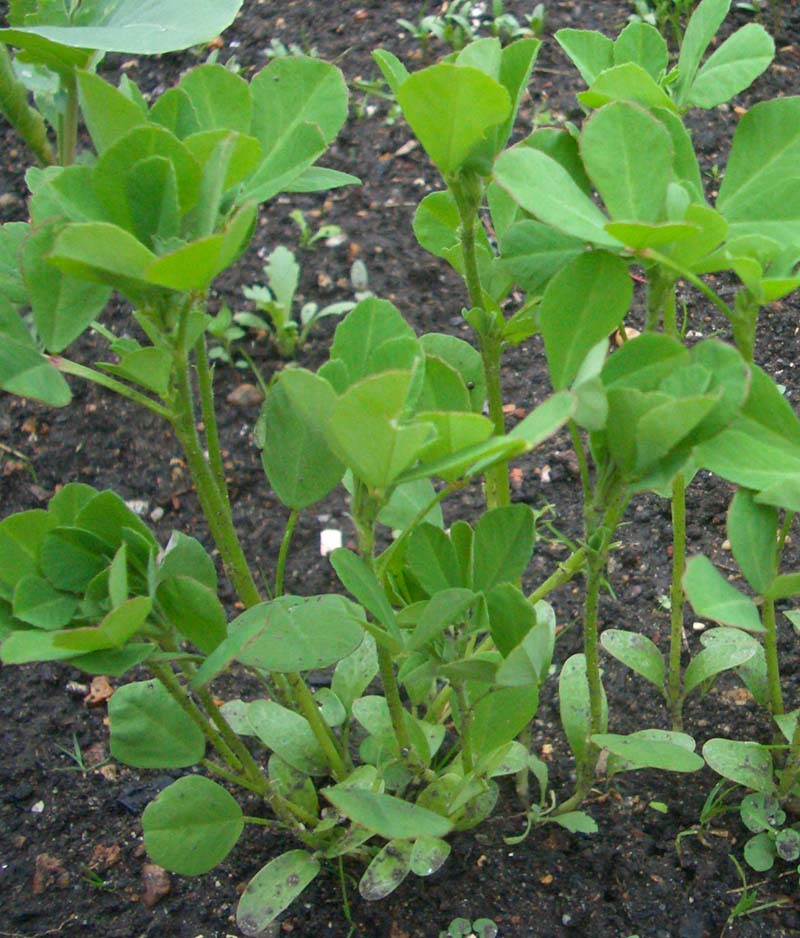 FenugreekTrigonella foenum-graecum
Compare
Questions and answers
What is the scientific name of the Dog Poop Bush?
The scientific name of the Dog Poop Bush is Ebenopsis confinis. Written with its author, the full name is Ebenopsis confinis (Standl.) Britton & Rose.
Which family does the Dog Poop Bush belong to?
Ebenopsis confinis belongs to the family Fabaceae, in the order Fabales and the class Magnoliopsida.
Where is the Dog Poop Bush found?
Checklists and occurrence records place Ebenopsis confinis in 1 country: Mexico.
Sources
Passages the profile rests on
- The species grows on desert hillsides and in thin chaparral below 250 m elevation. Source passage: “It grows in a habitat of desert hillsides and thin chaparral below 250 m” — English Wikipedia
- The species usually grows along washes. Source passage: “usually along washes.” — English Wikipedia
- The species is locally plentiful in Baja California Sur, particularly on the Gulf of California slope and adjacent islands. Source passage: “where it is locally plentiful, especially on the Gulf of California slope and the adjacent islands.” — English Wikipedia
- Ebenopsis confinis is a stiffly branched shrub or small tree with multiple stems and a spreading crown. Source passage: “This species is a stiffly branched, drought deciduous multi-stemmed large shrub to small tree with a spreading crown.” — English Wikipedia
- The bark ranges from gray-brown to reddish brown, beginning smooth and becoming scaly with age. Source passage: “The bark is a gray-brown to reddish brown, and is initially smooth but becomes scaly.” — English Wikipedia
- The plant grows as a large shrub or small tree. Source passage: “multi-stemmed large shrub to small tree” — English Wikipedia
- The plant has moderately stout twigs bearing a pair of spines measuring 2–8 mm at each leaf node. Source passage: “The twigs are moderately stout and have a pair of spines (stipules) 2 to 8 mm long emerging at the node of each leaf.” — English Wikipedia
- Its leaves are small, alternate, and bipinnately compound. Source passage: “The leaves are small, alternate and bipinnately compound.” — English Wikipedia
- Its leaf-node spines measure 2–8 mm in length. Source passage: “a pair of spines (stipules) 2 to 8 mm long” — English Wikipedia
- Its flowers are small and yellowish white, forming fluffy, pom-pom-like clusters. Source passage: “The flowers are small, colored yellowish white, and appear as fluffy heads in pom-pom like cluster.” — English Wikipedia
- The flowers are fragrant. Source passage: “The flowers are fragrant.” — English Wikipedia
- Its inflorescences emerge from one to three peduncles per shoot, each measuring 3–8 mm long. Source passage: “The inflorescence emerges from 1 to 3 peduncles per shoot, 3 to 8 mm long.” — English Wikipedia
- Each flower cluster contains approximately 17–35 flowers. Source passage: “The flower clusters have around 17 to 35 flowers.” — English Wikipedia
- Its flower bracts measure 0.6–1 mm. Source passage: “The bracts are shaped obovate to cuneate or spatulate, 0.6 to 1 mm large” — English Wikipedia
- Its fruit is an oblong, woody pod with a blackish coloration. Source passage: “The distinctive fruit is an oblong pod with a woody texture and blackish coloration, with 8 to 10 seeds.” — English Wikipedia
- Its seeds measure 11–16 mm long and 10–13 mm wide. Source passage: “The seeds are large, 11 to 16 mm long and 10 to 13 mm wide.” — English Wikipedia
Data
- Catalogue of Life, 2026-10-16 XR cc by
- Global Biodiversity Information Facility CC BY 4.0
- Wikidata CC0
- GeoNames CC BY 4.0
- Wikimedia Commons per image; credit shown with each image
- Within the Catalogue of Life, this name comes from The World Checklist of Vascular Plants (WCVP): Fabaceae cc by
References
- N.L.Britton & al. (eds.), N. Amer. Fl. 23: 33 (1928) where the name was published
This species in other databases
- Catalogue of Life 9CRR2
- Wikidata Q15534615
- iNaturalist 469114
- World Flora Online wfo-0001049512
- GRIN 405170
Page built on 27 November 2026. See how the catalog is made and all sources and licences.
Cite this page
ScientificNames.org. (2026). Ebenopsis confinis (Dog Poop Bush). Retrieved November 27, 2026, from https://scientificnames.org/species/ebenopsis-confinis
“Ebenopsis confinis (Dog Poop Bush).” ScientificNames.org, 2026, scientificnames.org/species/ebenopsis-confinis. Accessed 27 Nov. 2026.
ScientificNames.org. “Ebenopsis confinis (Dog Poop Bush).” Accessed November 27, 2026. https://scientificnames.org/species/ebenopsis-confinis.
@misc{scientificnames_ebenopsis_confinis_dog_poop_bush,
  author = {{ScientificNames.org}},
  title = {Ebenopsis confinis (Dog Poop Bush)},
  year = {2026},
  url = {https://scientificnames.org/species/ebenopsis-confinis},
  note = {Accessed 2026-11-27}
}