Species · Flowering plants
Squirting-cucumber Ecballium elaterium
The scientific name of the Squirting-cucumber is Ecballium elaterium. It is a species of flowering plant in the family Cucurbitaceae (gourd family), order Cucurbitales.
- Scientific name
- Ecballium elaterium (L.) A.Rich.
- Common name
- Squirting-cucumber
- Genus
- Ecballium
- Family
- Cucurbitaceae (Gourd Family)
- Order
- Cucurbitales
- Class
- Magnoliopsida
- Recorded in
- 55 countries
- Name status
- accepted in the Catalogue of Life

Overview
The squirting-cucumber is native to southern Europe, northwestern Africa and southwestern Asia and has become locally naturalised in several other parts of the world. It is distinguished by its ripe fruits, which eject seeds in a stream of mucilaginous liquid.
Written 26 November 2026 from the sources listed below. Each statement was checked against the passage it cites; statements that could not be supported were removed.
Appearance
The flowers are pale yellow, with funnel-shaped corollas divided into five lobes. They measure approximately 2–5 cm in diameter.[1][2][3]
The fruits are oval, green or blue-green and resemble small hairy cucumbers. They measure approximately 5 cm long. The seeds are small, dark brown and round.[4][5][6]
Habitat
The species grows in sunny environments and can develop in both rich soils and poor, well-drained soils. It tolerates a wide range of soil pH conditions and grows best in a hot, dry garden position.[7][8][9][10]
Behaviour
Ripe fruits eject seeds by squirting a stream of mucilaginous liquid. The fruit can generate internal pressure of up to 27 atmospheres and project seeds as far as 7–8 metres.[11][12][13]
Water stress can reduce the effectiveness of the seed-squirting mechanism.[14]
Reproduction and life cycle
Male flowers grow in racemes, while female flowers that produce fruits grow singly. The flowers bloom between June and August.[15][16]
The fruits release their seeds when ripe or when an animal detaches them from the stem.[17]
Conservation
The species is considered invasive because it can establish readily in different soil and environmental conditions.[18][19]
Uses
The dried juice of the fruit, known as elaterium, has traditionally been used to treat rheumatism, jaundice, sinusitis, fever, liver disorders and constipation. Traditional medicinal use has been reported particularly in Tunisia, Algeria and Turkey.[20][21]
The species has been cultivated in vitro to produce cucurbitacins. These compounds function as defensive agents, and ten cucurbitacins have been identified in the species.[22][23][24]
Classification of the Squirting-cucumber
| Kingdom | Plantae |
|---|---|
| Subkingdom | Pteridobiotina |
| Phylum | Tracheophyta |
| Class | Magnoliopsida |
| Order | Cucurbitales |
| Family | Cucurbitaceae (Gourd Family) |
| Tribe | Bryonieae |
| Genus | Ecballium (Squirting Cucumber) |
| Species | Ecballium elaterium (L.) A.Rich. |
Where the Squirting-cucumber is found
Checklists and occurrence records place Ecballium elaterium in 55 countries across Africa, Asia, Europe, North America and Oceania. GBIF holds 48,661 georeferenced records of it.
Countries where it is native or its origin is not stated
- Albania 116
- Algeria 301
- Armenia
- Austria 4
- Azerbaijan 40
- Belgium 12
- Bosnia and Herzegovina 7
- Bulgaria 133
- Croatia 1,682
- Cyprus 375
- Czechia 18
- Denmark 4
- France 15,514
- Georgia 89
- Gibraltar 53
- Greece 3,770
- Iran 8
- Israel 871
- Italy 6,269
- Jordan 46
- Kosovo
- Lebanon 60
- Libya 4
- Malta 306
- Moldova
- Montenegro 11
- Morocco 73
- North Macedonia 26
- Palestinian Territory 117
- Poland 4
- Romania 34
- Russia 114
- San Marino
- Serbia 13
- Slovakia 2
- Slovenia 2
- Spain 14,495
- Sweden 25
- Switzerland 45
- Syria 39
- Tajikistan
- The Netherlands 13
- Tunisia 68
- Turkey 1,446
- Ukraine 362
- United Kingdom 104
Countries where it has been introduced
- Australia 322
- China 7
- Germany 33
- Hungary 24
- Kazakhstan 4
- New Zealand 3
- Portugal 1,555
- United States 38
- Uzbekistan
Regions and cities with the most records
- Occitanie, France 5,926
- Provence-Alpes-Côte d'Azur, France 5,678
- Madrid, Spain 2,047
- Catalonia, Spain 2,029
- Valencia, Spain 1,536
- San Fernando de Henares, Spain 1,346
- Coslada, Spain 1,344
- Torrejón de Ardoz, Spain 1,341
- Rivas-Vaciamadrid, Spain 1,310
- Madrid, Spain 1,261
- Mejorada del Campo, Spain 1,259
- Ciudad Lineal, Spain 1,252
- Sicily, Italy 1,234
- Marseille 15, France 1,230
- Marseille 14, France 1,196
- Marseille 16, France 1,196
- Getafe, Spain 1,146
- Marseille 03, France 1,128
- Marseille 02, France 1,125
- Marseille 13, France 1,111
- Marseille, France 1,105
- Apulia, Italy 1,104
- Allauch, France 1,092
- Marseille 01, France 1,090
- Marseille 04, France 1,079
- Marseille 07, France 1,071
- Marseille 12, France 1,071
- Marseille 06, France 1,070
- Marseille 05, France 1,069
- Marseille 10, France 1,055
- Marseille 11, France 1,052
- Chamartín, Spain 1,048
- Les Pennes-Mirabeau, France 1,045
- Arganda, Spain 1,039
- Marseille 08, France 1,035
- Pinto, Spain 1,025
3 more countries have a few records outside this range
These countries hold a few records of Ecballium elaterium but lie outside the range the checklists give for it. Such records are often zoo or garden specimens, museum material or vagrants, so the species is not counted as occurring there.
A number beside a place is its count of GBIF occurrence records. A place without a number comes from a checklist alone. Records show where a species has been observed or collected, which can include escapes and vagrants.
Common names
English
- Squirting-cucumber
- Squirting Cucumber
- Exploding Cucumber
Names in 34 other languages
- Armenian
- Կատաղի վարունգ
- Belarusian
- Шалёны агурок
- Catalan
- Esquitxagossos
- Chinese
- 噴瓜
- Croatian
- Divlji krastavac, Primorska štrcalica
- Czech
- tykvice stříkavá
- Danish
- Æselagurk
- Dutch
- Springkomkommer
- Finnish
- ruiskukurkku
- French
- Concombre Sauvage, Concombre d'âne, momordique
- Galician
- Cogombro do demo
- German
- Eselsgurke, Spritzgurke
- Greek
- Πικραγγουριά
- Hebrew
- ירוקת-חמור מצויה
- Hungarian
- magrúgó, uborkás magrúgó
- Italian
- Cocomero asinino, Cucuzzella pazza, Schizzetto
- Japanese
- テッポウウリ, 鉄砲瓜
- Lithuanian
- Paprastasis tryškenis
- Macedonian
- Луда краставица
- Norwegian Bokmål
- eselagurk
- Polish
- Tryskawiec sprężysty
- Portuguese
- Pepino-de-são-gregório, pepino-selvagem
- Romanian
- Plesnitoare
- Russian
- Бешеный огурец
- Slovak
- tekvičník striekavý
- Slovenian
- navadni štrkavec
- Spanish
- Calabacilla Amarga, Cohombrillo Amargo, pepinillo del diablo
- Swedish
- sprutgurka
- Turkish
- Cırtatan, Eşek hıyarı
- Ukrainian
- Огірок-пирскач звичайний, Шалений огірок
- Welsh
- Cucumer Chwystrellol
- ext
- Melón bravíu
- nap
- Cucuzzigl
- vec
- Sucheta marina
Subspecies and varieties
- Ecballium elaterium subsp. dioicum subspecies
- Ecballium elaterium subsp. elaterium (Squirting Cucumber) subspecies
Related species
-
 ChayoteSicyos edulis
-
 CucumberCucumis sativus
-
 WatermelonCitrullus lanatus
-
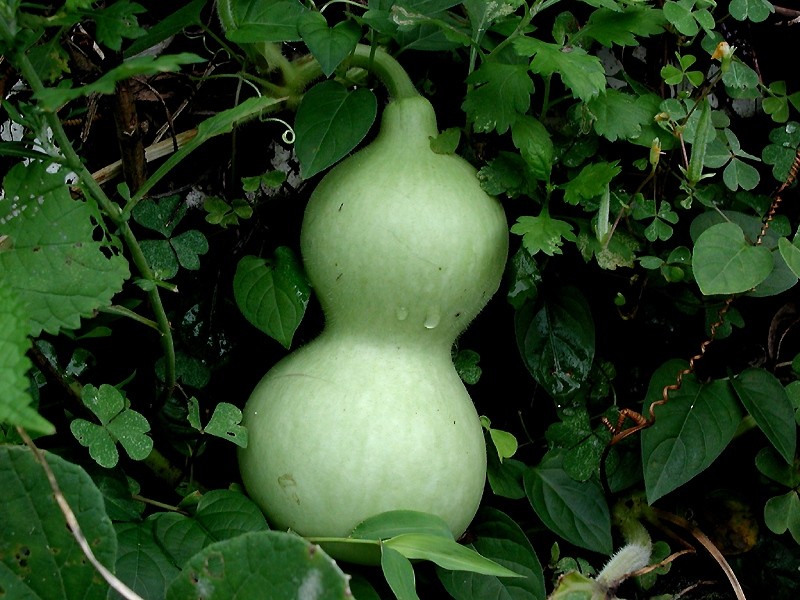 CalabashLagenaria siceraria
-
 MonkfruitSiraitia grosvenorii
-
 Bitter MelonMomordica charantia
-
 Wax GourdBenincasa hispida
-
 ZucchiniCucurbita pepo
Compare
Questions and answers
What is the scientific name of the Squirting-cucumber?
The scientific name of the Squirting-cucumber is Ecballium elaterium. Written with its author, the full name is Ecballium elaterium (L.) A.Rich..
Which family does the Squirting-cucumber belong to?
Ecballium elaterium belongs to the family Cucurbitaceae, in the order Cucurbitales and the class Magnoliopsida.
Where is the Squirting-cucumber found?
Checklists and occurrence records place Ecballium elaterium in 55 countries, including France, Spain, Italy, Greece, Croatia and Turkey.
What other names does the Squirting-cucumber have?
Ecballium elaterium is also known in English as Squirting Cucumber and Exploding Cucumber.
How is cucumber dispersed?
The squirting-cucumber disperses its seeds by ejecting them from ripe fruits in a stream of mucilaginous liquid. The seeds can be projected as far as 7–8 metres.[11][13]
Is cucumber a climber or creeper?
The squirting-cucumber usually has stems that trail along the ground, although they sometimes grow in a shrubby form.[25]
Sources
Passages the profile rests on
- Its flowers have yellow corollas divided into five lobes. Source passage: “The flowers have a five-lobed yellow corolla” — English Wikipedia
- Its flowers measure approximately 2–5 cm in diameter. Source passage: “2–5 cm (0.79–1.97 in) diameter” — English Wikipedia
- Its flowers are pale yellow and have a funnel shape characteristic of cucumber flowers. Source passage: “The flowers have the typical cucumber funnel shape, are pale yellow” — botanic.cam.ac.uk
- Its fruits are oval, green or blue-green, and resemble small hairy cucumbers. Source passage: “an oval green or blue-green fruit about 5 cm (2.0 in) long, resembling a tiny but hairy cucumber.” — English Wikipedia
- Its fruits are approximately 5 cm long. Source passage: “The fleshy, ovoid, bristly fruits are 5cm in length” — botanic.cam.ac.uk
- Its seeds are small, dark brown and round. Source passage: “The small, dark brown, round seeds” — pmc.ncbi.nlm.nih.gov
- The species grows best in a hot, dry garden position. Source passage: “requires a hot, dry position in the garden.” — botanic.cam.ac.uk
- The species can grow in rich soils and sunny environments. Source passage: “it can easily grow in rich soils and sunny environments” — pmc.ncbi.nlm.nih.gov
- The species can also grow in poor, well-drained soils. Source passage: “but it can grow in poor and drained soils too” — pmc.ncbi.nlm.nih.gov
- The species tolerates a wide range of soil pH conditions. Source passage: “it does not need much water, nor a specific pH range.” — pmc.ncbi.nlm.nih.gov
- Ripe fruits eject seeds by squirting a stream of mucilaginous liquid. Source passage: “the ripe fruit squirting a stream of mucilaginous liquid containing its seeds” — English Wikipedia
- The fruit can generate internal pressure of up to 27 atmospheres to propel its seeds. Source passage: “leading to a turgor pressure of up to 27 atms.” — English Wikipedia
- The species can project its seeds as far as 7–8 metres. Source passage: “The seeds are projected as far as 7–8 m (23–26 ft).” — English Wikipedia
- Water stress can reduce the effectiveness of the species' seed-squirting mechanism. Source passage: “indicating that the squirting mechanism can be decreased in water stressed conditions.” — English Wikipedia
- Male flowers grow in racemes, whereas female flowers that produce fruits grow singly. Source passage: “Male flowers are produced in racemes, while the fruit-producing females are solitary.” — botanic.cam.ac.uk
- Its flowers bloom between June and August. Source passage: “pale yellow flowers that flourish between June and August” — pmc.ncbi.nlm.nih.gov
- The fruits release their seeds when ripe or when an animal detaches them from the stem. Source passage: “When the fruits reach a certain degree of ripening, or when an animal grabs the fruits and separates them from the stem” — pmc.ncbi.nlm.nih.gov
- The species is considered invasive. Source passage: “It is considered an invasive species.” — English Wikipedia
- The species is regarded as invasive because it can establish readily in different soil and environmental conditions. Source passage: “It is considered an invasive species, as it can easily grow in rich soils and sunny environments” — pmc.ncbi.nlm.nih.gov
- The dried juice of the fruit, known as elaterium, has traditionally been used to treat rheumatism, jaundice, sinusitis, fever, liver disorders and constipation. Source passage: “the dried fruit juice, called “elaterium”, has been used to treat rheumatism, jaundice, sinusitis, fever, liver disorders, and constipation” — pmc.ncbi.nlm.nih.gov
- Traditional medicinal use of the species has been reported particularly in Tunisia, Algeria and Turkey. Source passage: “especially in medicine in Tunisia, Algeria and Turkey” — pmc.ncbi.nlm.nih.gov
- The species has been cultivated in vitro to produce cucurbitacins. Source passage: “in some cases it has also been cultured in vitro with the aim of producing cucurbitacins” — pmc.ncbi.nlm.nih.gov
- The species contains cucurbitacins that function as defensive agents. Source passage: “cucurbitacins, often found as glycosylated derivatives, used by the plant as defensive agents.” — pmc.ncbi.nlm.nih.gov
- Ten cucurbitacins have been identified in the species. Source passage: “ten of which have been identified in E. elaterium.” — pmc.ncbi.nlm.nih.gov
- Its stems are bristly and usually trail along the ground, although they sometimes grow in a shrubby form. Source passage: “usually trailing on the ground but sometimes shrubby, with bristly stems.” — English Wikipedia
Data
- Catalogue of Life, 2026-10-16 XR cc by
- Global Biodiversity Information Facility CC BY 4.0
- Wikidata CC0
- GeoNames CC BY 4.0
- Wikimedia Commons per image; credit shown with each image
- Within the Catalogue of Life, this name comes from Synonymic Checklists of the Vascular Plants of the World cc by
References
- (L.) A.Rich. where the name was published
This species in other databases
- Catalogue of Life 38DKH
- Wikidata Q157877
- iNaturalist 162161
- World Flora Online wfo-0000659225
- GRIN 14775
Page built on 28 November 2026. See how the catalog is made and all sources and licences.
Cite this page
ScientificNames.org. (2026). Ecballium elaterium (Squirting-cucumber). Retrieved November 28, 2026, from https://scientificnames.org/species/ecballium-elaterium
“Ecballium elaterium (Squirting-cucumber).” ScientificNames.org, 2026, scientificnames.org/species/ecballium-elaterium. Accessed 28 Nov. 2026.
ScientificNames.org. “Ecballium elaterium (Squirting-cucumber).” Accessed November 28, 2026. https://scientificnames.org/species/ecballium-elaterium.
@misc{scientificnames_ecballium_elaterium_squirting_cucumber,
  author = {{ScientificNames.org}},
  title = {Ecballium elaterium (Squirting-cucumber)},
  year = {2026},
  url = {https://scientificnames.org/species/ecballium-elaterium},
  note = {Accessed 2026-11-28}
}