Species · Other invertebrates
Red Wiggler Eisenia fetida
The scientific name of the Red Wiggler is Eisenia fetida. It is a species of animal in the family Lumbricidae (earthworms), order Crassiclitellata. The name dates from 1826.
- Scientific name
- Eisenia fetida (Savigny in Cuvier, 1826)
- Common name
- Red Wiggler
- Genus
- Eisenia
- Family
- Lumbricidae (Earthworms)
- Order
- Crassiclitellata
- Class
- Clitellata
- Environment
- freshwater, terrestrial
- Recorded in
- 44 countries
- Name status
- accepted in the Catalogue of Life
Overview
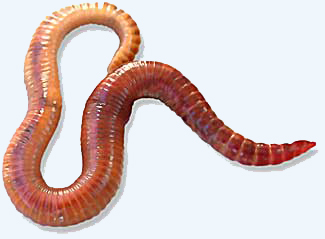
The red wiggler inhabits moist, decaying organic material, including compost, manure, and rotting vegetation. It has a reddish-brown body with small rings, a yellowish tail, and groups of bristles on each body segment.
Written 24 November 2026 from the sources listed below. Each statement was checked against the passage it cites; statements that could not be supported were removed.
Appearance
The red wiggler has a reddish-brown body with small rings and a yellowish tail. Each body segment has groups of bristles called setae.[1][2]
Habitat
The red wiggler inhabits decaying organic material, including rotting vegetation, compost, and manure. It is naturally found in moist, organic-rich environments such as livestock manure and beneath woodland logs.[3][4]
The species is epigean and is rarely found in soil. It generally lives just below the surface to avoid light, and individuals outside composting bins may live beneath rocks, pots, leaves, and mulch.[5][6][7]
The species thrives in aerobic environments. It can be maintained in worm bins at temperatures between 55°F and 77°F, with temperatures between 59°F and 77°F required for active feeding and reproduction.[8][9][10]
Diet
The red wiggler consumes decaying organic matter and most organic materials that are not high in salts or ammonia. It may consume between 25% and 35% of its body weight daily.[11][12][13]
The species consumes cardboard and the glue holding its layers together. It generally avoids dairy products and meat.[14][15]
Behaviour
The red wiggler moves by using segmental bristles to grip surfaces while contracting and stretching its muscles. Individuals move away from light when possible.[16][17]
The species produces a pungent liquid when handled roughly. During summer, individuals may move deeper than 15 centimeters to find cooler areas.[18][19]
Reproduction and life cycle
Under ideal conditions, each individual can produce approximately three cocoons per week. Each cocoon may contain between one and nine fertilized eggs.[20][21]
At 25°C, individuals hatch from their cocoons in approximately three weeks. Each egg capsule typically produces an average of three offspring, with a reported range of two to seven, while the Napa Master Gardener account reports hatching in approximately two weeks.[22][23][24]
A juvenile can become reproductively mature and produce offspring within three months. Eight individuals can produce approximately 1,500 adults within six months.[25][26]
Uses
The red wiggler is used to convert domestic and industrial organic waste into compost through vermicomposting. It is also used in systems that process blackwater on site and to produce nutrient-rich compost from food waste and other organic materials.[27][28][29]
The species is widely used as fishing bait for tench, bream, and roach.[30]
Similar species
Eisenia andrei is closely related to Eisenia fetida. Eisenia fetida can be lighter in colour than Eisenia andrei, although morphology is not a reliable identification method.[31][32]
Classification of the Red Wiggler
| Kingdom | Animalia |
|---|---|
| Phylum | Annelida |
| Class | Clitellata |
| Subclass | Oligochaeta |
| Order | Crassiclitellata |
| Suborder | Lumbricina |
| Family | Lumbricidae (Earthworms) |
| Genus | Eisenia (Rosy Worm) |
| Species | Eisenia fetida (Savigny in Cuvier, 1826) |
Where the Red Wiggler is found
Checklists and occurrence records place Eisenia fetida in 44 countries. GBIF holds 3,018 georeferenced records of it.
Countries
- Aland Islands 8
- Austria 40
- Azerbaijan 6
- Belarus 9
- Belgium 3
- Bermuda 3
- Bulgaria 5
- Canada 79
- China 39
- Denmark 13
- Estonia 207
- Finland 55
- France 71
- Georgia 13
- Germany 117
- Greece 3
- Hungary 9
- India 30
- Ireland 48
- Isle of Man 19
- Italy 32
- Japan 11
- Jersey 17
- Kazakhstan 11
- Latvia 8
- Mexico 17
- Moldova 10
- Norway 68
- Pakistan 6
- Poland 35
- Portugal 13
- Romania 3
- Russia 184
- South Korea 29
- Spain 41
- Sweden 155
- Switzerland 13
- Tajikistan 5
- The Netherlands 255
- Turkey 38
- Ukraine 54
- United Kingdom 890
- United States 343
- Uzbekistan 3
Regions and cities with the most records
- England, United Kingdom 762
- Fulham, United Kingdom 145
- City of Westminster, United Kingdom 143
- Islington, United Kingdom 143
- London, United Kingdom 143
- Streatham, United Kingdom 143
- Acton, United Kingdom 142
- Catford, United Kingdom 136
- Wembley, United Kingdom 136
- Archway, United Kingdom 135
- Cricklewood, United Kingdom 132
- Southall, United Kingdom 130
- Harrow, United Kingdom 119
- Morden, United Kingdom 118
- Tottenham, United Kingdom 118
- Finchley, United Kingdom 115
- Mitcham, United Kingdom 115
- Hounslow, United Kingdom 114
- Beckenham, United Kingdom 107
- Sutton, United Kingdom 106
- Carshalton, United Kingdom 105
- Walthamstow, United Kingdom 105
- Enfield Town, United Kingdom 104
- Hayes, United Kingdom 103
- Croydon, United Kingdom 101
- Banstead, United Kingdom 100
- Barking, United Kingdom 100
- Esher, United Kingdom 100
- Chingford, United Kingdom 99
- Edmonton, United Kingdom 99
- Ilford, United Kingdom 99
- Feltham, United Kingdom 98
- South Croydon, United Kingdom 98
- Purley, United Kingdom 96
- Eltham, United Kingdom 94
- California, United States 78
9 more countries have a few records outside this range
These countries hold a few records of Eisenia fetida but lie outside the range the checklists give for it. Such records are often zoo or garden specimens, museum material or vagrants, so the species is not counted as occurring there.
A number beside a place is its count of GBIF occurrence records. A place without a number comes from a checklist alone. Records show where a species has been observed or collected, which can include escapes and vagrants.
Common names
English
- Red Wiggler
- Bindling
- Bramble Worm
- Bramlin
- English Redworm
- Tiger Worm (N. America)
- Brandling
- Brandling Worm
- Manure Worm
- Red Worm
- Soilution Worm
- Tiger Worm
Names in 10 other languages
- Czech
- žížala hnojní
- Danish
- Brandorm, Kompostorm
- Dutch
- Mestworm
- Finnish
- tunkioliero
- French
- Ver du fumier
- German
- Dungwurm, Kompostwurm, Mistwurm
- Korean
- 줄지렁이
- Norwegian Bokmål
- kompostmeitemark
- Polish
- kompostowiec różowy
- Swedish
- dyngmask
Synonyms
36 other scientific names have been used for this species and are now treated as synonyms of Eisenia fetida.
- Allolobophora foetida Michaelsen, 1890
- Allolobophora foetida (Savigny in Cuvier, 1826)
- Allolobophora foetida var. fimetoria Orley, 1881
- Allolobophora rosea rosea Zicsi, 1982
- Eisenia fasciata Backlund, 1948
- Eisenia fetida attica Tzelepe, 1943
- Eisenia fetida fetida (Savigny, 1826)
- Eisenia fetida fetida Bouche, 1972
- Eisenia fetida fimetoria Örley, 1881
- Eisenia foetida (Savigny, 1826)
- Eisenia foetida Kobayashi, 1940
- Eisenia foetida Omodeo, 1956
- Eisenia foetida Michaelsen, 1900
- Eisenia foetida Zicsi & Michalis, 1981
- Eisenia foetida Perel, 1979
- Eisenia foetida Szuts, 1919
- Eisenia foetida Mihailova, 1966
- Eisenia foetida Malm, 1877
- Eisenia foetida attica Tzelepe, 1943
- Eisenia grandis storkani Easton, 1983
- Eisenia lucens Sapkarev, 1972
- Eisenia nordenskioldi caucasica Michaelsen, 1902
- Endrilus annulatus W.Smith, 1887
- Enterion fetidum Savigny in Cuvier, 1826
- Enterion foetidum Savigny, 1826
- Helodricus foetidus Michaelsen, 1913
- Helodrilus foetidus Michaelsen, 1913
- Lumbricus annularis Templeton, 1836
- Lumbricus brevispinus Gerstfeldt, 1858
- Lumbricus foetidus (Savigny in Cuvier, 1826)
- Lumbricus foetidus Duges, 1837
- Lumbricus luteus Blanchard, 1849
- Lumbricus olidus Hoffmeister, 1843
- Lumbricus rubro-fasciatus Baird, 1871
- Lumbricus semifasciatus Burmeister, 1835
- Lumbricus annulatus Hutton, 1877 ambiguous synonym
Related species
-
 Dark Red WrigglerEisenia andrei
- Eisenia nordenskioldi
- Eisenia balatonica
- Eisenia gordejeffi
- Eisenia hydrophilica
- Eisenia intermedia
- Eisenia japonica
- Eisenia kontschani
Compare
Questions and answers
What is the scientific name of the Red Wiggler?
The scientific name of the Red Wiggler is Eisenia fetida. Written with its author, the full name is Eisenia fetida (Savigny in Cuvier, 1826).
Which family does the Red Wiggler belong to?
Eisenia fetida belongs to the family Lumbricidae, in the order Crassiclitellata and the class Clitellata.
Where is the Red Wiggler found?
Checklists and occurrence records place Eisenia fetida in 44 countries, including United Kingdom, United States, The Netherlands, Estonia, Russia and Sweden.
What other names does the Red Wiggler have?
Eisenia fetida is also known in English as Bindling, Bramble Worm, Bramlin, English Redworm, Tiger Worm (N. America) and Brandling.
What's the difference between earthworms and red wigglers?
The red wiggler is epigean and inhabits decaying organic material, while it is rarely found in soil.[3][5]
What can Eisenia fetida eat?
It consumes decaying organic matter and most organic materials that are not high in salts or ammonia, including cardboard and the glue holding its layers together. It generally avoids dairy products and meat.[11][12][14][15]
What food do red wigglers eat?
Red wigglers consume decaying organic matter and most organic materials that are not high in salts or ammonia. They also consume cardboard and its binding glue, but generally avoid dairy products and meat.[11][12][14][15]
Sources
Passages the profile rests on
- The worm has a reddish-brown body with small rings and a yellowish tail. Source passage: “The worm is reddish-brown in color, has small rings around its body, and has a yellowish tail.” — English Wikipedia
- The worm has groups of bristles called setae on each body segment. Source passage: “Groups of bristles (called setae) on each segment of the worm move in and out” — English Wikipedia
- The species inhabits decaying organic material, including rotting vegetation, compost, and manure. Source passage: “These worms thrive in rotting vegetation, compost, and manure.” — English Wikipedia
- The species is naturally found in moist, organic-rich environments such as livestock manure and beneath woodland logs. Source passage: “In nature, Eisenia fetida is found in moist, organic-rich environments, such as livestock manure or under logs in the woods.” — composting.ces.ncsu.edu
- The species is epigean and is rarely found in soil. Source passage: “They are epigean, rarely found in soil.” — English Wikipedia
- The species generally lives just below the surface to avoid light. Source passage: “Usually they live just beneath the surface to avoid light.” — English Wikipedia
- Individuals outside composting bins may live beneath rocks, pots, leaves, and mulch. Source passage: “Those of us that don't live in bins typically live under rocks, pots, leaves, and mulch.” — ucanr.edu
- The species thrives in aerobic environments. Source passage: “It thrives in an aerobic (with air) environment.” — extension.oregonstate.edu
- The species can be maintained in worm bins at temperatures between 55°F and 77°F. Source passage: “Worms thrive in temperatures between 55°F and 77°F.” — extension.oregonstate.edu
- The species requires a bin environment between 59°F and 77°F for active feeding and reproduction. Source passage: “to actively eat and reproduce, Eisenia fetida needs their bin environment to be between 59 and 77 degrees Fahrenheit” — composting.ces.ncsu.edu
- The species consumes decaying organic matter. Source passage: “Red wigglers eat decaying organic matter” — ucanr.edu
- The species can consume most organic materials that are not high in salts or ammonia. Source passage: “You can feed them most types of organic matter that are not high in salts or ammonia.” — composting.ces.ncsu.edu
- The species may consume between 25% and 35% of its body weight daily. Source passage: “Eisenia fetida may consume 25% - 35% of their body weight per day.” — composting.ces.ncsu.edu
- The species consumes cardboard and the glue holding its layers together. Source passage: “We particularly like cardboard because we like the glue that holds the layers together.” — ucanr.edu
- The species generally avoids dairy products and meat. Source passage: “We'll eat just about anything except dairy products and meat.” — ucanr.edu
- The species moves by using segmental bristles to grip surfaces while contracting and stretching its muscles. Source passage: “they have groups of bristles (called setae) on each segment that move in and out to grip surfaces as the earthworms stretch and contract their muscles” — composting.ces.ncsu.edu
- Individuals move away from light when possible. Source passage: “They will move away from light, if they can.” — composting.ces.ncsu.edu
- The species produces a pungent liquid when handled roughly. Source passage: “When roughly handled a redworm exudes a pungent liquid” — English Wikipedia
- The species may move deeper than 15 centimeters during summer to find cooler areas. Source passage: “In the summer, they will actively go deeper than 15 centimeters to find cooler areas” — English Wikipedia
- Each individual can produce approximately three cocoons per week under ideal conditions. Source passage: “In ideal conditions, each earthworm can lay approximately 3 cocoons per week” — English Wikipedia
- Each cocoon may contain between one and nine fertilized eggs. Source passage: “each cocoon may contain anywhere from 1-9 fertilized eggs.” — English Wikipedia
- At 25°C, individuals hatch from their cocoons in approximately three weeks. Source passage: “At 25°C, E. fetida hatches from its cocoon in about 3 weeks.” — English Wikipedia
- Each egg capsule typically produces an average of three offspring, with a reported range of two to seven. Source passage: “Two to seven (3 on average) Eisenia fetida babies will hatch from an egg capsule in 30 to 75 days.” — composting.ces.ncsu.edu
- Egg capsules hatch in approximately two weeks according to the Napa Master Gardener account. Source passage: “Eggs take about two weeks to hatch” — ucanr.edu
- A juvenile can become reproductively mature and produce offspring within three months. Source passage: “in only three months, a baby worm can lay eggs and produce its own babies.” — ucanr.edu
- Eight individuals can produce approximately 1,500 adults within six months. Source passage: “Eight of us can produce 1,500 adults in six months.” — ucanr.edu
- The species is used to convert domestic and industrial organic waste into compost through vermicomposting. Source passage: “E. fetida is used for vermicomposting of both domestic and industrial organic waste.” — English Wikipedia
- The species is used in vermicomposting systems that process blackwater on site. Source passage: “Vermicomposting septic systems have been used for decades and allow for decentralized on-site processing of blackwater using Eisenia fetida.” — English Wikipedia
- The species is used to produce nutrient-rich compost from food waste and other organic materials. Source passage: “This worm’s specialized digestive system converts food waste and other organic materials to a nutrient-rich compost called vermicast or worm castings.” — extension.oregonstate.edu
- The species is widely used as fishing bait for tench, bream, and roach. Source passage: “Red worm is widely used in fishing, being one of the most ideal baits for tench, bream, and roach.” — English Wikipedia
- Eisenia andrei is closely related to Eisenia fetida. Source passage: “E. fetida is closely related to E. andrei” — English Wikipedia
- Eisenia fetida can be lighter in colour than Eisenia andrei, although morphology is not a reliable identification method. Source passage: “E. fetida is sometimes lighter in colour, however identification by morphology is not reliable.” — English Wikipedia
Data
- Catalogue of Life, 2026-10-16 XR cc by
- Global Biodiversity Information Facility CC BY 4.0
- Wikidata CC0
- GeoNames CC BY 4.0
- Wikimedia Commons per image; credit shown with each image
- Within the Catalogue of Life, this name comes from World List of Marine Oligochaeta cc by
References
- Savigny, J.-C. 1826. In G. Cuvier, Analyse des Tra where the name was published
This species in other databases
Page built on 24 November 2026. See how the catalog is made and all sources and licences.
Cite this page
ScientificNames.org. (2026). Eisenia fetida (Red Wiggler). Retrieved November 24, 2026, from https://scientificnames.org/species/eisenia-fetida
“Eisenia fetida (Red Wiggler).” ScientificNames.org, 2026, scientificnames.org/species/eisenia-fetida. Accessed 24 Nov. 2026.
ScientificNames.org. “Eisenia fetida (Red Wiggler).” Accessed November 24, 2026. https://scientificnames.org/species/eisenia-fetida.
@misc{scientificnames_eisenia_fetida_red_wiggler,
  author = {{ScientificNames.org}},
  title = {Eisenia fetida (Red Wiggler)},
  year = {2026},
  url = {https://scientificnames.org/species/eisenia-fetida},
  note = {Accessed 2026-11-24}
}