Species · Flowering plants
Eriostemon banksii
Eriostemon banksii has no English name on record in the checklists used here. It is a species of flowering plant in the family Rutaceae (rue family), order Sapindales.
- Scientific name
- Eriostemon banksii A.Cunn. ex Endl.
- Genus
- Eriostemon
- Family
- Rutaceae (Rue Family)
- Order
- Sapindales
- Class
- Magnoliopsida
- Recorded in
- 1 country
- Name status
- accepted in the Catalogue of Life
Overview
Eriostemon banksii grows in forest on old sand dunes in near-coastal areas and is endemic to eastern Australia, including near-coastal areas of Cape York Peninsula in far north Queensland. It is a shrub or small tree with hairy branchlets, thin egg-shaped to elliptic leaves, and scattered white flowers with five petals and ten stamens.
Written 28 November 2026 from the sources listed below. Each statement was checked against the passage it cites; statements that could not be supported were removed.
Appearance
Eriostemon banksii is a shrub or small tree with hairy branchlets. It typically reaches a maximum height of 6 m.[1][2]
Its leaves are thin, egg-shaped to elliptic or broadly elliptic, measuring 30–60 mm long and 7–12 mm wide.[3][4]
Its flowers are few, scattered and white, with five petals and ten stamens. The flower pedicels are 4–8 mm long.[5][6][7]
Its sepals are broadly egg-shaped, warty and covered with silvery scaly hairs, measuring 1.0–1.5 mm long. Its elliptic white petals bear silvery star-shaped hairs and are approximately 7 mm long.[8][9][10][11]
Habitat
The species grows in forest on old sand dunes in near-coastal areas.[12]
Reproduction and life cycle
Flowering occurs mainly between April and September.[13]
Uses
The species has been reported in research examining the composition of its leaf essential oils.[14]
Classification of Eriostemon banksii
| Kingdom | Plantae |
|---|---|
| Subkingdom | Pteridobiotina |
| Phylum | Tracheophyta |
| Class | Magnoliopsida |
| Order | Sapindales |
| Family | Rutaceae (Rue Family) |
| Subfamily | Zanthoxyloideae |
| Tribe | Zanthoxyleae |
| Subtribe | Eriostemoninae |
| Genus | Eriostemon |
| Species | Eriostemon banksii A.Cunn. ex Endl. |
Where Eriostemon banksii is found
Checklists and occurrence records place Eriostemon banksii in 1 country across Oceania. GBIF holds 187 georeferenced records of it.
Countries
Regions and cities with the most records
Range as the checklists state it
Australia (N-Queensland)
A number beside a place is its count of GBIF occurrence records. A place without a number comes from a checklist alone. Records show where a species has been observed or collected, which can include escapes and vagrants.
Synonyms
One other scientific name has been used for this species and is now treated as a synonym of Eriostemon banksii.
- Eriostemon australasius subsp. banksii (Endl.) Paul G.Wilson
Related species
-
 Pink Wax FlowerEriostemon australasius
- Eriostemon cynobiformis
-
 PomeloCitrus maxima
-
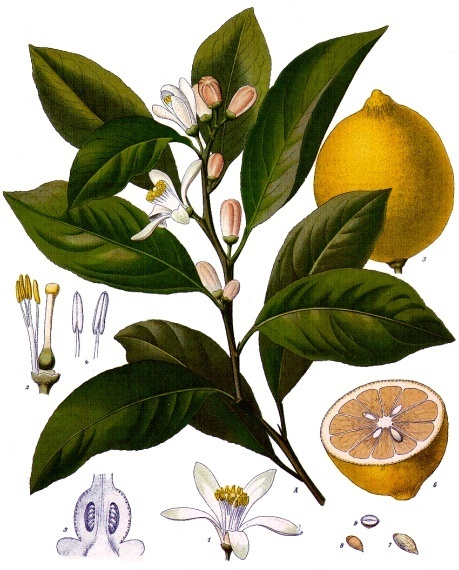 LemonCitrus × limon
-
 YuzuCitrus × junos
-
 Swatow OrangeCitrus × reticulata
-
 CitronCitrus medica
-
 Bitter OrangeCitrus × aurantium
Compare
Sources
Passages the profile rests on
- Eriostemon banksii is a shrub or small tree with hairy branchlets. Source passage: “Eriostemon banksii is a shrub or small tree that typically grows to a height of up to 6 m (20 ft) and has hairy branchlets.” — English Wikipedia
- The plant typically reaches a maximum height of 6 m. Source passage: “typically grows to a height of up to 6 m (20 ft)” — English Wikipedia
- Its leaves are egg-shaped to elliptic or broadly elliptic and thin. Source passage: “The leaves are egg-shaped to elliptic or broadly elliptic, 30–60 mm (1.2–2.4 in) long, 7–12 mm (0.28–0.47 in) wide, and thin.” — English Wikipedia
- Its leaves measure 30–60 mm in length and 7–12 mm in width. Source passage: “30–60 mm (1.2–2.4 in) long, 7–12 mm (0.28–0.47 in) wide” — English Wikipedia
- Its flowers are scattered, white, and have five petals and ten stamens. Source passage: “scattered white flowers with five petals and ten stamens.” — English Wikipedia
- Its flowers are few in number. Source passage: “The flowers are few in number” — English Wikipedia
- Its flower pedicels are 4–8 mm long. Source passage: “borne on a pedicel 4–8 mm (0.16–0.31 in) long” — English Wikipedia
- Its sepals are broadly egg-shaped, warty, and covered with silvery scaly hairs. Source passage: “with broadly egg-shaped, warty sepals 1.0–1.5 mm (0.039–0.059 in) long with silvery scaly hairs.” — English Wikipedia
- Its petals are white and elliptic, measuring about 7 mm long, and bear silvery star-shaped hairs. Source passage: “The petals are white, elliptic, about 7 mm (0.28 in) long and covered with silvery, star-shaped hairs.” — English Wikipedia
- Its sepals measure 1.0–1.5 mm in length. Source passage: “broadly egg-shaped, warty sepals 1.0–1.5 mm (0.039–0.059 in) long” — English Wikipedia
- Its petals are approximately 7 mm long. Source passage: “The petals are white, elliptic, about 7 mm (0.28 in) long” — English Wikipedia
- The species grows in forest on old sand dunes in near-coastal areas. Source passage: “This eriostemon grows in forest on old sand dunes in near-coastal areas” — English Wikipedia
- Flowering occurs mainly between April and September. Source passage: “Flowering mainly occurs from April to September.” — English Wikipedia
- The species has been reported in research examining the composition of its leaf essential oils. Source passage: “with a report on the composition of leaf essential oils in E. banksii and E. australasius s. str.” — pmc.ncbi.nlm.nih.gov
Data
- Catalogue of Life, 2026-10-16 XR cc by
- Global Biodiversity Information Facility CC BY 4.0
- Wikidata CC0
- GeoNames CC BY 4.0
- Within the Catalogue of Life, this name comes from Synonymic Checklists of the Vascular Plants of the World cc by
References
- A.Cunn. ex Endl. Enum. Pl. [Endlicher] 15 (1837). where the name was published
This species in other databases
Page built on 29 November 2026. See how the catalog is made and all sources and licences.
Cite this page
ScientificNames.org. (2026). Eriostemon banksii. Retrieved November 29, 2026, from https://scientificnames.org/species/eriostemon-banksii
“Eriostemon banksii.” ScientificNames.org, 2026, scientificnames.org/species/eriostemon-banksii. Accessed 29 Nov. 2026.
ScientificNames.org. “Eriostemon banksii.” Accessed November 29, 2026. https://scientificnames.org/species/eriostemon-banksii.
@misc{scientificnames_eriostemon_banksii,
  author = {{ScientificNames.org}},
  title = {Eriostemon banksii},
  year = {2026},
  url = {https://scientificnames.org/species/eriostemon-banksii},
  note = {Accessed 2026-11-29}
}