Species · Flowering plants
Bushy Yate Eucalyptus lehmannii
The scientific name of the Bushy Yate is Eucalyptus lehmannii. It is a species of flowering plant in the family Myrtaceae (myrtle family), order Myrtales.
- Scientific name
- Eucalyptus lehmannii (Schauer) Benth.
- Common name
- Bushy Yate
- Genus
- Eucalyptus
- Family
- Myrtaceae (Myrtle Family)
- Order
- Myrtales
- Class
- Magnoliopsida
- Red List category
- LC Least Concern
- Recorded in
- 4 countries
- Name status
- accepted in the Catalogue of Life

Overview
Bushy yate is a common name of Eucalyptus lehmannii, a flowering plant in the family Myrtaceae. The species is endemic to south-western Western Australia and occurs in southern coastal and subcoastal areas extending from east of Albany towards Israelite Bay, and in the Stirling Range. Its flower buds are fused together at their bases in each axillary cluster.
Written 26 November 2026 from the sources listed below. Each statement was checked against the passage it cites; statements that could not be supported were removed.
Appearance
Bushy yate is a small tree with an oval, spreading crown and dense foliage that can extend to the ground. It can also grow as a multi-trunked mallee with smooth bark that sheds in strips.[1][2]
Its bark ranges from whitish grey to grey-brown and orange-brown. Young plants initially have stems that are triangular in cross-section.[3][4]
Young leaves are alternate, oblong to elliptical or lance-shaped, and glossy green above with a dull blue-green lower surface. They measure 5–8 cm long and 1–3 cm wide.[5][6]
Adult leaves are alternate, with elliptical to oval-shaped blades and glossy light to mid-green surfaces. The blades measure approximately 4.5–9.5 cm long and 0.7–2.8 cm wide, and the petioles measure 0.1–1.5 cm long.[7][8][9]
The leaf oil glands are obscure or scattered.[10]
The inflorescences develop in the leaf axils on flattened stalks that curve downwards as the flowers open. The stalks measure 4–11 cm long.[11][12]
Each inflorescence may contain 11–19 or more flower buds, whose bases are joined together. The buds measure approximately 3.3–6.5 cm long and 0.5–1.0 cm wide at the base of the cap when ready to open.[13][14][15]
The species has erect, greenish-yellow stamens.[16]
Habitat
Bushy yate occurs in the Esperance Plains, Jarrah Forest, Mallee and Warren biogeographic regions of Western Australia.[17]
It grows in sandy soils over granite or quartzite, often with gravel, on rocky hills and coastal dunes.[18]
Behaviour
Eucalyptus lehmannii has been described as invasive in southern Africa.[19]
Reproduction and life cycle
Each axillary inflorescence may contain 11–19 or more flower buds. The bases of the buds in each inflorescence are joined together.[13][14]
Uses
Bushy yate is cultivated as an ornamental plant in Australia. It is used as a small screen, an individual specimen or a grove in ornamental plantings.[20][21]
The species is widely cultivated in Australia and the United States for its ornamental form and decorative flowers, buds and fruit. It has also been cultivated in Europe and South Africa.[22][23]
In the United States, the species has been described as suitable for screens and courtyard trees in locations as far north as San Francisco Bay.[24]
Similar species
Eucalyptus lehmannii has sometimes been classified together with Eucalyptus conferruminata. Eucalyptus conferruminata is distinguished by having a relatively short operculum.[25][26]
Classification of the Bushy Yate
| Kingdom | Plantae |
|---|---|
| Subkingdom | Pteridobiotina |
| Phylum | Tracheophyta |
| Class | Magnoliopsida |
| Order | Myrtales |
| Family | Myrtaceae (Myrtle Family) |
| Subfamily | Myrtoideae |
| Tribe | Eucalypteae |
| Genus | Eucalyptus (Gum) |
| Species | Eucalyptus lehmannii (Schauer) Benth. |
Where the Bushy Yate is found
Checklists and occurrence records place Eucalyptus lehmannii in 4 countries across Africa, North America and Oceania. GBIF holds 632 georeferenced records of it.
Countries where it is native or its origin is not stated
Countries where it has been introduced
Regions and cities with the most records
- Western Australia, Australia 455
- Victoria, Australia 61
- Geelong, Australia 12
- St Albans, Australia 11
- Melbourne, Australia 7
- Australian Capital Territory, Australia 6
- Canterbury, New Zealand 6
- Christchurch, New Zealand 6
- Torquay, Australia 5
- Western Cape, South Africa 4
- South Australia, Australia 3
- Tasmania, Australia 3
2 more countries have a few records outside this range
These countries hold a few records of Eucalyptus lehmannii but lie outside the range the checklists give for it. Such records are often zoo or garden specimens, museum material or vagrants, so the species is not counted as occurring there.
A number beside a place is its count of GBIF occurrence records. A place without a number comes from a checklist alone. Records show where a species has been observed or collected, which can include escapes and vagrants.
Common names
English
- Bushy Yate
- Bald Island Marlock
- Bush Yate
- Lehmann's Gum
- Lehmann's Mallee
- Spider Gum
Names in 2 other languages
- Afrikaans
- spinnekopbloekom
- Chinese
- 莍曼桉
Subspecies and varieties
- Eucalyptus lehmannii subsp. lehmannii (Broad-leaved Bushy Yate) subspecies
- Eucalyptus lehmannii subsp. parallela (Narrow-leaved Bushy Yate) subspecies
Related species
-
 Rainbow EucalyptusEucalyptus deglupta
-
 Southern Blue GumEucalyptus globulus
-
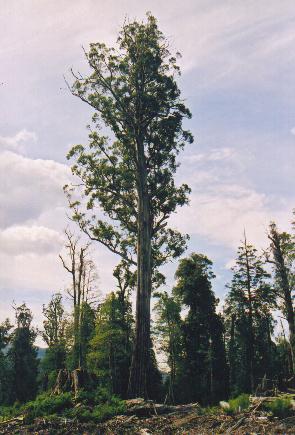 Mountain AshEucalyptus regnans
- River Red GumEucalyptus camaldulensis
-
 Argyle AppleEucalyptus cinerea
-
 Snow GumEucalyptus pauciflora
-
 JarrahEucalyptus marginata
-
 Cider GumEucalyptus gunnii
Compare
Questions and answers
What is the scientific name of the Bushy Yate?
The scientific name of the Bushy Yate is Eucalyptus lehmannii. Written with its author, the full name is Eucalyptus lehmannii (Schauer) Benth..
Which family does the Bushy Yate belong to?
Eucalyptus lehmannii belongs to the family Myrtaceae, in the order Myrtales and the class Magnoliopsida.
Where is the Bushy Yate found?
Checklists and occurrence records place Eucalyptus lehmannii in 4 countries, including Australia and New Zealand.
What is the conservation status of the Bushy Yate?
The IUCN Red List category recorded for Eucalyptus lehmannii is Least Concern (LC).
What other names does the Bushy Yate have?
Eucalyptus lehmannii is also known in English as Bald Island Marlock, Bush Yate, Lehmann's Gum, Lehmann's Mallee and Spider Gum.
Sources
Passages the profile rests on
- Eucalyptus lehmannii is a small tree with an oval, spreading crown and dense foliage that can extend to the ground. Source passage: “It is a small tree with an oval, spreading form and dense foliage which sometimes reaches to the ground.” — English Wikipedia
- The species can grow as a multi-trunked mallee with smooth bark that sheds in strips. Source passage: “Eucalyptus lehmannii is a sometimes multi-trunked mallee with smooth bark which is whitish grey to grey-brown and orange-brown and which sheds in strips.” — English Wikipedia
- Its bark ranges from whitish grey to grey-brown and orange-brown. Source passage: “smooth bark which is whitish grey to grey-brown and orange-brown” — English Wikipedia
- Young plants have initially triangular stems in cross-section. Source passage: “The stems of young plants are initially triangular in cross-section” — English Wikipedia
- Young leaves are alternate, oblong to elliptical or lance-shaped, and glossy green above with a dull blue-green lower surface. Source passage: “leaves that are alternate, oblong to elliptical or lance-shaped, 5–8 cm long and 1–3 cm wide, glossy green on the upper surface and dull blue-green below.” — English Wikipedia
- Young leaves measure 5–8 cm long and 1–3 cm wide. Source passage: “5–8 cm long and 1–3 cm wide” — English Wikipedia
- Adult leaves are alternate and have elliptical to oval-shaped blades with glossy light to mid-green surfaces. Source passage: “The adult leaves have a petiole 0.1–1.5 cm long and a blade elliptical to oval-shaped, about 4.5–9.5 cm long and 0.7–2.8 cm wide and both surfaces glossy light to mid-green.” — English Wikipedia
- Adult leaf blades measure approximately 4.5–9.5 cm long and 0.7–2.8 cm wide. Source passage: “about 4.5–9.5 cm long and 0.7–2.8 cm wide” — English Wikipedia
- Adult leaf petioles measure 0.1–1.5 cm long. Source passage: “The adult leaves have a petiole 0.1–1.5 cm long” — English Wikipedia
- The leaf oil glands are obscure or scattered. Source passage: “The oil glands in the leaves common to all eucalypts, are obscure or scattered.” — English Wikipedia
- The inflorescences develop in the leaf axils on flattened stalks that curve downwards as the flowers open. Source passage: “The inflorescences appear in the axils of the leaves, have a flattened stalk 4–11 cm which curves downwards as the flowers open.” — English Wikipedia
- Inflorescence stalks measure 4–11 cm long. Source passage: “have a flattened stalk 4–11 cm” — English Wikipedia
- Each inflorescence may contain 11–19 or more flower buds. Source passage: “There may be 11–19 or more buds in each inflorescence” — English Wikipedia
- The bases of the flower buds in each inflorescence are joined together. Source passage: “with their bases joined.” — English Wikipedia
- Flower buds measure approximately 3.3–6.5 cm long and 0.5–1.0 cm wide at the base of the cap when ready to open. Source passage: “By the time the bud opens, it is about 3.3–6.5 cm long, including the cap (strictly the operculum) and 0.5–1.0 cm wide at the base of the cap.” — English Wikipedia
- The species has erect, greenish-yellow stamens. Source passage: “The stamens are erect and greenish-yellow.” — English Wikipedia
- The species occurs in the Esperance Plains, Jarrah Forest, Mallee and Warren biogeographic regions of Western Australia. Source passage: “It occurs in the Esperance Plains, Jarrah Forest, Mallee and Warren biogeographic regions of Western Australia” — English Wikipedia
- The species grows in sandy soils over granite or quartzite, often with gravel, on rocky hills and coastal dunes. Source passage: “growing in sandy soils over granite or quartzite, often with gravel on rocky hills and coastal dunes.” — English Wikipedia
- Eucalyptus lehmannii has been described as invasive in southern Africa. Source passage: “Eucalyptus lehmannii, as well as some others of the genus including Eucalyptus cladocalyx, Eucalyptus globulus and Eucalyptus grandis have been described as invasive in southern Africa.” — English Wikipedia
- Bushy yate is cultivated as an ornamental plant in Australia. Source passage: “Bushy yate is a useful ornamental in Australia” — English Wikipedia
- The species is used as a small screen, an individual specimen or a grove in ornamental plantings. Source passage: “as a small screen, an individual specimen or as a grove.” — English Wikipedia
- The species is widely cultivated in Australia and the United States for its ornamental form and decorative flowers, buds and fruit. Source passage: “It is widely cultivated in Australia and the United States because of its ornamental shape and decorative flowers, buds and fruit.” — English Wikipedia
- The species has also been cultivated in Europe and South Africa. Source passage: “It has also been grown in other countries, including Europe and South Africa.” — English Wikipedia
- In the United States, the species has been described as suitable for screens and courtyard trees in locations as far north as San Francisco Bay. Source passage: “a useful screen or attractive courtyard tree for areas as far north as San Francisco Bay” — English Wikipedia
- Eucalyptus lehmannii has sometimes been classified together with Eucalyptus conferruminata. Source passage: “There is some confusion between the species E. lehmannii and E. conferruminata - some authors place this tree in E. conferruminata.” — English Wikipedia
- Eucalyptus conferruminata is distinguished from Eucalyptus lehmannii by having a relatively short operculum. Source passage: “E. conferruminata is said to have a relatively short operculum.” — English Wikipedia
Data
- Catalogue of Life, 2026-10-16 XR cc by
- Global Biodiversity Information Facility CC BY 4.0
- Wikidata CC0
- GeoNames CC BY 4.0
- Wikimedia Commons per image; credit shown with each image
- Within the Catalogue of Life, this name comes from Synonymic Checklists of the Vascular Plants of the World cc by
References
- (Schauer) Benth. where the name was published
This species in other databases
- Catalogue of Life 3BQ57
- Wikidata Q7212900
- iNaturalist 82773
- World Flora Online wfo-0000955219
- GRIN 15939
Page built on 28 November 2026. See how the catalog is made and all sources and licences.
Cite this page
ScientificNames.org. (2026). Eucalyptus lehmannii (Bushy Yate). Retrieved November 28, 2026, from https://scientificnames.org/species/eucalyptus-lehmannii
“Eucalyptus lehmannii (Bushy Yate).” ScientificNames.org, 2026, scientificnames.org/species/eucalyptus-lehmannii. Accessed 28 Nov. 2026.
ScientificNames.org. “Eucalyptus lehmannii (Bushy Yate).” Accessed November 28, 2026. https://scientificnames.org/species/eucalyptus-lehmannii.
@misc{scientificnames_eucalyptus_lehmannii_bushy_yate,
  author = {{ScientificNames.org}},
  title = {Eucalyptus lehmannii (Bushy Yate)},
  year = {2026},
  url = {https://scientificnames.org/species/eucalyptus-lehmannii},
  note = {Accessed 2026-11-28}
}