Species · Flowering plants
Moluccan Albizia Falcataria falcata
The scientific name of the Moluccan Albizia is Falcataria falcata. It is a species of flowering plant in the family Fabaceae (bean), order Fabales.
- Scientific name
- Falcataria falcata (L.) Greuter & R.Rankin
- Common name
- Moluccan Albizia
- Genus
- Falcataria
- Family
- Fabaceae (Bean)
- Order
- Fabales
- Class
- Magnoliopsida
- Red List category
- LC Least Concern
- Recorded in
- 37 countries
- Name status
- accepted in the Catalogue of Life

Overview
Falcataria falcata is a tall tree with a massive trunk, an open crown, light-coloured bark and twice-pinnately compound leaves with small leaflets.
Written 26 November 2026 from the sources listed below. Each statement was checked against the passage it cites; statements that could not be supported were removed.
Appearance
Moluccan albizia has twice-pinnately compound leaves with small leaflets. Its flowers are small, creamy white and faintly fragrant.[1][2]
The tree has a massive trunk and an open crown. Its bark is smooth and light-coloured or white.[3][4]
Its wood is light tan and has long fibres. Its mature fruits are pods that fall from the tree.[5][6]
The tree reaches approximately 30 metres in height in natural conditions. Recorded growth includes 16 metres in three years, 33 metres in nine years and 45 metres in seventeen years.[7][8][9][10]
Its wood density is 280 kilograms per cubic metre at 18% moisture content.[11]
Habitat
It is cultivated throughout humid tropical and subtropical regions worldwide, including South Asian and Southeast Asian countries.[12][13]
Behaviour
Caterpillars of the Hawaiian koa looper have been recorded defoliating Moluccan albizia in Hawaii. They complete their development on this tree without eating leaves of their native host, Acacia koa.[14][15]
Conservation
Moluccan albizia is considered invasive in Hawaii and American Samoa. It has become invasive in forests in Hawaii and New Caledonia.[16][17]
The species was assessed for the IUCN Red List in 2020 and is classified as Least Concern.[18][19]
Uses
Moluccan albizia is cultivated for timber in South and Southeast Asia. Its softwood is used to manufacture matchsticks, and its wood pulp is used in papermaking.[20][21][22]
Plywood and veneer-based products are increasingly important uses of the species.[23]
Similar species
Adenanthera falcata L. and Albizia falcata (L.) Backer are homotypic synonyms of Moluccan albizia. The species was initially classified in the genus Adenanthera under the name Adenanthera falcata L.[24][25][26]
Classification of the Moluccan Albizia
| Kingdom | Plantae |
|---|---|
| Subkingdom | Pteridobiotina |
| Phylum | Tracheophyta |
| Class | Magnoliopsida |
| Order | Fabales |
| Family | Fabaceae (Bean) |
| Genus | Falcataria (Peacocksplume) |
| Species | Falcataria falcata (L.) Greuter & R.Rankin |
Where the Moluccan Albizia is found
Checklists and occurrence records place Falcataria falcata in 37 countries across Africa, Asia, North America, Oceania and South America. GBIF holds 2,077 georeferenced records of it.
Countries where it is native or its origin is not stated
- Australia 5
- Indonesia 234
- Japan 7
- Macao 3
- Malaysia 47
- Micronesia 10
- Palau 5
- Papua New Guinea 314
- Philippines 29
- Singapore 64
- Solomon Islands 40
- Taiwan 75
Countries where it has been introduced
- Angola 1
- Bangladesh
- Cameroon 1
- China 11
- Cook Islands 13
- Fiji 4
- French Polynesia 75
- Guinea-Bissau
- Honduras
- India 7
- Jamaica
- Kenya 1
- Madagascar 7
- Mozambique 3
- New Caledonia 34
- Nigeria 3
- Niue
- Samoa 26
- Seychelles 391
- Sri Lanka 16
- Uganda 1
- United States 624
- Venezuela 14
- Wallis and Futuna 4
- Zimbabwe 8
Regions and cities with the most records
- Hawaii, United States 540
- Victoria, Seychelles 254
- Aliamanu / Salt Lakes / Foster Village, United States 210
- Kalihi Valley, United States 207
- Joint Base Pearl Harbor Hickam, United States 193
- Kaneohe, United States 193
- Honolulu, United States 188
- Makiki / Lower Punchbowl / Tantalus, United States 187
- Manoa, United States 187
- Waikīkī, United States 184
- Kailua, United States 183
- Pearl City, United States 183
- Kuliouou - Kalani Iki, United States 182
- Diamond Head / Kapahulu / Saint Louis Heights, United States 181
- Niu Valley, United States 175
- East Honolulu, United States 171
- Port Glaud, Seychelles 165
- ʻEwa Beach-Iroquois Point, United States 130
- La Digue and Inner Islands, Seychelles 97
- Hilo, United States 83
- Mililani Mauka / Launani Valley, United States 78
- Mililani Mauka, United States 75
- Mililani Town, United States 70
- Waipahu, United States 70
- Schofield-Wheeler, United States 63
- Wahiawā, United States 63
- Wahiawā-Whitmore, United States 63
- Ang Mo Kio New Town, Singapore 60
- Novena, Singapore 60
- Sembawang Estate, Singapore 60
- Sengkang New Town, Singapore 60
- Sungai Simpang, Singapore 60
- Woodlands, Singapore 60
- Yio Chu Kang, Singapore 60
- Yishun New Town, Singapore 60
- ‘Ewa Beach, United States 60
11 more countries have a few records outside this range
These countries hold a few records of Falcataria falcata but lie outside the range the checklists give for it. Such records are often zoo or garden specimens, museum material or vagrants, so the species is not counted as occurring there.
A number beside a place is its count of GBIF occurrence records. A place without a number comes from a checklist alone. Records show where a species has been observed or collected, which can include escapes and vagrants.
Common names
English
- Moluccan Albizia
- Molucca Albizia
Names in 7 other languages
- Chinese
- 南洋楹, 摩鹿加合歡, 摩鹿加合歡/麻六甲合歡/南洋楹/仁仁樹
- Hawaiian
- tamaligi
- Indonesian
- Jeungjing, Sengon
- Japanese
- モルッカネム
- Malay
- Batai
- Slovak
- falkatária kosákovitá
- pau
- Ukallrangebard
Synonyms
16 other scientific names have been used for this species and are now treated as synonyms of Falcataria falcata.
- Adenanthera falcata L.
- Adenanthera falcataria L.
- Adenanthera falcatoria L.
- Albizia eymae Fosberg
- Albizia falcata (L.) Backer
- Albizia falcataria (L.) Fosberg
- Albizia falcatoria (L.) Fosberg
- Albizia fulva C.T.White & W.D.Francis ex Lane-Poole
- Albizia moluccana Miq.
- Falcataria moluccana (Miq.) Barneby & J.W.Grimes
- Paraserianthes falcataria (L.) I.C.Nielsen
- Paraserianthes falcataria subsp. falcataria
- Paraserianthes falcataria subsp. fulva (C.T.White & W.D.Francis ex Lane-Poole) I.C.Nielsen
- Paraserianthes falcataria subsp. solomonensis I.C.Nielsen
- Paraserianthes falcatoria (L.) I.C.Nielsen
- Pithecellobium falcatum (L.) Kosterm.
Related species
-
 Acacia CedarFalcataria toona
- Falcataria pullenii
-
 PeanutArachis hypogaea
-
 LiquoriceGlycyrrhiza glabra
-
 TamarindTamarindus indica
-
 ChickpeaCicer arietinum
-
 SoybeanGlycine max
-
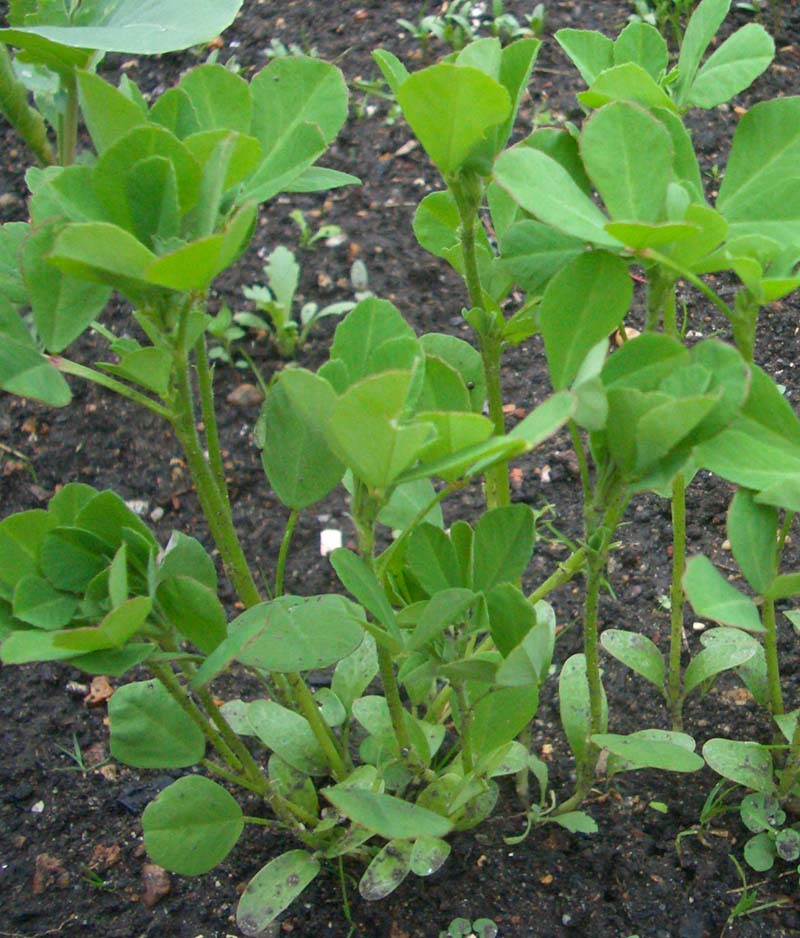 FenugreekTrigonella foenum-graecum
Compare
Questions and answers
What is the scientific name of the Moluccan Albizia?
The scientific name of the Moluccan Albizia is Falcataria falcata. Written with its author, the full name is Falcataria falcata (L.) Greuter & R.Rankin.
Which family does the Moluccan Albizia belong to?
Falcataria falcata belongs to the family Fabaceae, in the order Fabales and the class Magnoliopsida.
Where is the Moluccan Albizia found?
Checklists and occurrence records place Falcataria falcata in 37 countries, including Papua New Guinea, Indonesia, Taiwan, Singapore, Malaysia and Solomon Islands.
What is the conservation status of the Moluccan Albizia?
The IUCN Red List category recorded for Falcataria falcata is Least Concern (LC).
What other names does the Moluccan Albizia have?
Falcataria falcata is also known in English as Molucca Albizia.
Are albizia trees good for anything?
Moluccan albizia is cultivated for timber. Its softwood is used to manufacture matchsticks, its wood pulp is used in papermaking, and its wood is used for plywood and veneer-based products.[20][21][22][23]
Sources
Passages the profile rests on
- The species has twice-pinnately compound leaves with small leaflets. Source passage: “Leaves – twice pinnately compound with small leaflets” — English Wikipedia
- Its flowers are small, creamy white and faintly fragrant. Source passage: “Flowers – creamy white small flowers are faintly fragrant” — English Wikipedia
- Its bark is smooth and light-coloured or white. Source passage: “Bark – smooth, light or white bark.” — English Wikipedia
- The species has a massive trunk and an open crown. Source passage: “It reaches about 30 m (100 ft) tall in nature, and has a massive trunk and an open crown.” — English Wikipedia
- Its mature fruits are pods that fall from the tree. Source passage: “Fruits – pods that fall from the trees when mature.” — English Wikipedia
- Its wood is light tan and has long fibres. Source passage: “Wood – light tan with long fibres.” — English Wikipedia
- The tree reaches approximately 30 metres in height in natural conditions. Source passage: “It reaches about 30 m (100 ft) tall in nature” — English Wikipedia
- Recorded growth includes 16 metres in three years. Source passage: “It has been recorded growing 16 m (52 ft) in three years” — English Wikipedia
- Recorded growth includes 33 metres in nine years. Source passage: “33 m (108 ft) in nine years” — English Wikipedia
- Recorded growth includes 45 metres in seventeen years. Source passage: “45 m (148 ft) in seventeen years.” — English Wikipedia
- Its wood density is 280 kilograms per cubic metre at 18% moisture content. Source passage: “Wood density=280 kg / m3 (based on weight and volume at 18% moisture content)” — English Wikipedia
- The species is cultivated for timber in South Asian and Southeast Asian countries. Source passage: “It is cultivated for timber throughout South Asian and Southeast Asian countries.” — English Wikipedia
- The species is cultivated throughout humid tropical and subtropical regions worldwide. Source passage: “Falcataria falcata is cultivated throughout the wet tropical and subtropical regions of the world” — English Wikipedia
- Caterpillars of the Hawaiian koa looper have been recorded defoliating this tree in Hawaii. Source passage: “In Hawaii the caterpillars of the endemic Hawaiian koa looper (Scotorythra paludicola) have been found to defoliate Falcataria falcata” — English Wikipedia
- Hawaiian koa looper caterpillars complete their development on this tree without eating leaves of their native host, Acacia koa. Source passage: “complete their development on this invasive tree without the larvae eating the leaves of their native host Acacia koa.” — English Wikipedia
- The species is considered invasive in Hawaii and American Samoa. Source passage: “This tree is considered to be invasive in Hawaii, American Samoa” — English Wikipedia
- The species has become invasive in forests in Hawaii and New Caledonia. Source passage: “The tree has become invasive in forests in Hawaii and on other Pacific islands, like New Caledonia.” — English Wikipedia
- The species was assessed for the IUCN Red List in 2020. Source passage: “Moluccan albizia Falcataria falcata has most recently been assessed for The IUCN Red List of Threatened Species in 2020.” — iucnredlist.org
- The species is classified as Least Concern on the IUCN Red List. Source passage: “Falcataria falcata is listed as Least ...” — iucnredlist.org
- The species is cultivated for timber in South and Southeast Asia. Source passage: “It is cultivated for timber throughout South Asian and Southeast Asian countries.” — English Wikipedia
- Its softwood is used to manufacture matchsticks. Source passage: “Falcataria falcata softwood is used to make match-sticks” — English Wikipedia
- Its wood pulp is used in papermaking. Source passage: “The pulp is used for paper-making.” — English Wikipedia
- Plywood and veneer-based products are increasingly important uses of the species. Source passage: “Plywood production and veneer based products have increasingly been an important use for these trees.” — English Wikipedia
- The species was initially classified in the genus Adenanthera under the name Adenanthera falcata L. Source passage: “L'espèce a été initialement classée dans le genre Adenanthera sous le basionyme Adenanthera falcata L.” — fr.wikipedia.org
- Adenanthera falcata L. is a homotypic synonym of the species. Source passage: “synonymes homotypiques : Adenanthera falcata L.” — fr.wikipedia.org
- Albizia falcata (L.) Backer is a homotypic synonym of the species. Source passage: “Albizia falcata (L.) Backer” — fr.wikipedia.org
Data
- Catalogue of Life, 2026-10-16 XR cc by
- Global Biodiversity Information Facility CC BY 4.0
- Wikidata CC0
- GeoNames CC BY 4.0
- iNaturalist per image; credit shown with each image
- Within the Catalogue of Life, this name comes from The World Checklist of Vascular Plants (WCVP): Fabaceae cc by
References
- Espermat. Cuba Invent. Prelim.: XII (2016) where the name was published
This species in other databases
Page built on 28 November 2026. See how the catalog is made and all sources and licences.
Cite this page
ScientificNames.org. (2026). Falcataria falcata (Moluccan Albizia). Retrieved November 28, 2026, from https://scientificnames.org/species/falcataria-falcata
“Falcataria falcata (Moluccan Albizia).” ScientificNames.org, 2026, scientificnames.org/species/falcataria-falcata. Accessed 28 Nov. 2026.
ScientificNames.org. “Falcataria falcata (Moluccan Albizia).” Accessed November 28, 2026. https://scientificnames.org/species/falcataria-falcata.
@misc{scientificnames_falcataria_falcata_moluccan_albizia,
  author = {{ScientificNames.org}},
  title = {Falcataria falcata (Moluccan Albizia)},
  year = {2026},
  url = {https://scientificnames.org/species/falcataria-falcata},
  note = {Accessed 2026-11-28}
}