Species · Birds
Australian Hobby Falco longipennis
The scientific name of the Australian Hobby is Falco longipennis. It is a species of bird in the family Falconidae (falcons), order Falconiformes. The name dates from 1838.
- Scientific name
- Falco longipennis Swainson, 1838
- Common name
- Australian Hobby
- Genus
- Falco
- Family
- Falconidae (Falcons)
- Order
- Falconiformes
- Class
- Aves
- Red List category
- LC Least Concern
- Recorded in
- 4 countries
- Name status
- accepted in the Catalogue of Life

Overview
Falco longipennis occurs throughout mainland Australia, on offshore islands including Lord Howe Island, and in a restricted range in Tasmania. It is a relatively slender, long-winged falcon with a black cap and mask, and captures airborne prey, mainly birds.
Written 26 November 2026 from the sources listed below. Each statement was checked against the passage it cites; statements that could not be supported were removed.
Appearance
The Australian Hobby is relatively slender and long-winged compared with other falcons. Its plumage is darker in humid environments and lighter in dry environments.[1][2]
It generally has a black cap and mask, a whitish forehead and half-collar, and blue-grey or rufous underparts with darker streaking. Adults have a pale yellowish-grey cere, pale blue eye ring, brown eyes and dull yellow feet.[3][4]
Adult females measure approximately 34–35.5 cm in length, while adult males generally measure approximately 30–32 cm. The wingspan is approximately 66–87 cm.[5][6][7]
Habitat
The Australian Hobby occupies open woodland, watercourses and vegetated urban areas. It is rarely recorded around cliffs or escarpments.[8][9]
Diet
The Australian Hobby captures airborne prey, mainly birds. Its prey includes European Starlings, House Sparrows, Crimson Rosellas and Silvereyes.[10][11][12][13][14]
Insectivorous bats also form part of its diet. It eats beetles, cicadas, crickets and grasshoppers.[15][16]
Behaviour
The Australian Hobby is a solitary and aggressive falcon. When hovering, it uses rapid, flickering wingbeats and fans its tail.[17][18]
Its flight is often low, fast and zigzagging over or between vegetation and open ground. It hunts during daylight, at dusk and sometimes at night using artificial light.[19][20]
It can capture prey in mid-air, attack directly from a perch or hunt through fast contour flight above or between tree canopies. It attacks fleeing birds through a succession of short, shallow stoops.[21][22]
Australian Hobbies have been observed soaring and circling to defend their territories against other birds of prey.[23]
Reproduction and life cycle
The Australian Hobby usually nests between August and January. It usually commandeers an existing stick nest built by another large raptor.[24][25]
The female lays three to four heavily blotched eggs. Incubation takes approximately 35 days, and successful broods usually contain two to three young.[26][27][28]
Both male and female Australian Hobbies participate in brooding. After hatching, the female takes responsibility for feeding nestlings, while the male increases his hunting rate early in the nestling period to supplement her.[29][30][31]
Australian Hobby fledglings can remain dependent on their parents for up to three months.[32]
Conservation
DDT exposure was associated with reduced eggshell thickness in the Australian Hobby. DDT-associated eggshell thinning caused some local population declines through egg breakage during incubation but did not result in widespread population decline.[33][34]
The Australian Hobby is susceptible to columbid herpesvirus-1 infection, which can cause death through extensive splenic and hepatic necrosis. Consumption of infected rock pigeons is identified as a frequent suspected source of infection.[35][36][37]
Classification of the Australian Hobby
| Kingdom | Animalia |
|---|---|
| Phylum | Chordata |
| Subphylum | Vertebrata |
| Infraphylum | Gnathostomata |
| Parvphylum | Osteichthyes |
| Megaclass | Tetrapoda |
| Class | Aves (Bird) |
| Order | Falconiformes (Falcons) |
| Family | Falconidae (Falcons) |
| Subfamily | Falconinae |
| Genus | Falco (Falcons) |
| Species | Falco longipennis Swainson, 1838 |
Where the Australian Hobby is found
Checklists and occurrence records place Falco longipennis in 4 countries across Asia and Oceania. GBIF holds 123,914 georeferenced records of it.
Countries
Regions and cities with the most records
- New South Wales, Australia 30,689
- Victoria, Australia 30,431
- Western Australia, Australia 18,048
- Queensland, Australia 17,911
- South Australia, Australia 8,617
- Northern Territory, Australia 6,415
- Australian Capital Territory, Australia 6,254
- Canberra, Australia 6,173
- Melbourne, Australia 5,810
- Perth, Australia 5,806
- Tuggeranong, Australia 5,064
- Balwyn North, Australia 4,935
- Burwood, Australia 4,771
- St Albans, Australia 4,315
- Geelong, Australia 4,295
- Torquay, Australia 2,123
- Brisbane, Australia 2,113
- Frankston East, Australia 1,990
- Adelaide, Australia 1,826
- Adelaide Hills, Australia 1,716
- Newcastle, Australia 1,710
- Tasmania, Australia 1,658
- Maitland, Australia 1,636
- Kwinana, Australia 1,514
- Townsville, Australia 1,514
- Palmerston, Australia 1,356
- Logan City, Australia 1,329
- Darwin, Australia 1,316
- Parramatta, Australia 1,025
- Capalaba, Australia 1,014
- Sydney, Australia 935
- Liverpool, Australia 822
- Narangba, Australia 761
- Wollongong, Australia 759
- Alice Springs, Australia 640
- Hornsby, Australia 587
Range as the checklists state it
Southern Asia
Australia
A number beside a place is its count of GBIF occurrence records. A place without a number comes from a checklist alone. Records show where a species has been observed or collected, which can include escapes and vagrants.
Common names
English
- Australian Hobby
- Australian Hobby Or Little Falcon
Names in 28 other languages
- Arabic
- شاهين أسترالي
- Catalan
- falcó mostatxut australià
- Chinese
- 姬隼
- Croatian
- australski sokol
- Czech
- ostříž australský
- Danish
- Australsk Lærkefalk
- Dutch
- Australische Boomvalk
- Esperanto
- longflugila falko
- Estonian
- austraalia lõopistrik
- Finnish
- australiannuolihaukka
- French
- Petit Faucon
- German
- Australbaumfalke, Australischer Baumfalke
- Greek
- Αυστραλιανό Δενδρογέρακο
- Hungarian
- ausztrál kabasólyom
- Indonesian
- Alap-alap australia
- Italian
- Lodolaio australiano
- Japanese
- オーストラリアチゴハヤブサ
- Lithuanian
- australinis sketsakalis
- Norwegian
- eukalyptusfalk
- Polish
- sokół australijski
- Portuguese
- ógea-australiana
- Russian
- Австралийский чеглок
- Serbian
- Australijski lastavičar
- Slovak
- sokol dlhokrídly
- Spanish
- Alcotán australiano, Halcón Pequeño
- Swedish
- australisk lärkfalk
- Turkish
- Avustralya Delice Doğanı, Küçük doğan
- Ukrainian
- підсоколик австралійський
Subspecies and varieties
- Falco longipennis hanieli (Sunda Australian Hobby) subspecies
- Falco longipennis longipennis (Southern Australian Hobby) subspecies
- Falco longipennis murchisonianus (Inland Australian Hobby) subspecies
Related species
-
 Peregrine FalconFalco peregrinus
-
 Common KestrelFalco tinnunculus
-
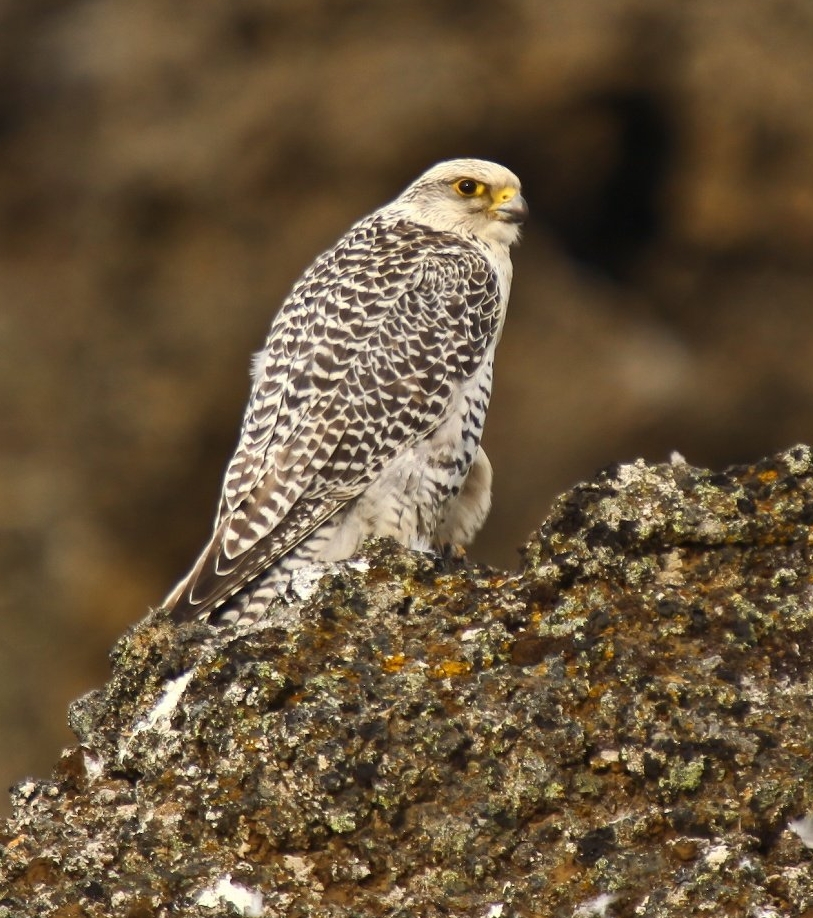 GyrfalconFalco rusticolus
-
 MerlinFalco columbarius
-
 American KestrelFalco sparverius
-
 Saker FalconFalco cherrug
-
 Eurasian HobbyFalco subbuteo
-
 Amur FalconFalco amurensis
Compare
Questions and answers
What is the scientific name of the Australian Hobby?
The scientific name of the Australian Hobby is Falco longipennis. Written with its author, the full name is Falco longipennis Swainson, 1838.
Which family does the Australian Hobby belong to?
Falco longipennis belongs to the family Falconidae, in the order Falconiformes and the class Aves.
Where is the Australian Hobby found?
Checklists and occurrence records place Falco longipennis in 4 countries: Australia, Papua New Guinea, Indonesia and Timor Leste.
What is the conservation status of the Australian Hobby?
The IUCN Red List category recorded for Falco longipennis is Least Concern (LC).
What other names does the Australian Hobby have?
Falco longipennis is also known in English as Australian Hobby Or Little Falcon.
Sources
Passages the profile rests on
- The Australian Hobby is relatively slender and long-winged compared with other falcons. Source passage: “Smaller than other falcons, the Australian hobby is relatively slender and long winged.” — English Wikipedia
- Its plumage is darker in humid environments and lighter in dry environments. Source passage: “with a darker form in humid areas and a lighter form in drier environments.” — English Wikipedia
- The Australian Hobby generally has a black cap and mask, a whitish forehead and half-collar, and blue-grey or rufous underparts with darker streaking. Source passage: “Generally the hobby displays a black cap and mask with a whitish forehead and half-collar. Underparts can be blue-grey or rufous and streaked darker.” — English Wikipedia
- Adult Australian Hobbies have a pale yellowish-grey cere, pale blue eye ring, brown eyes and dull yellow feet. Source passage: “The cere in adults is a pale yellowish grey, the eye ring is pale blue, the eyes are brown and the feet are dull yellow.” — English Wikipedia
- Adult females measure approximately 34–35.5 cm in length. Source passage: “Females are larger in size between 34 and 35.5 cm” — English Wikipedia
- Adult males generally measure approximately 30–32 cm in length. Source passage: “males are generally between 30 and 32 cm in length” — English Wikipedia
- The Australian Hobby has a wingspan of approximately 66–87 cm. Source passage: “with a wing span between 66 and 87 cm.” — English Wikipedia
- The Australian Hobby occupies open woodland, watercourses and vegetated urban areas. Source passage: “Hobbies frequent most open habitats including open woodland, water courses and vegetated urban areas” — English Wikipedia
- The species is rarely recorded around cliffs or escarpments. Source passage: “but are rarely recorded around cliffs or escarpments.” — English Wikipedia
- The Australian Hobby preys on European Starlings. Source passage: “the European starling (Sturnus vulgaris)” — English Wikipedia
- The Australian Hobby preys on House Sparrows. Source passage: “house sparrow (Passer domesticus)” — English Wikipedia
- The Australian Hobby preys on Crimson Rosellas. Source passage: “crimson rosella (Platycercus elegans)” — English Wikipedia
- The Australian Hobby preys on Silvereyes. Source passage: “silvereye (Zosterops lateralis)” — English Wikipedia
- The Australian Hobby captures airborne prey, mainly birds. Source passage: “Captures airborne prey, mainly birds.” — ebird.org
- Insectivorous bats form part of the Australian Hobby's diet. Source passage: “Insectivorous bats and insects” — English Wikipedia
- The Australian Hobby eats beetles, cicadas, crickets and grasshoppers. Source passage: “including beetles, cicadas, crickets and grasshoppers also form part of the hobby's diet.” — English Wikipedia
- The Australian Hobby is a solitary and aggressive falcon. Source passage: “The hobby is a solitary and aggressive falcon” — English Wikipedia
- The Australian Hobby uses rapid, flickering wingbeats and fans its tail when hovering. Source passage: “using rapid flickering wing beats, with tail fanned when hovering.” — English Wikipedia
- Its flight is often low, fast and zigzagging over or between vegetation and open ground. Source passage: “Its flight is often characterised as low and fast, zig-zagging over or between vegetation and open ground.” — English Wikipedia
- The Australian Hobby hunts during daylight, at dusk and sometimes at night using artificial light. Source passage: “often hunts at dusk, diurnally and sometimes nocturnally by artificial light.” — English Wikipedia
- The Australian Hobby can capture prey in mid-air, attack directly from a perch or hunt through fast contour flight above or between tree canopies. Source passage: “catching their prey in mid air, by direct attack from a perch or in fast contour-flying above or between tree canopies.” — English Wikipedia
- The Australian Hobby attacks fleeing birds through a succession of short, shallow stoops. Source passage: “attacks fleeing birds in a series of short shallow stoops.” — English Wikipedia
- Australian Hobbies have been observed soaring and circling to defend their territories against other birds of prey. Source passage: “hobbies have been observed soaring and circling to ward off other birds of prey” — English Wikipedia
- The Australian Hobby usually nests between August and January. Source passage: “Nesting usually occurs any time between August and January” — English Wikipedia
- The Australian Hobby usually commandeers an existing stick nest built by another large raptor. Source passage: “where an old stick nest of another large raptor is commandeered.” — English Wikipedia
- The female lays three to four heavily blotched eggs. Source passage: “Three to four heavily blotched eggs are laid” — English Wikipedia
- Incubation of Australian Hobby eggs takes approximately 35 days. Source passage: “incubation taking about 35 days.” — English Wikipedia
- Successful Australian Hobby broods usually contain two to three young. Source passage: “Successful broods usually comprise two to three young.” — English Wikipedia
- Both male and female Australian Hobbies participate in brooding. Source passage: “brooding is shared by both male and female hobbies.” — English Wikipedia
- Female Australian Hobbies take responsibility for feeding nestlings after hatching. Source passage: “feeding of the nestlings after hatching becomes the responsibility of the female.” — English Wikipedia
- Male Australian Hobbies increase their hunting rate early in the nestling period to supplement the female. Source passage: “Early on in the nestling period the male hunting rate increases to supplement the female” — English Wikipedia
- Australian Hobby fledglings can remain dependent on their parents for up to three months. Source passage: “The fledglings remain dependent for up to three months” — English Wikipedia
- DDT exposure was associated with reduced eggshell thickness in the Australian Hobby. Source passage: “egg shell thickness of some species of falcon, including the Australian hobby, was significantly reduced.” — English Wikipedia
- DDT-associated eggshell thinning caused some local population declines through egg breakage during incubation but did not result in widespread population decline in the Australian Hobby. Source passage: “This led to some decline in local populations through egg breakage during incubation but did not eventuate in widespread population decline for the Australian hobby.” — English Wikipedia
- The Australian Hobby is susceptible to columbid herpesvirus-1 infection. Source passage: “Hobbies are susceptible to the columbid herpesvirus-1 (CoHV-1) infection” — English Wikipedia
- Columbid herpesvirus-1 infection can cause death through extensive splenic and hepatic necrosis in the Australian Hobby. Source passage: “which causes death by massive splenic and hepatic necrosis.” — English Wikipedia
- Consumption of infected rock pigeons is identified as a frequent suspected source of columbid herpesvirus-1 infection in the Australian Hobby. Source passage: “The cause of infection is often attributed to the consumption of rock pigeons (Columbia livia) which carry the disease.” — English Wikipedia
Data
- Catalogue of Life, 2026-10-16 XR cc by
- Global Biodiversity Information Facility CC BY 4.0
- Wikidata CC0
- GeoNames CC BY 4.0
- Wikimedia Commons per image; credit shown with each image
- Within the Catalogue of Life, this name comes from The Integrated Taxonomic Information System cc0
References
- Mayr, Ernst, and G. William Cottrell, eds. (1979). Check-List of Birds of the World, Vol. 1, Second Edition.
- Dickinson, Edward C., ed. (2003). The Howard and Moore Complete Checklist of the Birds of the World, 3rd Edition.
- Gill, Frank, & and Minturn Wright. (2006). Birds of the World: Recommended English Names.
- Dickinson, E. C., and J. V. Remsen Jr., eds. (2013). The Howard and Moore Complete Checklist of the Birds of the World, 4th Edition, Vol. 1 Non-Passerines.
This species in other databases
Page built on 29 November 2026. See how the catalog is made and all sources and licences.
Cite this page
ScientificNames.org. (2026). Falco longipennis (Australian Hobby). Retrieved November 29, 2026, from https://scientificnames.org/species/falco-longipennis
“Falco longipennis (Australian Hobby).” ScientificNames.org, 2026, scientificnames.org/species/falco-longipennis. Accessed 29 Nov. 2026.
ScientificNames.org. “Falco longipennis (Australian Hobby).” Accessed November 29, 2026. https://scientificnames.org/species/falco-longipennis.
@misc{scientificnames_falco_longipennis_australian_hobby,
  author = {{ScientificNames.org}},
  title = {Falco longipennis (Australian Hobby)},
  year = {2026},
  url = {https://scientificnames.org/species/falco-longipennis},
  note = {Accessed 2026-11-29}
}