Species · Birds
Spotted Kestrel Falco moluccensis
The scientific name of the Spotted Kestrel is Falco moluccensis. It is a species of bird in the family Falconidae (falcons), order Falconiformes. The name dates from 1850.
- Scientific name
- Falco moluccensis (Bonaparte, 1850)
- Common name
- Spotted Kestrel
- Genus
- Falco
- Family
- Falconidae (Falcons)
- Order
- Falconiformes
- Class
- Aves
- Red List category
- LC Least Concern
- Recorded in
- 4 countries
- Name status
- accepted in the Catalogue of Life

Overview
Falco moluccensis occurs throughout Indonesia and Timor-Leste and is distributed across Wallacea and Java. It is a heavily marked, reddish-brown falcon with grey tails, white tips and dark banding that varies between adults and juveniles.
Written 26 November 2026 from the sources listed below. Each statement was checked against the passage it cites; statements that could not be supported were removed.
Conservation
The Spotted Kestrel is classified as Least Concern on the IUCN Red List. Its population trend is increasing, and its most recent assessment was in 2024.[1][2][3][4]
Similar species
The Spotted Kestrel is thought to be closely related to the Nankeen Kestrel. Both species are classified as members of the Falco tinnunculus group.[5][6]
Appearance
The Spotted Kestrel is a heavily marked, reddish-brown falcon. It measures between 26 and 32 cm from head to tail, has a wingspan of 59–71 cm and an average body weight of 162 g.[7][8][9][10]
Sexual differences in size and plumage are less pronounced than in the Common Kestrel. Adult males have grey tails with one broad subterminal band and white tips, while females have grey tails with white tips and nine dark bands.[11][12][13]
Juveniles resemble females but are darker and more heavily marked.[14]
Habitat
The Spotted Kestrel inhabits grasslands containing scattered trees and lightly wooded cultivated areas. It also occurs along the edges of primary and tall secondary forests.[15][16][17]
It occasionally enters forests along logging roads and sometimes occupies clearings within forested areas. It has also been recorded in areas of human habitation.[18][19][20]
The species is considered likely to have small habitat ranges.[21]
Diet
The presumed diet of the Spotted Kestrel includes small mammals and birds, particularly waterfowl and doves.[22][23]
Its feeding behaviour is not well documented.[24]
Behaviour
The Spotted Kestrel moves around during wet and dry seasons. It is considered more sedentary than the Common Kestrel.[25][26]
Reproduction and life cycle
Pre-breeding behaviour has been observed in June and July during the dry season. Breeding was observed in August on one occasion and has also been observed in December and January during the wet season.[27][28][29]
The species may breed during both wet and dry seasons, although further information is needed.[30]
The Spotted Kestrel uses human-made structures, abandoned nests and cliff sides as nesting sites. In Indonesia, nesting sites have included the peaked roofs of traditional houses and the crowns of palm trees.[31][32][33][34]
Nests are usually occupied from March through September or October during the mating season. The species does not construct its own nest but lays eggs in abandoned nests made by other raptors or corvids.[35][36]
The species' eggs resemble those of the Common Kestrel and have a colour and shape similar to those of the Oriental Hobby.[37][38]
Classification of the Spotted Kestrel
| Kingdom | Animalia |
|---|---|
| Phylum | Chordata |
| Subphylum | Vertebrata |
| Infraphylum | Gnathostomata |
| Parvphylum | Osteichthyes |
| Megaclass | Tetrapoda |
| Class | Aves (Bird) |
| Order | Falconiformes (Falcons) |
| Family | Falconidae (Falcons) |
| Subfamily | Falconinae |
| Genus | Falco (Falcons) |
| Species | Falco moluccensis (Bonaparte, 1850) |
Where the Spotted Kestrel is found
Checklists and occurrence records place Falco moluccensis in 4 countries across Asia and Oceania. GBIF holds 4,223 georeferenced records of it.
Countries
Regions and cities with the most records
- Maluku, Indonesia 314
- Caringin, Indonesia 175
- Labuan Bajo, Indonesia 139
- Cianjur, Indonesia 134
- Manado, Indonesia 98
- Airmadidi, Indonesia 92
- Bali, Indonesia 89
- Sukabumi, Indonesia 86
- Waingapu, Indonesia 81
- Aileu, Timor Leste 75
- Ciputat, Indonesia 65
- Maros, Indonesia 62
- Ruteng, Indonesia 60
- Tomohon, Indonesia 59
- Jakarta, Indonesia 53
- Tondano, Indonesia 52
- Ternate, Indonesia 50
- Bitung, Indonesia 48
- South Tangerang, Indonesia 48
- Wongsorejo, Indonesia 48
- Dili, Timor Leste 47
- Kotamobagu, Indonesia 47
- Yogyakarta, Indonesia 46
- Lautém, Timor Leste 43
- Dili Municipality, Timor Leste 42
- Soreang, Indonesia 41
- Banjar, Indonesia 39
- Leuwiliang, Indonesia 39
- Tangerang, Indonesia 39
- Teluknaga, Indonesia 38
- Sofifi, Indonesia 36
- Jogonalan, Indonesia 35
- Kebonarun, Indonesia 35
- Utan, Indonesia 35
- Candi Prambanan, Indonesia 32
- Cimahi, Indonesia 30
Range as the checklists state it
Southern Asia
Australia
A number beside a place is its count of GBIF occurrence records. A place without a number comes from a checklist alone. Records show where a species has been observed or collected, which can include escapes and vagrants.
Common names
English
- Spotted Kestrel
Names in 28 other languages
- Arabic
- عوسق منقط
- Catalan
- xoriguer de les Moluques
- Chinese
- 斑隼
- Croatian
- indonezijska vjetruša
- Czech
- poštolka molucká
- Danish
- Moluk Tårnfalk
- Dutch
- Indische Torenvalk, Molukkentorenvalk, Molukse Torenvalk
- Esperanto
- moluka falko
- Estonian
- sunda tuuletallaja
- Finnish
- sundantuulihaukka
- French
- Crécerelle des Moluques, Faucon des Moluques
- German
- Molukken-Falke, Molukkenfalke
- Hungarian
- szunda vércse
- Indonesian
- Alap-alap sapi
- Italian
- Gheppio macchiato
- Japanese
- モルッカチョウゲンボウ
- Lithuanian
- molukinis pelėsakalis
- Norwegian
- indonesiafalk
- Polish
- pustułka plamista
- Portuguese
- francelho-pintado, peneireiro-das-molucas
- Russian
- Молуккская пустельга
- Serbian
- Molučka vetruška
- Slovak
- sokol škvrnitý
- Spanish
- Cernícalo moluqueño, Cérnicalo de Las Molucas
- Swedish
- moluckfalk
- Turkish
- Benekli kerkenez, Maluku Kerkenezi
- Ukrainian
- боривітер молуцький
- Welsh
- cudyll coch Molwcaidd
Subspecies and varieties
- Falco moluccensis microbalius subspecies
- Falco moluccensis moluccensis subspecies
Related species
-
 Peregrine FalconFalco peregrinus
-
 Common KestrelFalco tinnunculus
-
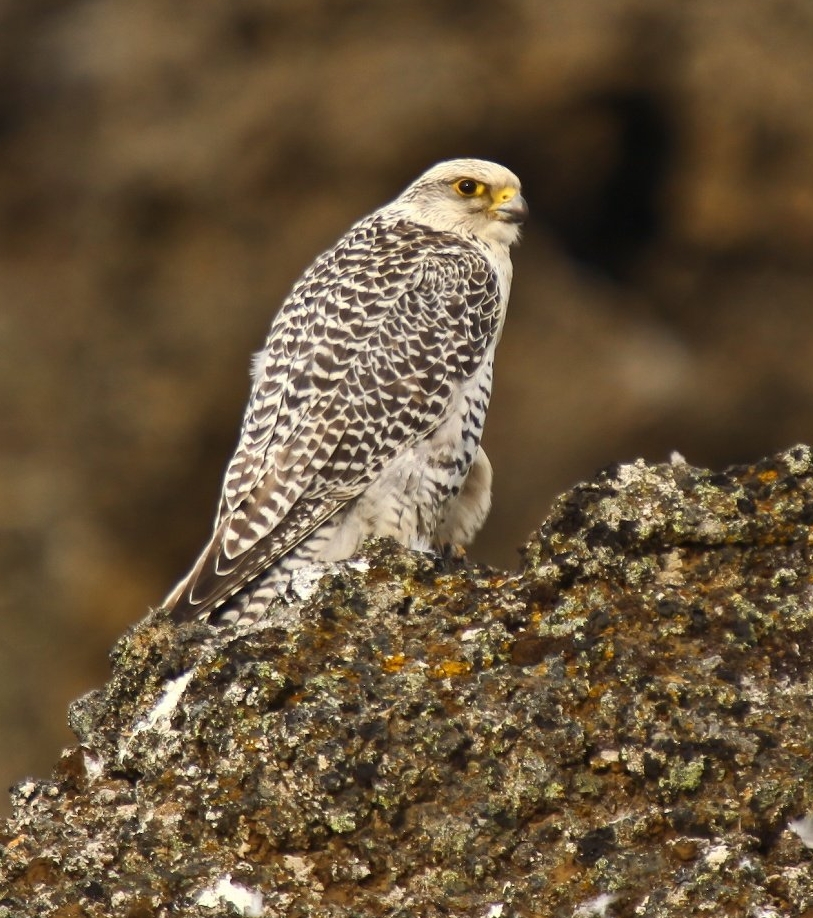 GyrfalconFalco rusticolus
-
 MerlinFalco columbarius
-
 American KestrelFalco sparverius
-
 Saker FalconFalco cherrug
-
 Eurasian HobbyFalco subbuteo
-
 Amur FalconFalco amurensis
Compare
Questions and answers
What is the scientific name of the Spotted Kestrel?
The scientific name of the Spotted Kestrel is Falco moluccensis. Written with its author, the full name is Falco moluccensis (Bonaparte, 1850).
Which family does the Spotted Kestrel belong to?
Falco moluccensis belongs to the family Falconidae, in the order Falconiformes and the class Aves.
Where is the Spotted Kestrel found?
Checklists and occurrence records place Falco moluccensis in 4 countries: Indonesia, Timor Leste, Philippines and Australia.
What is the conservation status of the Spotted Kestrel?
The IUCN Red List category recorded for Falco moluccensis is Least Concern (LC).
Is a kestrel a falcon or hawk?
The Spotted Kestrel is described as a falcon and belongs to the family Falconidae.[10]
What are the different types of Kestrels?
The Spotted Kestrel is thought to be closely related to the Nankeen Kestrel. Both belong to the Falco tinnunculus group.[5][6]
Sources
Passages the profile rests on
- The Spotted Kestrel is classified as Least Concern on the IUCN Red List. Source passage: “Spotted Kestrel Falco moluccensis LC” — ebird.org
- The Spotted Kestrel has an increasing population trend. Source passage: “Population trend Increasing” — datazone.birdlife.org
- The species was most recently assessed for the IUCN Red List in 2024. Source passage: “has most recently been assessed for The IUCN Red List of Threatened Species in 2024.” — iucnredlist.org
- The Spotted Kestrel is listed as Least Concern by the IUCN Red List. Source passage: “Falco moluccensis is listed as Least ...” — iucnredlist.org
- The Spotted Kestrel is thought to be closely related to the Nankeen Kestrel. Source passage: “it is thought to be closely related to the nankeen kestrel (Falco cenchroides).” — English Wikipedia
- The Spotted Kestrel and Nankeen Kestrel are both classified as members of the Falco tinnunculus group. Source passage: “Both species are considered members of the Falco tinnunculus group.” — English Wikipedia
- The Spotted Kestrel measures between 26 and 32 cm from head to tail. Source passage: “Spotted kestrels measure 26–32 cm (10–12.5 in) from head to tail” — English Wikipedia
- The species has a wingspan of 59–71 cm. Source passage: “with a wingspan of 59–71 cm (23–28 in).” — English Wikipedia
- The average body weight of the Spotted Kestrel is 162 g. Source passage: “On average, spotted kestrels weigh 162 g (5.7 oz).” — English Wikipedia
- The Spotted Kestrel is described as a heavily marked, reddish-brown falcon. Source passage: “Heavily-marked reddish-brown falcon, Falconidae Spotted Kestrel Falco moluccensis LC” — ebird.org
- Sexual differences in size and plumage are less pronounced in the Spotted Kestrel than in the Common Kestrel. Source passage: “The sexual dimorphism in size and plumage is less pronounced than that of the common kestrel.” — English Wikipedia
- Adult males have grey tails with one broad subterminal band and white tips. Source passage: “Males have grey tails with one broad subterminal band with white tips.” — English Wikipedia
- Females have grey tails with white tips and nine dark bands. Source passage: “Females also have grey tails with white tips, although they have 9 dark bands.” — English Wikipedia
- Juveniles resemble females but are darker and more heavily marked. Source passage: “Juveniles are very similar to females, but they appear more darker and heavily marked.” — English Wikipedia
- The Spotted Kestrel inhabits grasslands containing scattered trees. Source passage: “inhabits grasslands with scattered trees” — English Wikipedia
- The species occupies lightly wooded cultivated areas. Source passage: “lightly wooded cultivation” — English Wikipedia
- The species occurs along the edges of primary and tall secondary forests. Source passage: “the edges of primary and tall secondary forest.” — English Wikipedia
- The Spotted Kestrel occasionally enters forests along logging roads. Source passage: “Along logging roads, it occasionally penetrates forests” — English Wikipedia
- The species sometimes occupies clearings within forested areas. Source passage: “sometimes inhabits clearings within forested areas.” — English Wikipedia
- The Spotted Kestrel has also been recorded in areas of human habitation. Source passage: “It has also been known to live in areas of human habitation.” — English Wikipedia
- The species is considered likely to have small habitat ranges. Source passage: “It is likely they have small habitat ranges.” — English Wikipedia
- The Spotted Kestrel's presumed diet includes small mammals. Source passage: “it is assumed spotted kestrel feeds primarily on small mammals” — English Wikipedia
- The species' presumed diet includes birds, particularly waterfowl and doves. Source passage: “birds (mostly waterfowl and doves)” — English Wikipedia
- The feeding behaviour of the Spotted Kestrel is not well documented. Source passage: “The feeding behaviour of the spotted kestrel is not well known” — English Wikipedia
- The Spotted Kestrel moves around during wet and dry seasons. Source passage: “They move around during the wet and dry seasons.” — English Wikipedia
- The species is considered more sedentary than the Common Kestrel. Source passage: “Both species are known to be more sedentary when compared to the common kestrel (F. tinnunculus).” — English Wikipedia
- Pre-breeding behaviour has been observed in June and July during the dry season. Source passage: “Spotted kestrels have been observed to be in a pre-breeding behaviour in June–July during the dry season” — English Wikipedia
- Breeding was observed in August on one occasion. Source passage: “in one instance breeding was observed in August.” — English Wikipedia
- Breeding behaviour has also been observed in December and January during the wet season. Source passage: “However, they also displayed breeding behaviour in December–January, during the wet season.” — English Wikipedia
- The species may breed during both wet and dry seasons, although further information is needed. Source passage: “It may be possible that they breed during both seasons, although more information is needed.” — English Wikipedia
- The Spotted Kestrel uses human-made structures as nesting sites. Source passage: “The spotted kestrel can be found occupying human-made structures” — English Wikipedia
- The species also occupies abandoned nests and cliff sides for nesting. Source passage: “abandoned nests, and cliff sides” — English Wikipedia
- In Indonesia, nesting sites have included the peaked roofs of traditional houses. Source passage: “including the peaked roofs of traditional houses” — English Wikipedia
- In Indonesia, nests have also been found in the crowns of palm trees. Source passage: “or in the crowns of palm trees.” — English Wikipedia
- Nests are usually occupied from March through September or October during the mating season. Source passage: “Nests are usually occupied from March through September or October during mating season.” — English Wikipedia
- The Spotted Kestrel does not construct its own nest but lays eggs in abandoned nests made by other raptors or corvids. Source passage: “Similar to other falcons, the spotted kestrel does not build its own nests. Instead, it lays its eggs in abandoned nests built by other raptors or corvids.” — English Wikipedia
- The species' eggs resemble those of the Common Kestrel. Source passage: “The eggs resemble that of the common kestrel.” — English Wikipedia
- The eggs have a colour and shape similar to those of the Oriental Hobby. Source passage: “The colour and shape of the egg is similar to Oriental hobby (Falco severus).” — English Wikipedia
Data
- Catalogue of Life, 2026-10-16 XR cc by
- Global Biodiversity Information Facility CC BY 4.0
- Wikidata CC0
- GeoNames CC BY 4.0
- Wikimedia Commons per image; credit shown with each image
- Within the Catalogue of Life, this name comes from The Integrated Taxonomic Information System cc0
References
- Dickinson, Edward C., ed. (2003). The Howard and Moore Complete Checklist of the Birds of the World, 3rd Edition.
- Gill, Frank, & and Minturn Wright. (2006). Birds of the World: Recommended English Names.
- Dickinson, E. C., and J. V. Remsen Jr., eds. (2013). The Howard and Moore Complete Checklist of the Birds of the World, 4th Edition, Vol. 1 Non-Passerines.
This species in other databases
Page built on 28 November 2026. See how the catalog is made and all sources and licences.
Cite this page
ScientificNames.org. (2026). Falco moluccensis (Spotted Kestrel). Retrieved November 28, 2026, from https://scientificnames.org/species/falco-moluccensis
“Falco moluccensis (Spotted Kestrel).” ScientificNames.org, 2026, scientificnames.org/species/falco-moluccensis. Accessed 28 Nov. 2026.
ScientificNames.org. “Falco moluccensis (Spotted Kestrel).” Accessed November 28, 2026. https://scientificnames.org/species/falco-moluccensis.
@misc{scientificnames_falco_moluccensis_spotted_kestrel,
  author = {{ScientificNames.org}},
  title = {Falco moluccensis (Spotted Kestrel)},
  year = {2026},
  url = {https://scientificnames.org/species/falco-moluccensis},
  note = {Accessed 2026-11-28}
}