Species · Birds
Malagasy Kestrel Falco newtoni
The scientific name of the Malagasy Kestrel is Falco newtoni. It is a species of bird in the family Falconidae (falcons), order Falconiformes. The name dates from 1863.
- Scientific name
- Falco newtoni (Gurney Sr, 1863)
- Common name
- Malagasy Kestrel
- Genus
- Falco
- Family
- Falconidae (Falcons)
- Order
- Falconiformes
- Class
- Aves
- Red List category
- LC Least Concern
- Recorded in
- 2 countries
- Name status
- accepted in the Catalogue of Life

Overview
Falco newtoni is native to Madagascar, Mayotte, and the Comoros, and also occurs on Aldabra. The species occurs in two subspecies and has a rufous colour morph with an almost black head and nape.
Written 26 November 2026 from the sources listed below. Each statement was checked against the passage it cites; statements that could not be supported were removed.
Appearance
Male Malagasy Kestrels have rufous-grey heads and napes marked with dark streaks. A dark moustachial streak extends from the base of the bill toward the sides of the throat. Their upperparts and wing coverts are chestnut with black spots, while the upper tail coverts are grey with blackish spots.[1][2][3][4]
The long flight feathers are blackish brown, with white and chestnut spots on their inner webs. The underparts are whitish, and the chest, belly, and underwing coverts have black spots. The grey tail has six to seven narrow black bars and one broad subterminal bar, and all feathers have white tips.[5][6][7][8][9]
A rufous colour morph also occurs, with an almost black head and nape. Its body and underwing coverts are dark chestnut-brown with black streaks and spots, and its throat is buffish-white.[10][11][12]
Females have more strongly chestnut-coloured heads than males, more heavily spotted underparts, and brown tails with black bars. Juveniles resemble adult females in coloration.[13][14][15]
Both sexes have slate-grey bills with black tips and yellow ceres. The legs are yellow, or bright orange in the rufous morph.[16][17]
The Malagasy Kestrel can reach a body size of 30 cm. Male wing lengths range from 180 to 195 mm, while female wing lengths range from 188 to 203 mm. Male body weight ranges from 112 to 118 grams, and females can weigh up to 128 grams.[18][19][20][21][22]
Habitat
On Madagascar, the Malagasy Kestrel inhabits savannas and wetlands. It also occurs in artificial landscapes near human settlements and at elevations from 0 to 2,000 metres above sea level.[23][24][25]
The species is reported from almost all habitats in Madagascar except thick forest. It is uncommon in forests.[26][27]
Diet
Insects make up the majority of the Malagasy Kestrel's diet. The species occasionally eats small birds, frogs, and mammals.[28][29]
Behaviour
The Malagasy Kestrel usually catches insects while flying. It catches small birds, frogs, and mammals on the ground.[30][31]
The species hunts from low perches by hawking or hovering with its wings. Its call consists of a sharp scream or a loud repeated twitter.[32][33]
Reproduction and life cycle
The Malagasy Kestrel usually nests on rock ledges, in buildings, in tree holes, or in other birds' stick nests. It can also use stick nests built by pied crows.[34][35]
Clutches usually contain four to six eggs, which are usually laid in September. Females alone incubate the eggs and are fed regularly by males during incubation.[36][37][38]
Similar species
The Seychelles Kestrel is the closest living relative of the Malagasy Kestrel. The two species were formerly considered the same species.[39][40]
Classification of the Malagasy Kestrel
| Kingdom | Animalia |
|---|---|
| Phylum | Chordata |
| Subphylum | Vertebrata |
| Infraphylum | Gnathostomata |
| Parvphylum | Osteichthyes |
| Megaclass | Tetrapoda |
| Class | Aves (Bird) |
| Order | Falconiformes (Falcons) |
| Family | Falconidae (Falcons) |
| Subfamily | Falconinae |
| Genus | Falco (Falcons) |
| Species | Falco newtoni (Gurney Sr, 1863) |
Where the Malagasy Kestrel is found
Checklists and occurrence records place Falco newtoni in 2 countries across Africa. GBIF holds 9,583 georeferenced records of it.
Countries
Regions and cities with the most records
- Antananarivo, Madagascar 1,473
- Ambohidratrimo, Madagascar 1,458
- Ivato, Madagascar 1,450
- Amboasary, Madagascar 525
- Toliara, Madagascar 509
- Moramanga, Madagascar 448
- Hell-Ville, Madagascar 233
- Sakaraha, Madagascar 163
- Ambalavao, Madagascar 131
- Antsirabe, Madagascar 125
- Mahajanga, Madagascar 103
- Tôlanaro, Madagascar 102
- Alarobia, Madagascar 100
- Morondava, Madagascar 90
- Manjakandriana, Madagascar 86
- Antsiranana, Madagascar 70
- Ambato Boeny, Madagascar 66
- Ambohitrolomahitsy, Madagascar 65
- Ifanadiana, Madagascar 65
- Ambositra, Madagascar 53
- Betafo, Madagascar 53
- Maroantsetra, Madagascar 53
- Anjozorobe, Madagascar 40
- Ambodifotatra, Madagascar 32
- Fianarantsoa, Madagascar 32
- Outer Islands, Seychelles 31
- Maevatanana, Madagascar 30
- Ambatolampy, Madagascar 29
- Imerintsiatosika, Madagascar 27
- Miandrivazo, Madagascar 24
- Ankazobe, Madagascar 23
- Soanindrariny, Madagascar 22
- Marovoay, Madagascar 21
- Toamasina, Madagascar 18
- Arivonimamo, Madagascar 17
- Ambilobe, Madagascar 14
Range as the checklists state it
Africa
A number beside a place is its count of GBIF occurrence records. A place without a number comes from a checklist alone. Records show where a species has been observed or collected, which can include escapes and vagrants.
Common names
English
- Malagasy Kestrel
- Aldabra Kestrel
- MAKE
- Madagascan Kestrel
- Madagascar Kestrel
Names in 26 other languages
- Arabic
- عوسق ملغاشي
- Catalan
- xoriguer de Newton
- Chinese
- 馬達加斯加隼, 马岛隼
- Croatian
- madagaskarska vjetruša
- Czech
- poštolka madagaskarská
- Danish
- Madagascar Tårnfalk, Madagaskartårnfalk
- Dutch
- Madagaskartorenvalk
- Esperanto
- Malagasa turfalko, madagaskara falko
- Estonian
- madagaskari tuuletallaja
- Finnish
- madagaskarintuulihaukka
- French
- Crécerelle malgache, Faucon de Newton, Faucon malgache
- German
- Hitikitike, Katiti, Madagaskarfalke, Malegassenturmfalke
- Hungarian
- madagaszkári vércse
- Italian
- Gheppio del Madagascar
- Japanese
- マダガスカルチョウゲンボウ
- Lithuanian
- madagaskarinis pelėsakalis
- Malagasy
- Hitsikitsika, Voromahery
- Polish
- pustułka malgaska
- Portuguese
- Peneireiro-de-madagascar, francelho-malgaxe, peneireiro-malgaxe
- Russian
- Мадагаскарская пустельга
- Serbian
- Madagaskarska vetruška
- Slovak
- sokol hrdzavochrbtý
- Spanish
- Cernícalo de Aldabra, Cernícalo de Madagascar
- Swedish
- madagaskarfalk
- Turkish
- Madagasgar kerkenezi, Madagaskar Kerkenezi
- Ukrainian
- боривітер мадагаскарський
Synonyms
One other scientific name has been used for this species and is now treated as a synonym of Falco newtoni.
- Tinnunculus newtoni Gurney, 1863
Subspecies and varieties
- Falco newtoni aldabranus (Aldabra Kestrel) subspecies
- Falco newtoni newtoni (Madagascar Kestrel) subspecies
Related species
-
 Peregrine FalconFalco peregrinus
-
 Common KestrelFalco tinnunculus
-
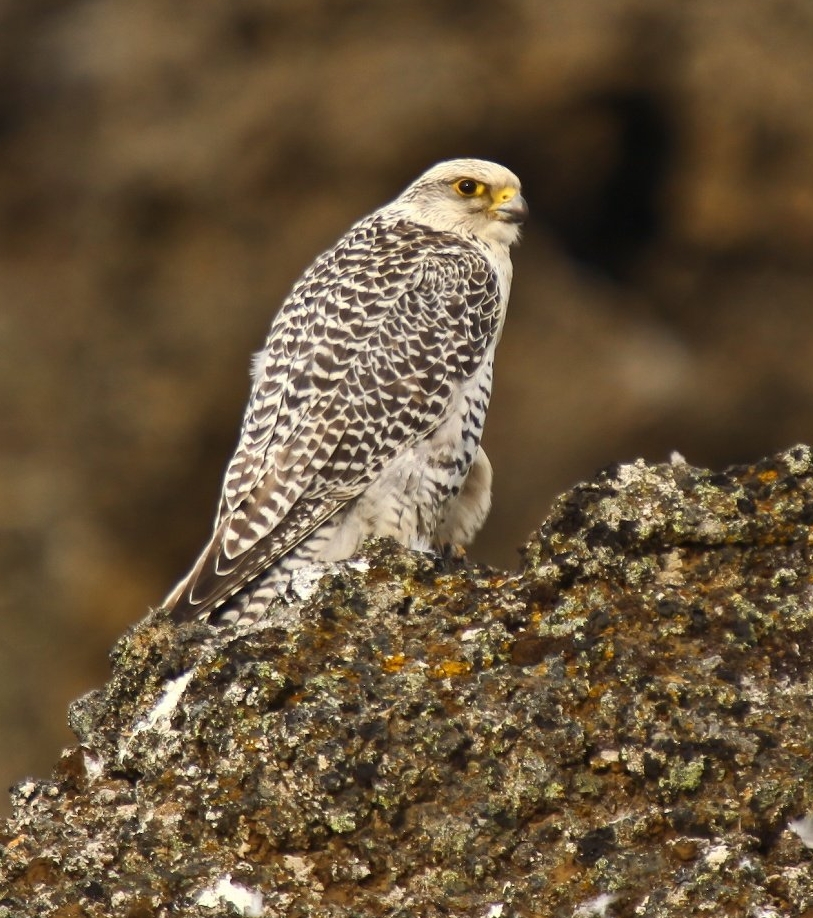 GyrfalconFalco rusticolus
-
 MerlinFalco columbarius
-
 American KestrelFalco sparverius
-
 Saker FalconFalco cherrug
-
 Eurasian HobbyFalco subbuteo
-
 Amur FalconFalco amurensis
Compare
Questions and answers
What is the scientific name of the Malagasy Kestrel?
The scientific name of the Malagasy Kestrel is Falco newtoni. Written with its author, the full name is Falco newtoni (Gurney Sr, 1863).
Which family does the Malagasy Kestrel belong to?
Falco newtoni belongs to the family Falconidae, in the order Falconiformes and the class Aves.
Where is the Malagasy Kestrel found?
Checklists and occurrence records place Falco newtoni in 2 countries: Madagascar and Seychelles.
What is the conservation status of the Malagasy Kestrel?
The IUCN Red List category recorded for Falco newtoni is Least Concern (LC).
What other names does the Malagasy Kestrel have?
Falco newtoni is also known in English as Aldabra Kestrel, MAKE, Madagascan Kestrel and Madagascar Kestrel.
Sources
Passages the profile rests on
- Male Malagasy Kestrels have rufous-grey heads and napes marked with dark streaks. Source passage: “The head and the nape of the males is rufous grey with dark streaks.” — English Wikipedia
- Males have a dark moustachial streak extending from the base of the bill toward the sides of the throat. Source passage: “A dark moustachial streak running from the basis of the bill backwards to sides of the throat.” — English Wikipedia
- The upperparts and wing coverts of males are chestnut with black spots. Source passage: “The upperparts and the wingcoverts are chestnut with black spots.” — English Wikipedia
- The upper tail coverts are grey with blackish spots. Source passage: “The uppertail coverts are grey with blackish spots.” — English Wikipedia
- The long flight feathers are blackish brown with white and chestnut spots on their inner webs. Source passage: “The long flight feathers are blackish brown, the inner webs are covered with white and chestnut spots.” — English Wikipedia
- The underparts are whitish. Source passage: “The underparts are whitish.” — English Wikipedia
- The chest, belly, and underwing coverts have black spots. Source passage: “The chest, belly and underwing coverts are covered with black spots.” — English Wikipedia
- The grey tail has six to seven narrow black bars and one broad subterminal bar. Source passage: “The tail is grey coloured. It has six to seven narrow black bars and a broad subterminal bar.” — English Wikipedia
- All feathers have white tips. Source passage: “All feathers have white tips.” — English Wikipedia
- A rufous colour morph also occurs, with an almost black head and nape. Source passage: “In addition there is a rufous phase. At this morph the head and nape are almost black.” — English Wikipedia
- The rufous morph has dark chestnut-brown body and underwing coverts marked with black streaks and spots. Source passage: “Body and underwing coverts are dark chestnut brown with black streaks and spots.” — English Wikipedia
- The throat of the rufous morph is buffish-white. Source passage: “The throat exhibits a buffish-white hue.” — English Wikipedia
- Females have more strongly chestnut-coloured heads than males. Source passage: “The head of the females is stronger chestnut coloured.” — English Wikipedia
- Females have more heavily spotted underparts and brown tails with black bars. Source passage: “The underparts are more spotted and the tail is brown with black bars.” — English Wikipedia
- Juveniles resemble adult females in coloration. Source passage: “The juveniles are similar coloured as the females.” — English Wikipedia
- Both sexes have slate-grey bills with black tips and yellow ceres. Source passage: “Both sexes exhibits a slate grey bill with a black tip. The cere is yellow.” — English Wikipedia
- The legs are yellow or bright orange in the rufous morph. Source passage: “The legs are either yellow or bright orange (rufous morph).” — English Wikipedia
- The Malagasy Kestrel can reach a body size of 30 cm. Source passage: “It can reach a size of 30 cm.” — English Wikipedia
- Male wing lengths range from 180 to 195 mm. Source passage: “The wings are 180 mm to 195 mm at the males” — English Wikipedia
- Female wing lengths range from 188 to 203 mm. Source passage: “188 mm to 203 mm at the females.” — English Wikipedia
- Male body weight ranges from 112 to 118 grams. Source passage: “The males can reach a weight between 112 and 118 grams.” — English Wikipedia
- Females can weigh up to 128 grams. Source passage: “The weight of the females is up to 128 grams.” — English Wikipedia
- On Madagascar, the species inhabits savannas and wetlands. Source passage: “where it occurs in savannas and wetlands” — English Wikipedia
- The species also occurs in artificial landscapes near human settlements. Source passage: “but also artificial landscapes in the vicinity of human settlements” — English Wikipedia
- The species occurs at elevations from 0 to 2,000 metres above sea level. Source passage: “in altitudes from 0 to 2000 asl.” — English Wikipedia
- The species is uncommon in forests. Source passage: “It is uncommon in forests.” — English Wikipedia
- The species is reported from almost all habitats in Madagascar except thick forest. Source passage: “Found throughout Madagascar in almost all habitats except thick forest.” — ebird.org
- Insects make up the majority of the Malagasy Kestrel's diet. Source passage: “Insects take up the majority of the Malagasy kestrel's diet” — English Wikipedia
- The species occasionally eats small birds, frogs, and mammals. Source passage: “but it also occasionally eats small birds, frogs, and mammals” — English Wikipedia
- The species usually catches insects while flying. Source passage: “which are usually taken during flight” — English Wikipedia
- It catches small birds, frogs, and mammals on the ground. Source passage: “all of which are taken on the ground.” — English Wikipedia
- The species hunts from low perches by hawking or hovering with its wings. Source passage: “It hunts from a low perch, hawking or hovering with the wing” — English Wikipedia
- Its call consists of a sharp scream or a loud repeated twitter. Source passage: “The Malagasy kestrel's call consists of a sharp scream of iitsi, kitsi, kitsi, kitsi or a loud repeated twitter.” — English Wikipedia
- The species usually nests on rock ledges, in buildings, in tree holes, or in other birds' stick nests. Source passage: “The Malagasy kestrel usually nests on rock ledges, in buildings, in tree holes, or in the stick nests of other birds” — English Wikipedia
- The species can use stick nests built by pied crows. Source passage: “such as the pied crow.” — English Wikipedia
- Clutches usually contain four to six eggs. Source passage: “Four to six eggs are laid” — English Wikipedia
- Eggs are usually laid in September. Source passage: “usually in September” — English Wikipedia
- Females alone incubate the eggs and are fed regularly by males during incubation. Source passage: “and are incubated by the female only, who is fed by the male at regular intervals during incubation.” — English Wikipedia
- The Seychelles Kestrel is the closest living relative of the Malagasy Kestrel. Source passage: “Its closest living relative is the Seychelles kestrel” — English Wikipedia
- The Malagasy Kestrel and Seychelles Kestrel were formerly considered the same species. Source passage: “they were at one time considered conspecific.” — English Wikipedia
Data
- Catalogue of Life, 2026-10-16 XR cc by
- Global Biodiversity Information Facility CC BY 4.0
- Wikidata CC0
- GeoNames CC BY 4.0
- Wikimedia Commons per image; credit shown with each image
- Within the Catalogue of Life, this name comes from The Integrated Taxonomic Information System cc0
References
- Dickinson, Edward C., ed. (2003). The Howard and Moore Complete Checklist of the Birds of the World, 3rd Edition.
- Gill, Frank, & and Minturn Wright. (2006). Birds of the World: Recommended English Names.
- Dickinson, E. C., and J. V. Remsen Jr., eds. (2013). The Howard and Moore Complete Checklist of the Birds of the World, 4th Edition, Vol. 1 Non-Passerines.
This species in other databases
Page built on 29 November 2026. See how the catalog is made and all sources and licences.
Cite this page
ScientificNames.org. (2026). Falco newtoni (Malagasy Kestrel). Retrieved November 29, 2026, from https://scientificnames.org/species/falco-newtoni
“Falco newtoni (Malagasy Kestrel).” ScientificNames.org, 2026, scientificnames.org/species/falco-newtoni. Accessed 29 Nov. 2026.
ScientificNames.org. “Falco newtoni (Malagasy Kestrel).” Accessed November 29, 2026. https://scientificnames.org/species/falco-newtoni.
@misc{scientificnames_falco_newtoni_malagasy_kestrel,
  author = {{ScientificNames.org}},
  title = {Falco newtoni (Malagasy Kestrel)},
  year = {2026},
  url = {https://scientificnames.org/species/falco-newtoni},
  note = {Accessed 2026-11-29}
}