Species · Birds
New Zealand Falcon Falco novaeseelandiae
The scientific name of the New Zealand Falcon is Falco novaeseelandiae. It is a species of bird in the family Falconidae (falcons), order Falconiformes. The name dates from 1788.
- Scientific name
- Falco novaeseelandiae J. F. Gmelin, 1788
- Common name
- New Zealand Falcon
- Genus
- Falco
- Family
- Falconidae (Falcons)
- Order
- Falconiformes
- Class
- Aves
- Red List category
- LC Least Concern
- Recorded in
- 2 countries
- Name status
- accepted in the Catalogue of Life

Overview
The species is endemic to New Zealand and occurs widely on both the North Island and South Island.
Written 26 November 2026 from the sources listed below. Each statement was checked against the passage it cites; statements that could not be supported were removed.
Similar species
The New Zealand Falcon has eastern, bush, and southern forms. The eastern form is larger and paler than the bush form, while the southern form has intermediate coloration and size.[1][2][3][4][5]
Appearance
Male New Zealand falcons are approximately two-thirds the size of females.[6]
Female eastern-form falcons have an average wingspan of 83 cm, while males have an average wingspan of 72 cm. Male eastern-form falcons weigh between 300 and 350 g, and females weigh between 450 and 600 g.[7][8][9][10]
Habitat
Eastern-form falcons inhabit open country and steppe habitats in the eastern and central South Island. They nest on steep slopes or rock ledges.[11][12]
Southern-form falcons occupy forest habitats near oceans in Fiordland, Stewart Island, and the Auckland Islands.[3][13]
The species has expanded into pine plantations in the North Island and farmland in the South Island.[14]
Diet
The New Zealand Falcon primarily eats live native and introduced birds caught in the air. Common avian prey includes finches, larks, pipits, and thrushes, as well as silvereyes, blackbirds, and yellowhammers.[15][16][17]
Other prey includes small mammals such as hares, rabbits, stoats, mice, and rats. Recorded prey also includes skinks and insects such as beetles, locusts, cicadas, and dragonflies.[18][19]
The species occasionally consumes carrion, including fish. Southern-form falcons hunt forest birds and seabirds and can hunt seabird chicks inside their burrows in the Auckland Islands.[20][21][22]
The falcon commonly attacks prey directly while flying.[23]
Behaviour
The New Zealand Falcon is sedentary and spends most of its time within or near its home range. Recorded home-range estimates vary from 15 to 200 km² depending on food availability.[24][25]
Outside the breeding season, individuals or pairs use permanent sheltered roosts. They may sunbathe for up to 30 minutes in the morning.[26][27]
The species defends its nests by making loud calls and stooping towards intruders. It uses a high-pitched kek kek kek call in territorial defence.[28][29]
New Zealand falcons engage in play involving chasing, swooping, and mock attacks.[30]
Conservation
The New Zealand Falcon is classified as stable at Threatened under the New Zealand Threat Classification System. Its estimated total population is approximately 5,000–15,000 individuals.[31][32]
The species requires conservation research. Agricultural development, vineyards, forestry, and housing have reduced its native habitats.[33][34]
Classification of the New Zealand Falcon
| Kingdom | Animalia |
|---|---|
| Phylum | Chordata |
| Subphylum | Vertebrata |
| Infraphylum | Gnathostomata |
| Parvphylum | Osteichthyes |
| Megaclass | Tetrapoda |
| Class | Aves (Bird) |
| Order | Falconiformes (Falcons) |
| Family | Falconidae (Falcons) |
| Subfamily | Falconinae |
| Genus | Falco (Falcons) |
| Species | Falco novaeseelandiae J. F. Gmelin, 1788 |
Where the New Zealand Falcon is found
Checklists and occurrence records place Falco novaeseelandiae in 2 countries across Oceania. GBIF holds 30,584 georeferenced records of it.
Countries
Regions and cities with the most records
- Wellington Region, New Zealand 6,804
- Lower Hutt, New Zealand 5,288
- Wainuiomata, New Zealand 5,131
- Wellington, New Zealand 4,668
- Otago, New Zealand 4,659
- Karori, New Zealand 4,477
- Canterbury, New Zealand 4,086
- Porirua, New Zealand 3,680
- Manawatu-Wanganui, New Zealand 2,743
- Waikato Region, New Zealand 1,980
- Upper Hutt, New Zealand 1,850
- Southland, New Zealand 1,570
- Tasman District, New Zealand 1,478
- West Coast, New Zealand 1,449
- Marlborough, New Zealand 1,368
- Taranaki Region, New Zealand 957
- Bay of Plenty, New Zealand 906
- Paraparaumu, New Zealand 837
- Palmerston North, New Zealand 756
- Hawke's Bay Region, New Zealand 720
- Stoke, New Zealand 632
- Nelson, New Zealand 587
- Dunedin, New Zealand 585
- Richmond, New Zealand 553
- Nelson Region, New Zealand 465
- Whanganui, New Zealand 407
- Rotorua, New Zealand 366
- Taupo, New Zealand 305
- New Plymouth, New Zealand 302
- Christchurch, New Zealand 270
- Blenheim, New Zealand 229
- Hastings, New Zealand 217
- Gisborne, New Zealand 215
- Hamilton, New Zealand 205
- Masterton, New Zealand 191
- Cambridge, New Zealand 186
Range as the checklists state it
Australia
A number beside a place is its count of GBIF occurrence records. A place without a number comes from a checklist alone. Records show where a species has been observed or collected, which can include escapes and vagrants.
Common names
English
- New Zealand Falcon
- Bush Falcon
- Bush Hawk
- Eastern Falcon
- Eastern New Zealand Falcon
- Quail Hawk
- Southern Falcon
- Southern New Zealand Falcon
- Sparrow Hawk
Names in 27 other languages
- Arabic
- صقر نيوزيلندي
- Catalan
- falcó de Nova Zelanda
- Chinese
- 新西兰隼, 鶉隼
- Croatian
- novozelandski sokol
- Czech
- ostříž novozélandský
- Danish
- Newzealandsk Falk
- Dutch
- Nieuw-Zeelandse Valk
- Esperanto
- novzelanda falko
- Estonian
- maoori pistrik
- Finnish
- uudenseelanninhaukka
- French
- Faucon de Nouvelle-Zélande
- German
- Maorifalke
- Hungarian
- új-zélandi sólyom
- Italian
- Falco della Nuova Zelanda, Falco di Nuova Zelanda
- Japanese
- ニュージーランドハヤブサ
- Lithuanian
- Naujosios Zelandijos sakalas
- Māori
- Kārearea
- Norwegian
- maorifalk
- Polish
- sokół nowozelandzki
- Portuguese
- Falcão-da-Nova-Zelândia, falcão-maori, falcão-neozelandês
- Russian
- Новозеландский сокол, Новозеландский чеглок
- Serbian
- Novozelandski soko
- Slovak
- sokol jastrabovitý
- Spanish
- Halcón maorí
- Swedish
- nyazeelandfalk, nyzeeländsk falk
- Turkish
- Yeni Zelanda Doğanı, Yeni Zellanda doğanı
- Ukrainian
- сокіл новозеландський
Synonyms
6 other scientific names have been used for this species and are now treated as synonyms of Falco novaeseelandiae.
- Falco harpe Forster, JR, 1848
- Falco novae Gmelin, JF, 1788
- Falco novaezeelandiae J. F. Gmelin, 1788
- Falco novaezelandiae Latham, J, 1790
- Falco novaseelandiae Gmelin, JF, 1788
- Nesierax pottsi Iredale, T; Mathews, GM, 1913
Related species
-
 Peregrine FalconFalco peregrinus
-
 Common KestrelFalco tinnunculus
-
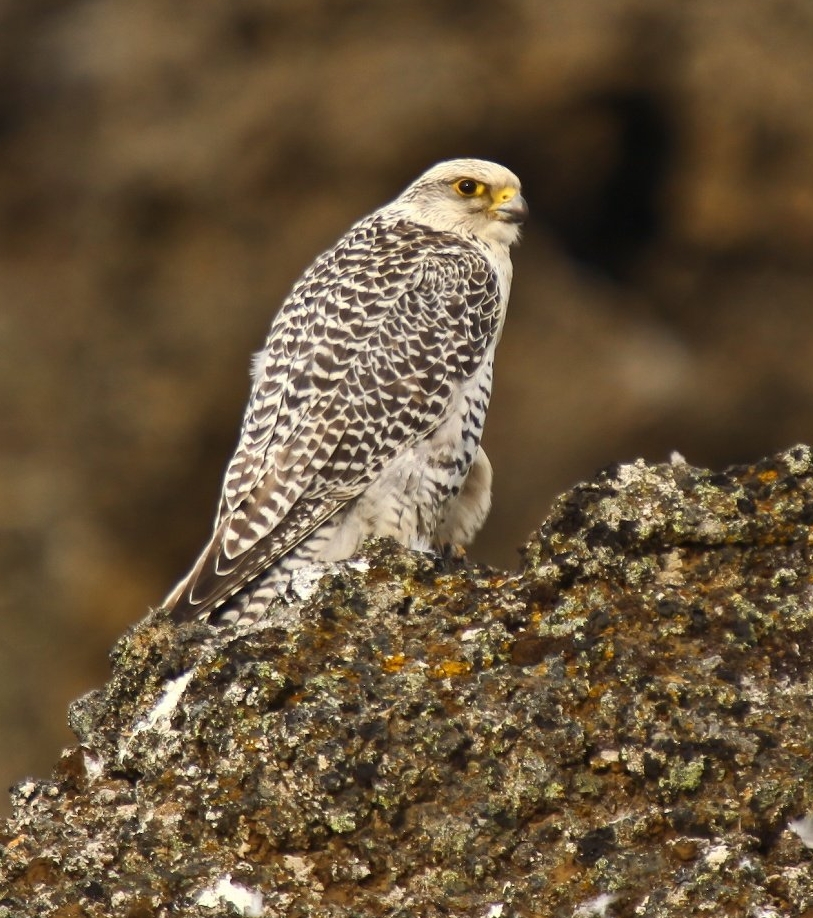 GyrfalconFalco rusticolus
-
 MerlinFalco columbarius
-
 American KestrelFalco sparverius
-
 Saker FalconFalco cherrug
-
 Eurasian HobbyFalco subbuteo
-
 Amur FalconFalco amurensis
Compare
Questions and answers
What is the scientific name of the New Zealand Falcon?
The scientific name of the New Zealand Falcon is Falco novaeseelandiae. Written with its author, the full name is Falco novaeseelandiae J. F. Gmelin, 1788.
Which family does the New Zealand Falcon belong to?
Falco novaeseelandiae belongs to the family Falconidae, in the order Falconiformes and the class Aves.
Where is the New Zealand Falcon found?
Checklists and occurrence records place Falco novaeseelandiae in 2 countries: New Zealand and Australia.
What is the conservation status of the New Zealand Falcon?
The IUCN Red List category recorded for Falco novaeseelandiae is Least Concern (LC).
What other names does the New Zealand Falcon have?
Falco novaeseelandiae is also known in English as Bush Falcon, Bush Hawk, Eastern Falcon, Eastern New Zealand Falcon, Quail Hawk and Southern Falcon.
How rare are New Zealand falcons?
The estimated total population is approximately 5,000–15,000 individuals. The species is classified as stable at Threatened under the New Zealand Threat Classification System.[31][32]
What habitats do falcons live in?
New Zealand Falcons inhabit open country, steppe habitats, forests, and forest edges. Southern-form falcons occupy forest habitats near oceans, while the species has also expanded into pine plantations and farmland.[11][35][36][13][14]
Sources
Passages the profile rests on
- The eastern form occurs in eastern and central parts of the South Island. Source passage: “the larger 'eastern falcon' form in the eastern and central South Island” — English Wikipedia
- The bush form occurs in the central and southern parts of the North Island. Source passage: “the smaller 'bush falcon' form in the central and south North Island” — English Wikipedia
- The southern form occurs in Fiordland, Stewart Island, and the Auckland Islands. Source passage: “an intermediary 'southern falcon' form in Fiordland, Stewart Island, and the Auckland Islands.” — English Wikipedia
- The eastern form is larger and paler than the bush form. Source passage: “The eastern falcon is larger and paler, while the bush falcon is smaller and darker.” — English Wikipedia
- The southern form has intermediate coloration and size compared with the eastern and bush forms. Source passage: “The southern falcon sits between the other forms in colouration and size” — English Wikipedia
- Male New Zealand falcons are approximately two-thirds the size of females. Source passage: “Male New Zealand falcons are about two-thirds the size of female falcons.” — English Wikipedia
- Female eastern-form falcons have an average wingspan of 83 cm. Source passage: “83 cm (33 in) in females” — English Wikipedia
- Male eastern-form falcons have an average wingspan of 72 cm. Source passage: “72 cm (28 in) in males.” — English Wikipedia
- Male eastern-form falcons weigh between 300 and 350 g. Source passage: “Males of the eastern form range in weight from 300 to 350 g (11 to 12 oz)” — English Wikipedia
- Female eastern-form falcons weigh between 450 and 600 g. Source passage: “Females of the eastern form weigh between 450 and 600 g (16 and 21 oz)” — English Wikipedia
- Eastern-form falcons inhabit open country and steppe habitats in the eastern and central South Island. Source passage: “The native habitat of the eastern falcons in the eastern and central South Island is open country and steppes” — English Wikipedia
- Eastern-form falcons nest on steep slopes or rock ledges. Source passage: “with nests on steep slopes or rock ledges.” — English Wikipedia
- Southern-form falcons occupy forest habitats near oceans in the Auckland Islands, Stewart Island, and Fiordland. Source passage: “The southern falcon is found in the Auckland Islands, Stewart Island, and Fiordland in forest habitats near oceans” — English Wikipedia
- The species has expanded into pine plantations in the North Island and farmland in the South Island. Source passage: “The habitat range of the falcon has increased to include human-modified landscapes such as pine plantations in the North island and farmlands in the South Island.” — English Wikipedia
- The species primarily eats live native and introduced birds caught in the air. Source passage: “but is mostly made up of live introduced and native birds caught in the air.” — English Wikipedia
- Common avian prey includes finches, larks, pipits, and thrushes. Source passage: “The most common avian prey includes introduced finch, lark, pipit, and thrush species” — English Wikipedia
- Other recorded bird prey includes silvereyes, blackbirds, and yellowhammers. Source passage: “silvereyes, blackbirds, and the yellowhammer.” — English Wikipedia
- The falcon also eats small mammals, including hares, rabbits, stoats, mice, and rats. Source passage: “small mammals like hares, rabbits, stoats, mice, and rats make up a small part of their diet.” — English Wikipedia
- Its recorded prey includes skinks and insects such as beetles, locusts, cicadas, and dragonflies. Source passage: “They also hunt skinks and hard-bodied insects like beetles, locusts, cicadas, and dragonflies.” — English Wikipedia
- The species occasionally consumes carrion, including fish. Source passage: “It also occasionally takes advantage of carrion (including fish) to get a quick meal.” — English Wikipedia
- Southern-form falcons hunt forest birds and seabirds. Source passage: “The southern falcon hunts forest birds as well as seabirds when they come in at dusk” — English Wikipedia
- The falcon can hunt seabird chicks inside their burrows in the Auckland Islands. Source passage: “enter seabird burrows to catch live chicks.” — English Wikipedia
- The falcon commonly attacks prey directly while flying. Source passage: “The most common is a direct flying attack” — English Wikipedia
- The New Zealand falcon is sedentary and spends most of its time within or near its home range. Source passage: “The New Zealand falcon is a sedentary bird that spends most of its time within or close to its home range.” — English Wikipedia
- Its recorded home-range estimates vary from 15 to 200 km² depending on food availability. Source passage: “The home range of a falcon varies, with calculations from 200 km2 to 15 km2, with dependence on food availability.” — English Wikipedia
- Outside the breeding season, individuals or pairs use permanent sheltered roosts. Source passage: “Outside of the breeding season solitary or pairs of falcons will use permanent sheltered roosts.” — English Wikipedia
- New Zealand falcons may sunbathe for up to 30 minutes in the morning. Source passage: “The falcon is noted to sunbathe for up to 30 minutes in the morning” — English Wikipedia
- The species defends its nests by making loud calls and stooping towards intruders. Source passage: “the falcon will make loud kekking noises alongside stooping at the head of the intruder.” — English Wikipedia
- The species uses a high-pitched kek kek kek call in territorial defence. Source passage: “The New Zealand falcon has a high-pitched kek kek kek call that is usually heard in territory defence” — English Wikipedia
- New Zealand falcons engage in play involving chasing, swooping, and mock attacks. Source passage: “They will chase, swoop and mock-attack each other” — English Wikipedia
- The New Zealand falcon is classified as stable at Threatened under the New Zealand Threat Classification System. Source passage: “Under the New Zealand Threat Classification System the falcon is stable at Threatened” — English Wikipedia
- The estimated total population is approximately 5,000–15,000 individuals. Source passage: “with only around 5000–15000 individuals remaining.” — English Wikipedia
- The species requires conservation research. Source passage: “with conservation research needed.” — English Wikipedia
- Agricultural development, vineyards, forestry, and housing have reduced the species' native habitats. Source passage: “The native habitats of the New Zealand falcon have been reduced through human development of land for the purposes of agriculture, vineyards, forestry, and housing” — English Wikipedia
- Bush-form falcons primarily inhabit forests. Source passage: “The bush falcon primarily lives in forests” — English Wikipedia
- Bush-form falcons hunt along forest edges in native podocarp broadleaf forests. Source passage: “the bush falcon hunts at forest edges” — English Wikipedia
Data
- Catalogue of Life, 2026-10-16 XR cc by
- Global Biodiversity Information Facility CC BY 4.0
- Wikidata CC0
- GeoNames CC BY 4.0
- Wikimedia Commons per image; credit shown with each image
- Within the Catalogue of Life, this name comes from The Integrated Taxonomic Information System cc0
References
- Mayr, Ernst, and G. William Cottrell, eds. (1979). Check-List of Birds of the World, Vol. 1, Second Edition.
- Gill, Frank, & and Minturn Wright. (2006). Birds of the World: Recommended English Names.
- Dickinson, E. C., and J. V. Remsen Jr., eds. (2013). The Howard and Moore Complete Checklist of the Birds of the World, 4th Edition, Vol. 1 Non-Passerines.
This species in other databases
Page built on 29 November 2026. See how the catalog is made and all sources and licences.
Cite this page
ScientificNames.org. (2026). Falco novaeseelandiae (New Zealand Falcon). Retrieved November 29, 2026, from https://scientificnames.org/species/falco-novaeseelandiae
“Falco novaeseelandiae (New Zealand Falcon).” ScientificNames.org, 2026, scientificnames.org/species/falco-novaeseelandiae. Accessed 29 Nov. 2026.
ScientificNames.org. “Falco novaeseelandiae (New Zealand Falcon).” Accessed November 29, 2026. https://scientificnames.org/species/falco-novaeseelandiae.
@misc{scientificnames_falco_novaeseelandiae_new_zealand_falcon,
  author = {{ScientificNames.org}},
  title = {Falco novaeseelandiae (New Zealand Falcon)},
  year = {2026},
  url = {https://scientificnames.org/species/falco-novaeseelandiae},
  note = {Accessed 2026-11-29}
}