Species · Flowering plants
Wilga Geijera parviflora
The scientific name of the Wilga is Geijera parviflora. It is a species of flowering plant in the family Rutaceae (rue family), order Sapindales.
- Scientific name
- Geijera parviflora Lindl.
- Common name
- Wilga
- Genus
- Geijera
- Family
- Rutaceae (Rue Family)
- Order
- Sapindales
- Class
- Magnoliopsida
- Red List category
- LC Least Concern
- Recorded in
- 2 countries
- Name status
- accepted in the Catalogue of Life

Overview
Geijera parviflora is endemic to inland parts of eastern Australia, with its main distribution in inland New South Wales and Queensland and extensions into south-eastern South Australia. Its leaves produce a strong smell when crushed, and its approximately spherical fruit contains one shiny black seed.
Written 26 November 2026 from the sources listed below. Each statement was checked against the passage it cites; statements that could not be supported were removed.
Appearance
Its flowers are small and white, arranged in loose panicles measuring 40–70 mm long. The white petals measure 1.5–2.5 mm long, and the flowers produce an odour described as both foetid and citrus-scented.[1][2][3][4]
Its fruit is approximately spherical and contains one shiny black seed enclosed within a thick outer skin. Its bark is rough and has a pleasant smell.[5][6][7]
Habitat
Wilga grows in open woodland as scattered trees or occasionally in stands. It occurs mainly in mixed woodland communities and prefers calcareous red clay or sandy soils.[8][9][10]
It occurs in dry areas receiving less than 750 mm of annual rainfall. It can also thrive in relatively damp soil, as demonstrated by two specimens growing in damp soil at the Australian National Botanic Gardens.[11][12]
Wilga is endemic to inland parts of eastern Australia. Its main distribution includes inland New South Wales and Queensland, with extensions into south-eastern South Australia, and it is also recorded in scattered locations in Victoria, South Australia and Western Australia.[13][14][15]
Diet
Sheep readily consume Wilga foliage, particularly from the lower branches. Cattle rarely eat this species.[16][17]
Behaviour
Wilga flowers attract insects through their foetid smell. Blowflies are attracted to the flowers for pollination.[18][19]
Butterflies and lady beetles utilise the tree. Wrens and bower birds also utilise it.[20][21]
Reproduction and life cycle
Flowering occurs between June and November, while fruiting occurs between January and May. Each fruit contains a single shiny black seed enclosed within a thick outer skin.[22][23][6]
Propagation from fresh seeds and cuttings has proven difficult. Cracking the hard seed coat is suggested to assist germination.[24][25]
A recommended propagation method involves fracturing and removing the seed coat before sowing fresh seeds.[26]
Conservation
Wax scale may affect this species in coastal areas.[27]
Uses
Wilga is used as a shade and fodder tree in agricultural areas. It provides windbreaks and shade for livestock, including lambing ewes.[28][29]
It is planted as an ornamental tree in Australia and overseas. It is sought after for parks and gardens because of its evergreen foliage, attractive form and limited height.[30][31]
Indigenous Australians chewed its aromatic leaves to alleviate toothache. Its foliage can also be burned to drive away mosquitoes.[32][33]
Wilga produces dark amber honey with a very strong flavour.[34]
It grows best in full sunlight and can live for approximately 25 years when grown on well-drained soils.[35][36]
Classification of the Wilga
| Kingdom | Plantae |
|---|---|
| Subkingdom | Pteridobiotina |
| Phylum | Tracheophyta |
| Class | Magnoliopsida |
| Order | Sapindales |
| Family | Rutaceae (Rue Family) |
| Subfamily | Zanthoxyloideae |
| Tribe | Zanthoxyleae |
| Subtribe | Lunasiinae |
| Genus | Geijera |
| Species | Geijera parviflora Lindl. |
Where the Wilga is found
Checklists and occurrence records place Geijera parviflora in 2 countries across Oceania. GBIF holds 12,442 georeferenced records of it.
Countries
Regions and cities with the most records
- New South Wales, Australia 9,640
- Queensland, Australia 2,235
- Victoria, Australia 124
- South Australia, Australia 111
- Griffith, Australia 58
- Western Australia, Australia 46
- Muswellbrook, Australia 37
- Tamworth, Australia 14
- Mildura, Australia 10
- Balwyn North, Australia 8
- Dubbo, Australia 8
- Melbourne, Australia 7
- St Albans, Australia 5
- Rockhampton, Australia 4
- Auckland, New Zealand 3
- Manawatu-Wanganui, New Zealand 3
- Whanganui, New Zealand 3
1 more country has a few records outside this range
These countries hold a few records of Geijera parviflora but lie outside the range the checklists give for it. Such records are often zoo or garden specimens, museum material or vagrants, so the species is not counted as occurring there.
Range as the checklists state it
Australia (E-South Australia, E- & S-Queensland, New South Wales, N-Victoria)
A number beside a place is its count of GBIF occurrence records. A place without a number comes from a checklist alone. Records show where a species has been observed or collected, which can include escapes and vagrants.
Common names
English
- Wilga
- Lavender-bush
- Tree Wilga
Names in 2 other languages
- Chinese
- 小花钩瓣常山
- Slovak
- vŕbnik malokvetý
Synonyms
3 other scientific names have been used for this species and are now treated as synonyms of Geijera parviflora.
- Geijera pendula Lindl.
- Zanthoxylum australasicum A.Juss.
- Geijera salicifolia Tate ambiguous synonym
Related species
-
 Geijera salicifolia
-
 Geijera linearifolia
- Geijera balansae
- Geijera cauliflora
-
 CapiviGeijera paniculata
- Geijera tartarea
-
 PomeloCitrus maxima
-
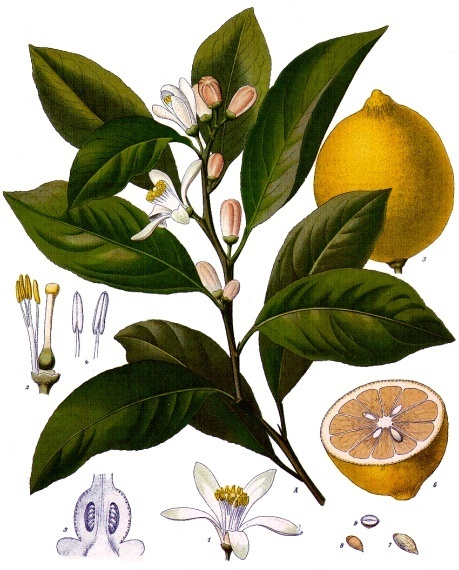 LemonCitrus × limon
Compare
Questions and answers
What is the scientific name of the Wilga?
The scientific name of the Wilga is Geijera parviflora. Written with its author, the full name is Geijera parviflora Lindl..
Which family does the Wilga belong to?
Geijera parviflora belongs to the family Rutaceae, in the order Sapindales and the class Magnoliopsida.
Where is the Wilga found?
Checklists and occurrence records place Geijera parviflora in 2 countries: Australia and New Zealand.
What is the conservation status of the Wilga?
The IUCN Red List category recorded for Geijera parviflora is Least Concern (LC).
What other names does the Wilga have?
Geijera parviflora is also known in English as Lavender-bush and Tree Wilga.
What is Wilga used for?
Wilga is used as a shade and fodder tree in agricultural areas and is planted as an ornamental tree in Australia and overseas. Its foliage has also been used to alleviate toothache and drive away mosquitoes.[28][30][32][33]
How tall can Geijera parviflora grow?
Wilga typically grows to a height of 8–10 metres.[37]
Sources
Passages the profile rests on
- Its flowers are small, white and arranged in loose panicles. Source passage: “small white flowers in loose panicles” — English Wikipedia
- Its flowers have white petals measuring 1.5–2.5 mm long. Source passage: “the petals white and 1.5–2.5 mm (0.059–0.098 in) long.” — English Wikipedia
- Its flowers produce an odour described as both foetid and citrus-scented. Source passage: “The smell of the flowers has been described as foetid, but also as citrus-scented” — English Wikipedia
- Its flower panicles measure 40–70 mm long. Source passage: “loose panicles 40–70 mm (1.6–2.8 in) long” — English Wikipedia
- Its fruit is approximately spherical and contains one shiny black seed. Source passage: “the fruit is more or less spherical, 4–5 mm (0.16–0.20 in) in diameter, each containing a single shiny black seed.” — English Wikipedia
- Each fruit contains a single shiny black seed enclosed within a thick outer skin. Source passage: “The fruit is round and contains a single shiny black seed within the thick outer skin.” — anbg.gov.au
- Its bark is rough and has a pleasant smell. Source passage: “The bark is rough and also pleasant smelling.” — anbg.gov.au
- It grows in open woodland as scattered trees or occasionally in stands. Source passage: “grows as scattered trees in open woodland or occasionally in stands.” — English Wikipedia
- It prefers calcareous red clay or sandy soils. Source passage: “Wilga prefers calcareous soils, either red clays or sandy soils” — English Wikipedia
- It occurs mainly in mixed woodland communities. Source passage: “Its habitat is mainly mixed woodland communities” — anbg.gov.au
- It occurs in dry areas receiving less than 750 mm of annual rainfall. Source passage: “It is distributed in dry areas with rainfall under 750mm per annum” — anbg.gov.au
- It can thrive in relatively damp soil, as demonstrated by two specimens growing in damp soil at the Australian National Botanic Gardens. Source passage: “two specimens in the Australian National Botanic Gardens are growing in relatively damp soil and thriving.” — anbg.gov.au
- It is endemic to inland parts of eastern Australia. Source passage: “is endemic to inland parts of eastern Australia.” — English Wikipedia
- Its main distribution includes inland New South Wales and Queensland, with extensions into south-eastern South Australia. Source passage: “It is mainly found in inland New South Wales and Queensland, extending into south-eastern South Australia” — English Wikipedia
- It is also recorded as occurring in scattered locations in Victoria, South Australia and Western Australia. Source passage: “primarily inland NSW, but also scattered in Qld, Vic, SA and WA.” — anbg.gov.au
- Sheep readily consume its foliage, particularly the lower branches. Source passage: “Sheep particularly enjoy grazing on the lower branches” — English Wikipedia
- Cattle rarely eat this species. Source passage: “Readily eaten by sheep, although rarely by cattle” — anbg.gov.au
- Its flowers attract insects through their foetid smell. Source passage: “The smell of the flowers has been described as foetid, but also as citrus-scented and attracts insects.” — English Wikipedia
- Blowflies are attracted to its flowers for pollination. Source passage: “emit a foetid smell to attract blowflies for pollination.” — anbg.gov.au
- Butterflies and lady beetles utilise the tree. Source passage: “Other insects (e.g. butterflies, lady beetles)” — anbg.gov.au
- Wrens and bower birds utilise the tree. Source passage: “birds (e.g. wrens, bower birds) readily utilise this tree.” — anbg.gov.au
- Flowering occurs between June and November. Source passage: “Flowering occurs from June to November” — English Wikipedia
- Fruiting occurs between January and May. Source passage: “followed by fruiting in January to May.” — anbg.gov.au
- Propagation from fresh seeds and cuttings has proven difficult. Source passage: “Regeneration from fresh seed and cuttings has proven to be difficult.” — English Wikipedia
- Cracking the hard seed coat is suggested to assist germination. Source passage: “It is suggested that the hard seed coat should be cracked, to assist seed germination.” — English Wikipedia
- A recommended propagation method involves fracturing and removing the seed coat before sowing fresh seeds. Source passage: “fracturing and removing the seed coat (with a hammer), then sowing the seed when it is still fresh being the recommended method.” — anbg.gov.au
- Wax scale may affect this species in coastal areas. Source passage: “Wax scale may affect G. parviflora in coastal areas” — anbg.gov.au
- It is used as a shade and fodder tree in agricultural areas. Source passage: “Wilga is a useful shade and fodder tree in agricultural areas.” — English Wikipedia
- It provides windbreaks and shade for livestock, including lambing ewes. Source passage: “This species also provides a great windbreak and shade, which is important for lambing ewes.” — anbg.gov.au
- It is planted as an ornamental tree in Australia and overseas. Source passage: “Despite being slow growing, it is planted in Australia and overseas as an ornamental.” — English Wikipedia
- It is sought after for parks and gardens because of its evergreen foliage, attractive form and limited height. Source passage: “Due to its limited height, beautiful form (resembling a weeping willow) and as an evergreen, G. parviflora is highly sought after for parks and gardens.” — anbg.gov.au
- Indigenous Australians chewed its aromatic leaves to alleviate toothache. Source passage: “Indigenous Australians chewed the aromatic leaves for alleviating toothache.” — English Wikipedia
- Its foliage can be burned to drive away mosquitoes. Source passage: “burning its foliage drives away mosquitoes.” — anbg.gov.au
- It produces dark amber honey with a very strong flavour. Source passage: “it yields a dark amber honey, with a very strong flavour” — anbg.gov.au
- When grown on well-drained soils, it can live for approximately 25 years. Source passage: “if grown on well-drained soils can grow to 9 metres tall and live for 25 years.” — anbg.gov.au
- It tolerates drought and grows best in full sunlight. Source passage: “It grows best in a position of full sun” — anbg.gov.au
- Geijera parviflora typically grows to a height of 8–10 metres. Source passage: “typically grows to a height of 8–10 m (26–33 ft)” — English Wikipedia
Data
- Catalogue of Life, 2026-10-16 XR cc by
- Global Biodiversity Information Facility CC BY 4.0
- Wikidata CC0
- GeoNames CC BY 4.0
- Wikimedia Commons per image; credit shown with each image
- iNaturalist per image; credit shown with each image
- Within the Catalogue of Life, this name comes from Synonymic Checklists of the Vascular Plants of the World cc by
References
- Lindl. J. Exped. Trop. Australia [Mitchell] 102 (1848). where the name was published
This species in other databases
Page built on 29 November 2026. See how the catalog is made and all sources and licences.
Cite this page
ScientificNames.org. (2026). Geijera parviflora (Wilga). Retrieved November 29, 2026, from https://scientificnames.org/species/geijera-parviflora
“Geijera parviflora (Wilga).” ScientificNames.org, 2026, scientificnames.org/species/geijera-parviflora. Accessed 29 Nov. 2026.
ScientificNames.org. “Geijera parviflora (Wilga).” Accessed November 29, 2026. https://scientificnames.org/species/geijera-parviflora.
@misc{scientificnames_geijera_parviflora_wilga,
  author = {{ScientificNames.org}},
  title = {Geijera parviflora (Wilga)},
  year = {2026},
  url = {https://scientificnames.org/species/geijera-parviflora},
  note = {Accessed 2026-11-29}
}