Species · Flowering plants
Quickstick Gliricidia sepium
The scientific name of the Quickstick is Gliricidia sepium. It is a species of flowering plant in the family Fabaceae (bean), order Fabales.
- Scientific name
- Gliricidia sepium (Jacq.) Kunth
- Common name
- Quickstick
- Genus
- Gliricidia
- Family
- Fabaceae (Bean)
- Order
- Fabales
- Class
- Magnoliopsida
- Red List category
- LC Least Concern
- Recorded in
- 67 countries
- Name status
- accepted in the Catalogue of Life

Overview
The native range extends from Mexico to Colombia, and it currently has a pantropical distribution. The species has a high capacity for nitrogen fixation.
Written 26 November 2026 from the sources listed below. Each statement was checked against the passage it cites; statements that could not be supported were removed.
Appearance
Quickstick typically reaches a height of 10–12 metres. Its smooth bark ranges in colour from whitish grey to deep red-brown.[1][2]
Its flowers grow at the ends of leafless branches and are bright pink to lilac with white tinges. They usually have a pale yellow spot at their base.[3][4][5]
Its fruit is a pod measuring approximately 10–15 centimetres in length. The pods are green when immature and turn yellow-brown when mature.[6][7]
Each fruit pod produces between four and ten round brown seeds.[8]
Habitat
In its native range, Quickstick occurs on volcanic soils in Central America and Mexico. It also grows in sandy, clay, and limestone soils.[9][10]
The species grows well in acidic soils with a pH between 4.5 and 6.2. It also tolerates saline conditions.[11][12]
Its centre of genetic diversity occurs in the dry regions of southern Mexico and northern Central America.[13]
Quickstick was introduced to the Philippines from Mexico beginning in the early seventeenth century and to the Caribbean before 1850. It was introduced to Sri Lanka during the nineteenth century.[14][15][16]
The species was introduced to India and Indonesia around 1900. It was introduced to West Africa, Uganda, and Kenya during the early twentieth century.[17][18]
Uses
Quickstick has traditionally been cultivated as a shade tree for cocoa plantations. It is also used to provide shade for coffee plantations.[19][20]
The species is used for live fencing, fodder, firewood, green manure, and intercropping. Its stems are widely used as poles for live fencing in Cuba and India.[21][22]
Its leaves are incorporated into soil during ploughing in the charsutri method of paddy cultivation. The species is also planted to reduce topsoil erosion when restoring denuded areas.[23][24]
Its foliage is used as cut-and-carry forage for cattle, sheep, and goats. Its high protein content allows it to supplement low-quality tropical forage.[25][26]
In some circumstances, its foliage is the only available feed source during the dry season.[27]
Quickstick is used to protect agricultural land and fruit plantations from livestock such as goats, cattle, and buffalo.[28]
Crushed leaves are used in livestock washes in Latin America to repel botflies. In the Philippines, leaf extracts are used to make anti-mange shampoo for dogs.[29][30]
Behaviour
Quickstick grows rapidly and is easily propagated. It tolerates repeated harvesting at intervals of two to four months, depending on climate.[31][32]
After cutting, the species can retain its leaves during the dry season. In some circumstances, its foliage remains the only available feed source during this period.[33][27]
Following cutting, the tree temporarily enters dormancy, during which its roots do not compete with crops for nutrients.[34]
Quickstick is intolerant of frost and poorly adapted to cool seasons. It can withstand temperatures as low as approximately −8 °C.[35][36]
Reproduction and life cycle
Quickstick requires pollinators to produce seeds. It is frequently propagated using stem cuttings.[37][38]
Its mature, dry seeds have hard, smooth, water-impermeable surfaces.[39]
Conservation
Quickstick has invasive potential and is considered a weed in Jamaica.[40]
Classification of the Quickstick
| Kingdom | Plantae |
|---|---|
| Subkingdom | Pteridobiotina |
| Phylum | Tracheophyta |
| Class | Magnoliopsida |
| Order | Fabales |
| Family | Fabaceae (Bean) |
| Genus | Gliricidia (Quickstick) |
| Species | Gliricidia sepium (Jacq.) Kunth |
Where the Quickstick is found
Checklists and occurrence records place Gliricidia sepium in 67 countries across Africa, Asia, North America, Oceania and South America. GBIF holds 34,409 georeferenced records of it.
Countries where it is native or its origin is not stated
- Antigua and Barbuda 3
- Barbados 7
- Belize 96
- Bolivia 4
- Bonaire, Saint Eustatius and Saba 11
- Colombia 21,022
- Costa Rica 349
- Curacao 11
- Dominica 43
- El Salvador 110
- Grenada 5
- Guadeloupe 58
- Guatemala 120
- Honduras 82
- Martinique 149
- Mexico 2,433
- Montserrat 15
- Nicaragua 199
- Panama 206
- Peru 5
- Saint Kitts and Nevis 47
- Saint Lucia 10
- Saint Vincent and the Grenadines 4
- U.S. Virgin Islands 18
Countries where it has been introduced
- Aruba 3
- Australia 22
- Bangladesh 4
- Benin 90
- Brazil 289
- Burkina Faso 8
- Cameroon 7
- Cayman Islands
- Comoros 12
- Cuba 73
- Dominican Republic 64
- Ecuador 78
- French Guiana 19
- French Polynesia 30
- Ghana 14
- Guinea 7
- Guyana 6
- Haiti 22
- India 7,829
- Indonesia 113
- Jamaica 30
- Kiribati 6
- Maldives 3
- Marshall Islands
- Myanmar 11
- Nepal
- Nigeria 50
- Pakistan
- Papua New Guinea 11
- Philippines 213
- Puerto Rico 98
- Senegal 5
- Seychelles 26
- Sierra Leone 3
- Sri Lanka 83
- Suriname 3
- Tanzania 35
- Trinidad and Tobago 20
- Uganda 3
- United States 68
- Vanuatu 2
- Venezuela 40
- Zimbabwe 2
Regions and cities with the most records
- Bolívar, Colombia 8,582
- María la Baja, Colombia 6,829
- Kerala, India 6,774
- San Jacinto, Colombia 6,570
- San Pablo, Colombia 6,552
- San Juan Nepomuceno, Colombia 6,496
- Antioquia, Colombia 5,073
- Fredonia, Colombia 2,892
- Sucre Department, Colombia 2,654
- Māvelikara, India 2,381
- Chengannūr, India 2,295
- Changanācheri, India 2,293
- Mēppādam, India 2,279
- Haripād, India 2,266
- Tiruvalla, India 2,264
- Paippad, India 2,255
- Panachikkad, India 2,163
- Puthuppally, India 2,151
- Nattakam, India 2,145
- Córdoba, Colombia 1,488
- Turbaco, Colombia 1,243
- Cartagena, Colombia 1,159
- Arjona, Colombia 1,093
- Santa Rosa, Colombia 1,092
- Sampués, Colombia 1,049
- Taliparamba, India 1,028
- Adūr, India 1,026
- Ezhome, India 985
- Pariyāram, India 973
- San Luis de Sincé, Colombia 946
- Kalliyasshēri, India 908
- Pāppinisshēri, India 905
- Kannapuram, India 904
- Sincelejo, Colombia 903
- Cherukunnu, India 897
- Kolaccheri, India 866
26 more countries have a few records outside this range
These countries hold a few records of Gliricidia sepium but lie outside the range the checklists give for it. Such records are often zoo or garden specimens, museum material or vagrants, so the species is not counted as occurring there.
- Cook Islands 6
- Democratic Republic of the Congo 3
- Fiji 4
- France 16
- Guam 13
- Ivory Coast 9
- Kenya 11
- Laos 6
- Liberia 9
- Madagascar 18
- Malawi 17
- Malaysia 23
- Mali 6
- Mayotte 51
- New Caledonia 17
- Northern Mariana Islands 3
- Palau 3
- Reunion 6
- Solomon Islands 4
- South Africa 11
- Taiwan 9
- Thailand 19
- Timor Leste 4
- Togo 10
- Vietnam 10
- Zambia 13
A number beside a place is its count of GBIF occurrence records. A place without a number comes from a checklist alone. Records show where a species has been observed or collected, which can include escapes and vagrants.
Common names
English
- Quickstick
- Fence Post Tree
- Nicaraguan Cocoashade
- Quick-stick
Names in 17 other languages
- Chinese
- 南洋櫻
- Finnish
- rusotuonenpuu
- French
- Gliricidia
- Indonesian
- Gamal
- Kannada
- ಗೊಬ್ಬರದ ಮರ [Gobbarada mara]
- Lithuanian
- Tamsusis ūkmedis
- Marathi
- गिरीपुष्प
- Portuguese
- mãe-do-cacau, planta-mãe-do-cacau
- Russian
- Глирицидия заборная
- Slovak
- agátovec plotný
- Spanish
- Balo, Cocuite, Madero negro, Matarratón, Piñón cubano, cacahuananche, cuchi verde, madre de cacao
- Thai
- แคฝรั่ง
- cjp
- Bulë́gli
- ewe
- Gbodouti
- hus
- jelelte
- tzh
- ujcum
- yua
- sak-yab
Synonyms
9 other scientific names have been used for this species and are now treated as synonyms of Gliricidia sepium.
- Gliricidia lambii Fernald
- Gliricidia maculata var. multijuga Micheli
- Lonchocarpus roseus (Mill.) DC.
- Lonchocarpus sepium (Jacq.) DC.
- Millettia luzonensis A.Gray
- Robinia rosea Marshall
- Robinia variegata Schltdl.
- Robinia rosea Mill. ambiguous synonym
- Robinia sepium Jacq. ambiguous synonym
Related species
-
 Gliricidia maculata
- Gliricidia brenningii
- Gliricidia ehrenbergii
- Gliricidia robusta
-
 PeanutArachis hypogaea
-
 LiquoriceGlycyrrhiza glabra
-
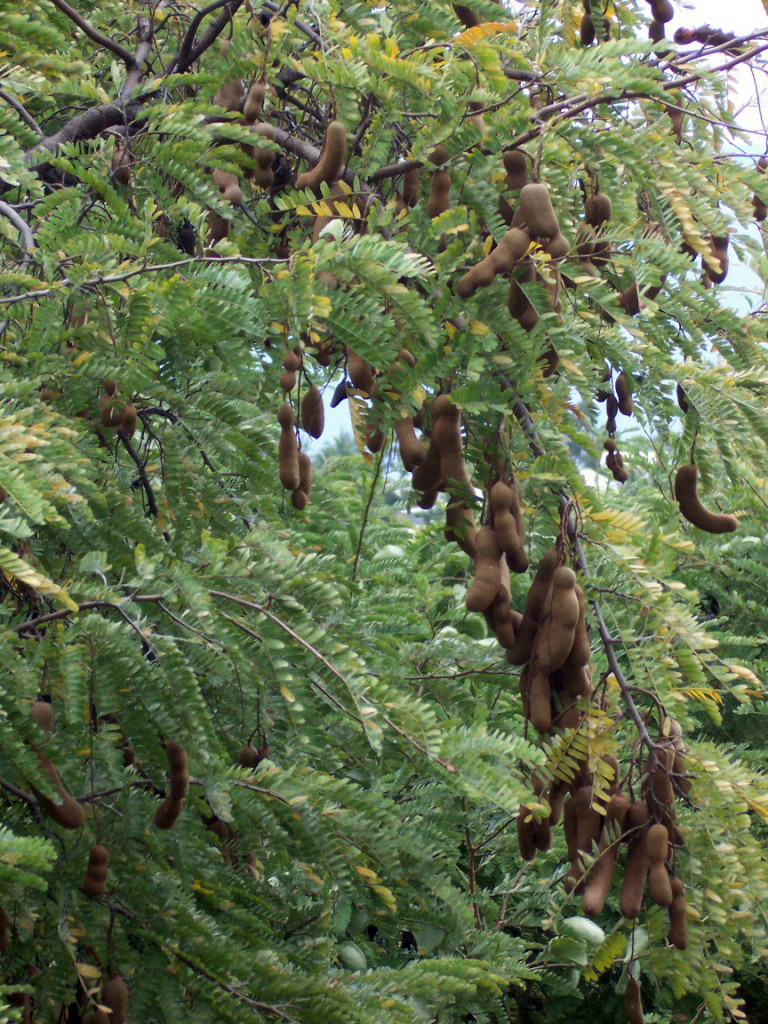 TamarindTamarindus indica
-
 ChickpeaCicer arietinum
Compare
Questions and answers
What is the scientific name of the Quickstick?
The scientific name of the Quickstick is Gliricidia sepium. Written with its author, the full name is Gliricidia sepium (Jacq.) Kunth.
Which family does the Quickstick belong to?
Gliricidia sepium belongs to the family Fabaceae, in the order Fabales and the class Magnoliopsida.
Where is the Quickstick found?
Checklists and occurrence records place Gliricidia sepium in 67 countries, including Colombia, Mexico, Costa Rica, Panama, Nicaragua and Martinique.
What is the conservation status of the Quickstick?
The IUCN Red List category recorded for Gliricidia sepium is Least Concern (LC).
What other names does the Quickstick have?
Gliricidia sepium is also known in English as Fence Post Tree, Nicaraguan Cocoashade and Quick-stick.
Is Gliricidia sepium poisonous?
Quickstick appears to be toxic to non-ruminant animals. Its toxic seeds and bark have traditionally been used as rodenticides.[41][42]
What is Gliricidia sepium used for?
Quickstick is used for plantation shade, live fencing, fodder, firewood, green manure, and intercropping. Its foliage is used as forage for cattle, sheep, and goats, and its leaves are used in livestock washes and anti-mange shampoo for dogs.[19][20][21][25][29][30]
What nutrients are found in madre de cacao?
Quickstick foliage has a high protein content, which allows it to supplement low-quality tropical forage.[26]
Sources
Passages the profile rests on
- The tree typically reaches a height of 10–12 metres. Source passage: “Gliricidia sepium is a medium-sized tree that grows 10–12 m (33–39 ft) high.” — English Wikipedia
- Its smooth bark ranges in colour from whitish grey to deep red-brown. Source passage: “The bark is smooth, and its color can range from a whitish gray to deep red-brown.” — English Wikipedia
- Its flowers grow at the ends of leafless branches. Source passage: “The flowers are located on the end of branches that have no leaves.” — English Wikipedia
- Its flowers are bright pink to lilac with white tinges. Source passage: “These flowers have a bright pink to lilac color that is tinged with white.” — English Wikipedia
- The flowers usually have a pale yellow spot at their base. Source passage: “A pale yellow spot is usually at the flower's base.” — English Wikipedia
- Its fruit is a pod measuring approximately 10–15 centimetres in length. Source passage: “The tree's fruit is a pod about 10–15 cm (4–6 in) long.” — English Wikipedia
- The fruit pods are green when immature and turn yellow-brown when mature. Source passage: “It is green when unripe and becomes yellow-brown when it reaches maturity.” — English Wikipedia
- Each fruit pod produces between four and ten round brown seeds. Source passage: “The pod produces four to ten round brown seeds.” — English Wikipedia
- In its native range, the species occurs on volcanic soils in Central America and Mexico. Source passage: “The tree is found on volcanic soils in its native range in Central America and Mexico.” — English Wikipedia
- The species can also grow in sandy, clay, and limestone soils. Source passage: “However, it can also grow on sandy, clay, and limestone soils.” — English Wikipedia
- The species grows well in acidic soils with a pH between 4.5 and 6.2. Source passage: “G. sepium grows well in acidic soils with a pH of 4.5–6.2.” — English Wikipedia
- The species tolerates saline conditions. Source passage: “and tolerance to salinity” — English Wikipedia
- Its centre of genetic diversity occurs in the dry regions of southern Mexico and northern Central America. Source passage: “Genetic studies have identified the center of genetic diversity of G. sepium as the dry zones of southern Mexico and northern Central America” — English Wikipedia
- The species was introduced to the Philippines from Mexico beginning in the early seventeenth century. Source passage: “G. sepium was first introduced to the Philippines from Mexico via the Manila galleons along with 200 other tropical American plant species from as early as the early 1600s.” — English Wikipedia
- The species was introduced to the Caribbean before 1850. Source passage: “These later introductions include the Caribbean before 1850;” — English Wikipedia
- The species was introduced to Sri Lanka during the nineteenth century. Source passage: “Sri Lanka in the 1800s;” — English Wikipedia
- The species was introduced to India and Indonesia around 1900. Source passage: “India and Indonesia at around 1900;” — English Wikipedia
- The species was introduced to West Africa, Uganda, and Kenya during the early twentieth century. Source passage: “West Africa, Uganda, and Kenya in the early 1900s.” — English Wikipedia
- The species has traditionally been cultivated as a shade tree for cocoa plantations. Source passage: “The common name madre de cacao (literally "mother of cacao" in Spanish) used in Central America and the Philippines is in reference to its traditional use as shade trees for cocoa tree plantations.” — English Wikipedia
- The species is used to provide shade for coffee plantations. Source passage: “G. sepium was spread from its native range throughout the tropics to shade plantation crops such as coffee.” — English Wikipedia
- The species is used for live fencing, fodder, firewood, green manure, and intercropping. Source passage: “Today it is used for many other purposes including live fencing, fodder, firewood, green manure, intercropping, and rat poison.” — English Wikipedia
- Its stems are widely used as poles for live fencing in Cuba and India. Source passage: “G. sepium is widely used in the form of poles for live fencing in Cuba, other islands and India.” — English Wikipedia
- Its leaves are incorporated into soil during ploughing in the charsutri method of paddy cultivation. Source passage: “In the charsutri method of paddy cultivation, leaves of glyricidia are incorporated in soil during ploughing.” — English Wikipedia
- The species is planted to reduce topsoil erosion when restoring denuded areas. Source passage: “it is also planted to prevent topsoil erosion in the initial stages of reforesting denuded areas” — English Wikipedia
- Its foliage is used as cut-and-carry forage for cattle, sheep, and goats. Source passage: “G. sepium is used as cut and carry forage for cattle, sheep, and goats.” — English Wikipedia
- Its high protein content allows it to supplement low-quality tropical forage. Source passage: “Its high protein content allows it to complement low-quality tropical forages.” — English Wikipedia
- In some circumstances, its foliage is the only available feed source during the dry season. Source passage: “In some cases it is the only source of feed during the dry season.” — English Wikipedia
- The species is used to protect agricultural land and fruit plantations from livestock such as goats, cattle, and buffalo. Source passage: “This is one of the best plants used for traditional live fencing to protect agriculture and fruit bearing plantations from animals such as goats, cow, and buffalo.” — English Wikipedia
- Crushed leaves are used in livestock washes in Latin America to repel botflies. Source passage: “Farmers in Latin America often wash their livestock with a paste made of crushed G. sepium leaves to ward off torsalos (botflies).” — English Wikipedia
- Leaf extracts are used to make anti-mange shampoo for dogs in the Philippines. Source passage: “In the Philippines, the extract obtained from its leaves is made into anti-mange dog shampoo.” — English Wikipedia
- The species grows rapidly and is easily propagated. Source passage: “Because it is easily propagated and grows quickly” — English Wikipedia
- The species tolerates repeated harvesting at intervals of two to four months, depending on climate. Source passage: “G. sepium can tolerate repeated cutting, every 2 to 4 months depending on the climate.” — English Wikipedia
- After cutting, the species can retain its leaves during the dry season. Source passage: “Cutting G. sepium causes it to retain its leaves during the dry season when many forage crops have lost their leaves.” — English Wikipedia
- Following cutting, the tree temporarily enters dormancy, during which its roots do not compete with crops for nutrients. Source passage: “When the trees are cut back, they enter a temporary dormant state during which their root systems do not compete for nutrients needed by the crops” — English Wikipedia
- The species is intolerant of frost and poorly adapted to cool seasons. Source passage: “Another limitation is frost intolerance and the lack of adaptation to a cool season: it is a tropical plant.” — English Wikipedia
- The species can withstand temperatures as low as approximately −8 °C. Source passage: “Generally, the G. sepium tree can withstand a minimum temperature of 17 °F (−8 °C).” — English Wikipedia
- The species requires pollinators to produce seeds. Source passage: “it requires the presence of pollinators to set seeds” — English Wikipedia
- The species is frequently propagated using stem cuttings. Source passage: “but is often propagated with stem cuttings despite it giving shallow roots.” — English Wikipedia
- Its mature, dry seeds have hard, smooth, water-impermeable surfaces. Source passage: “The seeds are often hard, smooth and (water impermeable when mature and dry” — English Wikipedia
- The species has invasive potential and is considered a weed in Jamaica. Source passage: “its swift propagation has caused it to be considered a weed in Jamaica.” — English Wikipedia
- The species appears to be toxic to non-ruminant animals. Source passage: “G. sepium seems to be toxic to non-ruminants.” — English Wikipedia
- The genus name Gliricidia means mouse killer and refers to the traditional use of the plant's toxic seeds and bark as rodenticides. Source passage: “The generic name Gliricidia means "mouse killer" in reference to the traditional use of its toxic seeds and bark as rodenticides.” — English Wikipedia
Data
- Catalogue of Life, 2026-10-16 XR cc by
- Global Biodiversity Information Facility CC BY 4.0
- Wikidata CC0
- GeoNames CC BY 4.0
- Wikimedia Commons per image; credit shown with each image
- Within the Catalogue of Life, this name comes from The World Checklist of Vascular Plants (WCVP): Fabaceae cc by
References
- W.G.Walpers, Repert. Bot. Syst. 1: 679 (1842) where the name was published
This species in other databases
- Catalogue of Life 9CWZQ
- Wikidata Q2717303
- iNaturalist 163327
- World Flora Online wfo-0000178022
- GRIN 17647
Page built on 28 November 2026. See how the catalog is made and all sources and licences.
Cite this page
ScientificNames.org. (2026). Gliricidia sepium (Quickstick). Retrieved November 28, 2026, from https://scientificnames.org/species/gliricidia-sepium
“Gliricidia sepium (Quickstick).” ScientificNames.org, 2026, scientificnames.org/species/gliricidia-sepium. Accessed 28 Nov. 2026.
ScientificNames.org. “Gliricidia sepium (Quickstick).” Accessed November 28, 2026. https://scientificnames.org/species/gliricidia-sepium.
@misc{scientificnames_gliricidia_sepium_quickstick,
  author = {{ScientificNames.org}},
  title = {Gliricidia sepium (Quickstick)},
  year = {2026},
  url = {https://scientificnames.org/species/gliricidia-sepium},
  note = {Accessed 2026-11-28}
}