Species · Flowering plants
Senegal Tea Gymnocoronis spilanthoides
The scientific name of the Senegal Tea is Gymnocoronis spilanthoides. It is a species of flowering plant in the family Asteraceae (composite), order Asterales.
- Scientific name
- Gymnocoronis spilanthoides DC.
- Common name
- Senegal Tea
- Genus
- Gymnocoronis
- Family
- Asteraceae (Composite)
- Order
- Asterales
- Class
- Magnoliopsida
- Recorded in
- 11 countries
- Name status
- accepted in the Catalogue of Life

Overview
Senegal tea is a perennial flowering plant. It is an emergent aquatic plant. Since 2019, it has been listed as an invasive alien species of Union concern in the European Union.
Written 27 November 2026 from the sources listed below. Each statement was checked against the passage it cites; statements that could not be supported were removed.
Habitat
Senegal tea is an emergent aquatic plant.[1]
Conservation
Since 2019, Senegal tea has been listed as an invasive alien species of Union concern in the European Union. Importing and trading the species are forbidden throughout the European Union.[2][3]
Classification of the Senegal Tea
| Kingdom | Plantae |
|---|---|
| Subkingdom | Pteridobiotina |
| Phylum | Tracheophyta |
| Class | Magnoliopsida |
| Order | Asterales |
| Family | Asteraceae (Composite) |
| Subfamily | Asteroideae |
| Tribe | Eupatorieae |
| Subtribe | Adenostemmatinae |
| Genus | Gymnocoronis |
| Species | Gymnocoronis spilanthoides DC. |
Where the Senegal Tea is found
Checklists and occurrence records place Gymnocoronis spilanthoides in 11 countries across Asia, Europe, Oceania and South America. GBIF holds 2,343 georeferenced records of it.
Countries where it is native or its origin is not stated
Countries where it has been introduced
Regions and cities with the most records
- New South Wales, Australia 707
- Queensland, Australia 206
- Taiwan, Taiwan 165
- Buenos Aires, Argentina 141
- Newcastle, Australia 135
- Maitland, Australia 88
- Caloundra, Australia 86
- Auckland, New Zealand 76
- Banqiao, Taiwan 69
- New Taipei City, Taiwan 68
- Buenos Aires, Argentina 67
- Neihu, Taiwan 67
- Taipei, Taiwan 66
- Central Department, Paraguay 65
- Yilan, Taiwan 63
- Entre Rios, Argentina 62
- Santos Lugares, Argentina 62
- Xizhi, Taiwan 61
- Tigre, Argentina 60
- San Isidro, Argentina 59
- Don Torcuato, Argentina 58
- Gold Coast, Australia 56
- Brisbane, Australia 53
- Danshui, Taiwan 53
- General Pacheco, Argentina 53
- Taipei, Taiwan 52
- Hurlingham, Argentina 51
- El Palomar, Argentina 50
- Villa Sarmiento, Argentina 50
- Valentín Alsina, Argentina 48
- Avellaneda, Argentina 47
- Villa de Mayo, Argentina 45
- Mato Grosso do Sul, Brazil 42
- Keelung, Taiwan 41
- Quilmes, Argentina 39
- Limpio, Paraguay 38
4 more countries have a few records outside this range
These countries hold a few records of Gymnocoronis spilanthoides but lie outside the range the checklists give for it. Such records are often zoo or garden specimens, museum material or vagrants, so the species is not counted as occurring there.
Range as the checklists state it
Hungary [I]; China [I] (Guangxi [I], Yunnan [I]); Taiwan [I]; Australia [I] (SE-Queensland [I], E-New South Wales [I], Victoria [I]); New Zealand [I]; Peru; Bolivia (Beni, Pando, Santa Cruz); N-Brazil (Pará); NE-Brazil (Bahia); WC-Brazil (Goiás, Mato Grosso do Sul); SE-Brazil (Rio de Janeiro); S-Brazil (Rio Grande do Sul); Paraguay (Caazapa, Central, Concepcion, Cordillera, Itapua, Paraguari, Pres. Hayes); Uruguay (Artigas, Canelones, Cerro Largo, Durazno, Montevideo, Paysandú, Rivera, Rio Negro, Rocha, Salto, San Jose, Soriano, Treinta y Tres); Argentina (Buenos Aires, Chaco, Corrientes, Entre Rios, Mendoza, Misiones, Santa Fe)
A number beside a place is its count of GBIF occurrence records. A place without a number comes from a checklist alone. Records show where a species has been observed or collected, which can include escapes and vagrants.
Common names
English
- Senegal Tea
- Senegal Teaplant
- Templeplant
Names in 10 other languages
- Chinese
- 光冠水菊, 光葉水菊
- Dutch
- smalle theeplant
- Finnish
- brasilianvesiasteri
- German
- Falscher Wasserfreund
- Hungarian
- mexikói vízibojt
- Japanese
- ミズヒマワリ
- Slovak
- šišatka mokraďová
- Spanish
- Jazmín de bañado
- Swedish
- vattenflockel
- Thai
- เซเนกัลที
Synonyms
7 other scientific names have been used for this species and are now treated as synonyms of Gymnocoronis spilanthoides.
- Adenostemma gymnocoronis Sch.Bip. ex Baker
- Alomia spilanthoides D.Don ex Hook.
- Gymnocoronis attenuata DC.
- Gymnocoronis spilanthoides var. attenuata (DC.) Baker
- Gymnocoronis spilanthoides var. spilanthoides
- Piqueria attenuata (DC.) Gardner
- Piqueria longipetiolata Sch.Bip. ex Baker ambiguous synonym
Subspecies and varieties
Related species
- Gymnocoronis latifolia
- Gymnocoronis matudae
- Gymnocoronis sessilis
-
 Jerusalem ArtichokeHelianthus tuberosus
-
 ChicoryCichorium intybus
-
 Absinthe WormwoodArtemisia absinthium
-
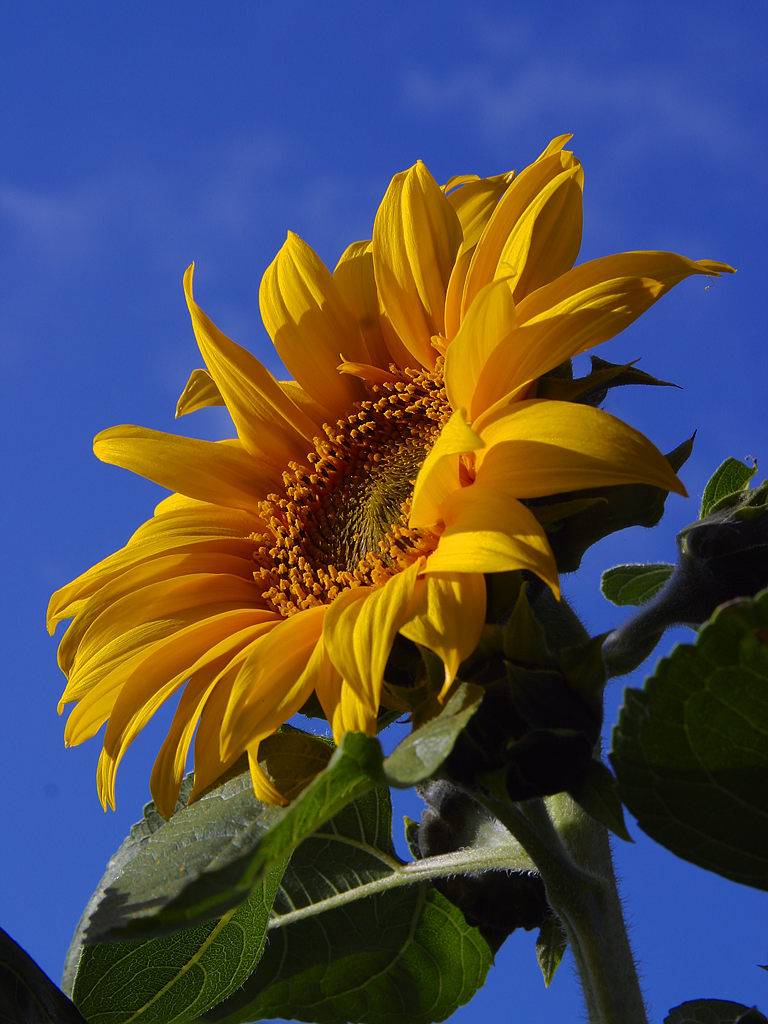 Common SunflowerHelianthus annuus
-
 Common YarrowAchillea millefolium
Compare
Questions and answers
What is the scientific name of the Senegal Tea?
The scientific name of the Senegal Tea is Gymnocoronis spilanthoides. Written with its author, the full name is Gymnocoronis spilanthoides DC..
Which family does the Senegal Tea belong to?
Gymnocoronis spilanthoides belongs to the family Asteraceae, in the order Asterales and the class Magnoliopsida.
Where is the Senegal Tea found?
Checklists and occurrence records place Gymnocoronis spilanthoides in 11 countries, including Argentina, Brazil, Paraguay, Uruguay, Bolivia and Peru.
What other names does the Senegal Tea have?
Gymnocoronis spilanthoides is also known in English as Senegal Teaplant and Templeplant.
Sources
Passages the profile rests on
- The species is an emergent aquatic plant. Source passage: “Gymnocoronis spilanthoides is an emergent aquatic, perennial” — aphis.usda.gov
- Since 2019, the species has been listed as an invasive alien species of Union concern in the European Union. Source passage: “In the European Union, the species features since 2019 on the list of invasive alien species of Union concern.” — English Wikipedia
- Importing and trading the species are forbidden throughout the European Union. Source passage: “This means that import of the species and trade in the species is forbidden in the whole of the EU.” — English Wikipedia
- The species belongs to the genus Gymnocoronis. Source passage: “is a species from the genus Gymnocoronis.” — English Wikipedia
- The species was first described by Augustin Pyramus de Candolle. Source passage: “The species was first described by Augustin Pyramus de Candolle.” — English Wikipedia
- The species is perennial. Source passage: “Gymnocoronis spilanthoides is an emergent aquatic, perennial” — aphis.usda.gov
Data
- Catalogue of Life, 2026-10-16 XR cc by
- Global Biodiversity Information Facility CC BY 4.0
- Wikidata CC0
- GeoNames CC BY 4.0
- Wikimedia Commons per image; credit shown with each image
- Within the Catalogue of Life, this name comes from Synonymic Checklists of the Vascular Plants of the World cc by
References
- DC. (1838). Prodr. [A.P. de Candolle] 7: 266 (1838). where the name was published
This species in other databases
- Catalogue of Life 3HR9B
- Wikidata Q1394846
- iNaturalist 407490
- World Flora Online wfo-0000083326
- GRIN 403701
Page built on 27 November 2026. See how the catalog is made and all sources and licences.
Cite this page
ScientificNames.org. (2026). Gymnocoronis spilanthoides (Senegal Tea). Retrieved November 27, 2026, from https://scientificnames.org/species/gymnocoronis-spilanthoides
“Gymnocoronis spilanthoides (Senegal Tea).” ScientificNames.org, 2026, scientificnames.org/species/gymnocoronis-spilanthoides. Accessed 27 Nov. 2026.
ScientificNames.org. “Gymnocoronis spilanthoides (Senegal Tea).” Accessed November 27, 2026. https://scientificnames.org/species/gymnocoronis-spilanthoides.
@misc{scientificnames_gymnocoronis_spilanthoides_senegal_tea,
  author = {{ScientificNames.org}},
  title = {Gymnocoronis spilanthoides (Senegal Tea)},
  year = {2026},
  url = {https://scientificnames.org/species/gymnocoronis-spilanthoides},
  note = {Accessed 2026-11-27}
}