Species · Flowering plants
Mexican Logwood Haematoxylum brasiletto
The scientific name of the Mexican Logwood is Haematoxylum brasiletto. It is a species of flowering plant in the family Fabaceae (bean), order Fabales.
- Scientific name
- Haematoxylum brasiletto H.Karst.
- Common name
- Mexican Logwood
- Genus
- Haematoxylum
- Family
- Fabaceae (Bean)
- Order
- Fabales
- Class
- Magnoliopsida
- Red List category
- LC Least Concern
- Recorded in
- 14 countries
- Name status
- accepted in the Catalogue of Life

Overview
Haematoxylum brasiletto grows in deciduous tropical forests, montane forests associated with oak and pine, and desert scrub in Baja California. It is a small tree or large thorny shrub with deep red heartwood, yellow flowers and copper-coloured seed pods.
Written 26 November 2026 from the sources listed below. Each statement was checked against the passage it cites; statements that could not be supported were removed.
Appearance
Mexican logwood is a small tree or large thorny shrub that grows between seven and fifteen metres tall. Its trunk and larger branches have fluted surfaces.[1][2][3]
Its heartwood is deep red. Its leaves are pinnate, with three pairs of heart-shaped leaflets and no terminal leaflet.[4][5]
The species produces clusters of yellow flowers with five distinct lobes. Its ripe seed pods are copper-coloured and split laterally, and its seeds are black and kidney-shaped.[6][7][8]
Habitat
Mexican logwood grows in deciduous tropical forests and in montane forests associated with oak and pine.[9][10]
In Baja California, it grows in desert scrub alongside elephant trees, woodrose and large Cardón cacti.[11]
The species occurs in Mexico, Belize, Costa Rica, Guatemala, El Salvador, Honduras, Nicaragua and Colombia.[12]
Uses
The timber is used to manufacture bows for stringed instruments. The heartwood is used to produce dyes for wool and cotton fabrics.[13][14]
The heartwood provides a pink colouring used in pharmaceuticals and toothpaste. The species also provides extracts of hematoxylin and hematein.[15][16]
Extracts from hardwood chips are used as remedies by the Tarahumara people. The species has also been used as an astringent and dentifrice, and in ethnobotanical treatments for fever, jaundice, inflammation and stomach pain.[17][18][19][20]
An extract made from boiled heartwood chips is reported to have antibiotic properties. An extract of boiled heartwood chips is also used as a tonic to strengthen the body.[21][22]
Classification of the Mexican Logwood
| Kingdom | Plantae |
|---|---|
| Subkingdom | Pteridobiotina |
| Phylum | Tracheophyta |
| Class | Magnoliopsida |
| Order | Fabales |
| Family | Fabaceae (Bean) |
| Genus | Haematoxylum |
| Species | Haematoxylum brasiletto H.Karst. |
Where the Mexican Logwood is found
Checklists and occurrence records place Haematoxylum brasiletto in 14 countries across North America and South America. GBIF holds 7,813 georeferenced records of it.
Countries where it is native or its origin is not stated
- Aruba 12
- Belize 4
- Bonaire, Saint Eustatius and Saba 164
- Colombia 4,600
- Costa Rica 186
- Curacao 588
- El Salvador 1
- Guatemala 71
- Honduras 15
- Mexico 2,044
- Nicaragua 96
- United States 12
- Venezuela 20
Countries where it has been introduced
Regions and cities with the most records
- La Guajira Department, Colombia 2,129
- Cesar Department, Colombia 1,739
- Hatonuevo, Colombia 1,614
- Barrancas, Colombia 1,421
- Albania, Colombia 1,220
- Bosconia, Colombia 818
- Sinaloa, Mexico 502
- El Copey, Colombia 466
- Bolívar, Colombia 433
- San Juan Nepomuceno, Colombia 425
- San Jacinto, Colombia 424
- Baja California Sur, Mexico 284
- Fonseca, Colombia 248
- Sonora, Mexico 221
- Willemstad, Curacao 195
- Bandariba, Curacao 174
- Magdalena Department, Colombia 172
- Kralendijk, Bonaire, Saint Eustatius and Saba 162
- Bonaire, Bonaire, Saint Eustatius and Saba 158
- Guanacaste Province, Costa Rica 157
- Ciénaga, Colombia 144
- Puebloviejo, Colombia 142
- Oaxaca, Mexico 120
- Culiacán, Mexico 113
- Michoacán, Mexico 111
- Chiapas, Mexico 96
- Guerrero, Mexico 88
- Jalisco, Mexico 73
- Morelos, Mexico 68
- La Paz, Mexico 65
- Santander Department, Colombia 61
- Tuxtla, Mexico 55
- Chiapa de Corzo, Mexico 52
- Valledupar, Colombia 52
- Heroica Guaymas, Mexico 50
- Santa Marta, Colombia 43
A number beside a place is its count of GBIF occurrence records. A place without a number comes from a checklist alone. Records show where a species has been observed or collected, which can include escapes and vagrants.
Common names
English
- Mexican Logwood
- Peachwood
Names in 5 other languages
- Papiamento
- Brasia, Brazia, Brazil, Campeshi, Kampèshi, Stokvishout, Verfhout
- Slovak
- kampeškovník farbiarsky
- Spanish
- Palo de Brasil, Palo de Campeche, azulillo, brazilette, palo brasil, palo de tinto
- tsz
- churuqua
- var
- huachachago
Synonyms
3 other scientific names have been used for this species and are now treated as synonyms of Haematoxylum brasiletto.
- Haematoxylon boreale S.Watson
- Haematoxylon brasiletto H.Karst.
- Haematoxylum boreale S.Watson
Related species
-
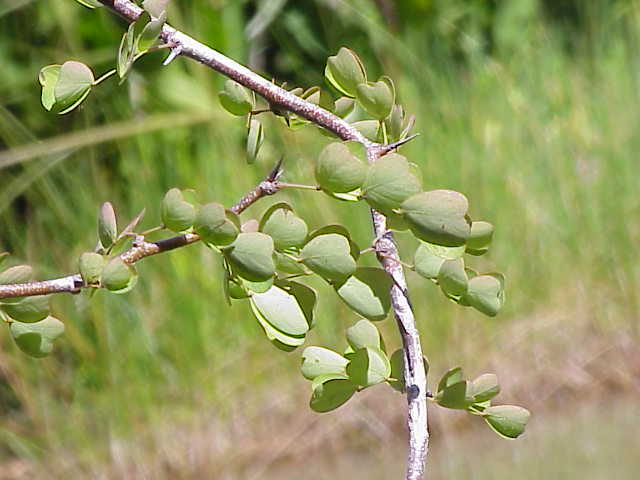 LogwoodHaematoxylum campechianum
- BloodwoodbushHaematoxylum dinteri
- Haematoxylum sousanum
- Haematoxylum calakmulense
-
 PeanutArachis hypogaea
-
 LiquoriceGlycyrrhiza glabra
-
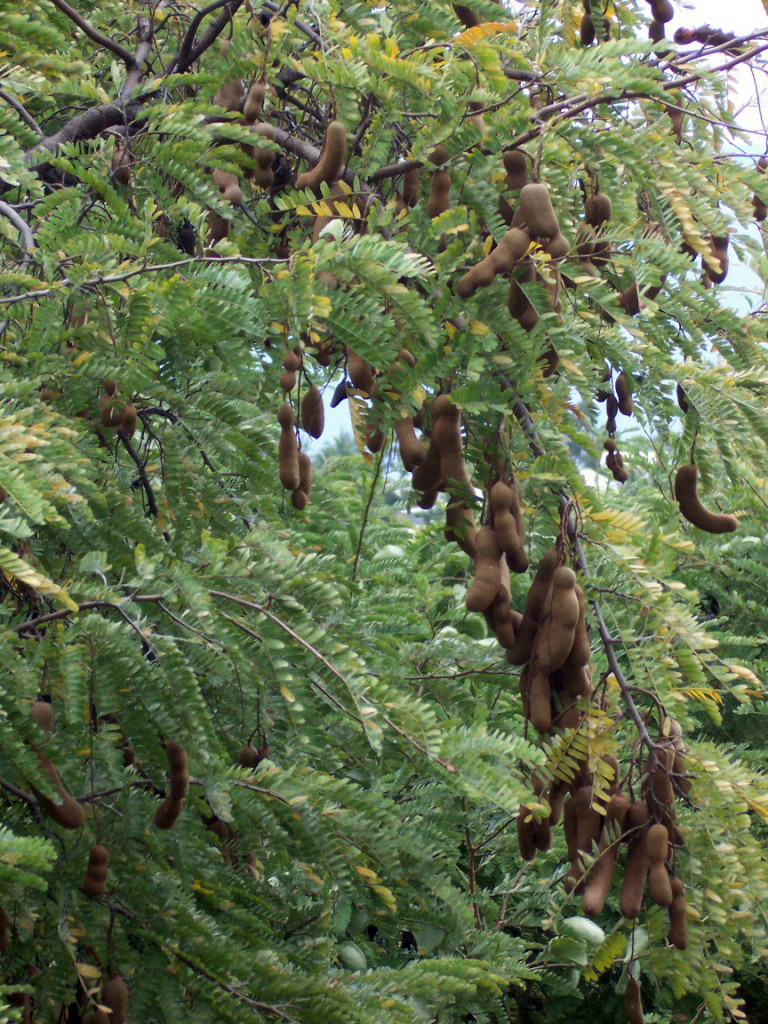 TamarindTamarindus indica
-
 ChickpeaCicer arietinum
Compare
Questions and answers
What is the scientific name of the Mexican Logwood?
The scientific name of the Mexican Logwood is Haematoxylum brasiletto. Written with its author, the full name is Haematoxylum brasiletto H.Karst..
Which family does the Mexican Logwood belong to?
Haematoxylum brasiletto belongs to the family Fabaceae, in the order Fabales and the class Magnoliopsida.
Where is the Mexican Logwood found?
Checklists and occurrence records place Haematoxylum brasiletto in 14 countries, including Colombia, Mexico, Curacao, Costa Rica, Bonaire, Saint Eustatius and Saba and Nicaragua.
What is the conservation status of the Mexican Logwood?
The IUCN Red List category recorded for Haematoxylum brasiletto is Least Concern (LC).
What other names does the Mexican Logwood have?
Haematoxylum brasiletto is also known in English as Peachwood.
What type of wood is peach wood?
Peachwood is an English name recorded for Mexican logwood, whose heartwood is deep red.[4]
What is peachwood used for?
Mexican logwood timber is used to manufacture bows for stringed instruments. Its heartwood is used to produce dyes for wool and cotton fabrics and pink colouring for pharmaceuticals and toothpaste.[13][14][15]
Sources
Passages the profile rests on
- Haematoxylum brasiletto is a small tree or large thorny shrub. Source passage: “H. brasiletto is a small tree or large thorny shrub” — English Wikipedia
- The species grows between seven and fifteen metres tall. Source passage: “seven to fifteen metres high.” — English Wikipedia
- Its trunk and larger branches have fluted surfaces. Source passage: “The trunk and larger branches are fluted” — English Wikipedia
- The heartwood of the tree is deep red. Source passage: “the heartwood is deep red.” — English Wikipedia
- Its leaves are pinnate and have three pairs of heart-shaped leaflets without a terminal leaflet. Source passage: “The tree has pinnate leaves with three pairs of heart-shaped leaflets and no terminal leaflet.” — English Wikipedia
- The species produces clusters of yellow flowers with five distinct lobes. Source passage: “The clusters of yellow flowers are typical of the Caesalpinioideae, with five distinct lobes” — English Wikipedia
- Its ripe seed pods are copper-coloured and split laterally. Source passage: “copper-coloured seed pods that split laterally when ripe” — English Wikipedia
- The seeds are black and kidney-shaped. Source passage: “The seeds are black and kidney-shaped.” — English Wikipedia
- The species grows in deciduous tropical forests. Source passage: “including deciduous tropical forests” — English Wikipedia
- The species grows in montane forests associated with oak and pine. Source passage: “montane forests where it is associated with oak and pine.” — English Wikipedia
- In Baja California, the species grows in desert scrub alongside elephant trees, woodrose and large Cardón cacti. Source passage: “It is found growing in desert scrub in Baja California in association with elephant trees (Bursera microphylla), the woodrose (Merremia aurea) and the large Cardón cactus (Pachycereus pringlei).” — English Wikipedia
- The species occurs in Mexico, Belize, Costa Rica, Guatemala, El Salvador, Honduras, Nicaragua and Colombia. Source passage: “H. brasiletto occurs in Mexico, Belize, Costa Rica, Guatemala, El Salvador, Honduras, Nicaragua and Colombia.” — English Wikipedia
- The timber is used to manufacture bows for stringed instruments. Source passage: “The wood of this tree is used in the making of bows for stringed instruments.” — English Wikipedia
- The heartwood is used to produce dyes for wool and cotton fabrics. Source passage: “The heartwood is used to produce dye for wool and cotton cloth” — English Wikipedia
- The heartwood provides a pink colouring used in pharmaceuticals and toothpaste. Source passage: “a pink colouring used in pharmaceuticals and toothpaste.” — English Wikipedia
- The species provides extracts of hematoxylin and hematein. Source passage: “The pigments hematoxylin and hematein can be extracted” — English Wikipedia
- Extracts from hardwood chips are used as remedies by the Tarahumara people. Source passage: “Extracts of hardwood chips are used as remedies by the Tarahumara Indians.” — English Wikipedia
- The species has been used as an astringent and dentifrice in ethnobotanical applications. Source passage: “use as an astringent, a dentifrice” — English Wikipedia
- Ethnobotanical applications of the species include treating fever and jaundice. Source passage: “for treating condyloma, erysipelas, fever, jaundice, inflammation and stomach pain.” — English Wikipedia
- The species has been used in ethnobotanical treatments for inflammation and stomach pain. Source passage: “inflammation and stomach pain.” — English Wikipedia
- An extract made from boiled heartwood chips is reported to have antibiotic properties. Source passage: “An extract of boiled heartwood chips is reported to have antibiotic properties” — English Wikipedia
- An extract of boiled heartwood chips is used as a tonic to strengthen the body. Source passage: “to act as a tonic to strengthen the body.” — English Wikipedia
Data
- Catalogue of Life, 2026-10-16 XR cc by
- Global Biodiversity Information Facility CC BY 4.0
- Wikidata CC0
- GeoNames CC BY 4.0
- Wikimedia Commons per image; credit shown with each image
- Within the Catalogue of Life, this name comes from The World Checklist of Vascular Plants (WCVP): Fabaceae cc by
References
- Fl. Columb. 2: 27 (1862) where the name was published
This species in other databases
- Catalogue of Life 3J8ZK
- Wikidata Q5638231
- iNaturalist 280512
- World Flora Online wfo-0000186730
- GRIN 18173
Page built on 28 November 2026. See how the catalog is made and all sources and licences.
Cite this page
ScientificNames.org. (2026). Haematoxylum brasiletto (Mexican Logwood). Retrieved November 28, 2026, from https://scientificnames.org/species/haematoxylum-brasiletto
“Haematoxylum brasiletto (Mexican Logwood).” ScientificNames.org, 2026, scientificnames.org/species/haematoxylum-brasiletto. Accessed 28 Nov. 2026.
ScientificNames.org. “Haematoxylum brasiletto (Mexican Logwood).” Accessed November 28, 2026. https://scientificnames.org/species/haematoxylum-brasiletto.
@misc{scientificnames_haematoxylum_brasiletto_mexican_logwood,
  author = {{ScientificNames.org}},
  title = {Haematoxylum brasiletto (Mexican Logwood)},
  year = {2026},
  url = {https://scientificnames.org/species/haematoxylum-brasiletto},
  note = {Accessed 2026-11-28}
}