Species · Molluscs
Northern Abalone Haliotis kamtschatkana
The scientific name of the Northern Abalone is Haliotis kamtschatkana. It is a species of mollusc in the family Haliotidae (abalone), order Lepetellida. The name dates from 1845.
- Scientific name
- Haliotis kamtschatkana Jonas, 1845
- Common name
- Northern Abalone
- Genus
- Haliotis
- Family
- Haliotidae (Abalone)
- Order
- Lepetellida
- Class
- Gastropoda
- Red List category
- EN Endangered
- Environment
- marine
- Recorded in
- 3 countries
- Name status
- accepted in the Catalogue of Life

Overview
Haliotis kamtschatkana inhabits rocky shores, kelp beds, and rocky sea floors in intertidal and subtidal environments. Its flattened, ear-shaped shell has uneven spiral cords, elevated undulations, and three to six respiratory holes.
Written 26 November 2026 from the sources listed below. Each statement was checked against the passage it cites; statements that could not be supported were removed.
Appearance
The adult shell is flattened, ear-shaped, and relatively thin, with uneven spiral cords and elevated undulations or lumps. It has three to six elevated respiratory holes and a somewhat scalloped edge.[1][2][3][4]
The shell is generally green-brown, although white or blue coloration also occurs. Its exterior can be red, pink, tan, or mottled, while the interior is silvery and iridescent with a mother-of-pearl appearance.[5][6][7][8]
The epipodium is lacy and green-brown. The central muscle is cream-colored, with mottled orange coloration along its sides and darker orange coloration near the foot.[9][10]
The head has two large tentacles, eye stalks, and a rasping mouth.[11]
The adult shell typically measures approximately 8 cm. Exceptional individuals can reach approximately 15 cm in shell size.[12][13]
Habitat
Northern Abalone inhabits rocky shores in intertidal and subtidal environments near kelp. It frequently occurs in kelp beds, rocky sea floors, and complex rocky reef habitats and requires exposure to ocean currents.[14][15][16][17]
Most individuals occupy the seabed between the lowest low tide and depths of approximately 30–40 feet. Individuals can occur at depths reaching approximately 100 metres.[18][19]
In Washington, individuals generally inhabit depths of 9–60 feet.[20]
Diet
Northern Abalone is herbivorous. Pinto abalone primarily consume marine algae, including bull kelp, while adults graze on algae and diatoms.[21][22][23]
Behaviour
The tentacles surrounding the foot and extending beyond the shell detect food and predators. Adult individuals are mobile but rarely travel far during their lives.[24][25]
When pursued by sea stars, individuals raise their shells, twist their bodies, and sweep their shells from side to side to move away.[26]
Pinto abalone form aggregations during spawning.[27]
Reproduction and life cycle
Northern Abalone reproduces through broadcast spawning between April and June. Individuals release sperm and eggs into the water column for external fertilization.[28][29]
The planktonic larval stage lasts approximately 12–13 days, with larval development and dispersal occurring over a relatively short period. Larvae settle in areas containing coralline algae.[30][31][32]
Individuals are thought to become capable of reproduction at shell lengths of approximately 2–2.5 inches. They take approximately 6–8 years after settlement to reach maturity.[33][34]
Successful fertilization depends on males and females occurring close together because adults have small home ranges.[35]
Conservation
Northern Abalone has been listed as endangered on the IUCN Red List since 2006. Canada listed the species as endangered under its Species at Risk Act in 2009, and Washington designated it a state endangered species in 2019.[36][37][38]
Overharvesting, illegal harvesting, predation by recovering sea otters, and disease have contributed to population declines. The species retains high genetic diversity despite depleted populations.[39][40]
Washington surveys recorded a decline of more than 97 percent in surveyed abundance between 1992 and 2017. The average density recorded in the most recent Washington survey was 0.005 abalone per square metre.[41][42]
A laboratory study found that elevated carbon dioxide levels reduced larval survival and increased shell abnormalities.[43]
Uses
Pinto abalone consumption and shells have cultural significance among Tlingit and Haida communities. Alaska Natives use the species as a supplemental food and trade item.[44][45]
The shells are used to decorate carvings and ceremonial clothing. The species is regarded as gourmet food and is described as having a delicate flavor.[46][47]
Classification of the Northern Abalone
| Kingdom | Animalia |
|---|---|
| Phylum | Mollusca |
| Class | Gastropoda (Gastropod) |
| Subclass | Vetigastropoda |
| Order | Lepetellida |
| Superfamily | Haliotoidea |
| Family | Haliotidae (Abalone) |
| Genus | Haliotis (Abalone) |
| Species | Haliotis kamtschatkana Jonas, 1845 |
Where the Northern Abalone is found
Checklists and occurrence records place Haliotis kamtschatkana in 3 countries. GBIF holds 22,011 georeferenced records of it.
Countries
Regions and cities with the most records
- Monterey, United States 7,466
- Pacific Grove, United States 7,466
- Seaside, United States 7,466
- Marina, United States 4,101
- British Columbia, Canada 3,473
- Alaska, United States 203
- San Luis Obispo, United States 197
- California, United States 160
- Carson, United States 92
- Lomita, United States 92
- Rancho Palos Verdes, United States 92
- Redondo Beach, United States 92
- Torrance, United States 92
- West Carson, United States 92
- Gardena, United States 91
- Hermosa Beach, United States 91
- Lawndale, United States 91
- Manhattan Beach, United States 90
- El Segundo, United States 72
- Oak Bay, Canada 63
- Campbell River, Canada 62
- Saanich, Canada 61
- Victoria, Canada 61
- Central Saanich, Canada 57
- Esquimalt, Canada 57
- Hawthorne, United States 53
- Lennox, United States 53
- Colwood, Canada 48
- Langford, Canada 44
- Nanaimo, Canada 39
- Harewood, Canada 34
- Lompoc, United States 34
- San Diego, United States 25
- Coronado, United States 24
- Santa Barbara, United States 22
- Long Beach, United States 21
2 more countries have a few records outside this range
These countries hold a few records of Haliotis kamtschatkana but lie outside the range the checklists give for it. Such records are often zoo or garden specimens, museum material or vagrants, so the species is not counted as occurring there.
A number beside a place is its count of GBIF occurrence records. A place without a number comes from a checklist alone. Records show where a species has been observed or collected, which can include escapes and vagrants.
Common names
English
- Northern Abalone
- Japanese Abalone
- Threaded Abalone
- Pinto Abalone
Names in 6 other languages
- Czech
- ušeň kamčatská
- French
- ormeau nordique
- Italian
- Abalone giapponese
- Japanese
- カムチャッカアワビ, ホソスジアワビ
- Russian
- Галиотис камчатский
- Slovak
- ušo japonský
Synonyms
4 other scientific names have been used for this species and are now treated as synonyms of Haliotis kamtschatkana.
- Haliotis assimilis Dall, 1878
- Haliotis aulaea Bartsch, 1940
- Haliotis kamtschatkana assimilis Dall, 1878
- Haliotis smithsoni Bartsch, 1940
Subspecies and varieties
- Haliotis kamtschatkana glabrosa subspecies
- Haliotis kamtschatkana kamtschatkana (Pinto Abalone) subspecies
- Haliotis kamtschatkana koyamai subspecies
Related species
-
 Green OrmerHaliotis tuberculata
-
 Donkey's Ear AbaloneHaliotis asinina
-
 Red AbaloneHaliotis rufescens
-
 PauaHaliotis iris
-
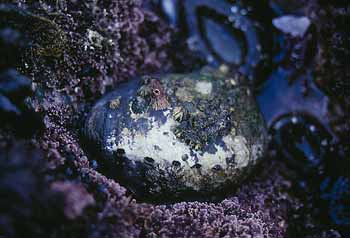 Black AbaloneHaliotis cracherodii
-
 PerlemoenHaliotis midae
-
 White AbaloneHaliotis sorenseni
-
 Pink AbaloneHaliotis corrugata
Compare
Questions and answers
What is the scientific name of the Northern Abalone?
The scientific name of the Northern Abalone is Haliotis kamtschatkana. Written with its author, the full name is Haliotis kamtschatkana Jonas, 1845.
Which family does the Northern Abalone belong to?
Haliotis kamtschatkana belongs to the family Haliotidae, in the order Lepetellida and the class Gastropoda.
Where is the Northern Abalone found?
Checklists and occurrence records place Haliotis kamtschatkana in 3 countries: United States, Canada and Mexico.
What is the conservation status of the Northern Abalone?
The IUCN Red List category recorded for Haliotis kamtschatkana is Endangered (EN).
What other names does the Northern Abalone have?
Haliotis kamtschatkana is also known in English as Japanese Abalone, Threaded Abalone and Pinto Abalone.
Sources
Passages the profile rests on
- The adult shell is flattened, ear-shaped, and relatively thin. Source passage: “The rather thin shell is flattened and ear-shaped.” — English Wikipedia
- The shell surface bears uneven spiral cords and elevated undulations or lumps. Source passage: “The surface is covered with uneven spiral cords, often very indistinct, and strongly elevated undulations or lumps.” — English Wikipedia
- The shell has three to six elevated respiratory holes. Source passage: “The shell has 3 to 6 elevated respiratory holes.” — English Wikipedia
- The shell has a somewhat scalloped edge. Source passage: “The shell is generally green-brown but can have white or blue coloration and has a somewhat scalloped edge.” — English Wikipedia
- The shell is generally green-brown, although white or blue coloration also occurs. Source passage: “The shell is generally green-brown but can have white or blue coloration” — English Wikipedia
- The shell interior is silvery and iridescent. Source passage: “The silvery interior of the shell is iridescent.” — English Wikipedia
- The shell exterior can be red, pink, tan, or mottled. Source passage: “The outside coloring can be red, pink, tan, or mottled.” — newsrelease.adfg.alaska.gov
- The shell interior has a mother-of-pearl appearance. Source passage: “The inside of the shell is mother of pearl.” — newsrelease.adfg.alaska.gov
- The epipodium is lacy and green-brown. Source passage: “The epipodium is lacy and green-brown in color.” — English Wikipedia
- The central muscle is cream-colored, with mottled orange coloration along its sides and darker orange coloration near the foot. Source passage: “The muscle is cream colored in the center, mottled orange on the sides, and darker orange at the foot.” — newsrelease.adfg.alaska.gov
- The head has two large tentacles, eye stalks, and a rasping mouth. Source passage: “The abalone’s head has two large tentacles, eye stocks, and a rasping mouth.” — newsrelease.adfg.alaska.gov
- The adult shell typically measures approximately 8 cm. Source passage: “The pinto abalone has an adult shell size of approximately 8 cm (3.1 in)” — English Wikipedia
- Exceptional individuals can reach approximately 15 cm in shell size. Source passage: “but it can rarely grow as large as 15 cm (5.9 in).” — English Wikipedia
- The species inhabits rocky shores in intertidal and subtidal environments near kelp. Source passage: “These abalone are found intertidally or subtidally near kelp to 30 feet (9 m) depth” — English Wikipedia
- The species frequently inhabits kelp beds and rocky sea floors. Source passage: “They are frequently found in kelp beds and on rocky bottoms.” — newsrelease.adfg.alaska.gov
- The species requires exposure to ocean currents. Source passage: “This species of abalone requires exposure to ocean currents.” — newsrelease.adfg.alaska.gov
- The species is associated with complex rocky reef habitats. Source passage: “Abalone exist in aggregations and are associated with complex rocky reef habitat.” — wdfw.wa.gov
- Individuals can occur at depths reaching approximately 100 metres. Source passage: “but they can be found to 330 feet (100 m) depth.” — English Wikipedia
- Most individuals occupy the seabed between the lowest low tide and depths of approximately 30–40 feet. Source passage: “Most occupy the sea floor from low-low tide to minus 30-40 feet.” — newsrelease.adfg.alaska.gov
- In Washington, individuals generally inhabit depths of 9–60 feet. Source passage: “Pinto abalone in Washington State are generally found between water depths of 9 to 60 feet.” — wdfw.wa.gov
- The species is herbivorous. Source passage: “Like all abalone, they are herbivorous.” — English Wikipedia
- Pinto abalone primarily consume marine algae, including bull kelp. Source passage: “Pinto abalone feed primarily on marine algae. It can consume small forms of algae up to forms as large as bull kelp.” — newsrelease.adfg.alaska.gov
- Adult individuals graze on algae and diatoms. Source passage: “As adults, abalone graze on algae and diatoms.” — wdfw.wa.gov
- The tentacles surrounding the foot and extending beyond the shell detect food and predators. Source passage: “Tentacles surrounding the foot and extending out of the shell sense food and predators.” — English Wikipedia
- Adult individuals are mobile but rarely travel far during their lives. Source passage: “The pinto abalone is mobile but rarely moves far during its adult life.” — newsrelease.adfg.alaska.gov
- When pursued by sea stars, individuals raise their shells, twist their bodies, and sweep their shells from side to side to move away. Source passage: “The abalone will raise its shell and twist its body. This sweeps the shell from side to side, and the abalone moves quickly away.” — newsrelease.adfg.alaska.gov
- Pinto abalone form aggregations during spawning. Source passage: “Pinto abalones form aggregations to spawn.” — newsrelease.adfg.alaska.gov
- The species reproduces through broadcast spawning between April and June. Source passage: “They broadcast spawn from April to June.” — English Wikipedia
- Individuals release sperm and eggs into the water column for external fertilization. Source passage: “Abalone are broadcast spawners, meaning that they release sperm and eggs into the water column where fertilization occurs.” — wdfw.wa.gov
- The planktonic larval stage lasts approximately 12–13 days. Source passage: “After fertilization, the planktonic stage lasts 12–13 days.” — newsrelease.adfg.alaska.gov
- Larval development and dispersal occur over a relatively short period. Source passage: “Larval dispersal is limited.” — English Wikipedia
- Larvae settle in areas containing coralline algae. Source passage: “Larvae settle in areas with coralline algae.” — newsrelease.adfg.alaska.gov
- Individuals are thought to become capable of reproduction at shell lengths of approximately 2–2.5 inches. Source passage: “It is thought that pinto abalones are capable of reproducing once they reach a length of 2–2 ½ inches.” — newsrelease.adfg.alaska.gov
- Individuals take approximately 6–8 years after settlement to reach maturity. Source passage: “After settling, it takes the pinto abalone 6-8 years to reach maturity.” — newsrelease.adfg.alaska.gov
- Successful fertilization depends on males and females occurring close together because adults have small home ranges. Source passage: “Abalone typically have a small home range and in order for successful fertilization males and females must be in close proximity.” — wdfw.wa.gov
- The species has been listed as endangered on the IUCN Red List since 2006. Source passage: “It has been listed as endangered by the IUCN Red List of Endangered Species since 2006.” — English Wikipedia
- Canada listed the species as endangered under its Species at Risk Act in 2009. Source passage: “In 2009, pinto abalone (referred to commonly as northern abalone in Canada) were listed as "Endangered" under Canada's Species at Risk Act.” — wdfw.wa.gov
- The species was designated a state endangered species in Washington in 2019. Source passage: “In Washington State, pinto abalone were designated a State Endangered Species in 2019.” — wdfw.wa.gov
- Overharvesting, illegal harvesting, predation by recovering sea otters, and disease have contributed to population declines. Source passage: “Population size has declined due to overharvesting, illegal harvesting, predation by recovering sea otters, and disease.” — English Wikipedia
- The species retains high genetic diversity despite depleted populations. Source passage: “Despite depleted populations, our analysis of over 6000 SNPs across nearly 300 individuals revealed that pinto abalone maintains a high genetic diversity with no evidence of a genetic bottleneck.” — pmc.ncbi.nlm.nih.gov
- Washington surveys recorded a decline of more than 97 percent in surveyed abundance between 1992 and 2017. Source passage: “have shown more than a 97 percent decline in surveyed abalone population abundance between 1992 and 2017” — wdfw.wa.gov
- The average density recorded in the most recent Washington survey was 0.005 abalone per square metre. Source passage: “Average pinto abalone density from the most recent survey was 0.005 abalone per meter squared.” — wdfw.wa.gov
- A laboratory study found that elevated carbon dioxide levels reduced larval survival and increased shell abnormalities. Source passage: “In laboratory experiments, elevated carbon dioxide levels led to decreased larval survival and increased shell abnormalities in Northern abalone.” — wdfw.wa.gov
- Pinto abalone consumption and shells have cultural significance among Tlingit and Haida communities. Source passage: “Both the consumption and the shells of the pinto abalone have played a role in Tlingit and Haida cultures.” — English Wikipedia
- Alaska Natives use the species as a supplemental food and trade item. Source passage: “Alaska Natives use abalone as a supplemental food and as a trade item.” — newsrelease.adfg.alaska.gov
- The shells are used to decorate carvings and ceremonial clothing. Source passage: “Their shells are used as decorations for carvings and ceremonial dress.” — newsrelease.adfg.alaska.gov
- The species is regarded as gourmet food and is described as having a delicate flavor. Source passage: “The pinto abalone has a distinctive delicate flavor, and its smaller size compared to other species of abalone makes it more tender.” — newsrelease.adfg.alaska.gov
Data
- Catalogue of Life, 2026-10-16 XR cc by
- Global Biodiversity Information Facility CC BY 4.0
- Wikidata CC0
- GeoNames CC BY 4.0
- Wikimedia Commons per image; credit shown with each image
- Within the Catalogue of Life, this name comes from World Register of Marine Species cc by
References
- Jonas, J. H. (1845). Neue Conchylien. Zeitschrift Für Malakozoologie, 2: 168–173. where the name was published
This species in other databases
Page built on 28 November 2026. See how the catalog is made and all sources and licences.
Cite this page
ScientificNames.org. (2026). Haliotis kamtschatkana (Northern Abalone). Retrieved November 28, 2026, from https://scientificnames.org/species/haliotis-kamtschatkana
“Haliotis kamtschatkana (Northern Abalone).” ScientificNames.org, 2026, scientificnames.org/species/haliotis-kamtschatkana. Accessed 28 Nov. 2026.
ScientificNames.org. “Haliotis kamtschatkana (Northern Abalone).” Accessed November 28, 2026. https://scientificnames.org/species/haliotis-kamtschatkana.
@misc{scientificnames_haliotis_kamtschatkana_northern_abalone,
  author = {{ScientificNames.org}},
  title = {Haliotis kamtschatkana (Northern Abalone)},
  year = {2026},
  url = {https://scientificnames.org/species/haliotis-kamtschatkana},
  note = {Accessed 2026-11-28}
}