Species · Flowering plants
Chimantá Massif Marsh Pitcher Heliamphora chimantensis
The scientific name of the Chimantá Massif Marsh Pitcher is Heliamphora chimantensis. It is a species of flowering plant in the family Sarraceniaceae (pitcher plant family), order Ericales.
- Scientific name
- Heliamphora chimantensis Wistuba, Carow & Harbarth
- Common name
- Chimantá Massif Marsh Pitcher
- Genus
- Heliamphora
- Family
- Sarraceniaceae (Pitcher Plant Family)
- Order
- Ericales
- Class
- Magnoliopsida
- Recorded in
- 1 country
- Name status
- accepted in the Catalogue of Life
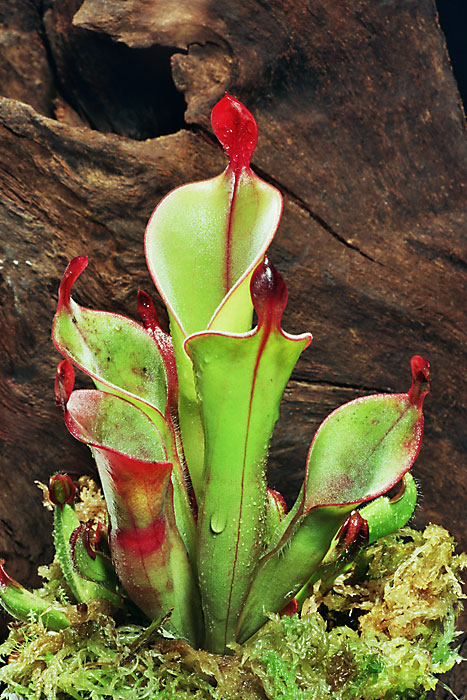
Overview
The Chimantá Massif marsh pitcher has hollow, pitcher-shaped leaves that function as insect traps. The species is endemic to the Chimantá Massif in Venezuela. It has approximately 20 anthers, which reach approximately 5 mm in length.
Written 26 November 2026 from the sources listed below. Each statement was checked against the passage it cites; statements that could not be supported were removed.
Habitat
The species grows in humid environments characterized by frequent rainfall and extremely nutrient-poor soils. It occurs in high-elevation formations belonging to the Guiana Highlands.[1][2]
Diet
The Chimantá Massif marsh pitcher captures and digests insects to obtain nutrients. It obtains nutrients released by decomposing insects trapped inside its pitchers.[3][4]
Behaviour
The plant's pitchers collect rainwater and attract prey that falls into their fluid-filled cavities.[5]
Uses
Cultivation of the Chimantá Massif marsh pitcher requires high humidity, bright light, and relatively cool temperatures. It is typically cultivated by experienced carnivorous plant enthusiasts and botanical institutions.[6][7]
Similar species
The species is considered more closely related to Heliamphora tatei and Heliamphora neblinae than to other species found in the Gran Sabana region.[8]
It differs from other species in the Gran Sabana region, which typically have between 10 and 15 anthers. Its anthers are shorter than those of Heliamphora tatei and Heliamphora neblinae, which measure 7–9 mm.[9][10][11][12]
Classification of the Chimantá Massif Marsh Pitcher
| Kingdom | Plantae |
|---|---|
| Subkingdom | Pteridobiotina |
| Phylum | Tracheophyta |
| Class | Magnoliopsida |
| Order | Ericales |
| Family | Sarraceniaceae (Pitcher Plant Family) |
| Genus | Heliamphora (Sun Pitchers) |
| Species | Heliamphora chimantensis Wistuba, Carow & Harbarth |
Where the Chimantá Massif Marsh Pitcher is found
Checklists and occurrence records place Heliamphora chimantensis in 1 country across South America. GBIF holds 6 georeferenced records of it.
Countries
Regions and cities with the most records
Range as the checklists state it
Venezuela (Bolívar)
A number beside a place is its count of GBIF occurrence records. A place without a number comes from a checklist alone. Records show where a species has been observed or collected, which can include escapes and vagrants.
Common names
English
- Chimantá Massif Marsh Pitcher
Related species
-
 Nodding Marsh PitcherHeliamphora nutans
-
 Small Marsh PitcherHeliamphora minor
-
 Giant Marsh PitcherHeliamphora tatei
-
 Chimantá-Aprada Marsh PitcherHeliamphora exappendiculata
-
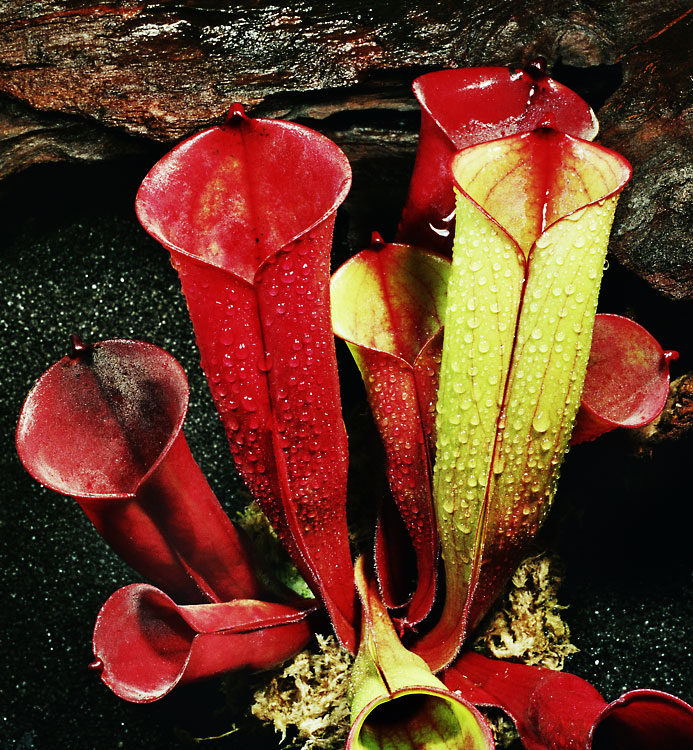 Aparaman Tepui-group Marsh PitcherHeliamphora folliculata
- Cerro Neblina Marsh PitcherHeliamphora hispida
- Huber's Marsh PitcherHeliamphora huberi
-
 Neblina Massif Marsh PitcherHeliamphora parva
Compare
Questions and answers
What is the scientific name of the Chimantá Massif Marsh Pitcher?
The scientific name of the Chimantá Massif Marsh Pitcher is Heliamphora chimantensis. Written with its author, the full name is Heliamphora chimantensis Wistuba, Carow & Harbarth.
Which family does the Chimantá Massif Marsh Pitcher belong to?
Heliamphora chimantensis belongs to the family Sarraceniaceae, in the order Ericales and the class Magnoliopsida.
Where is the Chimantá Massif Marsh Pitcher found?
Checklists and occurrence records place Heliamphora chimantensis in 1 country: Venezuela.
What habitat do pitcher plants live in?
The Chimantá Massif marsh pitcher grows in humid environments characterized by frequent rainfall and extremely nutrient-poor soils. It occurs in high-elevation formations belonging to the Guiana Highlands.[1][2]
How do I care for a Heliamphora plant?
Cultivation of the Chimantá Massif marsh pitcher requires high humidity, bright light, and relatively cool temperatures.[6]
Sources
Passages the profile rests on
- The species grows in humid environments characterized by frequent rainfall and extremely nutrient-poor soils. Source passage: “The species grows in humid environments with frequent rainfall and extremely nutrient-poor soils.” — English Wikipedia
- The species occurs in high-elevation formations belonging to the Guiana Highlands. Source passage: “These formations are part of the Guiana Highlands, an isolated high-elevation region known for its biodiversity.” — English Wikipedia
- The species captures and digests insects to obtain nutrients. Source passage: “Like other members of the genus Heliamphora, it survives in nutrient-poor environments by capturing and digesting insects using specialized pitcher-shaped leaves.” — English Wikipedia
- The plant obtains nutrients released by decomposing insects trapped inside its pitchers. Source passage: “The plant absorbs nutrients released from decomposing insects, allowing it to survive in nutrient-poor tepui soils.” — English Wikipedia
- The plant's pitchers collect rainwater and attract prey that falls into their fluid-filled cavities. Source passage: “These pitchers collect rainwater and attract prey, which falls into the fluid-filled cavity and becomes trapped.” — English Wikipedia
- Cultivation of this species requires high humidity, bright light, and relatively cool temperatures. Source passage: “These include high humidity, bright light, and relatively cool temperatures that mimic its natural habitat.” — English Wikipedia
- The species is typically cultivated by experienced carnivorous plant enthusiasts and botanical institutions. Source passage: “the species is typically grown only by experienced carnivorous plant enthusiasts and botanical institutions” — English Wikipedia
- The species is considered more closely related to Heliamphora tatei and Heliamphora neblinae than to other species found in the Gran Sabana region. Source passage: “The species is thought to be more closely related to Heliamphora tatei and Heliamphora neblinae than to other species found in the Gran Sabana region.” — English Wikipedia
- The species has approximately 20 anthers. Source passage: “H. tatei, H. neblinae, and H. chimantensis have approximately 20.” — English Wikipedia
- The anthers of this species reach approximately 5 mm in length. Source passage: “those of H. chimantensis are shorter, reaching only about 5 mm.” — English Wikipedia
- The species differs from other species in the Gran Sabana region, which typically have between 10 and 15 anthers. Source passage: “All other species in the Gran Sabana region typically have between 10 and 15 anthers” — English Wikipedia
- Its anthers are shorter than those of Heliamphora tatei and Heliamphora neblinae, which measure 7–9 mm. Source passage: “the anthers of H. tatei and H. neblinae measure 7–9 mm in length, while those of H. chimantensis are shorter” — English Wikipedia
Data
- Catalogue of Life, 2026-10-16 XR cc by
- Global Biodiversity Information Facility CC BY 4.0
- Wikidata CC0
- GeoNames CC BY 4.0
- Wikimedia Commons per image; credit shown with each image
- Within the Catalogue of Life, this name comes from Synonymic Checklists of the Vascular Plants of the World cc by
References
- Wistuba, Carow, & Harbarth. (2002). Carniv. Pl. Newslett. 31(3): 78 (2002). where the name was published
This species in other databases
Page built on 28 November 2026. See how the catalog is made and all sources and licences.
Cite this page
ScientificNames.org. (2026). Heliamphora chimantensis (Chimantá Massif Marsh Pitcher). Retrieved November 28, 2026, from https://scientificnames.org/species/heliamphora-chimantensis
“Heliamphora chimantensis (Chimantá Massif Marsh Pitcher).” ScientificNames.org, 2026, scientificnames.org/species/heliamphora-chimantensis. Accessed 28 Nov. 2026.
ScientificNames.org. “Heliamphora chimantensis (Chimantá Massif Marsh Pitcher).” Accessed November 28, 2026. https://scientificnames.org/species/heliamphora-chimantensis.
@misc{scientificnames_heliamphora_chimantensis_chimanta_massif_marsh_pitcher,
  author = {{ScientificNames.org}},
  title = {Heliamphora chimantensis (Chimantá Massif Marsh Pitcher)},
  year = {2026},
  url = {https://scientificnames.org/species/heliamphora-chimantensis},
  note = {Accessed 2026-11-28}
}