Species · Flowering plants
Water-thyme Hydrilla verticillata
The scientific name of the Water-thyme is Hydrilla verticillata. It is a species of flowering plant in the family Hydrocharitaceae (frog-bit family), order Alismatales.
- Scientific name
- Hydrilla verticillata (L.f.) Royle
- Common name
- Water-thyme
- Genus
- Hydrilla
- Family
- Hydrocharitaceae (Frog-bit Family)
- Order
- Alismatales
- Class
- Liliopsida
- Red List category
- LC Least Concern
- Recorded in
- 70 countries
- Name status
- accepted in the Catalogue of Life

Overview
Hydrilla verticillata grows in lakes, ponds, streams, marshes, and rivers. Its leaves have serrated or spiny margins and typically form whorls of five.
Written 27 November 2026 from the sources listed below. Each statement was checked against the passage it cites; statements that could not be supported were removed.
Appearance
Its flowers have three sepals and three petals. The transparent petals bear red streaks.[1]
Its stems contain air spaces that help keep them upright.[2]
Habitat
Water-thyme grows in lakes, ponds, streams, marshes, and rivers. It tolerates both freshwater and brackish water with salinity of up to seven percent.[3][4]
It can grow under both low-light and high-light conditions. Its roots can extend approximately 20 centimetres into lake sediment.[5][6]
Behaviour
Early in the growing season, Water-thyme initially grows horizontally along the bottom of a waterbody. As water temperatures increase, its stems elongate and send shoot tips toward the water surface.[7][8]
Reproduction and life cycle
Water-thyme can be monoecious or dioecious. Monoecious plants produce separate male and female flowers on the same plant.[9][10]
Water-thyme reproduces primarily through vegetative fragmentation, rhizomes, and overwintering turions. It produces reproductive tubers on its roots and turions on its stems.[11][12]
Water-thyme produces seeds but spreads mainly through vegetative propagules, including tubers, turions, and stem fragments. Its tubers can remain dormant in sediment for years before sprouting.[13][14]
Water-thyme flowers and produces seeds only rarely.[15]
Conservation
Water-thyme is a federally listed noxious weed in the United States. It is classified as a regulated Class A noxious weed in Washington State.[16][17]
Uses
Water-thyme is used as an aquarium plant.[18]
Water-thyme can be used in phytoremediation because it accumulates mercury, cadmium, chromium, and lead.[19]
Classification of the Water-thyme
| Kingdom | Plantae |
|---|---|
| Subkingdom | Pteridobiotina |
| Phylum | Tracheophyta |
| Class | Liliopsida |
| Order | Alismatales |
| Family | Hydrocharitaceae (Frog-bit Family) |
| Genus | Hydrilla |
| Species | Hydrilla verticillata (L.f.) Royle |
Where the Water-thyme is found
Checklists and occurrence records place Hydrilla verticillata in 70 countries across Africa, Asia, Europe, North America, Oceania and South America. GBIF holds 21,233 georeferenced records of it.
Countries where it is native or its origin is not stated
- Afghanistan 8
- Australia 603
- Austria 3
- Bangladesh 5
- Bhutan 3
- Brunei 4
- Burundi 19
- Cambodia 3
- China 526
- Democratic Republic of the Congo 7
- France 8
- Guam 4
- Hong Kong 17
- India 230
- Indonesia 136
- Iran
- Japan 1,394
- Kazakhstan 10
- Kenya 7
- Laos 3
- Latvia 50
- Lithuania 7
- Macao 6
- Malaysia 24
- Mongolia
- Myanmar 14
- Nepal 12
- New Caledonia 23
- Pakistan 26
- Papua New Guinea 16
- Philippines 46
- Poland 111
- Russia 383
- Rwanda 2
- Seychelles 3
- Singapore 16
- South Africa 12
- South Korea 1,024
- Sri Lanka 35
- Switzerland 10
- Taiwan 104
- Tanzania 22
- Thailand 102
- Uganda 18
- Vietnam 18
- Zambia 8
Countries where it has been introduced
- Aruba 3
- Colombia 2
- Costa Rica 59
- Cuba 8
- Fiji 139
- Germany 11
- Ghana
- Honduras 6
- Ireland 38
- Ivory Coast 1
- Jamaica 3
- Madagascar 5
- Mauritius 6
- Mexico 67
- Mozambique 6
- New Zealand 109
- Nicaragua 1
- Panama 60
- Reunion 21
- Spain 8
- Trinidad and Tobago
- United Kingdom 118
- United States 15,479
- Venezuela 1
Regions and cities with the most records
- Florida, United States 7,284
- Connecticut, United States 2,508
- Middletown, United States 1,280
- New York, United States 1,271
- Glastonbury, United States 1,130
- Wethersfield, United States 1,077
- Newington, United States 966
- Auburndale, United States 897
- Eloise, United States 884
- Winter Haven, United States 877
- Pennsylvania, United States 842
- Hartford, United States 822
- Pine Hills, United States 815
- East Hartford, United States 802
- Manchester, United States 773
- West Hartford, United States 766
- New Britain, United States 765
- South Windsor, United States 765
- Orlando, United States 748
- Texas, United States 745
- Oak Ridge, United States 741
- Haines City, United States 731
- Windsor, United States 697
- Bloomfield, United States 682
- Ocoee, United States 641
- Southchase, United States 592
- Farmington, United States 563
- Winter Park, United States 557
- Maitland, United States 551
- Bartow, United States 545
- Lake Butler, United States 532
- Meadow Woods, United States 530
- New City, United States 500
- Nanuet, United States 496
- Spring Valley, United States 496
- Avon, United States 493
11 more countries have a few records outside this range
These countries hold a few records of Hydrilla verticillata but lie outside the range the checklists give for it. Such records are often zoo or garden specimens, museum material or vagrants, so the species is not counted as occurring there.
A number beside a place is its count of GBIF occurrence records. A place without a number comes from a checklist alone. Records show where a species has been observed or collected, which can include escapes and vagrants.
Common names
English
- Water-thyme
- Esthwaite Waterweed
- Florida Elodea
- Florida-elodea
- Hydilla
- Indian Stargrass
- Indian Star-vine
- Water Thyme
Names in 20 other languages
- Arabic
- زعتر الماء
- Chinese
- hei zao, 水王孫, 黑藻
- Czech
- přeslenice vodní
- Dutch
- Getande waterpest
- Finnish
- kiehkuravesirutto
- French
- Hydrille verticillée
- German
- Grundnessel, Wasserquirl
- Hungarian
- örvös szúrós-átokhínár
- Japanese
- クロモ
- Korean
- 검정말
- Latin
- Hydrilla
- Lithuanian
- Menturlapė ežerutė
- Polish
- przesiąkra okółkowa
- Russian
- Гидрилла мутовчатая
- Slovak
- hydrila praslenatá
- Spanish
- Tomillo de agua del Viejo Mundo
- Swedish
- vattenkrans
- Thai
- สาหร่ายหางกระรอก
- Vietnamese
- Rong gai
- Welsh
- Alaw Gwelw, Ffugalaw Gwelw
Synonyms
8 other scientific names have been used for this species and are now treated as synonyms of Hydrilla verticillata.
- Elodea verticillata (L.f.) F.Muell.
- Hydrilla dentata Casp.
- Hydrilla ovalifolia Rich.
- Hydrilla roxburghii Steud.
- Hydrilla verticillata var. roxburghii Casp.
- Udora verticillata (L.f.) Spreng.
- Vallisneria verticillata (L.f.) Roxb.
- Serpicula verticillata L.f. ambiguous synonym
Subspecies and varieties
- Hydrilla verticillata subsp. angustifolia subspecies
- Hydrilla verticillata subsp. australis subspecies
- Hydrilla verticillata subsp. lithuanica subspecies
- Hydrilla verticillata subsp. peregrina subspecies
- Hydrilla verticillata subsp. verticillata subspecies
- Hydrilla verticillata var. verticillata variety
Related species
-
 Canadian WaterweedElodea canadensis
-
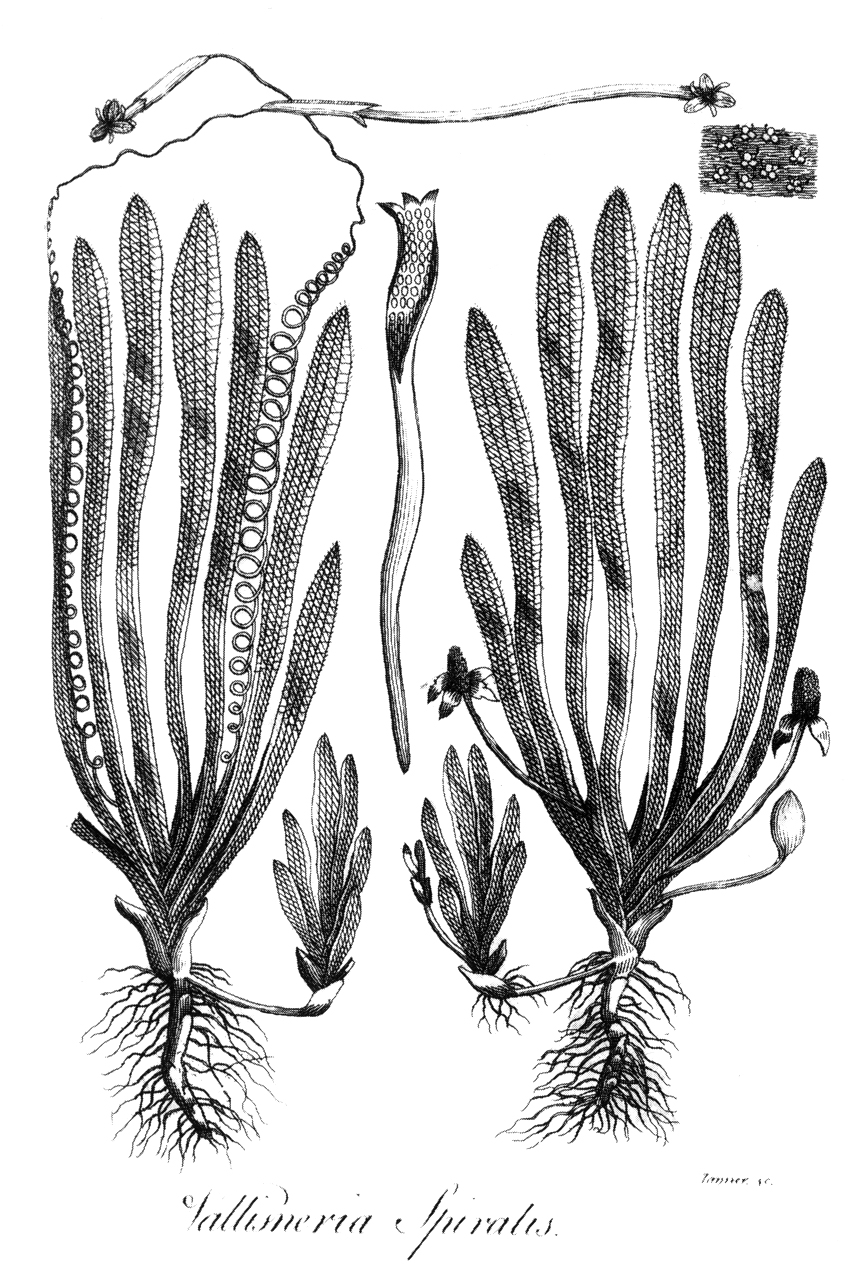 Straight VallisneriaVallisneria spiralis
-
 American EelgrassVallisneria americana
-
 European Frog-bitHydrocharis morsus-ranae
-
 Southern NaiadNajas guadalupensis
-
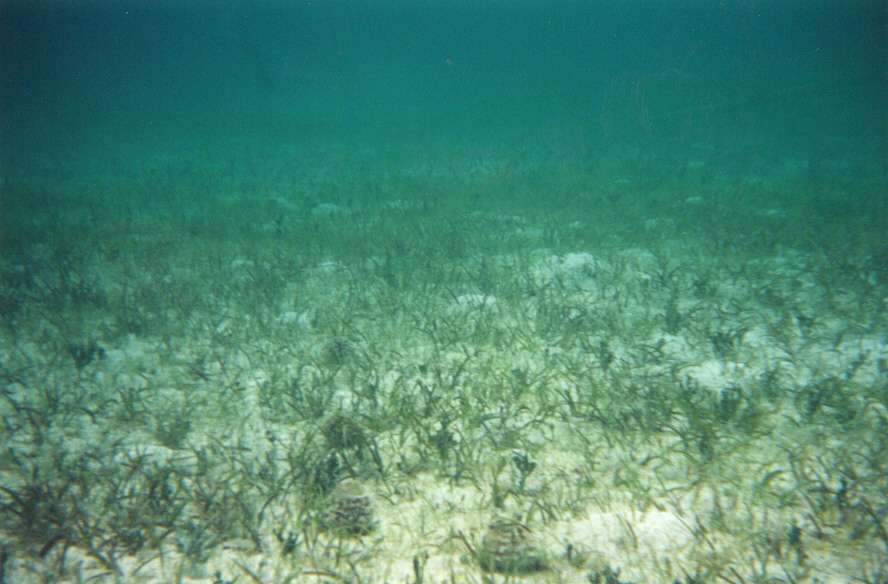 Turtle GrassThalassia testudinum
-
 Water SoldierStratiotes aloides
-
 Nuttall's Water-WeedElodea nuttallii
Compare
Questions and answers
What is the scientific name of the Water-thyme?
The scientific name of the Water-thyme is Hydrilla verticillata. Written with its author, the full name is Hydrilla verticillata (L.f.) Royle.
Which family does the Water-thyme belong to?
Hydrilla verticillata belongs to the family Hydrocharitaceae, in the order Alismatales and the class Liliopsida.
Where is the Water-thyme found?
Checklists and occurrence records place Hydrilla verticillata in 70 countries, including Japan, South Korea, Australia, China, Russia and India.
What is the conservation status of the Water-thyme?
The IUCN Red List category recorded for Hydrilla verticillata is Least Concern (LC).
What other names does the Water-thyme have?
Hydrilla verticillata is also known in English as Esthwaite Waterweed, Florida Elodea, Florida-elodea, Hydilla, Indian Stargrass and Indian Star-vine.
Sources
Passages the profile rests on
- Its flowers have three sepals and three petals, with transparent petals bearing red streaks. Source passage: “the flowers are small, with three sepals and three petals, the petals 3–5 mm long, transparent with red streaks.” — English Wikipedia
- Its stems contain air spaces that help keep them upright. Source passage: “They have air spaces to keep them upright.” — English Wikipedia
- Hydrilla grows in lakes, ponds, streams, marshes, and rivers. Source passage: “It can grow in deep or shallow water; it occurs in lakes, ponds, streams, marshes, and rivers.” — extension.uconn.edu
- It can tolerate both freshwater and brackish water with salinity of up to seven percent. Source passage: “It can tolerate fresh and brackish water (up to seven percent salinity).” — extension.uconn.edu
- Hydrilla can grow under both low-light and high-light conditions. Source passage: “It can grow in low or high light conditions” — extension.uconn.edu
- Its roots can extend approximately 20 centimetres into lake sediment. Source passage: “Hydrillas roots grow in the lake sediment to 20 cm deep.” — kingcounty.gov
- Hydrilla initially grows horizontally along the bottom of a waterbody early in the growing season. Source passage: “Early in the season, it grows horizontally along the bottom of the waterbody.” — allegany.cce.cornell.edu
- As water temperatures increase, its stems elongate and send shoot tips toward the water surface. Source passage: “As the water temperature increases, the stems elongate, sending the shoot tips toward the water surface” — allegany.cce.cornell.edu
- Hydrilla can be monoecious or dioecious. Source passage: “It is monoecious (sometimes dioecious)” — English Wikipedia
- Monoecious Hydrilla produces separate male and female flowers on the same plant. Source passage: “with male and female flowers produced separately on a single plant” — English Wikipedia
- Hydrilla reproduces primarily through vegetative fragmentation, rhizomes, and overwintering turions. Source passage: “It reproduces primarily vegetatively by fragmentation and by rhizomes and turions (overwintering)” — English Wikipedia
- Hydrilla produces reproductive tubers on its roots and turions on its stems. Source passage: “On the roots are reproductive structures called tubers (thickened underground part of a stem that stores nutrients, i.e., potato) and turions (small buds capable of growing into a full plant).” — kingcounty.gov
- Hydrilla produces seeds but spreads mainly through vegetative propagules, including tubers, turions, and stem fragments. Source passage: “Hydrilla does produce seeds, but is mainly spread by vegetative propagules, including tubers, turions, and stem fragments.” — extension.uconn.edu
- Hydrilla tubers can remain dormant in sediment for years before sprouting. Source passage: “Tubers can remain dormant in sediment for years before sprouting.” — extension.uconn.edu
- Hydrilla flowers and produces seeds only rarely. Source passage: “Rarely does hydrilla flower and set seed.” — allegany.cce.cornell.edu
- Hydrilla is a federally listed noxious weed in the United States. Source passage: “It is a federally listed noxious weed” — dec.ny.gov
- Hydrilla is classified as a regulated Class A noxious weed in Washington State. Source passage: “Hydrilla is a regulated Class A noxious weed.” — kingcounty.gov
- Hydrilla is used as an aquarium plant. Source passage: “It is a popular aquarium plant” — dec.ny.gov
- Hydrilla can be used in phytoremediation because it accumulates mercury, cadmium, chromium, and lead. Source passage: “This abundant source of biomass is a known bioremediation hyperaccumulator of mercury, cadmium, chromium and lead, and as such can be used in phytoremediation.” — English Wikipedia
Data
- Catalogue of Life, 2026-10-16 XR cc by
- Global Biodiversity Information Facility CC BY 4.0
- Wikidata CC0
- GeoNames CC BY 4.0
- Wikimedia Commons per image; credit shown with each image
- Within the Catalogue of Life, this name comes from The World Checklist of Vascular Plants (WCVP) cc by
References
- Ill. Bot. Himal. Mts.: t. 376 (1839) where the name was published
This species in other databases
- Catalogue of Life 3N52R
- Wikidata Q164181
- iNaturalist 77468
- World Flora Online wfo-0000769366
- GRIN 316414
Page built on 28 November 2026. See how the catalog is made and all sources and licences.
Cite this page
ScientificNames.org. (2026). Hydrilla verticillata (Water-thyme). Retrieved November 28, 2026, from https://scientificnames.org/species/hydrilla-verticillata
“Hydrilla verticillata (Water-thyme).” ScientificNames.org, 2026, scientificnames.org/species/hydrilla-verticillata. Accessed 28 Nov. 2026.
ScientificNames.org. “Hydrilla verticillata (Water-thyme).” Accessed November 28, 2026. https://scientificnames.org/species/hydrilla-verticillata.
@misc{scientificnames_hydrilla_verticillata_water_thyme,
  author = {{ScientificNames.org}},
  title = {Hydrilla verticillata (Water-thyme)},
  year = {2026},
  url = {https://scientificnames.org/species/hydrilla-verticillata},
  note = {Accessed 2026-11-28}
}