Species · Flowering plants
American Spongeplant Hydrocharis spongia
The scientific name of the American Spongeplant is Hydrocharis spongia. It is a species of flowering plant in the family Hydrocharitaceae (frog-bit family), order Alismatales.
- Scientific name
- Hydrocharis spongia Bosc
- Common name
- American Spongeplant
- Genus
- Hydrocharis
- Family
- Hydrocharitaceae (Frog-bit Family)
- Order
- Alismatales
- Class
- Liliopsida
- Recorded in
- 5 countries
- Name status
- accepted in the Catalogue of Life
Overview
Hydrocharis spongia grows in slow-moving or stagnant water, including streams, bayous, lakes, sloughs, ditches, and swampy forests. It has heart-shaped or nearly rounded floating or emerged leaves, with two leaf forms that can occur on the same individual.
Written 26 November 2026 from the sources listed below. Each statement was checked against the passage it cites; statements that could not be supported were removed.
Appearance
American spongeplant has heart-shaped or nearly rounded leaves that may float on the water or emerge above its surface. Floating leaves have a thick layer of spongy aerenchyma on their undersides, whereas emerged leaves lack this tissue.[1][2]
The plant has two leaf forms, which can occur on the same individual. It can grow to 50 cm in length, its leaves measure 2–7 cm in diameter, and its fruits measure 4–12 mm in diameter.[3][4][5][6]
Habitat
American spongeplant grows in slow-moving water in streams, bayous, and lakes. It also occurs in sloughs, ditches, and swampy forests, and can grow in stagnant water over muddy substrates.[7][8][9]
The species occurs at elevations from sea level to 100 meters.[10]
Its roots provide habitat for zooplankton species that use them to disperse their resting stages. The plant also provides important habitat for mosquito species, particularly those in the genus Mansonia.[11][12]
Reproduction and life cycle
The species is predominantly dioecious, although some individuals are monoecious. It flowers during summer and fall, primarily on plants bearing emerged leaves.[13][14]
Its fruits develop from pistillate flowers. After pollination, the fruit stalk bends backward and pushes the developing fruit beneath the water surface.[15][16]
Behaviour
American spongeplant can form extensive mats when it grows prolifically.[17]
Diet
Sugar from the plant is a food source for the Common Malaria Mosquito (Anopheles quadrimaculatus).[18]
Conservation
Climate change may cause the species to spread beyond its native range and threaten aquatic plants in newly colonized areas.[19]
Extensive growth can reduce dissolved oxygen and harm aquatic fauna. It can also restrict human uses of water and encourage herbicide use in affected areas when growth is uncontrolled.[20][21][22]
Similar species
American spongeplant can be confused with Pontederia crassipes, formerly known as Eichhornia crassipes. It can be distinguished from Common Water Hyacinth by its whitish roots and stems and its ridged leaf stalks.[23][24][25]
Young leaves have a central disk of red spongy cells on their undersides, which helps distinguish the species from European Frogbit.[26]
Classification of the American Spongeplant
| Kingdom | Plantae |
|---|---|
| Subkingdom | Pteridobiotina |
| Phylum | Tracheophyta |
| Class | Liliopsida |
| Order | Alismatales |
| Family | Hydrocharitaceae (Frog-bit Family) |
| Genus | Hydrocharis (Frog-bit) |
| Species | Hydrocharis spongia Bosc |
Where the American Spongeplant is found
Checklists and occurrence records place Hydrocharis spongia in 5 countries across Europe and North America. GBIF holds 1,974 georeferenced records of it.
Countries where it is native or its origin is not stated
Countries where it has been introduced
Regions and cities with the most records
- Florida, United States 375
- Illinois, United States 103
- North Carolina, United States 65
- Arkansas, United States 52
- Texas, United States 47
- Mississippi, United States 46
- Louisiana, United States 43
- Titusville, United States 43
- Missouri, United States 40
- Georgia, United States 36
- South Carolina, United States 34
- Virginia, United States 30
- Gainesville, United States 29
- Alabama, United States 20
- Pine Hills, United States 20
- Wekiwa Springs, United States 20
- Apopka, United States 18
- Winter Garden, United States 18
- Ocoee, United States 16
- Lake Butler, United States 15
- Tallahassee, United States 15
- Tennessee, United States 15
- California, United States 13
- Maryland, United States 12
- Oviedo, United States 12
- Alafaya, United States 11
- Monroe, United States 11
- Oklahoma, United States 11
- Winter Springs, United States 11
- Casselberry, United States 10
- Cherry Hill, United States 10
- Maumelle, United States 10
- Altamonte Springs, United States 9
- Burke, United States 9
- Dale City, United States 9
- Fort Hunt, United States 9
3 more countries have a few records outside this range
These countries hold a few records of Hydrocharis spongia but lie outside the range the checklists give for it. Such records are often zoo or garden specimens, museum material or vagrants, so the species is not counted as occurring there.
A number beside a place is its count of GBIF occurrence records. A place without a number comes from a checklist alone. Records show where a species has been observed or collected, which can include escapes and vagrants.
Common names
English
- American Spongeplant
Names in 1 other language
- Swedish
- nordgrodört
Synonyms
5 other scientific names have been used for this species and are now treated as synonyms of Hydrocharis spongia.
- Limnobium boscii Rich.
- Limnobium spongia (Bosc) Steud.
- Limnobium spongia subsp. spongia
- Rhizakenia ovata Raf.
- Hydrocharis cordifolia Nutt. ambiguous synonym
Related species
-
 European Frog-bitHydrocharis morsus-ranae
- Hydrocharis laevigata
- Hydrocharis dubia
- Hydrocharis chevalieri
-
 Canadian WaterweedElodea canadensis
-
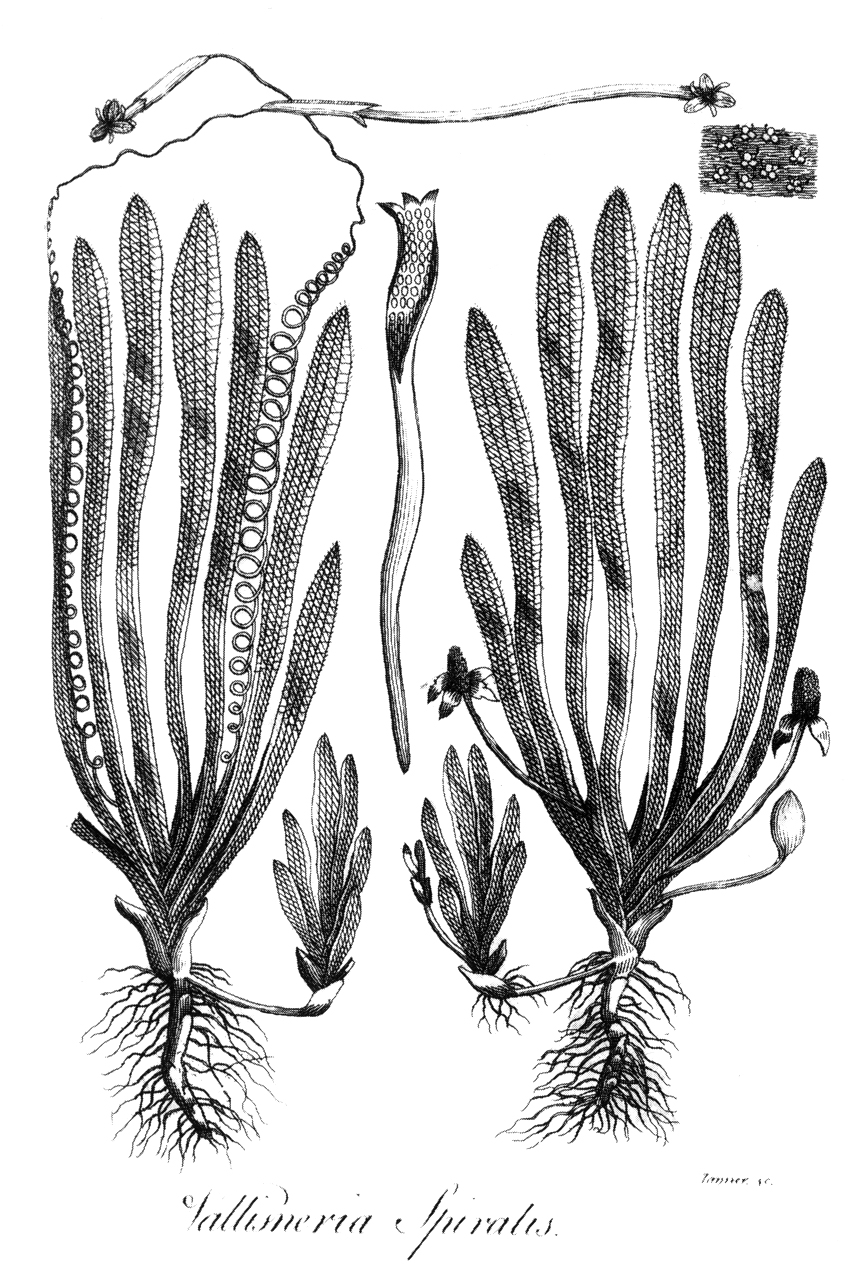 Straight VallisneriaVallisneria spiralis
-
 American EelgrassVallisneria americana
-
 Southern NaiadNajas guadalupensis
Compare
Questions and answers
What is the scientific name of the American Spongeplant?
The scientific name of the American Spongeplant is Hydrocharis spongia. Written with its author, the full name is Hydrocharis spongia Bosc.
Which family does the American Spongeplant belong to?
Hydrocharis spongia belongs to the family Hydrocharitaceae, in the order Alismatales and the class Liliopsida.
Where is the American Spongeplant found?
Checklists and occurrence records place Hydrocharis spongia in 5 countries, including United States, Mexico and Panama.
What are some examples of free-floating water plants?
American spongeplant has leaves that float on the water surface.[1]
Sources
Passages the profile rests on
- The plant has heart-shaped or nearly rounded leaves that may float on the water or emerge above its surface. Source passage: “Heart-shaped or nearly rounded leaves are floating or emersed” — English Wikipedia
- Floating leaves have a thick layer of spongy aerenchyma on their undersides, whereas emerged leaves lack this tissue. Source passage: “Floating leaves have a thick layer of spongy aerenchyma on the underside, while the emerged leaves lack the aerenchyma.” — English Wikipedia
- The plant has two leaf forms, which can occur on the same individual. Source passage: “The leaves have two forms, often on the same plant.” — English Wikipedia
- The plant can grow to 50 cm in length. Source passage: “The plants are herbaceous, growing up to 50 cm long.” — English Wikipedia
- Its leaves measure 2–7 cm in diameter. Source passage: “1–3 in (2–7 cm) in diameter.” — English Wikipedia
- Its fruits measure 4–12 mm in diameter. Source passage: “Fruits are 4 to 12 mm diameter” — English Wikipedia
- The species grows in slow-moving water in streams, bayous, and lakes. Source passage: “It grows in the slow-moving water of streams, bayous, and lakes” — English Wikipedia
- The species occurs in sloughs, ditches, and swampy forests. Source passage: “Its preferred habitat include sloughs, ditches, swampy forests” — English Wikipedia
- The species can grow in stagnant water over muddy substrates. Source passage: “in slow-moving or stagnant water with muddy substrate.” — English Wikipedia
- The species occurs at elevations from sea level to 100 meters. Source passage: “from sea level up to 100 meters elevation.” — English Wikipedia
- The plant's roots provide habitat for zooplankton species that use them to disperse their resting stages. Source passage: “The roots of Hydrocharis spongia are known habitats for various zooplankton species to use in order to disperse their resting stages.” — English Wikipedia
- The plant provides important habitat for mosquito species, particularly those in the genus Mansonia. Source passage: “American Frogbit is also important habitat for various mosquito species, especially those in the genus Mansonia.” — English Wikipedia
- The species is predominantly dioecious, although some individuals are monoecious. Source passage: “Plants are mostly dioecious and sometimes monoecious” — English Wikipedia
- The species flowers during summer and fall, primarily on plants bearing emerged leaves. Source passage: “flower in summer and fall, mostly on plants with emersed leaves.” — English Wikipedia
- Its fruits develop from pistillate flowers. Source passage: “Fruits are 4 to 12 mm diameter form from pistillate flowers” — English Wikipedia
- After pollination, the fruit stalk bends backward and pushes the developing fruit beneath the water surface. Source passage: “once pollinated the peduncle becomes recurved to push the developing fruit below the water surface.” — English Wikipedia
- The species can form extensive mats when it grows prolifically. Source passage: “American Frog-bit can form large, extensive mats” — English Wikipedia
- Sugar from the plant is a food source for the Common Malaria Mosquito (Anopheles quadrimaculatus). Source passage: “The sugar in American Frog-bit is a known food source of the Common Malaria Mosquito” — English Wikipedia
- Climate change may cause the species to spread beyond its native range and threaten aquatic plants in newly colonized areas. Source passage: “climate change can cause it and other members of its genus to spread beyond their native range, causing them to threaten the native aquatic plants in these new areas.” — English Wikipedia
- Extensive growth of the species can reduce dissolved oxygen and harm aquatic fauna. Source passage: “can harm aquatic fauna (i.e., dissolved oxygen depletion)” — English Wikipedia
- Extensive growth can restrict human uses of water. Source passage: “and restrict human uses of water when it is allowed to grow extensively.” — English Wikipedia
- Uncontrolled growth of the species can encourage herbicide use in affected areas. Source passage: “encouraging the use of herbicides in areas where it is spreading.” — English Wikipedia
- The species can be confused with Pontederia crassipes, formerly known as Eichhornia crassipes. Source passage: “Hydrocharis spongia can be confused with Pontederia crassipes (formerly Eichhornia crassipes)” — English Wikipedia
- The species can be distinguished from Common Water Hyacinth by its whitish roots and stems. Source passage: “American Frogbit will have whitish roots and stems, whereas Common Water Hyacinth with have darkly colored roots and stems.” — English Wikipedia
- The species has ridged leaf stalks that help distinguish it from Common Water Hyacinth. Source passage: “American Frogbit has ridged leaf stalks” — English Wikipedia
- Young leaves have a central disk of red spongy cells on their undersides, which helps distinguish the species from European Frogbit. Source passage: “the undersides of young leaves have a central disk of red spongy cells, which helps to distinguish it from European Frogbit.” — English Wikipedia
- The species is cultivated primarily to provide shade for fish and other aquatic animals in domestic tanks, ponds, and pools. Source passage: “The primary use for cultivating Hydrocharis spongia is to provide shade for fish or other aquatic fauna in domestic tanks, ponds, or pools.” — English Wikipedia
- The species is cultivated as an ornamental aquatic plant that prefers full sun. Source passage: “American Frog-bit prefers full sun” — English Wikipedia
Data
- Catalogue of Life, 2026-10-16 XR cc by
- Global Biodiversity Information Facility CC BY 4.0
- Wikidata CC0
- GeoNames CC BY 4.0
- Within the Catalogue of Life, this name comes from The World Checklist of Vascular Plants (WCVP) cc by
References
- Ann. Mus. Natl. Hist. Nat. 9: 396 (1807) where the name was published
This species in other databases
Page built on 28 November 2026. See how the catalog is made and all sources and licences.
Cite this page
ScientificNames.org. (2026). Hydrocharis spongia (American Spongeplant). Retrieved November 28, 2026, from https://scientificnames.org/species/hydrocharis-spongia
“Hydrocharis spongia (American Spongeplant).” ScientificNames.org, 2026, scientificnames.org/species/hydrocharis-spongia. Accessed 28 Nov. 2026.
ScientificNames.org. “Hydrocharis spongia (American Spongeplant).” Accessed November 28, 2026. https://scientificnames.org/species/hydrocharis-spongia.
@misc{scientificnames_hydrocharis_spongia_american_spongeplant,
  author = {{ScientificNames.org}},
  title = {Hydrocharis spongia (American Spongeplant)},
  year = {2026},
  url = {https://scientificnames.org/species/hydrocharis-spongia},
  note = {Accessed 2026-11-28}
}