Species · Fishes
Squalius Palaciosi Iberocypris palaciosi
The scientific name of the Squalius Palaciosi is Iberocypris palaciosi. It is a species of fish in the family Cyprinidae (carps), order Cypriniformes. The name dates from 1980.
- Scientific name
- Iberocypris palaciosi Doadrio, 1980
- Common name
- Squalius Palaciosi
- Genus
- Iberocypris
- Family
- Cyprinidae (Carps)
- Order
- Cypriniformes
- Class
- Teleostei
- Environment
- freshwater
- Recorded in
- 1 country
- Name status
- accepted in the Catalogue of Life
Overview
Squalius palaciosi was a freshwater ray-finned fish in the family Cyprinidae. The species was endemic to Andalusia in Spain and occurred only in the Jándula and Rumblar rivers, which are right-hand tributaries of the Guadalquivir River. The species has not been recorded since the late 1990s and is considered extinct, with damming and the introduction of non-native invasive species identified as the main reasons for its extinction.
Written 27 November 2026 from the sources listed below. Each statement was checked against the passage it cites; statements that could not be supported were removed.
Appearance
Squalius palaciosi was a freshwater ray-finned fish.[1]
Habitat
Squalius palaciosi preferred river and stream stretches with flowing currents. It preferred habitats with stony or rocky riverbeds and abundant aquatic vegetation.[2][3][4]
Conservation
Squalius palaciosi has not been recorded since the late 1990s.[5]
Damming and the introduction of non-native invasive species are considered the main reasons for the species' extinction.[6]
Classification of the Squalius Palaciosi
| Kingdom | Animalia |
|---|---|
| Phylum | Chordata |
| Subphylum | Vertebrata |
| Infraphylum | Gnathostomata |
| Parvphylum | Osteichthyes |
| Gigaclass | Actinopterygii |
| Superclass | Actinopteri |
| Class | Teleostei (Teleost) |
| Order | Cypriniformes |
| Family | Cyprinidae (Carps) |
| Genus | Iberocypris |
| Species | Iberocypris palaciosi Doadrio, 1980 |
Where the Squalius Palaciosi is found
Checklists and occurrence records place Iberocypris palaciosi in 1 country. GBIF holds 420 georeferenced records of it.
Countries
Regions and cities with the most records
A number beside a place is its count of GBIF occurrence records. A place without a number comes from a checklist alone. Records show where a species has been observed or collected, which can include escapes and vagrants.
Common names
English
- Squalius Palaciosi
Names in 1 other language
- Spanish
- Bogardilla
Synonyms
2 other scientific names have been used for this species and are now treated as synonyms of Iberocypris palaciosi.
- Leuciscus palaciosi (Doadrio, 1980)
- Squalius palaciosi (Doadrio, 1980)
Related species
-
 GoldfishCarassius auratus
-
 Common CarpCyprinus carpio
- ZebrafishDanio rerio
-
 Grass CarpCtenopharyngodon idella
-
 Common RoachRutilus rutilus
-
 Silver CarpHypophthalmichthys molitrix
-
 Crucian CarpCarassius carassius
-
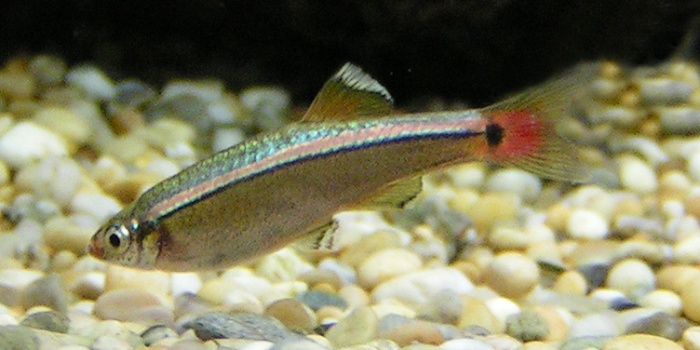 White Cloud Mountain MinnowTanichthys albonubes
Compare
Questions and answers
What is the scientific name of the Squalius Palaciosi?
The scientific name of the Squalius Palaciosi is Iberocypris palaciosi. Written with its author, the full name is Iberocypris palaciosi Doadrio, 1980.
Which family does the Squalius Palaciosi belong to?
Iberocypris palaciosi belongs to the family Cyprinidae, in the order Cypriniformes and the class Teleostei.
Where is the Squalius Palaciosi found?
Checklists and occurrence records place Iberocypris palaciosi in 1 country: Spain.
Where was Squalius palaciosi found?
The species was endemic to Andalusia in Spain. It occurred only in the Jándula and Rumblar rivers, which are right-hand tributaries of the Guadalquivir River.[7][8]
Where was the type locality of Squalius palaciosi?
The type locality was the Río Jándula at Lugar Nuevo, Andújar, Spain.[9]
When was Squalius palaciosi first formally described?
The species was first formally described under the name Iberocypris palaciosi in 1980 by Spanish ichthyologist Ignacio Doadrio.[10]
What does the name palaciosi commemorate?
The specific name palaciosi commemorates Fernando Palacios Arribas of the Museo Nacional de Ciencias Naturales in Madrid.[11]
What caused the extinction of Squalius palaciosi?
Damming and the introduction of non-native invasive species are considered the main reasons for the species' extinction.[6]
Sources
Passages the profile rests on
- The species was a freshwater ray-finned fish. Source passage: “extinct species of freshwater ray-finned fish” — English Wikipedia
- The species preferred river and stream stretches with flowing currents. Source passage: “preferred stretches of river or stream with a current” — English Wikipedia
- The species preferred habitats with stony or rocky riverbeds. Source passage: “a stony or rocky bed” — English Wikipedia
- The species preferred aquatic habitats with abundant aquatic vegetation. Source passage: “abundant aquatic vegetation.” — English Wikipedia
- The species has not been recorded since the late 1990s. Source passage: “Squalius palaciosi has not been recorded since the late 1990s.” — English Wikipedia
- Damming and the introduction of non-native invasive species are considered the main reasons for the species' extinction. Source passage: “Damming and the introduction of non-native invasive species are thought to be the main reasons for it becoming extinct.” — English Wikipedia
- The species was endemic to Andalusia in Spain. Source passage: “Squalius palaciosi was endemic to Andalusia in Spain” — English Wikipedia
- The species occurred only in the Jándula and Rumblar rivers, which are right-hand tributaries of the Guadalquivir River. Source passage: “found only in the Jándula and Rumblar rivers, right handed tributaries of the Guadalquivir River.” — English Wikipedia
- The type locality of the species was the Río Jándula at Lugar Nuevo, Andújar, Spain. Source passage: “its type locality given as the Río Jándula, Lugar Nuevo, Andújar, Spain.” — English Wikipedia
- The species was first formally described under the name Iberocypris palaciosi in 1980 by Spanish ichthyologist Ignacio Doadrio. Source passage: “first formally described as Iberocypris palaciosi in 1980 by Spanish ichthyologist Ignacio Doadrio” — English Wikipedia
- The specific name palaciosi commemorates Fernando Palacios Arribas of the Museo Nacional de Ciencias Naturales in Madrid. Source passage: “The specific name, palaciosi, is an eponym, honouring Fernando Palacios Arribas of the Museo Nacional de Ciencias Naturales in Madrid” — English Wikipedia
Data
- Catalogue of Life, 2026-10-16 XR cc by
- Global Biodiversity Information Facility CC BY 4.0
- Wikidata CC0
- GeoNames CC BY 4.0
- Within the Catalogue of Life, this name comes from World Register of Marine Species cc by
References
- Doadrio, I. (1980). Descripción de un nuevo género y de una nueva especie Iberocypris palaciosi n. gen. n. sp. (Pisces, Cyprinidae). Doñana: Acta Vertebrata, 7 (1): 5–17. [English summary.]. where the name was published
This species in other databases
- Catalogue of Life 3P7DT
- Wikidata Q2700523
- WoRMS urn:lsid:marinespecies.org:taxname:1012437
- ITIS 1199615-689252
Page built on 28 November 2026. See how the catalog is made and all sources and licences.
Cite this page
ScientificNames.org. (2026). Iberocypris palaciosi (Squalius Palaciosi). Retrieved November 28, 2026, from https://scientificnames.org/species/iberocypris-palaciosi
“Iberocypris palaciosi (Squalius Palaciosi).” ScientificNames.org, 2026, scientificnames.org/species/iberocypris-palaciosi. Accessed 28 Nov. 2026.
ScientificNames.org. “Iberocypris palaciosi (Squalius Palaciosi).” Accessed November 28, 2026. https://scientificnames.org/species/iberocypris-palaciosi.
@misc{scientificnames_iberocypris_palaciosi_squalius_palaciosi,
  author = {{ScientificNames.org}},
  title = {Iberocypris palaciosi (Squalius Palaciosi)},
  year = {2026},
  url = {https://scientificnames.org/species/iberocypris-palaciosi},
  note = {Accessed 2026-11-28}
}