Species · Flowering plants
Topel Holly Ilex × attenuata
The scientific name of the Topel Holly is Ilex × attenuata. It is a species of flowering plant in the family Aquifoliaceae (holly), order Aquifoliales.
- Scientific name
- Ilex × attenuata Ashe
- Common name
- Topel Holly
- Genus
- Ilex
- Family
- Aquifoliaceae (Holly)
- Order
- Aquifoliales
- Class
- Magnoliopsida
- Recorded in
- 1 country
- Name status
- accepted in the Catalogue of Life

Overview
Topel holly is an evergreen broadleaf shrub or small tree in the family Aquifoliaceae. It occurs throughout the southeastern United States where both parental species are native. It is distinguished by showy red fruits that persist on the plant throughout winter.
Written 27 November 2026 from the sources listed below. Each statement was checked against the passage it cites; statements that could not be supported were removed.
Appearance
Its bark is smooth and ranges from dark gray to light gray. Its flowers are greenish-white and visually insignificant, while its fruits are showy, red, and approximately pea-sized.[1][2][3]
Topel holly typically matures to 12–25 feet tall or more if left unpruned, with a typical width of 8 to 18 feet. Its evergreen leaves can reach 3 inches in length, and its fruits are less than one inch long and wide.[4][5][6][7]
Habitat
Topel holly grows best in acidic, moderately moist, well-drained soils. It grows in full sun to partial shade and performs well with afternoon shade in hot summer climates.[8][9][10]
It should be planted in locations protected from cold winter winds. It is listed for USDA hardiness zones 6a through 9b.[11][12]
Diet
The fruits of topel holly provide winter food for birds and other wildlife.[13]
Behaviour
The red fruits persist on the plant throughout winter.[14]
Reproduction and life cycle
Topel holly plants are dioecious, with male and female flowers occurring on separate plants. Female plants require a nearby male pollinizer to produce fruit.[15][16]
Topel holly flowers on new growth and produces flowers in late spring. Seeds and stem cuttings are recommended propagation methods.[17][18][19]
The cultivar 'Fosteri' can produce fruit without male plants.[20]
Conservation
Topel holly is classified as having low flammability.[21]
Uses
Topel holly is used as an ornamental plant for winter landscape interest. It can also be planted as a hedge or privacy screen.[22][23]
Its fruits attract birds. The cultivar 'Savannah' is notable for its showy red fruits.[24][25]
Human consumption of topel holly berries can cause minor toxic reactions. Ingestion of its fruits may cause vomiting, diarrhea, or other illness in humans.[26][27]
Similar species
Ilex × attenuata is a hybrid resulting from a cross between Ilex cassine and Ilex opaca.[28]
Classification of the Topel Holly
| Kingdom | Plantae |
|---|---|
| Subkingdom | Pteridobiotina |
| Phylum | Tracheophyta |
| Class | Magnoliopsida |
| Order | Aquifoliales |
| Family | Aquifoliaceae (Holly) |
| Genus | Ilex (Holly) |
| Species | Ilex × attenuata Ashe |
Where the Topel Holly is found
Checklists and occurrence records place Ilex × attenuata in 1 country across North America. GBIF holds 146 georeferenced records of it.
Countries
Regions and cities with the most records
- North Carolina, United States 12
- Florida, United States 10
- South Carolina, United States 8
- Georgia, United States 6
- Apex, United States 3
- Cary, United States 3
- District of Columbia, United States 3
- Garner, United States 3
- Raleigh, United States 3
- California, United States 1
Range as the checklists state it
USA (California, Florida, North Carolina, South Carolina)
A number beside a place is its count of GBIF occurrence records. A place without a number comes from a checklist alone. Records show where a species has been observed or collected, which can include escapes and vagrants.
Common names
English
- Topel Holly
Synonyms
One other scientific name has been used for this species and is now treated as a synonym of Ilex × attenuata.
- Ilex × nettletoniana R.H.Ferguson
Related species
-
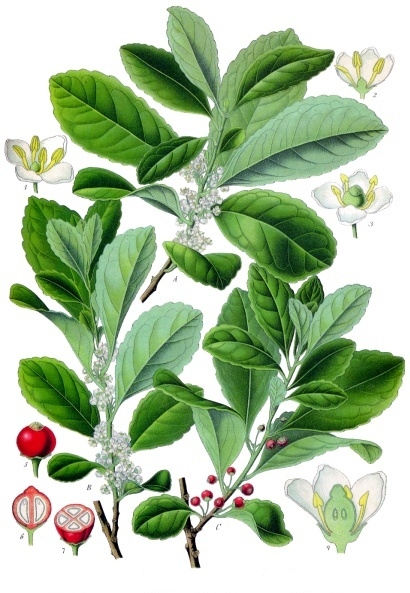 Yerba MateIlex paraguariensis
-
 Yaupon HollyIlex vomitoria
-
 WinterberryIlex verticillata
-
 English HollyIlex aquifolium
-
 Japanese HollyIlex crenata
- GuayusaIlex guayusa
-
 Christmas HollyIlex opaca
-
 Possum-hawIlex decidua
Compare
Questions and answers
What is the scientific name of the Topel Holly?
The scientific name of the Topel Holly is Ilex × attenuata. Written with its author, the full name is Ilex × attenuata Ashe.
Which family does the Topel Holly belong to?
Ilex × attenuata belongs to the family Aquifoliaceae, in the order Aquifoliales and the class Magnoliopsida.
Where is the Topel Holly found?
Checklists and occurrence records place Ilex × attenuata in 1 country: United States.
Sources
Passages the profile rests on
- Its bark is smooth and ranges from dark gray to light gray. Source passage: “Bark Color: Dark Gray Light Gray Surface/Attachment: Smooth” — plants.ces.ncsu.edu
- Its flowers are greenish-white and visually insignificant. Source passage: “Produces greenish-white, but insignificant, flowers on new growth.” — plants.ces.ncsu.edu
- Its fruits are showy, red, and approximately pea-sized. Source passage: “showy, pea-sized, red fruits” — plants.ces.ncsu.edu
- Topel holly typically matures to 12–25 feet tall or more if left unpruned. Source passage: “matures to 12 to 25 feet tall or more.” — plants.ces.ncsu.edu
- Its typical width ranges from 8 to 18 feet. Source passage: “Width: 8 ft. 0 in. - 18 ft. 0 in.” — plants.ces.ncsu.edu
- Its evergreen leaves can reach 3 inches in length. Source passage: “leaves (to 3 inches long)” — plants.ces.ncsu.edu
- Its fruits are less than one inch long and wide. Source passage: “Fruit Length: < 1 inch Fruit Width: < 1 inch” — plants.ces.ncsu.edu
- Topel holly grows best in acidic, moderately moist, well-drained soils. Source passage: “Topel holly grows best in acidic, medium moisture, well-drained soils” — plants.ces.ncsu.edu
- Topel holly grows in full sun to partial shade. Source passage: “in full sun to part shade.” — plants.ces.ncsu.edu
- Topel holly performs well with afternoon shade in hot summer climates. Source passage: “these plants do well with some afternoon shade in hot summer climates.” — plants.ces.ncsu.edu
- Topel holly should be planted in locations protected from cold winter winds. Source passage: “You should site the plant where it can be protected from cold winter winds” — plants.ces.ncsu.edu
- Topel holly is listed for USDA hardiness zones 6a through 9b. Source passage: “USDA Plant Hardiness Zone: 6a, 6b, 7a, 7b, 8a, 8b, 9a, 9b” — plants.ces.ncsu.edu
- The fruits provide winter food for birds and other wildlife. Source passage: “Winter food sources for birds and wildlife.” — plants.ces.ncsu.edu
- The red fruits persist on the plant throughout winter. Source passage: “Pea sized red fruits persist through winter” — plants.ces.ncsu.edu
- Topel holly plants are dioecious, with male and female flowers occurring on separate plants. Source passage: “Plants are dioecious (separate male and female plants)” — plants.ces.ncsu.edu
- Female plants require a nearby male pollinizer to produce fruit. Source passage: “female plants will need a nearby male pollinizer.” — plants.ces.ncsu.edu
- Topel holly flowers on new growth. Source passage: “the plant flowers on new growth.” — plants.ces.ncsu.edu
- Topel holly produces flowers in late spring. Source passage: “Blooms in late spring.” — plants.ces.ncsu.edu
- Seeds and stem cuttings are recommended propagation methods. Source passage: “Recommended Propagation Strategy: Seed Stem Cutting” — plants.ces.ncsu.edu
- The cultivar 'Fosteri' can produce fruit without male plants. Source passage: “'Fosteri', Foster holly, which does not require males to set fruit” — English Wikipedia
- Topel holly is classified as having low flammability. Source passage: “Fire Risk Rating: low flammability” — plants.ces.ncsu.edu
- Topel holly is used as an ornamental plant for winter landscape interest. Source passage: “The fruits provide an ornamental winter interest” — plants.ces.ncsu.edu
- Topel holly can be planted as a hedge or privacy screen. Source passage: “Design Feature: Foundation Planting Hedge Screen/Privacy” — plants.ces.ncsu.edu
- Topel holly fruits attract birds. Source passage: “Fruits are attractive to birds.” — plants.ces.ncsu.edu
- The cultivar 'Savannah' is notable for its showy red fruits. Source passage: “'Savannah', with very showy red fruit.” — English Wikipedia
- Human consumption of topel holly berries can cause minor toxic reactions. Source passage: “Human consumption of berries can cause minor toxic reaction.” — plants.ces.ncsu.edu
- Ingestion of its fruits may cause vomiting, diarrhea, or other illness in humans. Source passage: “Ingestion may cause vomiting, diarrhea, or other illness in humans.” — plants.ces.ncsu.edu
- Ilex × attenuata is a hybrid resulting from a cross between Ilex cassine and Ilex opaca. Source passage: “result of a cross between Ilex cassine (dahoon) and Ilex opaca (American holly).” — English Wikipedia
Data
- Catalogue of Life, 2026-10-16 XR cc by
- Global Biodiversity Information Facility CC BY 4.0
- Wikidata CC0
- GeoNames CC BY 4.0
- Wikimedia Commons per image; credit shown with each image
- Within the Catalogue of Life, this name comes from Synonymic Checklists of the Vascular Plants of the World cc by
References
- Ashe. (1924). J. Elisha Mitchell Sci. Soc. 40: 44 (1924). where the name was published
This species in other databases
Page built on 27 November 2026. See how the catalog is made and all sources and licences.
Cite this page
ScientificNames.org. (2026). Ilex × attenuata (Topel Holly). Retrieved November 27, 2026, from https://scientificnames.org/species/ilex-x-attenuata
“Ilex × attenuata (Topel Holly).” ScientificNames.org, 2026, scientificnames.org/species/ilex-x-attenuata. Accessed 27 Nov. 2026.
ScientificNames.org. “Ilex × attenuata (Topel Holly).” Accessed November 27, 2026. https://scientificnames.org/species/ilex-x-attenuata.
@misc{scientificnames_ilex_x_attenuata_topel_holly,
  author = {{ScientificNames.org}},
  title = {Ilex × attenuata (Topel Holly)},
  year = {2026},
  url = {https://scientificnames.org/species/ilex-x-attenuata},
  note = {Accessed 2026-11-27}
}