Species · Flowering plants
Hyacinth Bean Lablab purpureus
The scientific name of the Hyacinth Bean is Lablab purpureus. It is a species of flowering plant in the family Fabaceae (bean), order Fabales.
- Scientific name
- Lablab purpureus (L.) Sweet
- Common name
- Hyacinth Bean
- Genus
- Lablab
- Family
- Fabaceae (Bean)
- Order
- Fabales
- Class
- Magnoliopsida
- Recorded in
- 100 countries
- Name status
- accepted in the Catalogue of Life

Overview
The species is native to sub-Saharan Africa and is cultivated throughout tropical regions.
Written 26 November 2026 from the sources listed below. Each statement was checked against the passage it cites; statements that could not be supported were removed.
Appearance
Hyacinth bean generally grows as an annual or short-lived perennial vine with thick stems that can reach 6 metres long. Its vines climb by twining around supporting structures.[1][2][3]
Its leaves consist of three pointed leaflets, each reaching up to 15 centimetres long. The leaf undersides may be hairy.[4][5]
Its flowers grow in racemes containing multiple individual flowers, with colours that include white, purple and blue. The flowers grow on peduncles approximately 6 inches long.[6][7][8]
Its fruit is a legume pod that varies in shape, size and colour. Pods can grow up to 2.5 inches long and range from bright purple to pale green, with mature pods having a shiny, purplish-iridescent appearance.[9][10][11][12]
Each pod contains up to four seeds, approximately one centimetre long. Depending on the cultivar, seeds may be white, brown, red or black, sometimes with a white hilum, while seeds from wild plants have mottled colouring.[13][14][15][16]
Habitat
Hyacinth bean grows across soil types ranging from sandy to clay soils and tolerates a pH range of 4.5 to 7.5. It performs poorly in saline soils and poorly drained conditions.[17][18][19]
Its cultivation is supported by average daily temperatures of 18–30 °C and annual rainfall of 700–3,000 mm. Established plants can tolerate drought and shade.[20][21]
The species grows particularly well in hot weather and is especially suited to the southern United States. It grows well in full sun and rich, well-drained soil.[22][23]
Diet
The leaves are consumed raw or cooked in the manner of spinach. The flowers can be eaten raw or steamed, and the roots can be boiled or baked.[24][25][26]
Mature dried seeds contain cyanogenic glycosides and can be poisonous without appropriate preparation. Boiling the seeds in two changes of water makes them edible.[27][28]
Behaviour
Seedlings grow slowly during their early development. Once established, the plants compete effectively with weeds.[29][30]
Reproduction and life cycle
Hyacinth bean produces flowers throughout summer when growing conditions remain favourable. The first pods generally develop approximately 90 days after planting.[31][32]
Seeds can be collected in autumn and saved for planting in subsequent years.[33]
Uses
Its symbiosis with nitrogen-fixing rhizobium bacteria contributes to improving soil nitrogen availability. Its cultivation can also increase soil potassium and phosphorus availability.[34][35]
The species is used as green manure and in intercropping and mixed cropping systems.[36]
Classification of the Hyacinth Bean
| Kingdom | Plantae |
|---|---|
| Subkingdom | Pteridobiotina |
| Phylum | Tracheophyta |
| Class | Magnoliopsida |
| Order | Fabales |
| Family | Fabaceae (Bean) |
| Genus | Lablab (Hyacinth-bean) |
| Species | Lablab purpureus (L.) Sweet |
Where the Hyacinth Bean is found
Checklists and occurrence records place Lablab purpureus in 100 countries across Africa, Asia, Europe, North America, Oceania and South America. GBIF holds 8,694 georeferenced records of it.
Countries where it is native or its origin is not stated
- Afghanistan 475
- Algeria 3
- Benin 17
- Burundi 4
- Cabo Verde 13
- Cameroon 49
- Central African Republic 10
- Comoros 5
- Democratic Republic of the Congo 103
- Egypt 37
- Eritrea 16
- Eswatini 39
- Gabon 10
- Gambia
- Ghana 23
- Guinea 7
- Ivory Coast 15
- Malawi 92
- Mayotte 25
- Morocco 4
- Mozambique 110
- Namibia 72
- Nigeria 30
- Rwanda 37
- Senegal 14
- Seychelles 4
- Sierra Leone 5
- South Sudan 3
- Taiwan 427
- Togo 8
- Zambia 61
- Zimbabwe 124
Countries where it has been introduced
- Angola 57
- Australia 294
- Bangladesh 395
- Bermuda 6
- Bolivia 44
- Botswana 8
- Brazil 362
- Cambodia 21
- Cayman Islands
- Chad 5
- Chile 1
- China 865
- Christmas Island 21
- Colombia 92
- Cook Islands 17
- Dominican Republic 14
- Ecuador 65
- Ethiopia 229
- Fiji 20
- French Polynesia 45
- Guatemala 18
- Haiti 6
- India 542
- Indonesia 188
- Iraq 7
- Italy 18
- Jamaica 26
- Kenya 110
- Laos 64
- Madagascar 305
- Maldives 61
- Mali 5
- Marshall Islands 1
- Mauritius 3
- Mexico 77
- Myanmar 43
- Nauru
- Nepal 22
- New Caledonia 49
- Niger 1
- Niue 8
- Pakistan 29
- Peru 94
- Philippines 188
- Pitcairn 10
- Portugal 85
- Puerto Rico 94
- Reunion 175
- Russia 11
- Saint Helena
- Samoa 5
- Somalia
- South Africa 421
- Spain 34
- Sri Lanka 41
- Sudan 49
- Tanzania 173
- Thailand 320
- Tonga 36
- Trinidad and Tobago 11
- Tunisia 5
- Uganda 112
- Ukraine 15
- United States 722
- Uruguay 1
- Vanuatu 22
- Vietnam 72
- Yemen 12
Regions and cities with the most records
- Taiwan, Taiwan 231
- Saint-Louis, Reunion 102
- Le Tampon, Reunion 100
- Saint-Pierre, Reunion 87
- Queensland, Australia 83
- Piton Saint-Leu, Reunion 75
- Saint-Leu, Reunion 72
- KwaZulu-Natal, South Africa 70
- Chittagong, Bangladesh 69
- Guangdong, China 69
- Texas, United States 63
- Coimbra, Portugal 62
- Coimbra, Portugal 62
- Condeixa-a-Nova, Portugal 62
- Eiras, Portugal 62
- Ribeira de Frades, Portugal 62
- Santo António dos Olivais, Portugal 62
- São Martinho do Bispo, Portugal 62
- São Paulo de Frades, Portugal 62
- Saint-Joseph, Reunion 61
- Hainan, China 58
- São Paulo, Brazil 53
- Mpumalanga, South Africa 51
- Shulin, Taiwan 51
- Taipei, Taiwan 51
- Banqiao, Taiwan 50
- Neihu, Taiwan 49
- Hawaii, United States 45
- Saint-Paul, Reunion 45
- New Taipei City, Taiwan 44
- Xizhi, Taiwan 44
- Erlun, Taiwan 43
- Guangxi, China 43
- Yunnan, China 43
- Citong, Taiwan 42
- Xiluo, Taiwan 42
56 more countries have a few records outside this range
These countries hold a few records of Lablab purpureus but lie outside the range the checklists give for it. Such records are often zoo or garden specimens, museum material or vagrants, so the species is not counted as occurring there.
- Antigua and Barbuda 4
- Argentina 40
- Bahamas 22
- Barbados 5
- Belgium 4
- Belize 3
- Bhutan 14
- Bonaire, Saint Eustatius and Saba 9
- Canada 20
- Costa Rica 18
- Cuba 26
- Denmark 4
- Dominica 8
- El Salvador 18
- France 21
- French Guiana 3
- Georgia 3
- Germany 9
- Greece 4
- Guadeloupe 22
- Guam 9
- Guyana 35
- Honduras 12
- Hong Kong 39
- Hungary 9
- Iran 5
- Israel 9
- Japan 101
- Lebanon 6
- Malaysia 51
- Martinique 11
- New Zealand 8
- Nicaragua 8
- Norfolk Island 7
- North Korea 9
- Northern Mariana Islands 7
- Oman 23
- Palestinian Territory 3
- Panama 7
- Papua New Guinea 21
- Saint Barthelemy 4
- Saint Kitts and Nevis 3
- Saint Martin 4
- Saint Vincent and the Grenadines 3
- Saudi Arabia 14
- Singapore 5
- South Korea 11
- Suriname 5
- Sweden 11
- Switzerland 4
- Syria 3
- The Netherlands 121
- Turkey 3
- U.S. Virgin Islands 20
- United Kingdom 9
- Venezuela 19
A number beside a place is its count of GBIF occurrence records. A place without a number comes from a checklist alone. Records show where a species has been observed or collected, which can include escapes and vagrants.
Common names
English
- Hyacinth Bean
- Bonavist-bean
- Hyacinth-bean
- Lablab-bean
Names in 24 other languages
- Arabic
- لبلب أرجواني, لبلب شائع
- Chinese
- bian dou, 扁豆, 白扁豆, 鵲豆
- Czech
- lablab purpurový
- Danish
- hjelmbønne
- Dutch
- Helmboon, Hyacintboon
- Finnish
- hyasinttipapu
- French
- Pois de Senteur, dolique d'Égypte
- German
- Faselbohne
- Hebrew
- לבלב ארגמני
- Indonesian
- Kacang komak
- Italian
- fagiolo d'Egitto
- Japanese
- フジマメ, 千石豆, 藤豆
- Korean
- 편두
- Lithuanian
- Egiptinė lobija
- Polish
- Chropawiec pospolity, Fasolnik egipski, Wspięga pospolita
- Russian
- Лобия
- Slovak
- lablab obyčajný
- Spanish
- Frijol jacinto
- Swedish
- hjälmböna
- Tagalog
- bataw
- Tamil
- அவரை
- Telugu
- బొబ్బరలు
- Thai
- ถั่วแปบ
- bnn
- pulavazcipluh
Synonyms
One other scientific name has been used for this species and is now treated as a synonym of Lablab purpureus.
- Dolichos purpureus L.
Subspecies and varieties
- Lablab purpureus subsp. bengalensis subspecies
- Lablab purpureus subsp. purpureus (Lablab-bean) subspecies
- Lablab purpureus subsp. uncinatus subspecies
- Lablab purpureus var. rhomboideus variety
Related species
-
 PeanutArachis hypogaea
-
 LiquoriceGlycyrrhiza glabra
-
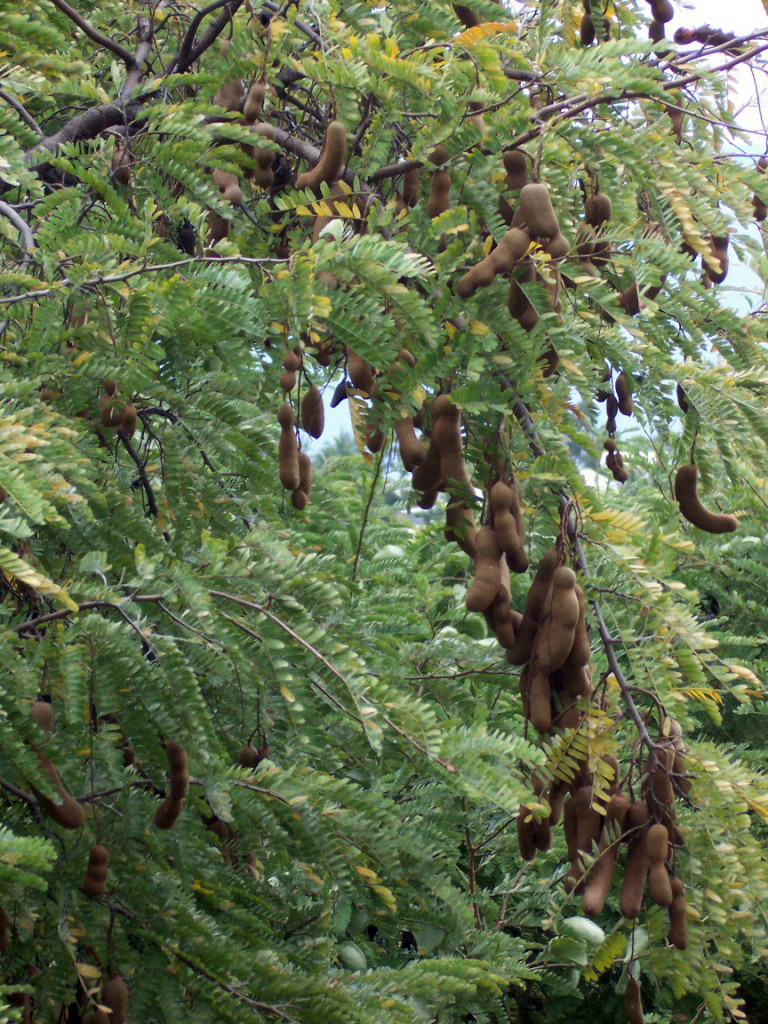 TamarindTamarindus indica
-
 ChickpeaCicer arietinum
-
 SoybeanGlycine max
-
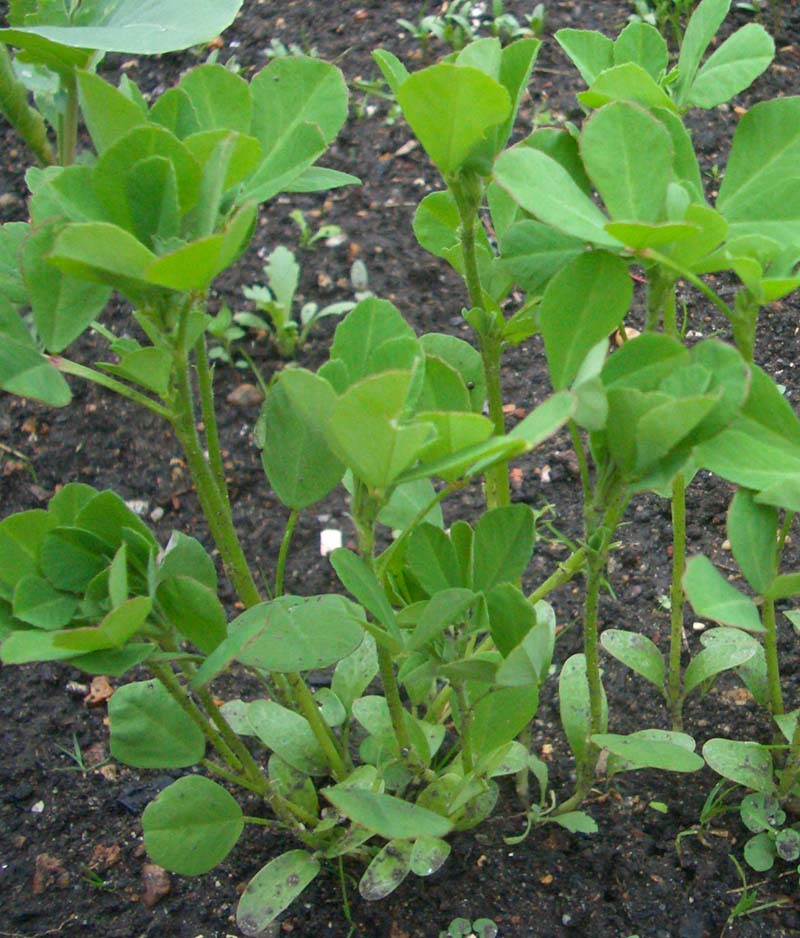 FenugreekTrigonella foenum-graecum
-
 RooibosAspalathus linearis
-
 Broad BeanVicia faba
Compare
Questions and answers
What is the scientific name of the Hyacinth Bean?
The scientific name of the Hyacinth Bean is Lablab purpureus. Written with its author, the full name is Lablab purpureus (L.) Sweet.
Which family does the Hyacinth Bean belong to?
Lablab purpureus belongs to the family Fabaceae, in the order Fabales and the class Magnoliopsida.
Where is the Hyacinth Bean found?
Checklists and occurrence records place Lablab purpureus in 100 countries, including Afghanistan, Taiwan, Zimbabwe, Mozambique, Democratic Republic of the Congo and Malawi.
What other names does the Hyacinth Bean have?
Lablab purpureus is also known in English as Bonavist-bean, Hyacinth-bean and Lablab-bean.
Is hyacinth bean plant toxic?
Mature dried seeds contain cyanogenic glycosides and can be poisonous without appropriate preparation. Boiling the seeds in two changes of water makes them edible.[27][28]
Does hyacinth bean come back every year?
Wild plants are perennial, but the species is mostly grown as an annual in cultivation. Its seeds can be collected in autumn and saved for planting in subsequent years.[33][37][38]
Sources
Passages the profile rests on
- The plant generally grows as an annual or short-lived perennial vine. Source passage: “they are annual or short-lived perennial vines.” — English Wikipedia
- The plant has thick stems that can grow up to 6 metres long. Source passage: “The thick stems can reach 6 meters (20 ft) in length.” — English Wikipedia
- The vines climb by twining around supporting structures. Source passage: “Vines climb by twining around a support.” — uaex.uada.edu
- Its leaves consist of three pointed leaflets, each reaching up to 15 centimetres long. Source passage: “The leaves are made up of three pointed leaflets, each up to 15 centimeters (6 in) long.” — English Wikipedia
- The undersides of its leaflets may be hairy. Source passage: “They may be hairy on the undersides.” — English Wikipedia
- Its flowers grow in racemes containing multiple individual flowers. Source passage: “The inflorescence is made up of racemes of many flowers.” — English Wikipedia
- Flower colour varies among cultivars and includes white, purple and blue. Source passage: “Some cultivars have white flowers, and others may have purplish or blue.” — English Wikipedia
- Its flowers grow on peduncles approximately 6 inches long. Source passage: “purple or white pea flowers on 6-inch long peduncles.” — uaex.uada.edu
- Its fruit is a legume pod that varies in shape, size and colour. Source passage: “The fruit is a legume pod variable in shape, size, and color.” — English Wikipedia
- Its pods are usually several centimetres long and range from bright purple to pale green. Source passage: “It is usually several centimeters long and bright purple to pale green.” — English Wikipedia
- Its mature pods have a shiny, purplish-iridescent appearance. Source passage: “shining purplish-iridescent fat bean pods” — uaex.uada.edu
- Its pods can grow up to 2.5 inches long. Source passage: “pods that grow to 2 ½ inches long.” — uaex.uada.edu
- Each fruit pod contains up to four seeds. Source passage: “It contains up to four seeds.” — English Wikipedia
- Depending on the cultivar, its seeds may be white, brown, red or black, sometimes with a white hilum. Source passage: “Depending on the cultivar, the seeds are white, brown, red, or black, sometimes with a white hilum.” — English Wikipedia
- Seeds from wild plants have mottled colouring. Source passage: “Wild plants have mottled seeds.” — English Wikipedia
- Its seeds are approximately one centimetre long. Source passage: “The seed is about a centimeter long.” — English Wikipedia
- The species grows across a wide range of soil types, from sandy to clay soils. Source passage: “Lablab can grow on a wide range of soils, from sand to clay” — English Wikipedia
- It grows in soils with a pH ranging from 4.5 to 7.5. Source passage: “within a pH range of 4.5 to 7.5.” — English Wikipedia
- It performs poorly in saline soils and poorly drained conditions. Source passage: “does not grow well in poorly drained soils or in saline conditions.” — English Wikipedia
- Its cultivation is supported by average daily temperatures of 18–30 °C and annual rainfall of 700–3,000 mm. Source passage: “Average daily temperatures of 18–30 °C (64–86 °F) and annual rainfall of 700–3,000 mm (28–118 in) allow lablab cultivation.” — English Wikipedia
- Established plants can tolerate drought and shade. Source passage: “once established they compete well with weeds and are able to tolerate drought or shade.” — English Wikipedia
- The species grows particularly well in hot weather and is especially suited to the southern United States. Source passage: “Hyacinth bean is a hot weather plant that does especially well in the South.” — uaex.uada.edu
- The plant grows well in full sun and rich, well-drained soil. Source passage: “Lablab should be grown in full sun in a rich, well-drained soil.” — uaex.uada.edu
- The leaves are consumed raw or cooked in the manner of spinach. Source passage: “The leaves are eaten raw or cooked like spinach.” — English Wikipedia
- The flowers can be consumed raw or steamed. Source passage: “The flowers can be eaten raw or steamed.” — English Wikipedia
- The roots can be boiled or baked for consumption. Source passage: “The root can be boiled or baked for food.” — English Wikipedia
- The mature dried seeds contain cyanogenic glycosides and can be poisonous without appropriate preparation. Source passage: “The mature, dried beans contain cacogenic glycosides and are poisonous” — uaex.uada.edu
- Boiling the seeds in two changes of water makes them edible. Source passage: “boiling the seeds in two changes of water renders them edible.” — uaex.uada.edu
- The seedlings grow slowly during their early development. Source passage: “The seedlings grow slowly” — English Wikipedia
- Once established, the plants compete effectively with weeds. Source passage: “once established they compete well with weeds” — English Wikipedia
- The species produces flowers throughout summer when growing conditions remain favourable. Source passage: “it continues to flower throughout the summer as long as conditions are favorable.” — uaex.uada.edu
- The first pods generally develop approximately 90 days after planting. Source passage: “It takes about 90 days from planting until the first pods are produced.” — uaex.uada.edu
- Seeds can be collected in autumn and saved for planting in subsequent years. Source passage: “Seeds can be saved from the crop in the fall for planting in future years.” — uaex.uada.edu
- Its symbiosis with nitrogen-fixing rhizobium bacteria contributes to improving soil nitrogen availability. Source passage: “Due to its symbiosis with nitrogen-fixing rhizobium bacteria, lablab bean has low soil fertility requirements and can be an important part of an agricultural system that improves soil nitrogen availability.” — English Wikipedia
- Cultivation of the species can increase soil potassium and phosphorus availability. Source passage: “Its cultivation also increases potassium and phosphorus availability.” — English Wikipedia
- The species is used as green manure and in intercropping and mixed cropping systems. Source passage: “These soil-improving properties make lablab attractive for intercropping, mixed cropping systems and as a green manure.” — English Wikipedia
- Wild plants of this species are perennial. Source passage: “The wild species is perennial.” — English Wikipedia
- In cultivation, the species is mostly grown as an annual. Source passage: “but mostly the vine is grown as an annual.” — uaex.uada.edu
- The species is cultivated as a food crop throughout tropical regions. Source passage: “it is cultivated throughout the tropics for food.” — English Wikipedia
- The species is grown as livestock forage. Source passage: “it is often grown as forage for livestock” — English Wikipedia
- The species is cultivated as an ornamental plant. Source passage: “and as an ornamental plant.” — English Wikipedia
- The species is native to sub-Saharan Africa. Source passage: “It is native to sub-Saharan Africa” — English Wikipedia
- Eastern and southern Africa are considered likely regions of origin because wild varieties occur there. Source passage: “Evidence of wild varieties in eastern and southern Africa suggests these regions as the likely source” — English Wikipedia
- India has also been proposed as a possible region of origin. Source passage: “although some theories suggest India as the origin.” — English Wikipedia
Data
- Catalogue of Life, 2026-10-16 XR cc by
- Global Biodiversity Information Facility CC BY 4.0
- Wikidata CC0
- GeoNames CC BY 4.0
- Wikimedia Commons per image; credit shown with each image
- iNaturalist per image; credit shown with each image
- Within the Catalogue of Life, this name comes from The World Checklist of Vascular Plants (WCVP): Fabaceae cc by
References
- Hort. Brit.: 481 (1826) where the name was published
This species in other databases
- Catalogue of Life 3RJTM
- Wikidata Q1077410
- iNaturalist 146816
- World Flora Online wfo-0000181603
- GRIN 104887
Page built on 27 November 2026. See how the catalog is made and all sources and licences.
Cite this page
ScientificNames.org. (2026). Lablab purpureus (Hyacinth Bean). Retrieved November 27, 2026, from https://scientificnames.org/species/lablab-purpureus
“Lablab purpureus (Hyacinth Bean).” ScientificNames.org, 2026, scientificnames.org/species/lablab-purpureus. Accessed 27 Nov. 2026.
ScientificNames.org. “Lablab purpureus (Hyacinth Bean).” Accessed November 27, 2026. https://scientificnames.org/species/lablab-purpureus.
@misc{scientificnames_lablab_purpureus_hyacinth_bean,
  author = {{ScientificNames.org}},
  title = {Lablab purpureus (Hyacinth Bean)},
  year = {2026},
  url = {https://scientificnames.org/species/lablab-purpureus},
  note = {Accessed 2026-11-27}
}