Species · Flowering plants
Common Laburnum Laburnum anagyroides
The scientific name of the Common Laburnum is Laburnum anagyroides. It is a species of flowering plant in the family Fabaceae (bean), order Fabales.
- Scientific name
- Laburnum anagyroides Medik.
- Common name
- Common Laburnum
- Genus
- Laburnum
- Family
- Fabaceae (Bean)
- Order
- Fabales
- Class
- Magnoliopsida
- Red List category
- LC Least Concern
- Recorded in
- 43 countries
- Name status
- accepted in the Catalogue of Life

Overview
The species is native to central and southern Europe. It is a small deciduous tree or large shrub with golden yellow flowers arranged in drooping racemes.
Written 26 November 2026 from the sources listed below. Each statement was checked against the passage it cites; statements that could not be supported were removed.
Appearance
Common Laburnum is a small deciduous tree or large shrub that can reach a height of 7 metres. It has smooth bark, dark green spreading branches, and drooping, hairy twigs.[1][2][3]
Its leaves generally consist of three oval leaflets with long petioles. Their upper surfaces are smooth, while their undersides are hairy.[4][5]
Its pea-shaped flowers are golden yellow and sweet-scented. They are densely arranged in drooping racemes measuring 10–25 centimetres long.[6][7][8]
Its fruit consists of legume pods containing numerous black seeds.[9]
Habitat
Common Laburnum grows and flowers in damp, mild habitats. It particularly occurs in calcareous soils in Southern Europe.[10][11]
Diet
Hares and deer can consume its seed-containing pods without apparent problems.[12]
Reproduction and life cycle
Common Laburnum flowers during May and June and blooms in late spring. Its flowers typically bloom in May.[13][14][15]
Conservation
The seeds contain cytisine, an alkaloid that is somewhat poisonous to humans, goats, and horses, particularly when the seeds are unripe.[16]
Uses
Common Laburnum is cultivated as an ornamental tree. Its hard, heavy yellow-brown wood is suitable for making posts, woodturning, and fuel.[17][18]
Its wood was historically used to make bows. Wood from very old specimens can serve as a substitute for ebony.[19][20]
Cytisine obtained from the plant is used in smoking cessation medicine.[21]
Similar species
Laburnum alpinum is closely related to Common Laburnum. Laburnum × watereri is a hybrid between Common Laburnum and Laburnum alpinum.[22][23]
Classification of the Common Laburnum
| Kingdom | Plantae |
|---|---|
| Subkingdom | Pteridobiotina |
| Phylum | Tracheophyta |
| Class | Magnoliopsida |
| Order | Fabales |
| Family | Fabaceae (Bean) |
| Genus | Laburnum (Golden-chain Tree) |
| Species | Laburnum anagyroides Medik. |
Where the Common Laburnum is found
Checklists and occurrence records place Laburnum anagyroides in 43 countries across Asia, Europe, Oceania and South America. GBIF holds 69,476 georeferenced records of it.
Countries where it is native or its origin is not stated
- Albania 3
- Austria 994
- Belarus 3
- Canada 309
- Croatia 38
- Czechia 547
- Denmark 587
- Estonia 24
- Finland 23
- Hungary 81
- Isle of Man 53
- Italy 1,638
- Kosovo 3
- Latvia 9
- Luxembourg 98
- Moldova 5
- North Macedonia 3
- Norway 1,366
- Portugal 47
- Romania 31
- Serbia 9
- Slovakia 69
- Slovenia 23
- Sweden 1,456
- Switzerland 1,612
- The Netherlands 584
- United States 372
Countries where it has been introduced
- Argentina 18
- Australia 22
- Belgium 1,095
- Bulgaria 21
- France 31,810
- Germany 3,417
- India 3
- Indonesia
- Ireland 45
- New Zealand 169
- Pakistan
- Poland 206
- Russia 83
- Spain 116
- Ukraine 191
- United Kingdom 22,293
Regions and cities with the most records
- England, United Kingdom 17,369
- Auvergne-Rhône-Alpes, France 9,575
- Île-de-France, France 4,879
- Bourgogne-Franche-Comté, France 3,700
- Scotland, United Kingdom 3,242
- Grand Est, France 2,663
- Centre-Val de Loire, France 2,457
- Limay, France 2,238
- Mantes-la-Jolie, France 2,217
- Mantes-la-Ville, France 2,177
- Hauts-de-France, France 2,023
- Grenoble, France 1,777
- Fontaine, France 1,770
- Saint-Égrève, France 1,736
- Vernon, France 1,736
- Meylan, France 1,733
- Saint-Martin-d'Hères, France 1,725
- Provence-Alpes-Côte d'Azur, France 1,695
- Échirolles, France 1,682
- Étampes, France 1,367
- Chambéry, France 1,270
- Bavaria, Germany 1,239
- Les Mureaux, France 1,199
- Louviers, France 1,138
- Halesowen, United Kingdom 1,125
- Dudley, United Kingdom 1,108
- Smethwick, United Kingdom 1,101
- Bartley Green, United Kingdom 1,095
- Tipton, United Kingdom 1,080
- West Bromwich, United Kingdom 1,076
- Brierley Hill, United Kingdom 1,075
- Wednesbury, United Kingdom 1,052
- Birmingham, United Kingdom 1,047
- Voiron, France 1,020
- Stourbridge, United Kingdom 1,014
- Camden Town, United Kingdom 985
7 more countries have a few records outside this range
These countries hold a few records of Laburnum anagyroides but lie outside the range the checklists give for it. Such records are often zoo or garden specimens, museum material or vagrants, so the species is not counted as occurring there.
A number beside a place is its count of GBIF occurrence records. A place without a number comes from a checklist alone. Records show where a species has been observed or collected, which can include escapes and vagrants.
Common names
English
- Common Laburnum
- Golden Chain
- Golden Rain
- Golden Chain Tree
- Golden Rain Tree
- Laburnham
- Golden Chain-tree
- Golden-chain
- Golden-chain Tree
- Laburnum
- Peatree
Names in 35 other languages
- Arabic
- أبنوس كاذب
- Armenian
- Լաբուրնում անագիրատերև
- Azerbaijani
- Anagirayabənzər qızılıakasiya
- Catalan
- Banús fals, Laburnum vulgare
- Chinese
- 毒豆, 毒豆(金鏈花), 金链花
- Croatian
- Obični zanovijet, Zanovijet, Zlatna kiša
- Czech
- štědřenec odvislý
- Danish
- Almindelig guldregn
- Dutch
- Goudenregen
- Esperanto
- Orpluvo
- Estonian
- harilik kuldvihm
- Finnish
- etelänkultasade
- French
- Cytise aubour, aubour, aubours faux anagyris, cytise faux ébénier, cytise faux-ébénier, faux ébénier
- Georgian
- ოქროწვიმა
- German
- Gemeiner Goldregen, gewöhnlicher Goldregen
- Hungarian
- közönséges aranyeső
- Italian
- Avorniello, maggiociondolo
- Japanese
- キバナフジ
- Lithuanian
- Paprastasis pupmedis
- Norwegian Bokmål
- filtgullregn
- Persian
- درخت پروانه
- Polish
- Złotokap pospolity, Złotokap zwyczajny
- Portuguese
- Codesso-bastardo
- Russian
- Бобовник анагировидный, Бобовник обыкновенный, бобовник анагирусовидный
- Slovak
- zlatý dážď, štedrec ovisnutý
- Slovenian
- navadni nagnoj
- Spanish
- Falso-ébano, Lluvia de oro, borne, citiso, codeso de los Alpes, ebano de Europa, falso ebano, falso ébano
- Swedish
- gullregn, sydgullregn
- Turkish
- Sarı Salkım
- Ukrainian
- Золотий дощ звичайний
- Welsh
- Banadlen Ffrainc, Euron, Pyswydden, Tresi Aur
- dsb
- Žołta akacija
- glv
- Billey frangagh
- hsb
- Złote kitki, Złote wisawki, Złoty kitkowc, Žołta kićina
- vec
- Ègano
Synonyms
57 other scientific names have been used for this species and are now treated as synonyms of Laburnum anagyroides.
- Cytisus alschingeri Vis.
- Cytisus insubricus Wettst. ex Briq.
- Cytisus jacquinianus (Wettst.) A.Kern.
- Cytisus laburnum L.
- Cytisus laburnum f. aureum R.Sm. ex C.Noble
- Cytisus laburnum subsp. alschingeri (Vis.) Wettst.
- Cytisus laburnum subsp. jacquinianus Wettst.
- Cytisus laburnum subsp. linnaeanus Wettst.
- Cytisus laburnum var. bullatum Jacques
- Cytisus laburnum var. pendulus Bosse
- Cytisus laburnum var. quercifolium Loudon
- Cytisus laburnum var. serotinus Bosse
- Cytisus laburnum var. sessilifolium Jacques
- Cytisus linneanus Wettst.
- Cytisus penduliflorus Stokes
- Cytisus pendulus Salisb.
- Cytisus weissmannii Wettst.
- Genista laburnum (L.) Scheele
- Laburnum alschingeri (Vis.) K.Koch
- Laburnum anagyroides f. aureum (R.Sm. ex C.Noble) Rehder
- Laburnum anagyroides f. bullatum (Jacques) C.K.Schneid.
- Laburnum anagyroides f. chrysophyllum (Späth) C.K.Schneid.
- Laburnum anagyroides f. jacquinianum (Wettst.) Hayek
- Laburnum anagyroides f. linnaeanum (Wettst.) Hayek
- Laburnum anagyroides f. pendulum (Bosse) Rehder
- Laburnum anagyroides f. quercifolium (Loudon) C.K.Schneid.
- Laburnum anagyroides f. serotinum (Bosse) Rehder
- Laburnum anagyroides f. sessilifolium (Jacques) C.K.Schneid.
- Laburnum anagyroides subsp. alschingeri (Vis.) Hayek
- Laburnum anagyroides subsp. anagyroides
- Laburnum anagyroides subsp. jacquinianum (Wettst.) Asch. & Graebn.
- Laburnum anagyroides var. alschingeri (Vis.) C.K.Schneid.
- Laburnum anagyroides var. anagyroides
- Laburnum anagyroides var. carlieri (G.Kirchn.) C.K.Schneid.
- Laburnum anagyroides var. jacquinianum Wettst.
- Laburnum anagyroides var. pendulum (Bosse) Rehder
- Laburnum anagyroidis Medik.
- Laburnum jacquinianum (Wettst.) Dieck
- Laburnum laburnum (L.) Voss
- Laburnum laburnum (L.) Dorfl.
Showing 40 of 57.
Related species
-
 Alpine LaburnumLaburnum alpinum
- Golden-chaintreeLaburnum × watereri
-
 PeanutArachis hypogaea
-
 LiquoriceGlycyrrhiza glabra
-
 TamarindTamarindus indica
-
 ChickpeaCicer arietinum
-
 SoybeanGlycine max
-
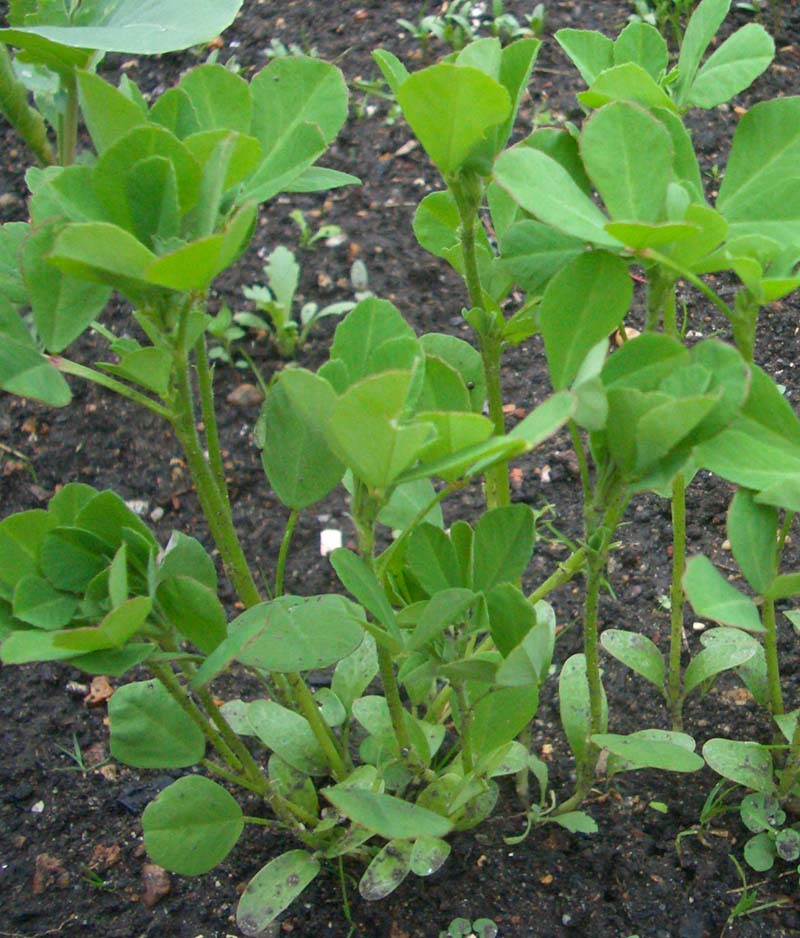 FenugreekTrigonella foenum-graecum
Compare
Questions and answers
What is the scientific name of the Common Laburnum?
The scientific name of the Common Laburnum is Laburnum anagyroides. Written with its author, the full name is Laburnum anagyroides Medik..
Which family does the Common Laburnum belong to?
Laburnum anagyroides belongs to the family Fabaceae, in the order Fabales and the class Magnoliopsida.
Where is the Common Laburnum found?
Checklists and occurrence records place Laburnum anagyroides in 43 countries, including Italy, Switzerland, Sweden, Norway, Austria and Denmark.
What is the conservation status of the Common Laburnum?
The IUCN Red List category recorded for Laburnum anagyroides is Least Concern (LC).
What other names does the Common Laburnum have?
Laburnum anagyroides is also known in English as Golden Chain, Golden Rain, Golden Chain Tree, Golden Rain Tree, Laburnham and Golden Chain-tree.
Is laburnum poisonous to humans?
Its seeds contain cytisine, an alkaloid that is somewhat poisonous to humans, particularly when the seeds are unripe.[16]
What does the word "laburnum" mean?
Laburnum is the Latin name of the plant.[24]
What is the name of the poisonous tree with yellow flowers?
Common Laburnum is a small deciduous tree or large shrub with golden yellow flowers. Its seeds contain cytisine, an alkaloid that is somewhat poisonous to humans.[1][8][16]
Can you describe the laburnum tree?
Common Laburnum is a small deciduous tree or large shrub that can reach a height of 7 metres. It has smooth bark, dark green spreading branches, drooping hairy twigs, and three-part leaves. Its golden yellow, sweet-scented flowers grow in drooping racemes.[1][2][3][4][8]
Sources
Passages the profile rests on
- Laburnum anagyroides is a small deciduous tree or large shrub. Source passage: “The plant is a small deciduous tree or large shrub” — English Wikipedia
- The plant can reach a height of 7 metres. Source passage: “up to 7 m (23 ft) tall.” — English Wikipedia
- The plant has smooth bark, dark green spreading branches, and drooping, hairy twigs. Source passage: “It has smooth bark, dark green spreading branches and pendulous and pubescent twigs.” — English Wikipedia
- Its leaves are generally composed of three oval leaflets with long petioles. Source passage: “The leaves are generally trifoliate and oval with long petioles” — English Wikipedia
- The upper surfaces of its leaves are smooth, while their undersides are hairy. Source passage: “smooth on the upperside and hairy on the underside.” — English Wikipedia
- Its flowers are pea-shaped and yellow. Source passage: “pea-like, yellow flowers” — English Wikipedia
- Its yellow flowers are densely arranged in drooping racemes measuring 10–25 centimetres long. Source passage: “flowers densely packed in pendulous racemes 10–25 cm (4–10 in) long.” — English Wikipedia
- Its flowers are golden yellow and sweet-scented. Source passage: “The flowers are golden yellow, sweet scented” — English Wikipedia
- Its fruit consists of legume pods containing numerous black seeds. Source passage: “The pods are legumes with large numbers of black seeds” — English Wikipedia
- The plant grows and flowers in damp, mild habitats. Source passage: “The plant grows and flowers in damp and mild habitats” — English Wikipedia
- The plant particularly occurs in calcareous soils in Southern Europe. Source passage: “especially in the calcareous soils of Southern Europe.” — English Wikipedia
- Hares and deer can consume the plant's seed-containing pods without apparent problems. Source passage: “hares and deer can feed on them without any problems” — English Wikipedia
- The plant flowers during May and June. Source passage: “It flowers during May and June.” — English Wikipedia
- The plant blooms in late spring. Source passage: “Laburnum anagyroides blooms in late spring” — English Wikipedia
- Its flowers typically bloom in May. Source passage: “typically bloom in May.” — English Wikipedia
- The plant's seeds contain cytisine, an alkaloid that is somewhat poisonous to humans, goats, and horses, particularly when the seeds are unripe. Source passage: “seeds that contain cytisine, an alkaloid somewhat poisonous to humans as well as goats and horses, especially when not ripe.” — English Wikipedia
- The species is cultivated as an ornamental tree. Source passage: “Laburnum anagyroides is cultivated as an ornamental tree.” — English Wikipedia
- Its hard, heavy yellow-brown wood is suitable for making posts, woodturning, and fuel. Source passage: “The wood is hard and heavy, of a yellow/brown colour, ideal for making posts, for woodturning and as fuel.” — English Wikipedia
- The wood was historically used to make bows. Source passage: “In the past (and today on historic re-enactments) it was used for making bows.” — English Wikipedia
- Wood from very old specimens can serve as a substitute for ebony. Source passage: “The tree is also known as false ebony since the wood from very old specimens could be used in place of ebony.” — English Wikipedia
- Cytisine obtained from the plant is used in smoking cessation medicine. Source passage: “A substance from the plant, cytisine, is used as a medicine for smoking cessation.” — English Wikipedia
- Laburnum alpinum is closely related to Laburnum anagyroides. Source passage: “Laburnum alpinum is closely related.” — English Wikipedia
- Laburnum × watereri is a hybrid between Laburnum anagyroides and Laburnum alpinum. Source passage: “a hybrid between this species and Laburnum alpinum — Laburnum × watereri.” — English Wikipedia
- Laburnum is the Latin name of the plant. Source passage: “Laburnum: the Latin name.” — landscapeplants.oregonstate.edu
Data
- Catalogue of Life, 2026-10-16 XR cc by
- Global Biodiversity Information Facility CC BY 4.0
- Wikidata CC0
- GeoNames CC BY 4.0
- Wikimedia Commons per image; credit shown with each image
- Within the Catalogue of Life, this name comes from The World Checklist of Vascular Plants (WCVP): Fabaceae cc by
References
- Vorles. Churpfälz. Phys.-Ökon. Ges. 2: 363 (1787) where the name was published
This species in other databases
Page built on 27 November 2026. See how the catalog is made and all sources and licences.
Cite this page
ScientificNames.org. (2026). Laburnum anagyroides (Common Laburnum). Retrieved November 27, 2026, from https://scientificnames.org/species/laburnum-anagyroides
“Laburnum anagyroides (Common Laburnum).” ScientificNames.org, 2026, scientificnames.org/species/laburnum-anagyroides. Accessed 27 Nov. 2026.
ScientificNames.org. “Laburnum anagyroides (Common Laburnum).” Accessed November 27, 2026. https://scientificnames.org/species/laburnum-anagyroides.
@misc{scientificnames_laburnum_anagyroides_common_laburnum,
  author = {{ScientificNames.org}},
  title = {Laburnum anagyroides (Common Laburnum)},
  year = {2026},
  url = {https://scientificnames.org/species/laburnum-anagyroides},
  note = {Accessed 2026-11-27}
}