Species · Molluscs
Laetifautor Deceptum Laetifautor deceptus
The scientific name of the Laetifautor Deceptum is Laetifautor deceptus. It is a species of mollusc in the family Calliostomatidae, order Trochida. The name dates from 1899.
- Scientific name
- Laetifautor deceptus (E. A. Smith, 1899)
- Common name
- Laetifautor Deceptum
- Genus
- Laetifautor
- Family
- Calliostomatidae
- Order
- Trochida
- Class
- Gastropoda
- Environment
- marine
- Name status
- accepted in the Catalogue of Life
Overview
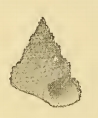
Laetifautor deceptum is a marine snail in the family Calliostomatidae, order Trochida, and class Gastropoda. It occurs off the coast of Northwest Australia. It has a small conical shell with seven gradually enlarging whorls and sharp spiral ridges composed of small granules.
Written 28 November 2026 from the sources listed below. Each statement was checked against the passage it cites; statements that could not be supported were removed.
Appearance
The shell is small, imperforate, and conical, with a moderately pointed spire. It consists of seven whorls that increase gradually in size; the first is globose and sinistral, while the remaining whorls are subangular in their middle portions.[1][2][3][4][5]
The whorls are flattened both above and below the suture. The base of the final whorl forms an angle.[6][7]
The shell bears rows of sharp spiral ridges composed of small granules, with approximately six rows on the penultimate whorl. The granules are less sharply conical, and the base is more densely granulated.[8][9]
The aperture is irregularly subquadrate and has internal grooves. The columella bears a prominent callus.[10][11]
Some specimens have scattered pale-brown dots on the shell, while others have a uniformly very pale flesh-colored shell.[12][13]
The shell reaches a maximum recorded height of 9 mm.[14]
Habitat
This marine snail occurs off the coast of Northwest Australia.[15]
Similar species
The original name Calliostoma deceptum was assigned because young specimens were confused with Laetifautor rubropunctatus.[16]
Classification of the Laetifautor Deceptum
| Kingdom | Animalia |
|---|---|
| Phylum | Mollusca |
| Class | Gastropoda (Gastropod) |
| Subclass | Vetigastropoda |
| Order | Trochida |
| Superfamily | Trochoidea |
| Family | Calliostomatidae |
| Subfamily | Calliostomatinae |
| Genus | Laetifautor |
| Species | Laetifautor deceptus (E. A. Smith, 1899) |
Common names
English
- Laetifautor Deceptum
Synonyms
3 other scientific names have been used for this species and are now treated as synonyms of Laetifautor deceptus.
- Calliostoma (Laetifautor) trepidum Hedley, 1907
- Calliostoma deceptum E. A. Smith, 1899
- Calliostoma trepidum Hedley, 1907
Related species
-
 Laetifautor fundatus
- Laetifautor SpinulosumLaetifautor spinulosus
-
 Laetifautor RubropunctatumLaetifautor rubropunctatus
- Laetifautor elegans
- Laetifautor balcombensis
- Laetifautor bicarinatus
- Laetifautor crebrinodulosus
- Laetifautor guphili
Compare
Questions and answers
What is the scientific name of the Laetifautor Deceptum?
The scientific name of the Laetifautor Deceptum is Laetifautor deceptus. Written with its author, the full name is Laetifautor deceptus (E. A. Smith, 1899).
Which family does the Laetifautor Deceptum belong to?
Laetifautor deceptus belongs to the family Calliostomatidae, in the order Trochida and the class Gastropoda.
What is the maximum recorded shell height?
The maximum recorded shell height is 9 mm.[14]
Where does Laetifautor deceptum occur?
It occurs off the coast of Northwest Australia.[15]
Why was the original name Calliostoma deceptum assigned?
It was assigned because young specimens were confused with Laetifautor rubropunctatus.[16]
Sources
Passages the profile rests on
- The shell is small, imperforate, and conical in shape. Source passage: “The small, imperforate shell has a conical shape.” — English Wikipedia
- The shell has a moderately pointed spire. Source passage: “The spire is moderately acute.” — English Wikipedia
- The shell consists of seven whorls that increase gradually in size. Source passage: “The seven whorls are slowly increasing in size.” — English Wikipedia
- The first whorl is globose and sinistral. Source passage: “The first one is sinistral and globose.” — English Wikipedia
- The remaining whorls are subangular in their middle portions. Source passage: “The rest are subangulate in the middle.” — English Wikipedia
- The whorls are flattened both above and below the suture. Source passage: “Above and below the suture they are flat.” — English Wikipedia
- The base of the final whorl forms an angle. Source passage: “The base of the last whorl forms an angle.” — English Wikipedia
- The shell bears rows of sharp spiral ridges composed of small granules, with approximately six rows on the penultimate whorl. Source passage: “It shows rows of acute spirals of small granules (about 6 on the penultimate whorl).” — English Wikipedia
- The shell granules are less sharply conical and the base is more densely granulated. Source passage: “The granules are not so acutely conical, and the base more closely granulated.” — English Wikipedia
- The aperture is irregularly subquadrate and has internal grooves. Source passage: “The aperture is irregularly subquadrate and sulcate within.” — English Wikipedia
- The columella bears a prominent callus. Source passage: “The columella has a prominent callus.” — English Wikipedia
- Some specimens have scattered pale-brown dots on the shell. Source passage: “Some examples exhibit scattered pale-brown dots” — English Wikipedia
- Some specimens have a uniformly very pale flesh-colored shell. Source passage: “others are uniformly of a very pale flesh tint.” — English Wikipedia
- The shell reaches a maximum recorded height of 9 mm. Source passage: “The height of the shell attains 9 mm.” — English Wikipedia
- This marine snail occurs off the coast of Northwest Australia. Source passage: “This marine snail occurs off Northwest Australia.” — English Wikipedia
- The original name Calliostoma deceptum was assigned because young specimens were confused with Laetifautor rubropunctatus. Source passage: “The original name, Calliostoma deceptum, was given after a number of young specimens were confused with C. rubo-punctatum, now called L. rubropunctatus.” — English Wikipedia
Data
- Catalogue of Life, 2026-10-16 XR cc by
- Wikidata CC0
- Wikimedia Commons per image; credit shown with each image
- Within the Catalogue of Life, this name comes from World Register of Marine Species cc by
This species in other databases
Page built on 28 November 2026. See how the catalog is made and all sources and licences.
Cite this page
ScientificNames.org. (2026). Laetifautor deceptus (Laetifautor Deceptum). Retrieved November 28, 2026, from https://scientificnames.org/species/laetifautor-deceptus
“Laetifautor deceptus (Laetifautor Deceptum).” ScientificNames.org, 2026, scientificnames.org/species/laetifautor-deceptus. Accessed 28 Nov. 2026.
ScientificNames.org. “Laetifautor deceptus (Laetifautor Deceptum).” Accessed November 28, 2026. https://scientificnames.org/species/laetifautor-deceptus.
@misc{scientificnames_laetifautor_deceptus_laetifautor_deceptum,
  author = {{ScientificNames.org}},
  title = {Laetifautor deceptus (Laetifautor Deceptum)},
  year = {2026},
  url = {https://scientificnames.org/species/laetifautor-deceptus},
  note = {Accessed 2026-11-28}
}