Species · Molluscs
Laetifautor Rubropunctatum Laetifautor rubropunctatus
The scientific name of the Laetifautor Rubropunctatum is Laetifautor rubropunctatus. It is a species of mollusc in the family Calliostomatidae, order Trochida. The name dates from 1853.
- Scientific name
- Laetifautor rubropunctatus (A. Adams, 1853)
- Common name
- Laetifautor Rubropunctatum
- Genus
- Laetifautor
- Family
- Calliostomatidae
- Order
- Trochida
- Class
- Gastropoda
- Environment
- marine
- Recorded in
- 1 country
- Name status
- accepted in the Catalogue of Life

Overview
Laetifautor rubropunctatus occurs in marine waters off Japan, the Philippines, and Australia. It is distinguished by a small, buffish orbiculate-conic shell with spinulose ridges, sharp nodules, and red dots between the ridges.
Written 28 November 2026 from the sources listed below. Each statement was checked against the passage it cites; statements that could not be supported were removed.
Appearance
The shell is small, buffish, and orbiculate-conic. Its coloration has been described as lutescent and also as pale fleshy pink with dark red dots between the oblique costae and spiral ridges.[1][2][3]
The shell is ornamented with transverse spinulose cinguli, including four on the body whorl. The body whorl has six transverse or spiral ridges, four of which are more prominent, while the upper whorls have three principal spiral ridges and a fourth secondary ridge at the suture.[4][5][6]
The intersections of the spiral ridges and oblique costae form sharp nodules or prickles. The spaces between the ridges form a clathrate pattern and are dotted with red.[7][8]
The shell base is almost flat and bears approximately six concentric ridges. These ridges are more or less granular, and the spaces between the basal granules display strong growth lines and translucent nacre.[9][10][11]
The shell's surface coloration closely resembles the surrounding surface and includes brown dots on and between the granules.[12]
Habitat
The species occurs in marine waters off Japan, the Philippines, and Australia.[13]
Classification of the Laetifautor Rubropunctatum
| Kingdom | Animalia |
|---|---|
| Phylum | Mollusca |
| Class | Gastropoda (Gastropod) |
| Subclass | Vetigastropoda |
| Order | Trochida |
| Superfamily | Trochoidea |
| Family | Calliostomatidae |
| Subfamily | Calliostomatinae |
| Genus | Laetifautor |
| Species | Laetifautor rubropunctatus (A. Adams, 1853) |
Where the Laetifautor Rubropunctatum is found
Checklists and occurrence records place Laetifautor rubropunctatus in 1 country. GBIF holds 23 georeferenced records of it.
Countries
A number beside a place is its count of GBIF occurrence records. A place without a number comes from a checklist alone. Records show where a species has been observed or collected, which can include escapes and vagrants.
Common names
English
- Laetifautor Rubropunctatum
Synonyms
2 other scientific names have been used for this species and are now treated as synonyms of Laetifautor rubropunctatus.
- Calliostoma rubropunctatum (A. Adams, 1853)
- Ziziphinus rubropunctatus A. Adams, 1853
Related species
-
 Laetifautor fundatus
- Laetifautor SpinulosumLaetifautor spinulosus
-
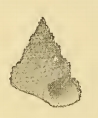 Laetifautor DeceptumLaetifautor deceptus
- Laetifautor elegans
- Laetifautor balcombensis
- Laetifautor bicarinatus
- Laetifautor crebrinodulosus
- Laetifautor guphili
Compare
Questions and answers
What is the scientific name of the Laetifautor Rubropunctatum?
The scientific name of the Laetifautor Rubropunctatum is Laetifautor rubropunctatus. Written with its author, the full name is Laetifautor rubropunctatus (A. Adams, 1853).
Which family does the Laetifautor Rubropunctatum belong to?
Laetifautor rubropunctatus belongs to the family Calliostomatidae, in the order Trochida and the class Gastropoda.
Where is the Laetifautor Rubropunctatum found?
Checklists and occurrence records place Laetifautor rubropunctatus in 1 country: Japan.
Sources
Passages the profile rests on
- The shell is small, buffish in color, and orbiculate-conic in shape. Source passage: “The small, buffish shell has an orbiculate-conic shape.” — English Wikipedia
- The shell's coloration has been described as lutescent by A. Adams. Source passage: “A.Adams describes the color as "lutescens."” — English Wikipedia
- The shell has also been described as pale fleshy pink with dark red dots between its oblique costae and spiral ridges. Source passage: “Tryon rather considers it pale fleshy pink, with dark red dots in the interstices between the oblique costae and the transverse or spiral ridges.” — English Wikipedia
- The shell is ornamented with transverse spinulose cinguli, including four on the body whorl. Source passage: “It is ornamented with transverse spinulose cinguli (4 on the body whorl).” — English Wikipedia
- The body whorl has six transverse or spiral ridges, four of which are more prominent. Source passage: “But on careful examination Tryon found six, of which four are, however, more prominent than the rest.” — English Wikipedia
- The upper shell whorls have three principal spiral ridges and a fourth secondary ridge at the suture. Source passage: “The upper volutions are encircled by three principal lirae, and a fourth secondary one at the suture.” — English Wikipedia
- The spaces between the shell's ridges form a clathrate pattern and are dotted with red. Source passage: “The interstices are clathrate, beautifully dotted with red.” — English Wikipedia
- The intersections of the spiral ridges and oblique costae form sharp nodules or prickles. Source passage: “The points of intersection of these spiral ridges and the oblique costae are produced into quite acute nodules or prickles.” — English Wikipedia
- The shell base is almost flat and bears approximately six concentric ridges. Source passage: “The base of the shell is almost flat, ornamented with about six concentric lirae” — English Wikipedia
- The concentric ridges on the shell base are more or less granular. Source passage: “which are more or less granulous” — English Wikipedia
- The spaces between the basal granules display strong growth lines and translucent nacre. Source passage: “with the interstices exhibiting strong lines of growth and translucent nacre.” — English Wikipedia
- The shell's surface coloration closely resembles the surrounding surface and includes brown dots on and between the granules. Source passage: “The color closely approaches the rest of the surface, varied with brown dots both upon and between the granules.” — English Wikipedia
- The species occurs in marine waters off Japan, the Philippines, and Australia. Source passage: “This marine species occurs off Japan, the Philippines and Australia.” — English Wikipedia
Data
- Catalogue of Life, 2026-10-16 XR cc by
- Global Biodiversity Information Facility CC BY 4.0
- Wikidata CC0
- GeoNames CC BY 4.0
- Wikimedia Commons per image; credit shown with each image
- Within the Catalogue of Life, this name comes from World Register of Marine Species cc by
This species in other databases
Page built on 29 November 2026. See how the catalog is made and all sources and licences.
Cite this page
ScientificNames.org. (2026). Laetifautor rubropunctatus (Laetifautor Rubropunctatum). Retrieved November 29, 2026, from https://scientificnames.org/species/laetifautor-rubropunctatus
“Laetifautor rubropunctatus (Laetifautor Rubropunctatum).” ScientificNames.org, 2026, scientificnames.org/species/laetifautor-rubropunctatus. Accessed 29 Nov. 2026.
ScientificNames.org. “Laetifautor rubropunctatus (Laetifautor Rubropunctatum).” Accessed November 29, 2026. https://scientificnames.org/species/laetifautor-rubropunctatus.
@misc{scientificnames_laetifautor_rubropunctatus_laetifautor_rubropunctatum,
  author = {{ScientificNames.org}},
  title = {Laetifautor rubropunctatus (Laetifautor Rubropunctatum)},
  year = {2026},
  url = {https://scientificnames.org/species/laetifautor-rubropunctatus},
  note = {Accessed 2026-11-29}
}