Species · Flowering plants
Camphire Lawsonia inermis
The scientific name of the Camphire is Lawsonia inermis. It is a species of flowering plant in the family Lythraceae (loosestrife family), order Myrtales.
- Scientific name
- Lawsonia inermis L.
- Common name
- Camphire
- Genus
- Lawsonia
- Family
- Lythraceae (Loosestrife Family)
- Order
- Myrtales
- Class
- Magnoliopsida
- Red List category
- LC Least Concern
- Recorded in
- 95 countries
- Name status
- accepted in the Catalogue of Life

Overview
Lawsonia inermis, also known as hina, the henna tree, the mignonette tree, and the Egyptian privet, is a flowering plant and one of the only two species of the genus Lawsonia, with the other being Lawsonia odorata. It is used as a traditional medicinal plant. The species is named after the Scottish physician Isaac Lawson, a good friend of Linnaeus.
Classification of the Camphire
| Kingdom | Plantae |
|---|---|
| Subkingdom | Pteridobiotina |
| Phylum | Tracheophyta |
| Class | Magnoliopsida |
| Order | Myrtales |
| Family | Lythraceae (Loosestrife Family) |
| Subfamily | Lythroideae |
| Genus | Lawsonia |
| Species | Lawsonia inermis L. |
Where the Camphire is found
Checklists and occurrence records place Lawsonia inermis in 95 countries across Africa, Asia, North America, Oceania and South America. GBIF holds 6,718 georeferenced records of it.
Countries where it is native or its origin is not stated
- Algeria 6
- Bangladesh 4
- Benin 78
- Cameroon 10
- Central African Republic 2
- China 91
- Comoros 6
- Democratic Republic of the Congo 17
- Egypt 86
- Eritrea 7
- Ethiopia 27
- Gambia 9
- Ghana 20
- Guinea 12
- Hong Kong 8
- India 4,661
- Indonesia 72
- Iran 3
- Israel 6
- Ivory Coast 14
- Japan 11
- Kenya 112
- Liberia 3
- Libya 4
- Madagascar 169
- Malaysia 31
- Maldives 8
- Mali 24
- Mauritania 10
- Mauritius 3
- Mayotte 7
- Morocco 24
- Myanmar 2
- Niger 11
- Nigeria 70
- Oman 19
- Pakistan 16
- Palestinian Territory 10
- Qatar
- Reunion 3
- Saudi Arabia 28
- Senegal 49
- Seychelles 6
- Sierra Leone 6
- Somalia 49
- South Africa 3
- South Sudan
- Sri Lanka 46
- Sudan 13
- Syria 5
- Taiwan 6
- Tanzania 35
- Togo 13
- Tunisia 8
- Uganda 3
- United Arab Emirates 17
- Yemen 43
Countries where it has been introduced
- Barbados 4
- Belize 4
- Bolivia 2
- Bonaire, Saint Eustatius and Saba 3
- Burkina Faso 14
- Cambodia 3
- Chad 8
- Colombia 57
- Costa Rica 31
- Cuba 21
- Dominica 1
- Dominican Republic 15
- Ecuador 15
- Fiji
- Guadeloupe 15
- Guam 3
- Guatemala 18
- Guyana 3
- Haiti 11
- Honduras 6
- Jamaica 13
- Laos 2
- Martinique 25
- Mexico 176
- Montserrat
- Mozambique 3
- Nicaragua 46
- Panama 10
- Peru 14
- Philippines 42
- Puerto Rico 24
- Singapore 12
- Suriname 14
- Tajikistan
- Thailand 25
- Trinidad and Tobago 14
- Venezuela 27
- Vietnam 31
Regions and cities with the most records
- Kerala, India 3,972
- Pallichal, India 836
- Neyyāttinkara, India 834
- Thiruvananthapuram, India 676
- Kayamkulam, India 645
- Chirakkal, India 383
- Kannur, India 382
- Taliparamba, India 339
- Vattiyūrkāvu, India 309
- Nedumangād, India 292
- Tiruvalla, India 292
- Tennala, India 269
- Vengara, India 267
- Tirur, India 264
- Tirūrangādi, India 264
- Tānālūr, India 264
- Changanācheri, India 262
- Kollam, India 254
- Kodur, India 251
- Tamil Nadu, India 249
- Moonniyur, India 245
- Malappuram, India 230
- Kāsaragod, India 205
- Tellicherry, India 205
- Alangad, India 161
- Edattala, India 160
- Vazhakkala, India 159
- Pallikal, India 158
- Alappuzha, India 153
- Alengād, India 151
- Kodungallūr, India 136
- Manjeri, India 129
- Ponnāni, India 119
- Idaiyarpālaiyam, India 99
- Coimbatore, India 98
- Kizhake Chālakudi, India 98
17 more countries have a few records outside this range
These countries hold a few records of Lawsonia inermis but lie outside the range the checklists give for it. Such records are often zoo or garden specimens, museum material or vagrants, so the species is not counted as occurring there.
Range as the checklists state it
Morocco [c]; Algeria [c]; Tunisia [c]; Libya [c]; Mauritania [c]; Guinea; Burkina Faso [I]; Togo; Benin; Cameroon; Central African Republic; Chad [I]; Sudan; ?South Sudan; Ethiopia; Somalia; Kenya; Mozambique [I]; Madagascar; Comores; Seychelles; Tajikistan [I]; Iran (S-Iran); Saudi Arabia (Hejaz, Asir); United Arab Emirates; Qatar; Oman (Mascat & Oman); Yemen (Aden Desert, coastal Hadhramaut, Inner Hadhramaut, SW-Yemen, W-Yemen); China (Fujian, Guangdong, Guangxi, Jiangsu, Yunnan); Pakistan (Sind, Baluchistan, Pakistani Punjab); NW-India (Andhra Pradesh, Assam, Bihar, Goa, Gujarat, Jharkhand, Karnataka, Kerala, Madhya Pradesh, Maharashtra, Manipur, Meghalaya, Odisha, Rajasthan, Sikkim, Tripura, Uttarakhand, Uttar Pradesh, West Bengal); Lakshadweep Isl. [Laccadives]; Maldives; Sri Lanka; Andaman Isl. [c] (South Andaman Isl. [c]); Nicobar Isl. (Great Nicobar Isl.); Myanmar; Thailand [I]; Laos [I]; Cambodia [I]; Vietnam [I]; Singapore [I]; Philippines [I]; Jawa [I]; Lesser Sunda Isl. [I] (Bali [I]); New Guinea [I]; Fiji [I]; Northern Marianas [I] (Alamagan [I], Saipan [I]); Guam [I]; Mexico [I]; Guatemala [I]; Belize [I]; Honduras [I]; Nicaragua [I]; Costa Rica [I]; Panama [I]; Turks & Caicos Isl. [I]; Cuba [I]; Jamaica [I]; Dominican Republic [I]; Haiti [I]; Puerto Rico [I]; Virgin Isl. [I]; St. Martin/St. Maarten [I]; St. Barthélémy [I]; Saba [I]; St. Eustatius [I]; Nevis [I]; St. Kitts [I]; Antigua [I]; Montserrat [I]; Guadeloupe [I]; Dominica [I]; Martinique [I]; St. Lucia [I]; Barbados [I]; Trinidad & Tobago [I]; Colombia [I]; Venezuela [I]; Guyana [I]; Surinam [I]; Ecuador [I]; Peru [I]; Bolivia [I]
A number beside a place is its count of GBIF occurrence records. A place without a number comes from a checklist alone. Records show where a species has been observed or collected, which can include escapes and vagrants.
Common names
English
- Camphire
- Egyptian Privet
- Egyptian-privet
- Henna Tree
- Jamaica-mignonette
- Mignonette Tree
- Mignonette-tree
Names in 47 other languages
- Arabic
- Hinná, Yoranna, حناء
- Bengali
- Mehedi
- Bulgarian
- Къна
- Burmese
- Dan
- Chinese
- 指甲花, 指甲花叶, 散沫花, 散沫花(指甲花)
- Czech
- henovník bezbranný
- Esperanto
- Henao
- Finnish
- hennapensas
- French
- Henne, Henné
- German
- Hennastrauch
- Greek
- Χέννα
- Gujarati
- Medi
- Hebrew
- כופר לבן
- Hindi
- Mehendi, Mehndi
- Indonesian
- Inai
- Italian
- Alcanna Vera, Arbusto della Henna
- Japanese
- シコウカ
- Kannada
- Gorante
- Khmer
- Krâpéén
- Malay
- Hinna, Pacar kuku
- Malayalam
- Mailanchi
- Marathi
- Mendhi, मेंदी
- Papiamento
- Miminet, Minimèt, Reseda
- Polish
- lawsonia bezbronna
- Portuguese
- Alfeneiro, Hena, Hésia
- Russian
- Лавсония неколючая
- Slovak
- lavzónia farbiarska
- Spanish
- Alcana, Alhena, Jenna, Resedón, alheña
- Swahili
- Mkokoa Muhina
- Tamil
- Marithondi, Marudaani, அழவனம், மருதாணி, மருதோன்றி
- Thai
- เทียนกิ่งขาว
- Turkish
- Kına
- Urdu
- Mehndri
- Vietnamese
- Lá mòn, Nhuôm món
- bam
- Jàbi, djabi
- cop
- ⲕⲟⲩⲡⲣ
- ful
- pouddi
- gax
- Elm, Halam, Urrurr
- kas
- Mohuz
- lao
- Kaaw
- mlk
- Mosriya
- orc
- Durrur
- ori
- Benjati
- rel
- Hanlan
- san
- Mendika
- saq
- Ilgerei
- som
- Allan, Elan
Synonyms
13 other scientific names have been used for this species and are now treated as synonyms of Lawsonia inermis.
- Alcanna spinosa (L.) Gaertn.
- Alkanna spinosa (L.) Gaertn.
- Casearia multiflora Spreng.
- Lawsonia alba Lam.
- Lawsonia alba var. flavescens Hassk.
- Lawsonia alba var. miniata Hassk.
- Lawsonia coccinea Sm.
- Lawsonia falcifolia Stokes
- Lawsonia inermis var. spinosa (L.) Pers.
- Lawsonia purpurea Lam.
- Lawsonia speciosa L.
- Lawsonia spinosa L.
- Rotantha combretoides Baker
Related species
-
 PomegranatePunica granatum
-
 Water CaltropTrapa natans
-
 Crape-myrtleLagerstroemia indica
-
 Purple LoosestrifeLythrum salicaria
-
 False HeatherCuphea hyssopifolia
-
 Sun OpenerHeimia salicifolia
-
 Socotran PomegranatePunica protopunica
-
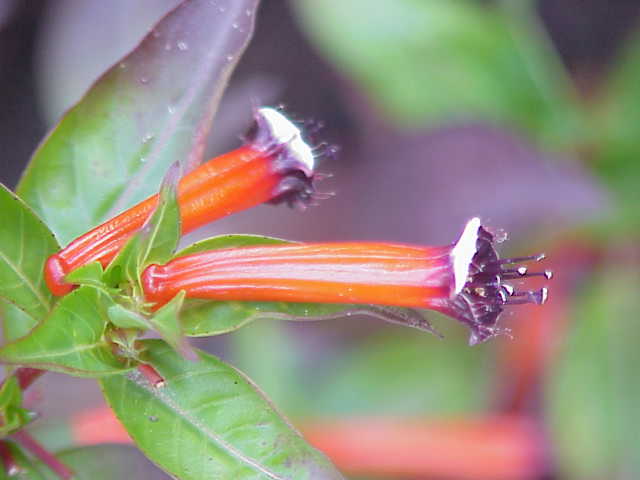 Cigar PlantCuphea ignea
Compare
Questions and answers
What is the scientific name of the Camphire?
The scientific name of the Camphire is Lawsonia inermis. Written with its author, the full name is Lawsonia inermis L..
Which family does the Camphire belong to?
Lawsonia inermis belongs to the family Lythraceae, in the order Myrtales and the class Magnoliopsida.
Where is the Camphire found?
Checklists and occurrence records place Lawsonia inermis in 95 countries, including India, Madagascar, Kenya, China, Egypt and Benin.
What is the conservation status of the Camphire?
The IUCN Red List category recorded for Lawsonia inermis is Least Concern (LC).
What other names does the Camphire have?
Lawsonia inermis is also known in English as Egyptian Privet, Egyptian-privet, Henna Tree, Jamaica-mignonette, Mignonette Tree and Mignonette-tree.
Sources
Data
- Catalogue of Life, 2026-10-16 XR cc by
- Global Biodiversity Information Facility CC BY 4.0
- Wikidata CC0
- English Wikipedia CC BY-SA 4.0
- GeoNames CC BY 4.0
- Wikimedia Commons per image; credit shown with each image
- iNaturalist per image; credit shown with each image
- Within the Catalogue of Life, this name comes from Synonymic Checklists of the Vascular Plants of the World cc by
References
- L. (1753). Sp. Pl. [Linnaeus] 1: 349 (1753). where the name was published
This species in other databases
- Catalogue of Life 3SNTF
- Wikidata Q182448
- iNaturalist 285378
- World Flora Online wfo-0000366658
- GRIN 21699
Page built on 24 November 2026. See how the catalog is made and all sources and licences.
Cite this page
ScientificNames.org. (2026). Lawsonia inermis (Camphire). Retrieved November 24, 2026, from https://scientificnames.org/species/lawsonia-inermis
“Lawsonia inermis (Camphire).” ScientificNames.org, 2026, scientificnames.org/species/lawsonia-inermis. Accessed 24 Nov. 2026.
ScientificNames.org. “Lawsonia inermis (Camphire).” Accessed November 24, 2026. https://scientificnames.org/species/lawsonia-inermis.
@misc{scientificnames_lawsonia_inermis_camphire,
  author = {{ScientificNames.org}},
  title = {Lawsonia inermis (Camphire)},
  year = {2026},
  url = {https://scientificnames.org/species/lawsonia-inermis},
  note = {Accessed 2026-11-24}
}