Species · Flowering plants
California Broomsage Lepidospartum squamatum
The scientific name of the California Broomsage is Lepidospartum squamatum. It is a species of flowering plant in the family Asteraceae (composite), order Asterales.
- Scientific name
- Lepidospartum squamatum (A.Gray) A.Gray
- Common name
- California Broomsage
- Genus
- Lepidospartum
- Family
- Asteraceae (Composite)
- Order
- Asterales
- Class
- Magnoliopsida
- Red List category
- LC Least Concern
- Recorded in
- 2 countries
- Name status
- accepted in the Catalogue of Life

Overview
California Broomsage is a large flowering shrub in the daisy family. It grows in the mountains, valleys, and deserts of central and southern California and Baja California, and is also commonly found in Arizona. Its branches are covered with woolly fibers, and its small leaves are no longer than three millimeters.
Written 27 November 2026 from the sources listed below. Each statement was checked against the passage it cites; statements that could not be supported were removed.
Appearance
California Broomsage is a large shrub with a spreading, rounded growth form that commonly exceeds two meters in height. Its branches are covered with woolly fibers, and its leaves are no longer than three millimeters.[1][2][3][4]
Its inflorescences consist of a single flower head or clusters of up to five heads at branch tips. The discoid flower heads contain numerous yellow tubular disc florets and have no ray florets.[5][6]
Its narrow fruits are achenes measuring a few millimeters in length, each bearing a dull white to light brown pappus. Mature fruiting inflorescences develop a cottony appearance as the pappi become visible.[7][8][9]
Habitat
California Broomsage grows in sandy and gravelly soils. Dry alluvial habitats, particularly arroyos, are among its preferred growing environments, and the species serves as an indicator of alluvial scrub habitat in its native region.[10][11][12]
In the Piute Mountains of Kern County, California, the species occurs in desert scrub and sandy flats. In Griffith Park, Los Angeles, it grows along fence lines where it is protected from disturbances such as mowing.[13][14]
Its native range includes the mountains, valleys, and deserts of central and southern California and Baja California. It is also commonly found in Arizona.[15][16]
Behaviour
California Broomsage flowers during hot summers when many other plants are dormant. Its flowering provides a resource for pollinators during hot summer conditions.[17][18]
Its flowers attract bees, butterflies, moths, and tarantula hawk wasps.[19]
Reproduction and life cycle
California Broomsage produces narrow achene fruits bearing pappi. The mature fruiting inflorescences develop a cottony appearance as the pappi become visible.[9][20]
Uses
Some Indigenous groups used the branches of California Broomsage to make brooms.[21]
Classification of the California Broomsage
| Kingdom | Plantae |
|---|---|
| Subkingdom | Pteridobiotina |
| Phylum | Tracheophyta |
| Class | Magnoliopsida |
| Order | Asterales |
| Family | Asteraceae (Composite) |
| Subfamily | Asteroideae |
| Tribe | Senecioneae |
| Subtribe | Tussilagininae |
| Genus | Lepidospartum (Broomsage) |
| Species | Lepidospartum squamatum (A.Gray) A.Gray |
Where the California Broomsage is found
Checklists and occurrence records place Lepidospartum squamatum in 2 countries across North America. GBIF holds 4,321 georeferenced records of it.
Countries
Regions and cities with the most records
- California, United States 3,569
- Altadena, United States 777
- Pasadena, United States 722
- Monrovia, United States 716
- La Crescenta-Montrose, United States 714
- Arcadia, United States 710
- San Gabriel, United States 705
- Duarte, United States 699
- Alhambra, United States 698
- Temple City, United States 692
- South Pasadena, United States 691
- La Cañada Flintridge, United States 682
- Glendale, United States 670
- Azusa, United States 662
- Rosemead, United States 660
- El Monte, United States 657
- Burbank, United States 656
- South El Monte, United States 647
- Monterey Park, United States 639
- Vincent, United States 621
- Baldwin Park, United States 587
- West Puente Valley, United States 564
- West Covina, United States 546
- Avocado Heights, United States 538
- East Los Angeles, United States 499
- Montebello, United States 474
- Los Angeles, United States 451
- Desert Hot Springs, United States 415
- Corona, United States 367
- North Tustin, United States 339
- Rancho Santa Margarita, United States 324
- Covina, United States 323
- Lake Forest, United States 323
- Glendora, United States 317
- San Dimas, United States 316
- La Verne, United States 309
Range as the checklists state it
USA (California); Mexico (Baja California Norte, Baja California Sur); Isla Guadalupe
A number beside a place is its count of GBIF occurrence records. A place without a number comes from a checklist alone. Records show where a species has been observed or collected, which can include escapes and vagrants.
Common names
English
- California Broomsage
- Scale Broom
Synonyms
10 other scientific names have been used for this species and are now treated as synonyms of Lepidospartum squamatum.
- Lepidospartum squamatum var. obtectum Jeps.
- Lepidospartum squamatum var. palmeri (A.Gray) L.C.Wheeler
- Lepidospartum squamatum var. squamatum
- Linosyris squamata A.Gray
- Linosyris squamata var. breweri A.Gray
- Linosyris squamata var. palmeri A.Gray
- Linosyris squamata var. squamata
- Senecio palmeri A.Gray
- Tetradymia squamata (A.Gray) A.Gray
- Tetradymia squamata var. squamata
Related species
-
 Nevada BroomsageLepidospartum latisquamum
- Burgess' BroomsageLepidospartum burgessii
-
 Jerusalem ArtichokeHelianthus tuberosus
-
 ChicoryCichorium intybus
-
 Absinthe WormwoodArtemisia absinthium
-
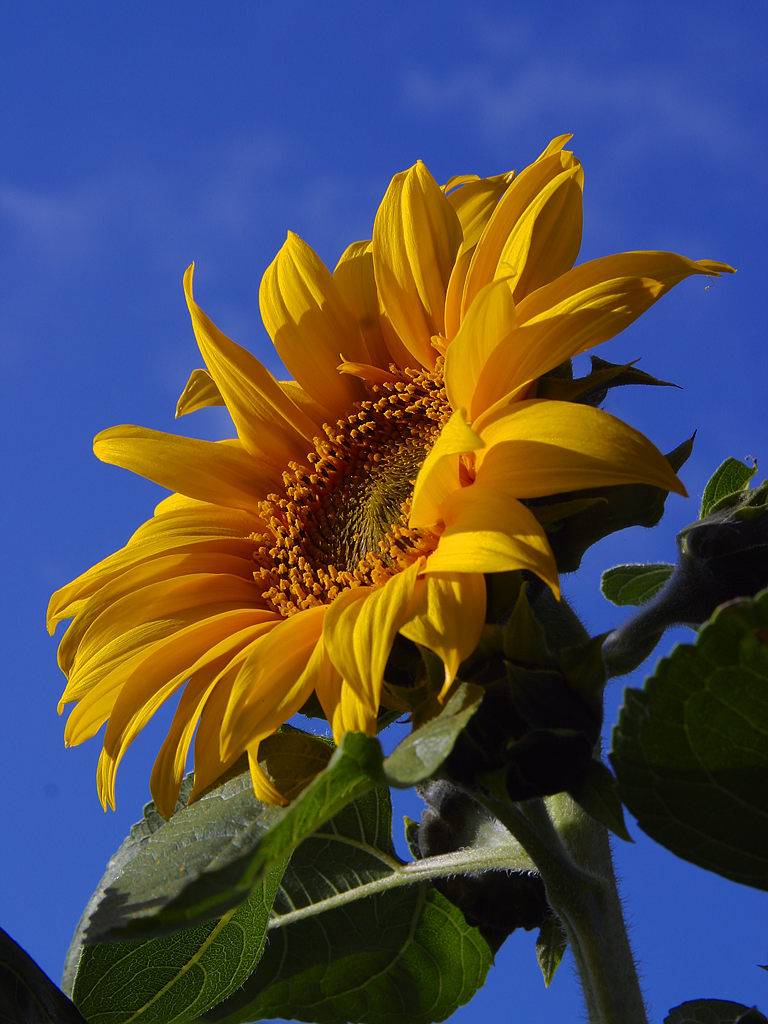 Common SunflowerHelianthus annuus
-
 Common YarrowAchillea millefolium
-
 LettuceLactuca sativa
Compare
Questions and answers
What is the scientific name of the California Broomsage?
The scientific name of the California Broomsage is Lepidospartum squamatum. Written with its author, the full name is Lepidospartum squamatum (A.Gray) A.Gray.
Which family does the California Broomsage belong to?
Lepidospartum squamatum belongs to the family Asteraceae, in the order Asterales and the class Magnoliopsida.
Where is the California Broomsage found?
Checklists and occurrence records place Lepidospartum squamatum in 2 countries: United States and Mexico.
What is the conservation status of the California Broomsage?
The IUCN Red List category recorded for Lepidospartum squamatum is Least Concern (LC).
What other names does the California Broomsage have?
Lepidospartum squamatum is also known in English as Scale Broom.
Sources
Passages the profile rests on
- The plant is a large shrub with a spreading, rounded growth form. Source passage: “Lepidospartum squamatum is a large shrub often exceeding two meters in height which takes a spreading, rounded form” — English Wikipedia
- The shrub commonly grows to heights exceeding two meters. Source passage: “often exceeding two meters in height” — English Wikipedia
- Its branches are covered with woolly fibers. Source passage: “its branches are coated in woolly fibers” — English Wikipedia
- Its leaves are no longer than three millimeters. Source passage: “stubby leaves no more than 3 millimeters long.” — English Wikipedia
- Its inflorescences consist of either one flower head or clusters containing up to five heads at branch tips. Source passage: “The inflorescence is a single flower head or small cluster of up to 5 heads at the ends of branches.” — English Wikipedia
- Its flower heads are discoid and contain numerous yellow tubular disc florets without ray florets. Source passage: “The heads are discoid, bearing many yellow tubular disc florets and no ray florets.” — English Wikipedia
- Its fruit is a narrow achene measuring a few millimeters in length. Source passage: “The fruit is a narrow achene a few millimeters long” — English Wikipedia
- Each fruit has a dull white to light brown pappus. Source passage: “with a dull white to light brown pappus on top.” — English Wikipedia
- Mature fruiting inflorescences develop a cottony appearance as their pappi become visible. Source passage: “As the fruits mature and the flower parts fall away the inflorescence takes on a cottony look due to all the pappi.” — English Wikipedia
- The species grows in sandy and gravelly soils. Source passage: “It grows in sandy, gravelly soils in a number of habitat types” — English Wikipedia
- Dry alluvial habitats, particularly arroyos, are among its preferred growing environments. Source passage: “especially dry alluvial habitat such as arroyos.” — English Wikipedia
- The species serves as an indicator of alluvial scrub habitat in its native region. Source passage: “It is considered an indicator species for the alluvial scrub habitat type in this region.” — English Wikipedia
- In the Piute Mountains of Kern County, California, the species occurs in desert scrub and sandy flats. Source passage: “In the Piute Mountains of Kern County, California, it is a common shrub found in desert scrub and sandy flats.” — English Wikipedia
- In Griffith Park, Los Angeles, the species grows along fence lines where it is protected from disturbances such as mowing. Source passage: “In Griffith Park, Los Angeles, the species is found growing along fence lines, where they grow protected from disturbance like mowing” — English Wikipedia
- Its native range includes the mountains, valleys, and deserts of central and southern California and Baja California. Source passage: “Lepidospartum squamatum is native to the mountains, valleys, and deserts of central and southern California, and Baja California.” — English Wikipedia
- The species is also commonly found in Arizona. Source passage: “It is also commonly found in neighboring Arizona.” — English Wikipedia
- The species flowers during hot summers when many other plants are dormant. Source passage: “These drought adaptations support flowering during hot summers when many plants are dormant” — English Wikipedia
- Its flowering provides a resource for pollinators during hot summer conditions. Source passage: “making it an important resource for pollinators.” — English Wikipedia
- Its flowers attract bees, butterflies, moths, and tarantula hawk wasps. Source passage: “While in bloom, scale broom will attract a wide variety of pollinators, including bees, butterflies, moths, and tarantula hawk wasps.” — English Wikipedia
- The species produces narrow achene fruits bearing pappi. Source passage: “The fruit is a narrow achene a few millimeters long with a dull white to light brown pappus on top.” — English Wikipedia
- Some Indigenous groups used the branches of this species to make brooms. Source passage: “Some indigenous groups used the branches to make brooms.” — English Wikipedia
Data
- Catalogue of Life, 2026-10-16 XR cc by
- Global Biodiversity Information Facility CC BY 4.0
- Wikidata CC0
- GeoNames CC BY 4.0
- Wikimedia Commons per image; credit shown with each image
- Within the Catalogue of Life, this name comes from Synonymic Checklists of the Vascular Plants of the World cc by
References
- Gray, A. (1883). Proc. Amer. Acad. Arts 19: 50 (1883). where the name was published
This species in other databases
- Catalogue of Life 6PC8J
- Wikidata Q6527690
- iNaturalist 58010
- World Flora Online wfo-0000006605
- GRIN 466362
Page built on 28 November 2026. See how the catalog is made and all sources and licences.
Cite this page
ScientificNames.org. (2026). Lepidospartum squamatum (California Broomsage). Retrieved November 28, 2026, from https://scientificnames.org/species/lepidospartum-squamatum
“Lepidospartum squamatum (California Broomsage).” ScientificNames.org, 2026, scientificnames.org/species/lepidospartum-squamatum. Accessed 28 Nov. 2026.
ScientificNames.org. “Lepidospartum squamatum (California Broomsage).” Accessed November 28, 2026. https://scientificnames.org/species/lepidospartum-squamatum.
@misc{scientificnames_lepidospartum_squamatum_california_broomsage,
  author = {{ScientificNames.org}},
  title = {Lepidospartum squamatum (California Broomsage)},
  year = {2026},
  url = {https://scientificnames.org/species/lepidospartum-squamatum},
  note = {Accessed 2026-11-28}
}