Species · Reptiles
Pacific Coast Parrot Snake Leptophis diplotropis
The scientific name of the Pacific Coast Parrot Snake is Leptophis diplotropis. It is a species of reptile in the family Colubridae (colubrid), order Squamata. The name dates from 1872.
- Scientific name
- Leptophis diplotropis (Günther, 1872)
- Common name
- Pacific Coast Parrot Snake
- Genus
- Leptophis
- Family
- Colubridae (Colubrid)
- Order
- Squamata
- Class
- Reptilia
- Red List category
- LC Least Concern
- Recorded in
- 1 country
- Name status
- accepted in the Catalogue of Life

Overview
Leptophis diplotropis, commonly known as the Pacific Coast parrot snake, is a species of snake in the family Colubridae. The species is endemic to Mexico.
Classification of the Pacific Coast Parrot Snake
| Kingdom | Animalia |
|---|---|
| Phylum | Chordata |
| Subphylum | Vertebrata |
| Infraphylum | Gnathostomata |
| Parvphylum | Osteichthyes |
| Megaclass | Tetrapoda |
| Class | Reptilia (Reptile) |
| Order | Squamata (Snakes) |
| Suborder | Serpentes (Snakes) |
| Infraorder | Alethinophidia |
| Family | Colubridae (Colubrid) |
| Subfamily | Colubrinae |
| Genus | Leptophis (Parrot Snakes) |
| Species | Leptophis diplotropis (Günther, 1872) |
Where the Pacific Coast Parrot Snake is found
Checklists and occurrence records place Leptophis diplotropis in 1 country across North America. GBIF holds 1,183 georeferenced records of it.
Countries
Regions and cities with the most records
- Sinaloa, Mexico 207
- Oaxaca, Mexico 191
- Sonora, Mexico 149
- Mazatlán, Mexico 115
- Jalisco, Mexico 99
- Guerrero, Mexico 87
- Nayarit, Mexico 78
- Santo Domingo Tehuantepec, Mexico 58
- Salina Cruz, Mexico 47
- Chiapas, Mexico 42
- Puerto Vallarta, Mexico 29
- Michoacán, Mexico 27
- Chihuahua, Mexico 25
- Colima, Mexico 23
- Acapulco de Juárez, Mexico 22
- Tuxtla, Mexico 18
- Heroica Ciudad de Juchitán de Zaragoza, Mexico 17
- Chiapa de Corzo, Mexico 14
- Morelos, Mexico 12
- Chilpancingo, Mexico 11
- Ixtapa-Zihuatanejo, Mexico 11
- México, Mexico 10
- Manzanillo, Mexico 8
- Oaxaca, Mexico 8
- Santa Cruz Xoxocotlán, Mexico 8
- Taxco de Alarcón, Mexico 8
- Zapopan, Mexico 8
- Guadalajara, Mexico 6
- Guanajuato, Mexico 6
- Zacatecas, Mexico 6
- Ciudad Lázaro Cárdenas, Mexico 5
- Tecomán, Mexico 5
- Tlaquepaque, Mexico 5
- Emiliano Zapata, Mexico 4
- Hacienda Santa Fe, Mexico 4
- Tonalá, Mexico 4
Range as the checklists state it
SE Mexico (Chiapas, Puebla, Oaxaca, Sinaloa, Morelos, Sonora, Jalisco, Hidalgo, Colima, Guanajuato, Chihuahua, Nayarit, México, Guerrero, Durango, Zacatecas etc.)
A number beside a place is its count of GBIF occurrence records. A place without a number comes from a checklist alone. Records show where a species has been observed or collected, which can include escapes and vagrants.
Common names
English
- Pacific Coast Parrot Snake
Names in 3 other languages
- Danish
- Dobbeltkølet Papegøjesnog
- Russian
- Попугайная змея Гюнтера
- Spanish
- Culebra perico del Pacífico, Culebra-perico gargantilla, Ranera del litoral del Pacífico, Ranera gargantilla, Ranera verde del Paífico, Ratonera de la Costa del Pacifico
Synonyms
One other scientific name has been used for this species and is now treated as a synonym of Leptophis diplotropis.
- Ahaetulla diplotropis Günther, 1872
Subspecies and varieties
- Leptophis diplotropis diplotropis (Common Twin-keeled Parrot Snake) subspecies
- Leptophis diplotropis forreri (Forrer's Pacific Coast Parrot Snake) subspecies
Related species
-
 Parrot SnakeLeptophis ahaetulla
- Gray LoraLeptophis stimsoni
-
 Mexican Parrot SnakeLeptophis mexicanus
- Leptophis mystacinus
- Cope's Parrot SnakeLeptophis depressirostris
-
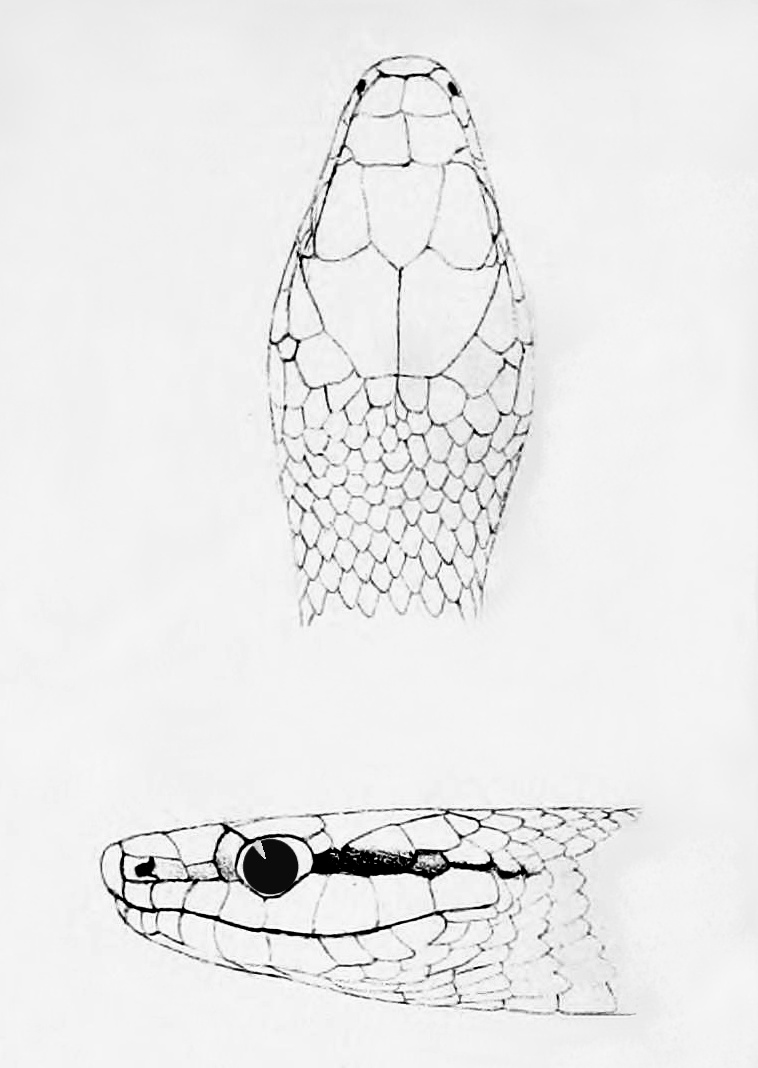 Cloud Forest Parrot SnakeLeptophis modestus
- Oliver’s Parrot SnakeLeptophis coeruleodorsus
- Oliver's Parrot SnakeLeptophis nebulosus
Compare
Questions and answers
What is the scientific name of the Pacific Coast Parrot Snake?
The scientific name of the Pacific Coast Parrot Snake is Leptophis diplotropis. Written with its author, the full name is Leptophis diplotropis (Günther, 1872).
Which family does the Pacific Coast Parrot Snake belong to?
Leptophis diplotropis belongs to the family Colubridae, in the order Squamata and the class Reptilia.
Where is the Pacific Coast Parrot Snake found?
Checklists and occurrence records place Leptophis diplotropis in 1 country: Mexico.
What is the conservation status of the Pacific Coast Parrot Snake?
The IUCN Red List category recorded for Leptophis diplotropis is Least Concern (LC).
Sources
Data
- Catalogue of Life, 2026-10-16 XR cc by
- Global Biodiversity Information Facility CC BY 4.0
- Wikidata CC0
- English Wikipedia CC BY-SA 4.0
- GeoNames CC BY 4.0
- Wikimedia Commons per image; credit shown with each image
- Within the Catalogue of Life, this name comes from The Reptile Database cc by
References
- Günther, A. (1872). Seventh account of new species of snakes in the collection of the British Museum. Ann. Mag. Nat. Hist. (4) 9: 13-37 [OCR Errors].
- Boulenger, George A. (1894). Catalogue of the snakes in the British Museum (Natural History). Volume II., Containing the Conclusion of the Colubridæ Aglyphæ. British Mus. (Nat. Hist.), London, Xi, 382 Pp.
- Smith, Hobart M. (1943). Summary of the collections of snakes and crocodilians made in Mexico under the Walter Rathbone Bacon Traveling Scholarship. Proceeding of the U. S. National Museum, 93 (3169): 393-504. Link
- Oliver, J. A. (1948). The relationships and zoogeography of the genus Thalerophis Oliver. Bull. Amer. Mus. Nat. Hist. 92: 157-280.
- Davis, William B.; Smith, Hobart M. (1953). Snakes of the Mexican state of Morelos. Herpetologica 8: 133-149.
- Zweifel,R.G. and Norris,K.S. (1955). Contributions to the herpetology of Sonora, Mexico:Descriptions of new subspecies of snakes (Micruroides euryxanthus and Lampropeltis getulus) and miscellaneous collecting notes. American Midland Naturalist 54: 230-249.
- Álvarez DEL TORO, M., & SMITH, H. M. (1956). Notulae herpetologicae Chiapasiae. I. Herpetologica 12: 3-17.
- Fugler, Charles M.;Dixon, James R. (1961). Notes on the herpetofauna of the El Dorado Area of Sinaloa, Mexico. Publications of the Museum, Michigan State University, Biological Series 2 (1): 1-24.
- Hardy, L.M., & McDiarmid, R.W. (1969). The amphibians and reptiles of Sinaloa, Mexico. Univ. Kansas Publ. Mus. Nat. Hist. 18 (3): 39-252.
- Mertens, R. (1973). Bemerkenswerte Schlanknattern der neotropischen Gattung Leptophis. Stud. Neotrop. Fauna 8: 141-154.
- McDiarmid, R.W., Copp, J.F., & Breedlove, D.E. (1976). Notes on the herpetofauna of western Mexico: new records from Sinaloa and the Tres Marias Islands. Contributions in Science, Los Angeles (275): 1-17.
- Alvarez DEL TORO, M. (1982). Los Reptiles de Chiapas. 3rd ed. México: Tuxtla Gutiérrez, 248 Pp.
- Camarillo Rangel, J. L. (1983). New herpetological records from the state of Mexico. Bull. Maryland Herp. Soc. 19(2):39-46.
- Webb, R. G. (1984). Herpetogeography in the Mazatlán-Durango Region of the Sierra Madre Occidental, Mexico. Vetrebrate Ecology and Systematics - A Ribute to Henry S. Fitch; Museum of Natural History, University of Kansas, Lawrence, Pp. 217-241.
- Tanner, Wilmer W. (1985). Snakes of Western Chihuahua. Great Basin Naturalist 45 (4): 615-676.
- Pérez-Higareda, G. & H.M. Smith. (1989). The Distribution of Leptophis diplotropis (Serpentes: Colubridae). Bull. Maryland Herpetol. Soc., 25(3): 73-76.
- García, A., & Ceballos, G. (1994). GUIA DE CAMPO DE LOS REPTILES Y ANFIBIOS DE LA COSTA DE JALISCO, MEXICO. Fundacion Ecologica de Cuixmala, a.c. Instituto de Biologia, Unam.
- Castro-Franco, Rubén, & María Guasalupe Bustos-Zagal. (1994). List of reptiles of Morelos, Mexico, and their distribution in relation to vegetation types. Southwestern Naturalist 39 (2): 171-175.
- Canseco-Marquez,L.; Gutierrez-Mayen,G. & Salazar-Arenas,J. (2000). New records and range extensions for amphibians and reptiles from Puebla, México. Herpetological Review 31 (4): 259-263.
- Casas-Andreu, G., F.R. Méndez-De la Cruz and X. Aguilar-Miguel. (2004). Anfibios y Reptiles; pp. 375–390, in A.J.M. García-Mendoza, J. Ordoñez and M. Briones-Salas (ed.). Biodiversidad de Oaxaca. Instituto de Biología, UNAM-Fondo Oaxaqueño Para La Conservación de La Naturaleza-World Wildlife Fund, México, D. F.
- Peterson, A.T. et al. (2004). A preliminary biological survey of Cerro Piedra Larga, Oaxaca, Mexico: Birds, mammals, reptiles, amphibians, and plants. Anales Del Instituto de Biología, Universidad Nacional Autónoma de México, Serie Zoología 75(2): 439-466.
- Liner, Ernest A. (2007). A CHECKLIST OF THE AMPHIBIANS AND REPTILES OF MEXICO. Louisiana State University Occasional Papers of the Museum of Natural Science 80: 1-60.
- Canseco-Márquez, L., & Gutiérrrez-Mayén, M.G. (2010). Anfibios y reptiles del Valle de Tehuacán-Cuicatlán. Comisión Nacional Para El Conocimiento Y Uso de La Biodiversidad, México D.F., Mexico, 302 Pp.
- Valdez-Lares, Rosaura and Raúl Muñiz Martínez. (2011). Geographic Distribution:Leptophis diplotropis (Pacific Coast parrot snake). Herpetological Review 42 (3): 394.
- Seung Hoon, & Cha. (2012). Snake, the world most beautifull curve [in Korean]. Hownext, 304 Pp. [ISBN 978-89-965656-7-3].
This species in other databases
Page built on 25 November 2026. See how the catalog is made and all sources and licences.
Cite this page
ScientificNames.org. (2026). Leptophis diplotropis (Pacific Coast Parrot Snake). Retrieved November 25, 2026, from https://scientificnames.org/species/leptophis-diplotropis
“Leptophis diplotropis (Pacific Coast Parrot Snake).” ScientificNames.org, 2026, scientificnames.org/species/leptophis-diplotropis. Accessed 25 Nov. 2026.
ScientificNames.org. “Leptophis diplotropis (Pacific Coast Parrot Snake).” Accessed November 25, 2026. https://scientificnames.org/species/leptophis-diplotropis.
@misc{scientificnames_leptophis_diplotropis_pacific_coast_parrot_snake,
  author = {{ScientificNames.org}},
  title = {Leptophis diplotropis (Pacific Coast Parrot Snake)},
  year = {2026},
  url = {https://scientificnames.org/species/leptophis-diplotropis},
  note = {Accessed 2026-11-25}
}