Species · Mammals
Natal Multimammate Mouse Mastomys natalensis
The scientific name of the Natal Multimammate Mouse is Mastomys natalensis. It is a species of mammal in the family Muridae (mice), order Rodentia. The name dates from 1834.
- Scientific name
- Mastomys natalensis (A. Smith, 1834)
- Common name
- Natal Multimammate Mouse
- Genus
- Mastomys
- Family
- Muridae (Mice)
- Order
- Rodentia
- Class
- Mammalia
- Red List category
- LC Least Concern
- Recorded in
- 39 countries
- Name status
- accepted in the Catalogue of Life

Overview
Mastomys natalensis occurs in Africa south of the Sahara and inhabits forests, savannas, shrublands, and agricultural land. It is the principal reservoir of Lassa virus and serves as a natural host of the virus.
Written 26 November 2026 from the sources listed below. Each statement was checked against the passage it cites; statements that could not be supported were removed.
Appearance
The Natal Multimammate Mouse is also known as the Natal multimammate rat, common African rat, African soft fur rat, and African soft-furred mouse.[1]
Habitat
The Natal Multimammate Mouse inhabits subtropical and tropical dry forests and moist lowland forests. It also occurs in dry and moist savannas and subtropical and tropical dry and moist shrublands.[2][3][4][5]
Its habitats include agricultural land, including arable land, irrigated land, and seasonally flooded agricultural land. It also occurs in pastureland and rural gardens.[6][7][8]
The species is closely associated with humans and commonly occurs in and around African villages.[9]
Behaviour
The Natal Multimammate Mouse is a natural host and the principal reservoir of Lassa virus. Humans can be exposed to the virus through contact with the species' urine, saliva, and blood.[10][11][12]
The species can shed Lassa virus in its urine at every age.[13][14]
In a reported Sierra Leone study, the Natal Multimammate Mouse accounted for 57% of rodents trapped in houses and was the predominant rodent captured. In the same study, 92.4% of respondents reported rodents indoors.[15][16]
Uses
The Natal Multimammate Mouse has been used as a laboratory animal since 1939. It is used in research on stomach cancer and spontaneous tumors.[17][18]
The species is bred domestically as food for pet snakes, including ball pythons and boa constrictors. It is occasionally kept as a pet.[19][20]
Conservation
The Natal Multimammate Mouse was assessed for the IUCN Red List in 2016 and is classified as Least Concern.[21][22]
Classification of the Natal Multimammate Mouse
| Kingdom | Animalia |
|---|---|
| Phylum | Chordata |
| Subphylum | Vertebrata |
| Infraphylum | Gnathostomata |
| Parvphylum | Osteichthyes |
| Megaclass | Tetrapoda |
| Class | Mammalia (Mammal) |
| Subclass | Theria |
| Infraclass | Eutheria |
| Order | Rodentia (Rodent) |
| Suborder | Myomorpha (Mice) |
| Superfamily | Muroidea |
| Family | Muridae (Mice) |
| Subfamily | Murinae (Old World Mice) |
| Genus | Mastomys (Multimammate Mice) |
| Species | Mastomys natalensis (A. Smith, 1834) |
Where the Natal Multimammate Mouse is found
Checklists and occurrence records place Mastomys natalensis in 39 countries across Africa. GBIF holds 38,043 georeferenced records of it.
Countries
- Angola 235
- Benin 281
- Botswana 883
- Burkina Faso 460
- Burundi 169
- Cameroon 473
- Central African Republic 158
- Chad 73
- Democratic Republic of the Congo 3,417
- Eswatini 5
- Ethiopia 906
- Gabon 10
- Gambia 22
- Ghana 87
- Guinea 1,919
- Guinea-Bissau 9
- Ivory Coast 1,031
- Kenya 1,766
- Liberia 77
- Malawi 349
- Mali 125
- Morocco 3
- Mozambique 124
- Namibia 664
- Niger 130
- Nigeria 219
- Republic of the Congo 34
- Rwanda 244
- Senegal 231
- Sierra Leone 806
- Somalia 55
- South Africa 566
- South Sudan 59
- Sudan 289
- Tanzania 18,403
- Togo 172
- Uganda 1,751
- Zambia 1,298
- Zimbabwe 540
Regions and cities with the most records
- Morogoro, Tanzania 7,115
- Morogoro, Tanzania 5,272
- Haut-Katanga, Democratic Republic of the Congo 1,227
- Faranah, Guinea 902
- Eastern Province, Sierra Leone 684
- Lubumbashi, Democratic Republic of the Congo 670
- Nzérékoré Region, Guinea 624
- North-Western, Zambia 571
- Tanga, Tanzania 445
- Segbwema, Sierra Leone 435
- Oromiya, Ethiopia 420
- Mtwara, Tanzania 417
- Koumassi, Ivory Coast 370
- Abidjan, Ivory Coast 361
- Abobo, Ivory Coast 361
- Marcory, Ivory Coast 361
- Tshopo, Democratic Republic of the Congo 361
- Anyama, Ivory Coast 360
- Lindi, Tanzania 357
- Faranah, Guinea 327
- Mwanza, Tanzania 296
- Kisesa, Tanzania 295
- Jimma, Ethiopia 288
- Usagara, Tanzania 285
- Matui, Tanzania 283
- Nangomba, Tanzania 274
- Mazinde, Tanzania 240
- Haut-Uele, Democratic Republic of the Congo 238
- Lushoto, Tanzania 237
- Manyara, Tanzania 222
- Geiro, Tanzania 203
- North-West, Botswana 198
- Magole, Tanzania 187
- Dumila, Tanzania 182
- Gueckedou, Guinea 178
- Mbeya, Tanzania 166
1 more country has a few records outside this range
These countries hold a few records of Mastomys natalensis but lie outside the range the checklists give for it. Such records are often zoo or garden specimens, museum material or vagrants, so the species is not counted as occurring there.
Range as the checklists state it
Africa
A number beside a place is its count of GBIF occurrence records. A place without a number comes from a checklist alone. Records show where a species has been observed or collected, which can include escapes and vagrants.
Common names
English
- Natal Multimammate Mouse
- Coucha Rat
- Multimammate Rat
- Natal Mastomys
Names in 10 other languages
- Afrikaans
- Natalse Vaalveldmuis
- Czech
- krysa mnohobradavková
- Dutch
- Veeltepelmuis
- Finnish
- afrikankivikkohiiri, moninisärotta, nigeriannisärotta
- French
- Rat africain commun, Rat du Natal, Rat multimammé du Natal, Souris multimammaire africaine, Souris à multiples mammelles du Natal
- German
- Natal-Vielzitzenmaus
- Japanese
- サハラタチチマウス
- Norwegian Bokmål
- Mangepattet Rotte
- Polish
- myszorówka natalska
- Russian
- Натальская мышь
Synonyms
23 other scientific names have been used for this species and are now treated as synonyms of Mastomys natalensis.
- Epimys concha ismailiae Heller, 1914
- Epimys coucha durumae Heller, 1912
- Epimys coucha neumanni Heller, 1912
- Epimys panya Heller, 1910
- Mastomys coucha komatiensis Roberts, 1926
- Mastomys coucha ovamboensis Roberts, 1926
- Mastomys hildebrandtii (Peters, 1878)
- Mus caffer A. Smith, 1834
- Mus coucha zuluensis Thomas & Schwann, 1905
- Mus fumatus Peters, 1878
- Mus fusca Bocage, 1890
- Mus hildebrandtii Peters, 1878
- Mus illovoensis Jentink, 1909
- Mus microdon Peters, 1852
- Mus muscardinus Wagner, 1843
- Mus natalensis A. Smith, 1834
- Mus tana True, 1893
- Mus ugandae de Winton, 1897
- Myomys fumatus (Peters, 1878)
- Mystromys longicaudatus Noack, 1887
- Praomys fumatus (Peters, 1878)
- Praomys natalensis (A. Smith, 1834)
- Rattus coucha tinctus Heller, 1918
Related species
-
 Southern Multimammate MouseMastomys coucha
- Guinea Multimammate MouseMastomys erythroleucus
- Verheyen's Multimammate MouseMastomys kollmannspergeri
- Hubert's Multimammate MouseMastomys huberti
- Awash Multimammate MouseMastomys awashensis
- Shortridge's Multimammate MouseMastomys shortridgei
- Dwarf MastomysMastomys pernanus
-
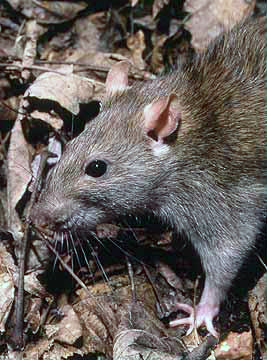 Brown RatRattus norvegicus
Compare
Questions and answers
What is the scientific name of the Natal Multimammate Mouse?
The scientific name of the Natal Multimammate Mouse is Mastomys natalensis. Written with its author, the full name is Mastomys natalensis (A. Smith, 1834).
Which family does the Natal Multimammate Mouse belong to?
Mastomys natalensis belongs to the family Muridae, in the order Rodentia and the class Mammalia.
Where is the Natal Multimammate Mouse found?
Checklists and occurrence records place Mastomys natalensis in 39 countries, including Tanzania, Democratic Republic of the Congo, Guinea, Kenya, Uganda and Zambia.
What is the conservation status of the Natal Multimammate Mouse?
The IUCN Red List category recorded for Mastomys natalensis is Least Concern (LC).
What other names does the Natal Multimammate Mouse have?
Mastomys natalensis is also known in English as Coucha Rat, Multimammate Rat and Natal Mastomys.
What is the ASF mouse?
The African soft-furred mouse is another name for the Natal Multimammate Mouse.[1]
What is a mouse's natural habitat?
The Natal Multimammate Mouse inhabits subtropical and tropical dry forests, moist lowland forests, dry and moist savannas, and dry and moist shrublands. It also occurs in agricultural land, pastureland, rural gardens, and areas in and around African villages.[2][3][4][5][6][7][9]
What is the Mastomys rat?
Mastomys natalensis is the scientific name of the Natal Multimammate Mouse, also known as the Natal multimammate rat.[1]
Sources
Passages the profile rests on
- The species is also known as the Natal multimammate rat, common African rat, African soft fur rat, and African soft-furred mouse. Source passage: “It is also known as the Natal multimammate rat, the common African rat, African soft fur rat or the African soft-furred mouse.” — English Wikipedia
- The species inhabits subtropical and tropical dry forests. Source passage: “subtropical or tropical dry forest” — English Wikipedia
- The species inhabits subtropical and tropical moist lowland forests. Source passage: “subtropical or tropical moist lowland forest” — English Wikipedia
- The species occurs in dry and moist savannas. Source passage: “dry savanna, moist savanna” — English Wikipedia
- The species occurs in subtropical and tropical dry and moist shrublands. Source passage: “subtropical or tropical dry shrubland, subtropical or tropical moist shrubland” — English Wikipedia
- The species inhabits agricultural land, including arable land and irrigated land. Source passage: “arable land, pastureland, rural gardens, urban areas, irrigated land” — English Wikipedia
- The species occurs in pastureland and rural gardens. Source passage: “pastureland, rural gardens” — English Wikipedia
- The species inhabits seasonally flooded agricultural land. Source passage: “seasonally flooded agricultural land” — English Wikipedia
- The species is closely associated with humans and commonly occurs in and around African villages. Source passage: “These rats are closely associated with humans, and are commonly found in and around African villages.” — English Wikipedia
- The species serves as a natural host of Lassa fever virus. Source passage: “The Natal multimammate rat is the natural host of the Lassa fever virus.” — English Wikipedia
- The species is the principal reservoir of Lassa virus. Source passage: “The main reservoir for Lassa virus (LASV) is the multimammate mouse, Mastomys natalensis.” — pmc.ncbi.nlm.nih.gov
- Humans can be exposed to the virus through contact with the species' urine, saliva, and blood. Source passage: “Zoonotic transmission occurs when humans are directly or indirectly exposed to fluids of the multimammate mouse, such as urine, saliva, and blood.” — pmc.ncbi.nlm.nih.gov
- The species can shed Lassa virus in its urine at any age. Source passage: “M. natalensis can shed LASV in urine at any age” — pmc.ncbi.nlm.nih.gov
- The species can shed Lassa virus in urine at every age. Source passage: “M. natalensis can shed LASV in urine at any age” — pmc.ncbi.nlm.nih.gov
- The species was the predominant rodent trapped in houses in the reported Sierra Leone study, accounting for 57% of trapped rodents. Source passage: “predominantly trapped M. natalensis (57% of trapped rodents)” — pmc.ncbi.nlm.nih.gov
- The species was frequently reported inside houses in the Sierra Leone study, where 92.4% of respondents reported rodents indoors. Source passage: “Rodents were frequently reported inside houses (92.4% of respondents)” — pmc.ncbi.nlm.nih.gov
- The species has been used as a laboratory animal since 1939. Source passage: “The species has been used as a laboratory animal since 1939.” — English Wikipedia
- The species is used in research on stomach cancer and spontaneous tumors. Source passage: “It has great value for researchers studying stomach cancer and spontaneous tumors.” — English Wikipedia
- The species is bred domestically as food for pet snakes, including ball pythons and boa constrictors. Source passage: “It is also bred domestically as food for various pet snake species such as ball pythons and boa constrictors.” — English Wikipedia
- The species is occasionally kept as a pet. Source passage: “Additionally, it is occasionally kept as a pet.” — English Wikipedia
- The species was assessed for the IUCN Red List in 2016. Source passage: “Mastomys natalensis has most recently been assessed for The IUCN Red List of Threatened Species in 2016.” — iucnredlist.org
- The species is classified as Least Concern on the IUCN Red List. Source passage: “Mastomys natalensis is listed as Least Concern.” — iucnredlist.org
Data
- Catalogue of Life, 2026-10-16 XR cc by
- Global Biodiversity Information Facility CC BY 4.0
- Wikidata CC0
- GeoNames CC BY 4.0
- Wikimedia Commons per image; credit shown with each image
- Within the Catalogue of Life, this name comes from The Integrated Taxonomic Information System cc0
References
- S. Afr. Quart. J., ser. 2 vol.2 p.156 where the name was published
- Rosevear, D. R. (1969). The Rodents of West Africa.
- Wilson, Don E., and DeeAnn M. Reeder, eds. (1993). Mammal Species of the World: A Taxonomic and Geographic Reference, 2nd Ed., 3rd Printing.
- Musser, Guy G., and Michael D. Carleton / Wilson, Don E., and DeeAnn M. Reeder, eds. (2005). Superfamily Muroidea. Mammal Species of the World: A Taxonomic and Geographic Reference, 3rd Ed., Vol. 2.
This species in other databases
Page built on 29 November 2026. See how the catalog is made and all sources and licences.
Cite this page
ScientificNames.org. (2026). Mastomys natalensis (Natal Multimammate Mouse). Retrieved November 29, 2026, from https://scientificnames.org/species/mastomys-natalensis
“Mastomys natalensis (Natal Multimammate Mouse).” ScientificNames.org, 2026, scientificnames.org/species/mastomys-natalensis. Accessed 29 Nov. 2026.
ScientificNames.org. “Mastomys natalensis (Natal Multimammate Mouse).” Accessed November 29, 2026. https://scientificnames.org/species/mastomys-natalensis.
@misc{scientificnames_mastomys_natalensis_natal_multimammate_mouse,
  author = {{ScientificNames.org}},
  title = {Mastomys natalensis (Natal Multimammate Mouse)},
  year = {2026},
  url = {https://scientificnames.org/species/mastomys-natalensis},
  note = {Accessed 2026-11-29}
}