Species · Insects
Smoky-winged Woodlouse Fly Melanophora roralis
The scientific name of the Smoky-winged Woodlouse Fly is Melanophora roralis. It is a species of insect in the family Calliphoridae (blow-fly), order Diptera. The name dates from 1758.
- Scientific name
- Melanophora roralis (Linnaeus, 1758)
- Common name
- Smoky-winged Woodlouse Fly
- Genus
- Melanophora
- Family
- Calliphoridae (Blow-fly)
- Order
- Diptera
- Class
- Insecta
- Recorded in
- 25 countries
- Name status
- accepted in the Catalogue of Life

Overview
Melanophora roralis is an insect belonging to the woodlouse fly group within the family Calliphoridae. The species occurs in damp areas near the shore. It is black with hairy antennae, a shiny thorax and distinctive white spots at the tips of females' wings.
Written 26 November 2026 from the sources listed below. Each statement was checked against the passage it cites; statements that could not be supported were removed.
Appearance
The species is black, with hairy antennae and a shiny thorax. Females have distinctive white spots at the tips of their wings.[1][2]
Adults measure between 3 and 5.5 millimetres in length.[3]
Habitat
The species occurs in damp areas near the shore.[4]
Diet
The species is a parasite of the woodlouse Porcellio scaber.[5]
Behaviour
Adults are active from mid-May through October.[6]
Reproduction and life cycle
Females lay between 189 and 238 eggs. The species takes up to 21 days to pupate.[7][8]
Classification of the Smoky-winged Woodlouse Fly
| Kingdom | Animalia |
|---|---|
| Phylum | Arthropoda |
| Subphylum | Hexapoda |
| Class | Insecta (Insect) |
| Order | Diptera (Fly) |
| Family | Calliphoridae (Blow-fly) |
| Genus | Melanophora |
| Species | Melanophora roralis (Linnaeus, 1758) |
Where the Smoky-winged Woodlouse Fly is found
Checklists and occurrence records place Melanophora roralis in 25 countries. GBIF holds 2,564 georeferenced records of it.
Countries
- Austria 19
- Belgium 4
- Canada 357
- Czechia 8
- Denmark 19
- Finland 36
- France 20
- Germany 210
- Hungary 14
- Ireland 76
- Isle of Man 53
- Italy 9
- Jersey 21
- Mexico 10
- Norway 10
- Poland 12
- Portugal 280
- Russia 10
- Spain 25
- Sweden 87
- Switzerland 3
- The Netherlands 130
- Ukraine 14
- United Kingdom 746
- United States 391
Regions and cities with the most records
- Ontario, Canada 344
- England, United Kingdom 264
- Azores, Portugal 203
- Scotland, United Kingdom 187
- Wales, United Kingdom 134
- Edinburgh, United Kingdom 133
- Broxburn, United Kingdom 131
- Penicuik, United Kingdom 131
- Bonnyrigg, United Kingdom 129
- Musselburgh, United Kingdom 129
- Waterdown, Canada 112
- Hamilton, Canada 111
- Ancaster, Canada 108
- Stoney Creek, Canada 108
- Ponta Delgada, Portugal 95
- Livingston, United Kingdom 77
- Bavaria, Germany 76
- Bangor, United Kingdom 69
- Guelph, Canada 67
- Massachusetts, United States 67
- California, United States 65
- Thornhill, Canada 47
- Willowdale, Canada 47
- Gelderland, The Netherlands 45
- Kirkcaldy, United Kingdom 44
- Toronto, Canada 43
- Cambridge, Canada 41
- Uppsala, Sweden 33
- Uppsala, Sweden 33
- Plymouth, United Kingdom 32
- Etobicoke, Canada 31
- Vaughan, Canada 31
- Saltash, United Kingdom 30
- Gorseinon, United Kingdom 29
- Llanelli, United Kingdom 29
- Markham, Canada 28
4 more countries have a few records outside this range
These countries hold a few records of Melanophora roralis but lie outside the range the checklists give for it. Such records are often zoo or garden specimens, museum material or vagrants, so the species is not counted as occurring there.
A number beside a place is its count of GBIF occurrence records. A place without a number comes from a checklist alone. Records show where a species has been observed or collected, which can include escapes and vagrants.
Common names
English
- Smoky-winged Woodlouse Fly
- Smoky-winged Woodlouse-fly
Names in 5 other languages
- Danish
- Sort bænkebiderflue
- Dutch
- Zwarte pissebedvlieg
- German
- Rauchflügelige Asselfliege
- Spanish
- Mosca cazadora de cochinillas de alas ahumadas
- Swedish
- mörkvingad gråsuggefluga
Synonyms
20 other scientific names have been used for this species and are now treated as synonyms of Melanophora roralis.
- Illigeria atra Robineau-Desvoidy, 1830
- Illigeria brasiliensis Robineau-Desvoidy, 1863
- Illigeria minor Robineau-Desvoidy, 1830
- Melanophora americana Macquart, 1844
- Melanophora atra Robineau-Desvoidy, 1830
- Melanophora distincta Robineau-Desvoidy, 1830
- Melanophora festiva Robineau-Desvoidy, 1830
- Melanophora grossificationis (Linnaeus, 1758)
- Melanophora interlapsa (Walker, 1853)
- Melanophora interventum (Harris, [1780])
- Melanophora nigerrima Macquart, 1834
- Melanophora nitidiventris Curran, 1928
- Melanophora stygia Harris, 1835
- Melanophora violacea Robineau-Desvoidy, 1830
- Musca grossificationis Linnaeus, 1758
- Musca interventum Linnaeus, 1758
- Musca roralis Linnaeus, 1758
- Tachina interlapsa Walker, 1853
- Tachina plumigera Wiedemann, 1830
- Musca atra Villers, 1789 ambiguous synonym
Related species
- Melanophora appendiculata
- Melanophora argyriventris
- Melanophora asetosa
- Melanophora basilewskyi
- Melanophora chia
-
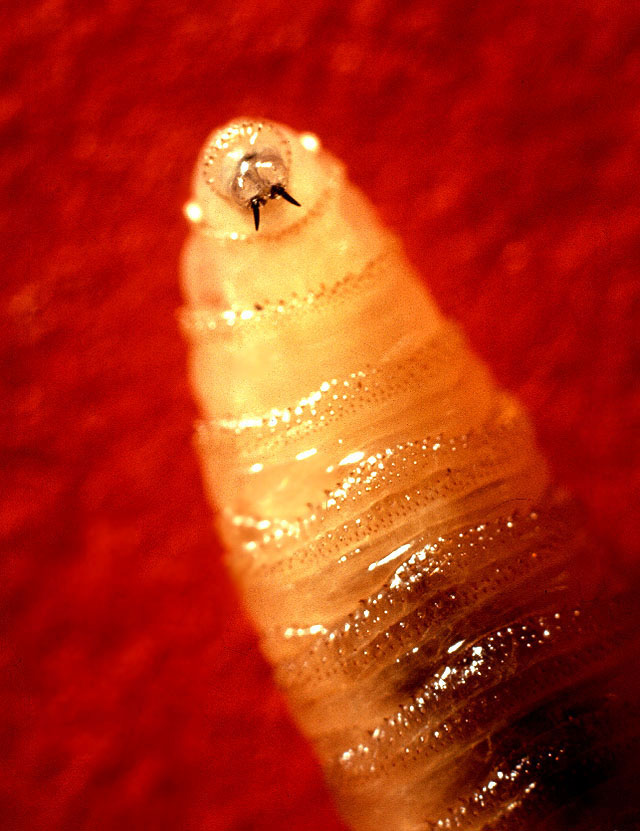 New World Screw-worm FlyCochliomyia hominivorax
-
 Common Green Bottle FlyLucilia sericata
-
 Blue Bottle FlyCalliphora vomitoria
Compare
Questions and answers
What is the scientific name of the Smoky-winged Woodlouse Fly?
The scientific name of the Smoky-winged Woodlouse Fly is Melanophora roralis. Written with its author, the full name is Melanophora roralis (Linnaeus, 1758).
Which family does the Smoky-winged Woodlouse Fly belong to?
Melanophora roralis belongs to the family Calliphoridae, in the order Diptera and the class Insecta.
Where is the Smoky-winged Woodlouse Fly found?
Checklists and occurrence records place Melanophora roralis in 25 countries, including United Kingdom, United States, Canada, Portugal, Germany and The Netherlands.
What other names does the Smoky-winged Woodlouse Fly have?
Melanophora roralis is also known in English as Smoky-winged Woodlouse-fly.
Sources
Passages the profile rests on
- The species is black with hairy antennae and a shiny thorax. Source passage: “black in colour with hairy antennae and a shiny thorax.” — English Wikipedia
- Females have distinctive white spots at the tips of their wings. Source passage: “The females of this species have a distinctive white spots at the tips of their wings” — English Wikipedia
- Adults measure between 3 and 5.5 millimetres in length. Source passage: “M. roralis is 3–5.5 millimetres (0.12–0.22 in) long” — English Wikipedia
- The species occurs in damp areas near the shore. Source passage: “damp areas near the shore.” — English Wikipedia
- The species is a parasite of the woodlouse Porcellio scaber. Source passage: “It is a parasite of Porcellio scaber.” — English Wikipedia
- Adults are active from mid-May through October. Source passage: “Species fly from mid-May to October” — English Wikipedia
- Females lay between 189 and 238 eggs. Source passage: “lay from 189 to 238 eggs” — English Wikipedia
- The species takes up to 21 days to pupate. Source passage: “It takes up to 21 days for the species' to pupate.” — English Wikipedia
Data
- Catalogue of Life, 2026-10-16 XR cc by
- Global Biodiversity Information Facility CC BY 4.0
- Wikidata CC0
- GeoNames CC BY 4.0
- Wikimedia Commons per image; credit shown with each image
- Within the Catalogue of Life, this name comes from Systema Dipterorum cc by
References
- Linnaeus, [T.Y., Carl (1758) Systema naturae... Ed. 10, Vol. 1. 824 pp. L. Salvii, Holmiae [= Stockholm]. [1758.01.01]. where the name was published
This species in other databases
Page built on 27 November 2026. See how the catalog is made and all sources and licences.
Cite this page
ScientificNames.org. (2026). Melanophora roralis (Smoky-winged Woodlouse Fly). Retrieved November 27, 2026, from https://scientificnames.org/species/melanophora-roralis
“Melanophora roralis (Smoky-winged Woodlouse Fly).” ScientificNames.org, 2026, scientificnames.org/species/melanophora-roralis. Accessed 27 Nov. 2026.
ScientificNames.org. “Melanophora roralis (Smoky-winged Woodlouse Fly).” Accessed November 27, 2026. https://scientificnames.org/species/melanophora-roralis.
@misc{scientificnames_melanophora_roralis_smoky_winged_woodlouse_fly,
  author = {{ScientificNames.org}},
  title = {Melanophora roralis (Smoky-winged Woodlouse Fly)},
  year = {2026},
  url = {https://scientificnames.org/species/melanophora-roralis},
  note = {Accessed 2026-11-27}
}