Species · Flowering plants
Merope angulata
Merope angulata has no English name on record in the checklists used here. It is a species of flowering plant in the family Rutaceae (rue family), order Sapindales.
- Scientific name
- Merope angulata (Willd.) Swingle
- Genus
- Merope
- Family
- Rutaceae (Rue Family)
- Order
- Sapindales
- Class
- Magnoliopsida
- Red List category
- LC Least Concern
- Recorded in
- 8 countries
- Name status
- accepted in the Catalogue of Life

Overview
Merope angulata grows in coastal mangrove swamps, tidal forests and brackish wetlands. It is an erect, saline-tolerant shrub with aromatic leaves and white, fragrant flowers.
Written 27 November 2026 from the sources listed below. Each statement was checked against the passage it cites; statements that could not be supported were removed.
Appearance
Merope angulata is an erect shrub with sparse stems emerging from a root crown. It can reach a height of 3 meters.[1][2]
Juvenile stems bear stout spines measuring 1.5–3.5 cm in length. Its leaves are oval, alternate, thick and leathery, with blunt or slightly pointed tips and slightly notched edges.[3][4]
Its leaves measure 4.5–16 cm long and 2–7 cm wide. They release an aromatic lime-like scent when bruised.[5][6]
Its flowers are white, fragrant and bisexual, occurring singly or in pairs and small clusters in leaf axils. They are approximately 2 cm long.[7][8]
Habitat
The species grows in coastal mangrove swamps, tidal forests and brackish wetlands. It is tolerant of saline environmental conditions.[9][10]
Reproduction and life cycle
The species produces relatively few seeds, limiting its natural regeneration. Poor seedling establishment is another factor restricting natural regeneration.[11][12]
Conservation
Habitat destruction for agriculture, aquaculture, coastal development and tourism threatens the species. Across its overall range, it is assessed as being of least concern on the IUCN Red List.[13][14]
The species is classified as critically endangered in Singapore and endangered in Peninsular Malaysia. It is considered rare and threatened in India.[15][16][17]
Similar species
Merope angulata is the only species belonging to the genus Merope.[18]
Classification of Merope angulata
| Kingdom | Plantae |
|---|---|
| Subkingdom | Pteridobiotina |
| Phylum | Tracheophyta |
| Class | Magnoliopsida |
| Order | Sapindales |
| Family | Rutaceae (Rue Family) |
| Subfamily | Aurantioideae |
| Genus | Merope |
| Species | Merope angulata (Willd.) Swingle |
Where Merope angulata is found
Checklists and occurrence records place Merope angulata in 8 countries across Asia and Oceania. GBIF holds 63 georeferenced records of it.
Countries
Regions and cities with the most records
Range as the checklists state it
India (West Bengal, Odisha); Bangladesh; Myanmar (Bago, Taninthayi, Rakhine); peninsular Malaysia (Perak, Negeri Sembilan, Melaka); Singapore; Borneo; Sulawesi; Philippines (Tawi-Tawi); Jawa; Moluccas (Ambon); New Guinea (Irian Jaya, Papua New Guinea)
A number beside a place is its count of GBIF occurrence records. A place without a number comes from a checklist alone. Records show where a species has been observed or collected, which can include escapes and vagrants.
Synonyms
13 other scientific names have been used for this species and are now treated as synonyms of Merope angulata.
- Atalantia angulata (Willd.) Engl.
- Atalantia longispina Kurz
- Atalantia spinosa (Blume) Hook. ex Koord.
- Citrus angulata Willd.
- Glycosmis spinosa (Blume) D.Dietr.
- Gonocitrus angulatus (Willd.) Kurz
- Limonia angulata (Willd.) Wight & Arn.
- Limonia spinosa (Blume) Spreng.
- Merope spinosa (Blume) M.Roem.
- Paramignya angulata (Willd.) Kurz
- Paramignya longispina Hook.fil.
- Sclerostylis spinosa (Willd.) Blume
- Trichilia spinosa Willd.
Related species
-
 PomeloCitrus maxima
-
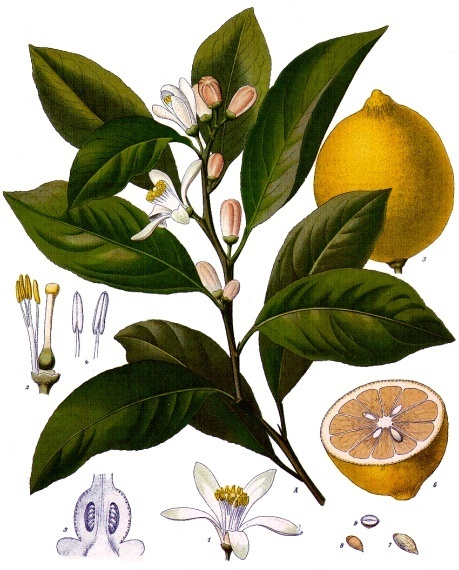 LemonCitrus × limon
-
 YuzuCitrus × junos
-
 Swatow OrangeCitrus × reticulata
-
 CitronCitrus medica
-
 Bitter OrangeCitrus × aurantium
-
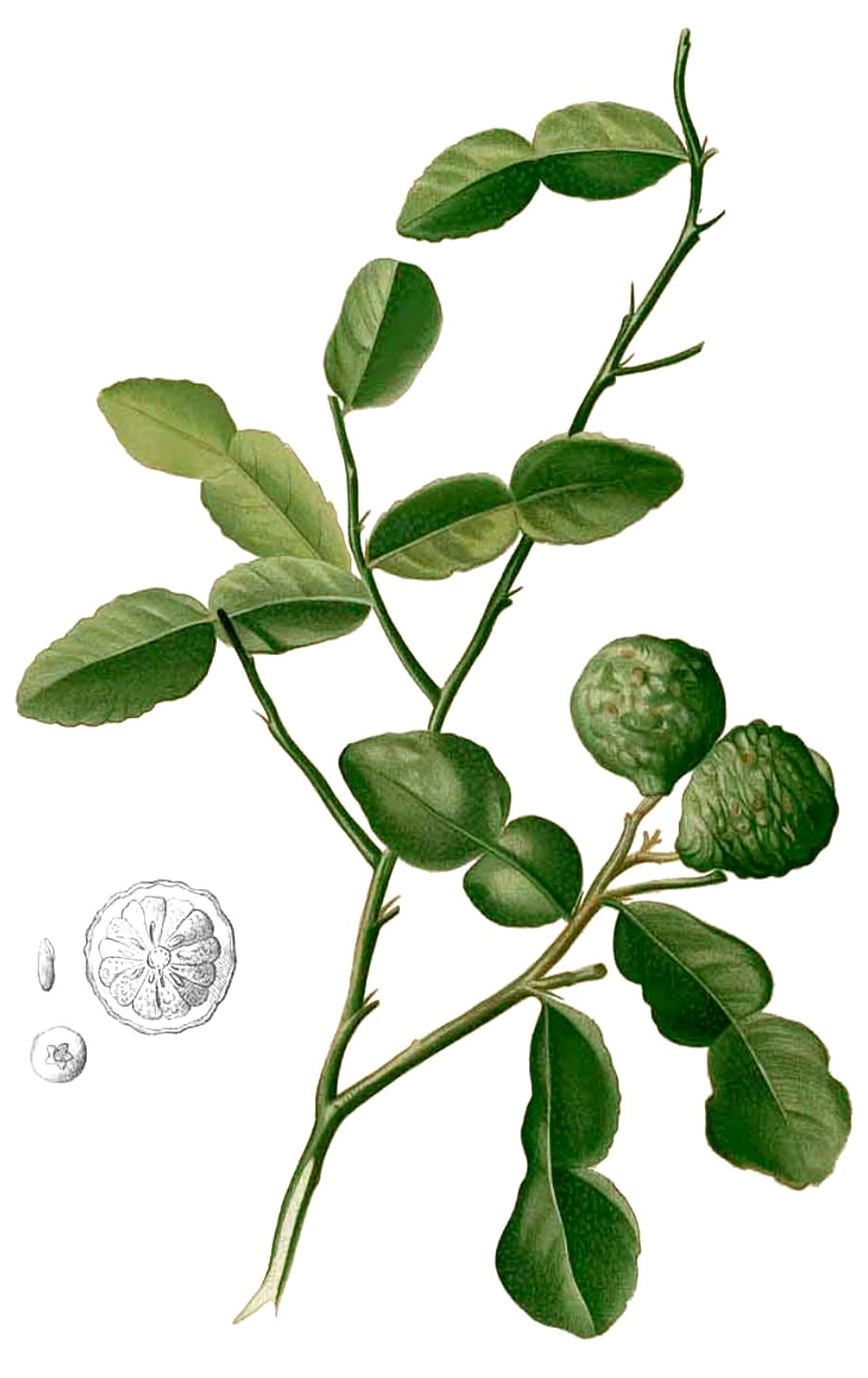 Kaffir LimeCitrus hystrix
-
 Key LimeCitrus × aurantiifolia
Compare
Sources
Passages the profile rests on
- Merope angulata is an erect shrub with sparse stems emerging from a root crown. Source passage: “It is an erect shrub growing up to 3 meters tall, with sparse stems growing from a root crown.” — English Wikipedia
- The shrub can reach a height of 3 meters. Source passage: “It is an erect shrub growing up to 3 meters tall” — English Wikipedia
- Juvenile stems bear stout spines measuring 1.5–3.5 cm in length. Source passage: “Stout spines 1.5 – 3.5 cm long grow on the axils of juvenile stems.” — English Wikipedia
- Its leaves are oval, alternate, thick and leathery, with blunt or slightly pointed tips and slightly notched edges. Source passage: “Leaves are oval, alternate, thick, and leathery, measuring 4.5 – 16 by 2 – 7 cm. The leaves are oval with blunt or slightly pointed tips and slightly notched leaf edges.” — English Wikipedia
- Its leaves measure 4.5–16 cm long and 2–7 cm wide. Source passage: “Leaves are oval, alternate, thick, and leathery, measuring 4.5 – 16 by 2 – 7 cm.” — English Wikipedia
- The leaves release an aromatic lime-like scent when bruised. Source passage: “They are aromatic with a lime-like scent when bruised.” — English Wikipedia
- Its flowers are white, fragrant and bisexual, and occur singly or in pairs and small clusters in leaf axils. Source passage: “Flowers are white, fragrant, solitary, and bisexual, about 2 cm long, and grow in leaf axils in pairs or small clusters.” — English Wikipedia
- Its flowers are approximately 2 cm long. Source passage: “Flowers are white, fragrant, solitary, and bisexual, about 2 cm long” — English Wikipedia
- The species grows in coastal mangrove swamps, tidal forests and brackish wetlands. Source passage: “The plant is salt-tolerant and grows in coastal mangrove swamps, tidal forests, and brackish wetlands.” — English Wikipedia
- Merope angulata is tolerant of saline environmental conditions. Source passage: “The plant is salt-tolerant” — English Wikipedia
- The species produces relatively few seeds, limiting its natural regeneration. Source passage: “Its natural regeneration is limited by sparse seed production and poor seedling establishment.” — English Wikipedia
- Poor seedling establishment is one factor restricting natural regeneration of the species. Source passage: “Its natural regeneration is limited by sparse seed production and poor seedling establishment.” — English Wikipedia
- Habitat destruction for agriculture, aquaculture, coastal development and tourism threatens the species. Source passage: “The species is threatened with habitat loss from destruction of its native habitat for agriculture, aquaculture, coastal development, and tourism.” — English Wikipedia
- The species is assessed as being of least concern across its overall range on the IUCN Red List. Source passage: “The IUCN Red List assesses the species' conservation status as least-concern across its range.” — English Wikipedia
- The species is classified as critically endangered in Singapore. Source passage: “It is assessed as critically endangered in Singapore” — English Wikipedia
- The species is classified as endangered in Peninsular Malaysia. Source passage: “endangered in Peninsular Malaysia” — English Wikipedia
- The species is considered rare and threatened in India. Source passage: “rare and threatened in India.” — English Wikipedia
- Merope angulata is the only species belonging to the genus Merope. Source passage: “It is the sole species in genus Merope.” — English Wikipedia
Data
- Catalogue of Life, 2026-10-16 XR cc by
- Global Biodiversity Information Facility CC BY 4.0
- Wikidata CC0
- GeoNames CC BY 4.0
- Wikimedia Commons per image; credit shown with each image
- Within the Catalogue of Life, this name comes from Synonymic Checklists of the Vascular Plants of the World cc by
References
- Swingle. (1915). J. Wash. Acad. Sci. 5: 423 (1915). where the name was published
This species in other databases
- Catalogue of Life 3ZW2M
- Wikidata Q18084397
- iNaturalist 425721
- World Flora Online wfo-0000452940
- GRIN 24104
Page built on 27 November 2026. See how the catalog is made and all sources and licences.
Cite this page
ScientificNames.org. (2026). Merope angulata. Retrieved November 27, 2026, from https://scientificnames.org/species/merope-angulata
“Merope angulata.” ScientificNames.org, 2026, scientificnames.org/species/merope-angulata. Accessed 27 Nov. 2026.
ScientificNames.org. “Merope angulata.” Accessed November 27, 2026. https://scientificnames.org/species/merope-angulata.
@misc{scientificnames_merope_angulata,
  author = {{ScientificNames.org}},
  title = {Merope angulata},
  year = {2026},
  url = {https://scientificnames.org/species/merope-angulata},
  note = {Accessed 2026-11-27}
}