Species · Flowering plants
Tropical Kudzu Neustanthus phaseoloides
The scientific name of the Tropical Kudzu is Neustanthus phaseoloides. It is a species of flowering plant in the family Fabaceae (bean), order Fabales.
- Scientific name
- Neustanthus phaseoloides (Roxb.) Benth.
- Common name
- Tropical Kudzu
- Genus
- Neustanthus
- Family
- Fabaceae (Bean)
- Order
- Fabales
- Class
- Magnoliopsida
- Recorded in
- 61 countries
- Name status
- accepted in the Catalogue of Life
Overview
Tropical kudzu (Neustanthus phaseoloides (Roxb.) Benth.) is a deep-rooting perennial herb in the family Fabaceae, order Fabales and class Magnoliopsida. It is indigenous to eastern or southeastern Asia and has been introduced and naturalized in tropical regions of Africa, the Americas, and Australia. It is characterized by large three-leaflet leaves, mauve to purple flowers, rapid growth and long twining stems.
Written 26 November 2026 from the sources listed below. Each statement was checked against the passage it cites; statements that could not be supported were removed.
Appearance
Tropical kudzu is a deep-rooting perennial herb that develops a subtuberous structure. Its large leaves consist of three leaflets, which can be oval or triangular.[1][2][3]
Its flowers range in colour from mauve to purple and occur in scattered pairs along racemes. Mature seed pods are black, hairy and straight or slightly curved.[4][5]
Its seeds are black or brown, roughly square with rounded corners. Mature pods contain between 10 and 20 seeds.[6][7]
Individual leaflets range from 2 × 2 centimetres to 20 × 15 centimetres. Mature seed pods measure between 4 and 11 centimetres long, and individual seeds measure approximately 3 × 2 millimetres.[8][9][10]
Habitat
Tropical kudzu grows in wet evergreen and monsoon forests. It commonly occurs in disturbed environments, including cocoa and banana plantations.[11][12]
It commonly grows at elevations below 600 metres above sea level and can grow in soils with pH values between 4.3 and 8. Its deep-rooting structure enables it to withstand waterlogged soils.[13][14][15]
Behaviour
Tropical kudzu climbs by twining around other plants or human-made structures. Its above-ground structure can grow by as much as 30 centimetres per day, and its stems can reach 20 metres in length.[16][17][18]
After becoming established, it forms tangled mats exceeding half a metre in height. Its growth is successful at temperatures between 22.1 and 27.4 °C, while colder environmental conditions substantially reduce its development.[19][20][21]
Reproduction and life cycle
Tropical kudzu reproduces both vegetatively and through seed production. Its seeds undergo epigeal germination.[22][23]
New plants can develop from stem nodes when vines come into contact with soil. Vegetative propagation can produce new crowns containing three or four vines each.[24][25]
The connection between a newly formed crown and its parent plant persists until the second growing season. The species produces more seeds when it has opportunities to climb.[26][27]
Conservation
Tropical kudzu can become invasive in tropical and subtropical environments because of its rapid growth, wide seed distribution and ability to cover other plants.[28]
Uses
Tropical kudzu is cultivated as a forage crop and a cover crop in tropical regions. It is also cultivated as a cover crop in oil palm, rubber and coconut plantations.[29][30]
Its deep-rooting system improves soil structure when it is cultivated as a cover crop. It is also used as green manure in crop rotations and to reduce soil erosion on sloping land.[31][32][33]
The species can be harvested as forage through grazing, hay production or silage production. Its whole fresh green plant contains 3.8% protein and 7.3% sugar, while its seeds contain between 12% and 20% protein.[34][35][36]
Under optimal conditions, monoculture cultivation can produce up to 10 tonnes of dry matter per hectare. In Malaysia, extracts of the species are used medicinally.[37][38]
Similar species
Tropical kudzu is closely related to Pueraria montana and Pueraria edulis. It can be distinguished from Pueraria montana by its much smaller tubers.[39][40]
Classification of the Tropical Kudzu
| Kingdom | Plantae |
|---|---|
| Subkingdom | Pteridobiotina |
| Phylum | Tracheophyta |
| Class | Magnoliopsida |
| Order | Fabales |
| Family | Fabaceae (Bean) |
| Genus | Neustanthus |
| Species | Neustanthus phaseoloides (Roxb.) Benth. |
Where the Tropical Kudzu is found
Checklists and occurrence records place Neustanthus phaseoloides in 61 countries across Africa, Asia, North America, Oceania and South America. GBIF holds 3,444 georeferenced records of it.
Countries where it is native or its origin is not stated
- American Samoa 5
- Bangladesh 11
- Cambodia 16
- China 317
- Guam 10
- Hong Kong 60
- India 161
- Indonesia 271
- Laos 12
- Malaysia 77
- Myanmar 45
- Nepal 15
- Papua New Guinea 92
- Philippines 86
- Singapore 14
- Solomon Islands 13
- Taiwan 106
- Thailand 326
- Vietnam 73
Countries where it has been introduced
- Angola 7
- Australia 49
- Belize 8
- Benin 102
- Bolivia 26
- Brazil 400
- Cameroon 87
- Central African Republic 3
- Christmas Island 2
- Colombia 164
- Comoros 5
- Cook Islands 26
- Cuba
- Democratic Republic of the Congo 28
- Dominican Republic 31
- Ecuador 51
- El Salvador 1
- Equatorial Guinea 37
- Fiji 11
- French Polynesia 31
- Gabon 88
- Ghana 11
- Guinea 7
- Honduras 8
- Ivory Coast 36
- Jamaica 4
- Liberia 20
- Mauritius
- New Caledonia 6
- Nicaragua 13
- Nigeria 49
- Niue 2
- Panama 24
- Puerto Rico 286
- Reunion 6
- Samoa 7
- Seychelles 11
- Sierra Leone 12
- Sri Lanka 35
- Tanzania 12
- Togo 12
- Trinidad and Tobago 16
Regions and cities with the most records
- Fajardo, Puerto Rico 117
- Guangdong, China 85
- Humacao, Puerto Rico 81
- Carolina, Puerto Rico 73
- Hainan, China 67
- Meta Department, Colombia 66
- Río Grande, Puerto Rico 63
- Trujillo Alto, Puerto Rico 54
- Bahia, Brazil 49
- Caguas, Puerto Rico 47
- Taiwan, Taiwan 47
- Queensland, Australia 45
- Kerala, India 44
- Guaynabo, Puerto Rico 42
- Ouémé, Benin 42
- Hong Lok Yuen, Hong Kong 39
- Pat Heung, Hong Kong 39
- Tai Po, Hong Kong 38
- Adjarra, Benin 36
- Discovery Park, Hong Kong 36
- Fanling, Hong Kong 36
- Porto-Novo, Benin 36
- Bayamón, Puerto Rico 35
- Kam Tin, Hong Kong 35
- Sheung Shui, Hong Kong 35
- Tsuen Wan, Hong Kong 35
- Fo Tan, Hong Kong 34
- Kwai Chung, Hong Kong 34
- Shek Lei, Hong Kong 34
- South-West, Cameroon 34
- Ekpé, Benin 33
- Keng Hau, Hong Kong 33
- Pok Hong, Hong Kong 33
- San Tin, Hong Kong 33
- Sha Tin Wai, Hong Kong 33
- Shuen Wan, Hong Kong 33
19 more countries have a few records outside this range
These countries hold a few records of Neustanthus phaseoloides but lie outside the range the checklists give for it. Such records are often zoo or garden specimens, museum material or vagrants, so the species is not counted as occurring there.
A number beside a place is its count of GBIF occurrence records. A place without a number comes from a checklist alone. Records show where a species has been observed or collected, which can include escapes and vagrants.
Common names
English
- Tropical Kudzu
- Wild Kudzu Vine
Names in 7 other languages
- Chinese
- san lie ye ye ge, 三裂叶野葛, 三裂葉野葛, 假菜豆, 熱帶葛藤, 草葛
- French
- Puero, Puéraria faux-haricot
- Italian
- pueraria del Tropico
- Japanese
- クズインゲン
- Slovak
- kudzovec fazuľovitý
- Spanish
- kudzu tropical
- Thai
- ถั่วเสี้ยนป่า
Synonyms
4 other scientific names have been used for this species and are now treated as synonyms of Neustanthus phaseoloides.
- Dioscorea bolojonica Blanco
- Dolichos phaseoloides Roxb.
- Pueraria phaseoloides (Roxb.) Benth.
- Pueraria phaseoloides var. phaseoloides
Subspecies and varieties
- Neustanthus phaseoloides var. javanicus (Puero) variety
- Neustanthus phaseoloides var. phaseoloides variety
- Neustanthus phaseoloides var. subspicatus variety
Related species
-
 PeanutArachis hypogaea
-
 LiquoriceGlycyrrhiza glabra
-
 TamarindTamarindus indica
-
 ChickpeaCicer arietinum
-
 SoybeanGlycine max
-
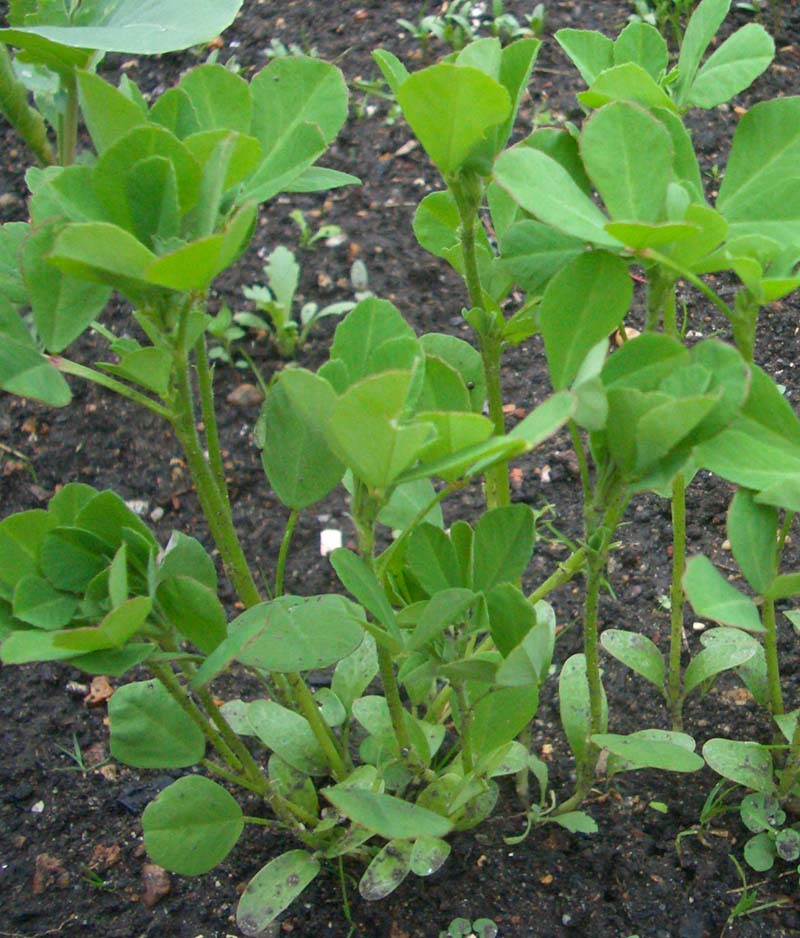 FenugreekTrigonella foenum-graecum
-
 RooibosAspalathus linearis
-
 Broad BeanVicia faba
Compare
Questions and answers
What is the scientific name of the Tropical Kudzu?
The scientific name of the Tropical Kudzu is Neustanthus phaseoloides. Written with its author, the full name is Neustanthus phaseoloides (Roxb.) Benth..
Which family does the Tropical Kudzu belong to?
Neustanthus phaseoloides belongs to the family Fabaceae, in the order Fabales and the class Magnoliopsida.
Where is the Tropical Kudzu found?
Checklists and occurrence records place Neustanthus phaseoloides in 61 countries, including Thailand, China, Indonesia, India, Taiwan and Papua New Guinea.
What other names does the Tropical Kudzu have?
Neustanthus phaseoloides is also known in English as Wild Kudzu Vine.
Why is kudzu such a problem?
Tropical kudzu can become invasive in tropical and subtropical environments because of its rapid growth, wide seed distribution and ability to cover other plants. It can form tangled mats exceeding half a metre in height.[19][28]
What are the characteristics of kudzu?
Tropical kudzu is a deep-rooting perennial herb with large leaves composed of three leaflets, mauve to purple flowers and black, hairy seed pods. Its stems can reach 20 metres in length, and its above-ground structure can grow by as much as 30 centimetres per day.[1][2][4][5][16][17]
Sources
Passages the profile rests on
- The species is a deep-rooting perennial herb that develops a subtuberous structure. Source passage: “Neustanthus phaseoloides is a deep rooting perennial herb, building a subtuberus.” — English Wikipedia
- Its leaves are large and composed of three leaflets. Source passage: “The leaves are large and trifoliate, typical for Leguminosae.” — English Wikipedia
- Individual leaflets can be oval or triangular. Source passage: “The single leaflets can have an oval or triangular shape.” — English Wikipedia
- Its flowers range in colour from mauve to purple and occur in scattered pairs along racemes. Source passage: “The colour ranges from mauve to purple and the dimensions are small and occur in scattered pairs on a raceme.” — English Wikipedia
- Mature seed pods are black, hairy, and straight or slightly curved. Source passage: “Mature pods of N. phaseoloides show a black color and hair coat. They are straight or slightly curved” — English Wikipedia
- Its seeds are black or brown and have a roughly square shape with rounded corners. Source passage: “They have a particular squarish form with rounded corner (3 x 2 mm) and have also a black or brown colour.” — English Wikipedia
- Each pod contains between 10 and 20 seeds. Source passage: “Each pod contains 10-20 seeds.” — English Wikipedia
- Individual leaflets range from 2 × 2 centimetres to 20 × 15 centimetres. Source passage: “Their dimensions can vary from 2 x 2 cm to 20 x 15 cm.” — English Wikipedia
- Its mature seed pods measure between 4 and 11 centimetres long. Source passage: “can be sized from 4 to 11 cm.” — English Wikipedia
- Individual seeds measure approximately 3 × 2 millimetres. Source passage: “squarish form with rounded corner (3 x 2 mm)” — English Wikipedia
- The species grows in wet evergreen and monsoon forests. Source passage: “in wet evergreen or monsoon forests.” — English Wikipedia
- It commonly occurs in disturbed environments such as cocoa and banana plantations. Source passage: “ruderal situations, such as plantations of cocoa or banana” — English Wikipedia
- It commonly grows at elevations below 600 metres above sea level. Source passage: “at low altitudes (often under 600 metres above sea level)” — English Wikipedia
- It can grow in soils with pH values between 4.3 and 8. Source passage: “the pH tolerance is between 4.3 and 8.” — English Wikipedia
- Its deep-rooting structure enables it to withstand waterlogged soils. Source passage: “This device allows to resist waterlogged soils and short periods of drought.” — English Wikipedia
- The above-ground structure can grow by as much as 30 centimetres per day. Source passage: “The above ground structure can grow up to 30 cm at day” — English Wikipedia
- Its stems can reach 20 metres in length. Source passage: “often the steams can reach 20 m of elongation.” — English Wikipedia
- The species climbs by twining around other plants or human-made structures. Source passage: “N. phaseoloides is a twiner and climbs over other plants or anthropogenic objects.” — English Wikipedia
- After becoming established, it forms tangled mats exceeding half a metre in height. Source passage: “After establishment, the plant starts to climb and build tangled mats of over a half meter.” — English Wikipedia
- Its growth is successful at temperatures between 22.1 and 27.4 °C. Source passage: “Successful growth was observed with a temperature between 22.1 and 27.4 °C” — English Wikipedia
- Colder environmental conditions substantially reduce its development. Source passage: “colder environment drastically reducing the development.” — English Wikipedia
- The species reproduces both vegetatively and through seed production. Source passage: “The reproduction of Neustanthus phaseoloides can be vegetative or generative.” — English Wikipedia
- Its seeds undergo epigeal germination. Source passage: “N. phaseoloides shows an epigeal germination.” — English Wikipedia
- New plants can develop from stem nodes when vines come into contact with soil. Source passage: “When vines are in contact with the soil, a new plant can grow from the nodes.” — English Wikipedia
- Vegetative propagation can produce new crowns containing three or four vines each. Source passage: “This enlarges and forms new crowns with 3 -4 vines each.” — English Wikipedia
- The connection between a newly formed crown and its parent plant persists until the second growing season. Source passage: “The conjunction with the parental plant is kept until the second growing season.” — English Wikipedia
- The species produces more seeds when it has opportunities to climb. Source passage: “It was found that the production of seeds is improved by the possibility to climb.” — English Wikipedia
- The species can become invasive in tropical and subtropical environments because of its rapid growth, wide seed distribution, and ability to cover other plants. Source passage: “Neustanthus phaseoloides can become an invasive species when growing in tropical and subtropical habitats due to its fast growth, its wide seed distribution and its ability to fully cover other plants.” — English Wikipedia
- The species is cultivated as a forage crop and a cover crop in tropical regions. Source passage: “This species is a forage crop and cover crop used in the tropics.” — English Wikipedia
- It is cultivated as a cover crop in oil palm, rubber, and coconut plantations. Source passage: “Neustanthus phaseoloides is grown as a cover crop (often with centro and calopo ) in oil palm, rubber and coconut.” — English Wikipedia
- Its cultivation as a cover crop improves soil structure through its deep-rooting system. Source passage: “the improvement of the soil structure due to its deep rooting system.” — English Wikipedia
- It is used as green manure in crop rotations. Source passage: “It can be used as a grazed forage crop and as green manure in crop rotations.” — English Wikipedia
- It is used to reduce soil erosion on sloping land. Source passage: “Furthermore, it can be used to prevent soil erosion on sloppy soils.” — English Wikipedia
- The species can be harvested as forage through grazing, hay production, or silage production. Source passage: “When used as a forage crop N. phaseoloides is mainly grazed. Cutting for hay, silage, barn betting is possible as well.” — English Wikipedia
- Its whole fresh green plant contains 3.8% protein and 7.3% sugar. Source passage: “protein (3.8%) and sugar (7.3%) content of the whole fresh plant (green part) is very high.” — English Wikipedia
- Its seeds contain between 12% and 20% protein. Source passage: “Neustanthus phaseoloides shows a high protein content in the seeds (12-20%).” — English Wikipedia
- In Malaysia, extracts of the species are used medicinally. Source passage: “In Malaysia its extracts are used as medicine.” — English Wikipedia
- Under optimal conditions, monoculture cultivation can produce up to 10 tonnes of dry matter per hectare. Source passage: “When grown as monoculture the yield of N. phaseoloides can reach up to 10 tons dry matter per ha” — English Wikipedia
- The species is closely related to Pueraria montana and Pueraria edulis. Source passage: “Neustanthus phaseoloides is similar to its close relative P. montana and P. edulis.” — English Wikipedia
- It can be distinguished from Pueraria montana by its much smaller tubers. Source passage: “N. phaseoloides produces really small tubers whereas the tubers of P. montana are big and edible.” — English Wikipedia
- The species is commonly called tropical kudzu in most tropical regions. Source passage: “It is known as puero in Australia and tropical kudzu in most tropical regions.” — English Wikipedia
- The species was formerly accepted under the scientific name Pueraria phaseoloides before 2016. Source passage: “Prior to 2016, the accepted name was Pueraria phaseoloides.” — English Wikipedia
Data
- Catalogue of Life, 2026-10-16 XR cc by
- Global Biodiversity Information Facility CC BY 4.0
- Wikidata CC0
- GeoNames CC BY 4.0
- Within the Catalogue of Life, this name comes from The World Checklist of Vascular Plants (WCVP): Fabaceae cc by
References
- F.A.W.Miquel, Pl. Jungh.: 235 (1852) where the name was published
This species in other databases
- Catalogue of Life 73XQJ
- Wikidata Q43001987
- iNaturalist 1186181
- World Flora Online wfo-0000183176
- GRIN 479388
Page built on 26 November 2026. See how the catalog is made and all sources and licences.
Cite this page
ScientificNames.org. (2026). Neustanthus phaseoloides (Tropical Kudzu). Retrieved November 26, 2026, from https://scientificnames.org/species/neustanthus-phaseoloides
“Neustanthus phaseoloides (Tropical Kudzu).” ScientificNames.org, 2026, scientificnames.org/species/neustanthus-phaseoloides. Accessed 26 Nov. 2026.
ScientificNames.org. “Neustanthus phaseoloides (Tropical Kudzu).” Accessed November 26, 2026. https://scientificnames.org/species/neustanthus-phaseoloides.
@misc{scientificnames_neustanthus_phaseoloides_tropical_kudzu,
  author = {{ScientificNames.org}},
  title = {Neustanthus phaseoloides (Tropical Kudzu)},
  year = {2026},
  url = {https://scientificnames.org/species/neustanthus-phaseoloides},
  note = {Accessed 2026-11-26}
}