Species · Birds
Anthony's Nightjar Nyctidromus anthonyi
The scientific name of the Anthony's Nightjar is Nyctidromus anthonyi. It is a species of bird in the family Caprimulgidae (nightjar), order Caprimulgiformes. The name dates from 1923.
- Scientific name
- Nyctidromus anthonyi (Chapman, 1923)
- Common name
- Anthony's Nightjar
- Genus
- Nyctidromus
- Family
- Caprimulgidae (Nightjar)
- Order
- Caprimulgiformes
- Class
- Aves
- Red List category
- LC Least Concern
- Recorded in
- 2 countries
- Name status
- accepted in the Catalogue of Life

Overview
Nyctidromus anthonyi occurs in coastal western Ecuador and extends into northern Peru. Males are distinguished by a broad tawny buff nape collar, buff-speckled grayish brown upperparts, and considerable white coloration on the outermost tail feathers.
Written 27 November 2026 from the sources listed below. Each statement was checked against the passage it cites; statements that could not be supported were removed.
Appearance
Male Anthony's Nightjars have grayish brown upperparts marked with buff speckles and blackish brown streaks. A broad tawny buff collar extends across the nape.[1][2]
The chin and upper throat are tawny buff with dark brown bars and speckles. The lower throat is white, and the grayish brown breast has buff bars.[3][4]
The belly and flanks are buff with faint brown bars. The outermost pair of tail feathers has considerable white coloration, and the five outermost primary wing feathers display a white or buffy stripe in flight.[5][6][7]
Females resemble males but have less white on their wings and tails.[8]
Male Anthony's Nightjars weigh between 32.3 and 39.5 grams, with a mean weight of approximately 35 grams. Females weigh between 31.0 and 42.0 grams, with a mean weight of approximately 37 grams.[9][10]
Habitat
Anthony's Nightjars inhabit arid open woodlands, grasslands, and shrublands. They occur at elevations ranging from sea level to 800 metres.[11][12]
Diet
Anthony's Nightjars feed on insects captured in flight or by sallying from branches.[13]
Behaviour
Anthony's Nightjars are active from dusk until dawn and roost on the ground during daylight hours. They are usually solitary.[14][15][16]
They are generally sedentary but may make small movements in response to rainfall.[17]
Most foraging takes place at dusk and in the early evening, usually over open or semi-open areas.[18][19]
Anthony's Nightjars sing mostly at dusk and dawn. Their song is a short, simple vocalization described as a treeow or keeLEEoo.[20][21]
They produce a rolling quaqrr vocalization from a perch and a soft tuk tuk tuk call during flight.[22][23]
Reproduction and life cycle
The breeding season has not been precisely defined but appears concentrated between December and March. It appears to be associated with rainfall.[24][25]
Anthony's Nightjars lay clutches containing one or two eggs on the ground atop leaf litter.[26]
Conservation
The IUCN has assessed Anthony's Nightjar as Least Concern. Its most recent IUCN Red List assessment was in 2024.[27][28]
The population is unknown but is believed to be increasing. This increase may be associated with the clearing of forest and dense scrub.[29][30]
Similar species
The pauraque (Nyctidromus albicollis) is identified as a close relative of Anthony's Nightjar.[31]
Anthony's Nightjar was considered a subspecies of the little nightjar during part of the mid-1900s.[32]
Uses
Anthony's Nightjar is a monotypic species. It was originally described in the genus Caprimulgus and was previously placed in that genus according to the cited taxonomic source.[33][34][35]
DNA analysis and vocal differences support placing Anthony's Nightjar and its close relative in their own genus.[31][36]
Classification of the Anthony's Nightjar
| Kingdom | Animalia |
|---|---|
| Phylum | Chordata |
| Subphylum | Vertebrata |
| Infraphylum | Gnathostomata |
| Parvphylum | Osteichthyes |
| Megaclass | Tetrapoda |
| Class | Aves (Bird) |
| Order | Caprimulgiformes (Nightjar) |
| Family | Caprimulgidae (Nightjar) |
| Genus | Nyctidromus (Pauraques) |
| Species | Nyctidromus anthonyi (Chapman, 1923) |
Where the Anthony's Nightjar is found
Checklists and occurrence records place Nyctidromus anthonyi in 2 countries across South America. GBIF holds 993 georeferenced records of it.
Countries
Regions and cities with the most records
- Lambayeque, Peru 264
- Manabí, Ecuador 196
- Chongoyape, Peru 194
- Cajamarca Department, Peru 105
- Guayas, Ecuador 105
- Piura, Peru 98
- Jaén, Peru 83
- Santa Elena, Ecuador 67
- La Libertad, Ecuador 41
- Santa Elena, Ecuador 41
- Guayaquil, Ecuador 38
- Portoviejo, Ecuador 38
- Salinas, Ecuador 37
- Tumbes, Peru 37
- Amazonas, Peru 36
- Loja, Ecuador 36
- Bagua Grande, Peru 23
- Ferreñafe, Peru 23
- Esmeraldas, Ecuador 16
- Eloy Alfaro, Ecuador 15
- El Oro, Ecuador 11
- La Breita, Peru 11
- Montecristi, Ecuador 11
- Machala, Ecuador 10
- Santa Rosa, Ecuador 8
- Tumbes, Peru 8
- La Peca, Peru 7
- Monsefú, Peru 7
- Playas, Ecuador 7
- Chiclayo, Peru 6
- El Triunfo, Ecuador 6
- Huaquillas, Ecuador 6
- Saña, Peru 6
- Zarumilla, Peru 6
- Arenillas, Ecuador 5
- Pasaje, Ecuador 5
Range as the checklists state it
South America
A number beside a place is its count of GBIF occurrence records. A place without a number comes from a checklist alone. Records show where a species has been observed or collected, which can include escapes and vagrants.
Common names
English
- Anthony's Nightjar
- Scrub Nightjar
Names in 25 other languages
- Catalan
- enganyapastors d'Anthony
- Chinese
- 灌丛夜鹰, 灌叢夜鷹
- Croatian
- ekvadorski leganj
- Czech
- lelek křovinný
- Danish
- Ecuadornatravn
- Dutch
- Ecuadornachtzwaluw, Struiknachtzwaluw
- Esperanto
- ekvadora kaprimulgo
- Estonian
- ekuadori öösorr
- Finnish
- pensaikkokehrääjä
- French
- Engoulevent d'Anthony, Engoulevent d’Anthony
- German
- Ecuadornachtschwalbe, Equadornachtschwalbe
- Hungarian
- perui lappantyú
- Italian
- Succiacapre di macchia
- Japanese
- ヤブヨタカ
- Lithuanian
- ekvadorinis lėlys
- Norwegian
- krattnattravn
- Polish
- lelkowiec ekwadorski
- Portuguese
- bacurau-equatoriano, noitibó-de-guaiaquil
- Russian
- Антонов козодой, Кустарниковый пораке
- Serbian
- Šikarski leganj
- Slovak
- lelek krovinový
- Spanish
- Chotacabras de Anthony, Chotacabras de Matorral
- Swedish
- tumbesnattskärra
- Turkish
- Anthony Porağı
- Ukrainian
- дрімлюга еквадорський
Synonyms
3 other scientific names have been used for this species and are now treated as synonyms of Nyctidromus anthonyi.
- Caprimulgus anthonyi (Chapman, 1923)
- Caprimulgus parvulus anthonyi Chapman, FM, 1923
- Setopagis anthonyi Chapman, 1923
Related species
-
 PauraqueNyctidromus albicollis
-
 Pennant-winged NightjarCaprimulgus vexillarius
-
 Great Eared NightjarLyncornis macrotis
-
 Eastern Whip-poor-willAntrostomus vociferus
-
 European NightjarCaprimulgus europaeus
-
 Common NighthawkChordeiles minor
-
 Standard-winged NightjarCaprimulgus longipennis
-
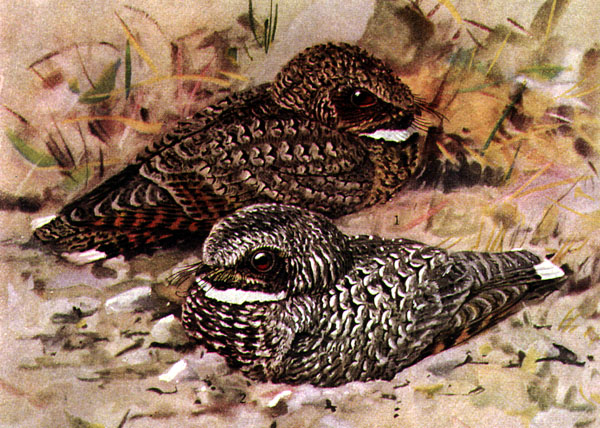 Common PoorwillPhalaenoptilus nuttallii
Compare
Questions and answers
What is the scientific name of the Anthony's Nightjar?
The scientific name of the Anthony's Nightjar is Nyctidromus anthonyi. Written with its author, the full name is Nyctidromus anthonyi (Chapman, 1923).
Which family does the Anthony's Nightjar belong to?
Nyctidromus anthonyi belongs to the family Caprimulgidae, in the order Caprimulgiformes and the class Aves.
Where is the Anthony's Nightjar found?
Checklists and occurrence records place Nyctidromus anthonyi in 2 countries: Peru and Ecuador.
What is the conservation status of the Anthony's Nightjar?
The IUCN Red List category recorded for Nyctidromus anthonyi is Least Concern (LC).
What other names does the Anthony's Nightjar have?
Nyctidromus anthonyi is also known in English as Scrub Nightjar.
What is a Nightjar diet?
Anthony's Nightjars feed on insects captured in flight or by sallying from branches.[13]
Are Nightjar birds rare?
Anthony's Nightjar is assessed as Least Concern by the IUCN. Its population is unknown but is believed to be increasing.[27][29]
What does a Nightjar look like?
Male Anthony's Nightjars have grayish brown, buff-speckled upperparts, a broad tawny buff nape collar, a white lower throat, and considerable white coloration on the outermost tail feathers. Females resemble males but have less white on their wings and tails.[1][2][5][4][8]
Sources
Passages the profile rests on
- Male Anthony's nightjars have grayish brown upperparts marked with buff speckles and blackish brown streaks. Source passage: “Males have grayish brown upperparts with buff speckles and blackish brown streaks;” — English Wikipedia
- Male Anthony's nightjars have a broad tawny buff collar on the nape. Source passage: “They have a broad tawny buff collar on the nape.” — English Wikipedia
- The chin and upper throat of male Anthony's nightjars are tawny buff with dark brown bars and speckles. Source passage: “The chin and upper throat are tawny buff with dark brown bars and speckles.” — English Wikipedia
- Male Anthony's nightjars have a white lower throat and a grayish brown breast with buff bars. Source passage: “The lower throat is white, the breast grayish brown with buff bars,” — English Wikipedia
- The outermost pair of tail feathers of Anthony's nightjars has considerable white coloration. Source passage: “The tail feathers are mostly brown with considerable white on the outermost pair.” — English Wikipedia
- The belly and flanks of male Anthony's nightjars are buff with faint brown bars. Source passage: “the belly and flanks buff with faint brown bars.” — English Wikipedia
- The five outermost primary wing feathers of Anthony's nightjars display a white or buffy stripe in flight. Source passage: “In flight the five outermost primary wing feathers show a white or buffy stripe.” — English Wikipedia
- Female Anthony's nightjars resemble males but have less white on their wings and tails. Source passage: “The female is similar to the male but with less white on the wings and tail.” — English Wikipedia
- Male Anthony's nightjars weigh between 32.3 and 39.5 grams, with a mean weight of approximately 35 grams. Source passage: “Male Anthony's nightjars weigh 32.3 to 39.5 g (1.1 to 1.4 oz) with a mean of about 35 g (1.2 oz)” — English Wikipedia
- Female Anthony's nightjars weigh between 31.0 and 42.0 grams, with a mean weight of approximately 37 grams. Source passage: “females 31.0 to 42.0 g (1.1 to 1.5 oz) with a mean of about 37 g (1.3 oz).” — English Wikipedia
- Anthony's nightjars inhabit arid open woodlands, grasslands, and shrublands. Source passage: “It inhabits arid open woodlands, grasslands, and shrublands.” — English Wikipedia
- Anthony's nightjars occur at elevations ranging from sea level to 800 metres. Source passage: “In elevation it ranges from sea level to 800 m (2,600 ft).” — English Wikipedia
- Anthony's nightjars feed on insects captured in flight or by sallying from branches. Source passage: “It captures its insect prey in flight or by sallying from a branch.” — English Wikipedia
- Anthony's nightjars are active from dusk until dawn. Source passage: “Anthony's nightjar is active from dusk to dawn.” — English Wikipedia
- Anthony's nightjars roost on the ground during daylight hours. Source passage: “It roosts on the ground during the day” — English Wikipedia
- Anthony's nightjars are usually solitary. Source passage: “and is usually solitary.” — English Wikipedia
- Anthony's nightjars are generally sedentary but may make small movements in response to rainfall. Source passage: “It is generally sedentary but may make small movements in response to rains.” — English Wikipedia
- Anthony's nightjars conduct most of their foraging at dusk and in the early evening. Source passage: “it does most of its foraging at dusk and in early evening.” — English Wikipedia
- Anthony's nightjars tend to forage over open or semi-open areas. Source passage: “It tends to forage over open or semi-open areas.” — English Wikipedia
- Anthony's nightjars sing mostly at dusk and dawn. Source passage: “Anthony's nightjar sings mostly at dusk and dawn.” — English Wikipedia
- The song of Anthony's nightjar is a short, simple vocalization described as a treeow or keeLEEoo. Source passage: “Its simple song is "a short treeow or keeLEEoo"” — English Wikipedia
- Anthony's nightjars produce a rolling quaqrr vocalization from a perch. Source passage: “It also makes a "rolling quaqrr" from a perch” — English Wikipedia
- Anthony's nightjars produce a soft tuk tuk tuk call during flight. Source passage: “and "a soft tuk tuk tuk" flight call.” — English Wikipedia
- The breeding season of Anthony's nightjar has not been precisely defined but appears concentrated between December and March. Source passage: “The breeding season of Anthony's nightjar has not been defined, though it appears to be concentrated between December and March” — English Wikipedia
- The breeding season of Anthony's nightjar appears to be associated with rainfall. Source passage: “and be tied to rainfall.” — English Wikipedia
- Anthony's nightjars lay clutches containing one or two eggs on the ground atop leaf litter. Source passage: “It lays its clutch of one to two eggs on the ground atop leaf litter.” — English Wikipedia
- The IUCN has assessed Anthony's nightjar as Least Concern. Source passage: “The IUCN has assessed Anthony's nightjar as being of Least Concern.” — English Wikipedia
- Anthony's nightjar was most recently assessed for the IUCN Red List in 2024. Source passage: “Scrub Nightjar Nyctidromus anthonyi has most recently been assessed for The IUCN Red List of Threatened Species in 2024.” — iucnredlist.org
- The population of Anthony's nightjar is unknown but is believed to be increasing. Source passage: “Its population is unknown but believed to be increasing,” — English Wikipedia
- The population increase of Anthony's nightjar may be associated with the clearing of forest and dense scrub. Source passage: “perhaps in response to the clearing of forest and dense scrub.” — English Wikipedia
- The pauraque (Nyctidromus albicollis) is identified as a close relative of Anthony's nightjar. Source passage: “and its close relative the pauraque (Nyctidromus albicollis)” — English Wikipedia
- Anthony's nightjar was considered a subspecies of the little nightjar during part of the mid-1900s. Source passage: “For a time in the mid-1900s it was considered a subspecies of little nightjar (Setopagis parvula).” — English Wikipedia
- Anthony's nightjar is a monotypic species. Source passage: “Anthony's nightjar is monotypic.” — English Wikipedia
- Anthony's nightjar was originally described in the genus Caprimulgus. Source passage: “Anthony's nightjar was originally described in genus Caprimulgus” — English Wikipedia
- Anthony's nightjar was previously placed in the genus Caprimulgus according to the cited taxonomic source. Source passage: “Nyctidromus anthonyi (del Hoyo and Collar 2014) was previously placed in the genus Caprimulgus.” — datazone.birdlife.org
- DNA analysis and vocal differences support placing Anthony's nightjar and its close relative in their own genus. Source passage: “DNA analysis and vocal differences show that it and its close relative the pauraque (Nyctidromus albicollis) require their own genus.” — English Wikipedia
Data
- Catalogue of Life, 2026-10-16 XR cc by
- Global Biodiversity Information Facility CC BY 4.0
- Wikidata CC0
- GeoNames CC BY 4.0
- Wikimedia Commons per image; credit shown with each image
- Within the Catalogue of Life, this name comes from The Integrated Taxonomic Information System cc0
This species in other databases
Page built on 27 November 2026. See how the catalog is made and all sources and licences.
Cite this page
ScientificNames.org. (2026). Nyctidromus anthonyi (Anthony's Nightjar). Retrieved November 27, 2026, from https://scientificnames.org/species/nyctidromus-anthonyi
“Nyctidromus anthonyi (Anthony's Nightjar).” ScientificNames.org, 2026, scientificnames.org/species/nyctidromus-anthonyi. Accessed 27 Nov. 2026.
ScientificNames.org. “Nyctidromus anthonyi (Anthony's Nightjar).” Accessed November 27, 2026. https://scientificnames.org/species/nyctidromus-anthonyi.
@misc{scientificnames_nyctidromus_anthonyi_anthonys_nightjar,
  author = {{ScientificNames.org}},
  title = {Nyctidromus anthonyi (Anthony's Nightjar)},
  year = {2026},
  url = {https://scientificnames.org/species/nyctidromus-anthonyi},
  note = {Accessed 2026-11-27}
}