Species · Molluscs
Odostomia plicata
Odostomia plicata has no English name on record in the checklists used here. It is a species of mollusc in the family Pyramidellidae (pyrams). The name dates from 1803.
- Scientific name
- Odostomia plicata (Montagu, 1803)
- Genus
- Odostomia
- Family
- Pyramidellidae (Pyrams)
- Class
- Gastropoda
- Environment
- marine
- Recorded in
- 15 countries
- Name status
- accepted in the Catalogue of Life
Overview
The species occurs in European waters within the ERMS scope, including the Greek, Irish, Portuguese, Spanish and United Kingdom Exclusive Economic Zones and off the southwest coast of Apulia. It has a thin, transparent, polished shell measuring 2.5 mm in length, with microscopic spiral striae.
Written 27 November 2026 from the sources listed below. Each statement was checked against the passage it cites; statements that could not be supported were removed.
Appearance
The shell is thin, transparent and polished, measuring 2.5 mm in length. It bears microscopic spiral striae and is very pale yellowish white or white, with darker coloration at the suture.[1][2][3][4]
The teleoconch comprises five to six whorls, and the sutures are moderately impressed. Fully grown specimens lack an umbilicus or have only a narrow chink, and the columellar tooth is small but distinct.[5][6][7][8]
Classification of Odostomia plicata
| Kingdom | Animalia |
|---|---|
| Phylum | Mollusca |
| Class | Gastropoda (Gastropod) |
| Subclass | Heterobranchia |
| Infraclass | Euthyneura |
| Subterclass | Tectipleura |
| Superorder | Pylopulmonata |
| Superfamily | Pyramidelloidea |
| Family | Pyramidellidae (Pyrams) |
| Subfamily | Odostomiinae |
| Genus | Odostomia |
| Species | Odostomia plicata (Montagu, 1803) |
Where Odostomia plicata is found
Checklists and occurrence records place Odostomia plicata in 15 countries. GBIF holds 998 georeferenced records of it.
Countries
- Croatia 22
- Denmark 3
- France 158
- Greece 11
- Guernsey 4
- Ireland 36
- Italy 56
- Jersey 8
- Malta 4
- Norway 12
- Portugal 34
- Spain 62
- Sweden 9
- The Netherlands 79
- United Kingdom 500
Regions and cities with the most records
- England, United Kingdom 68
- Newtownards, United Kingdom 61
- Vlissingen, The Netherlands 39
- Castlereagh, United Kingdom 37
- Middelburg, The Netherlands 37
- Bangor, United Kingdom 31
- Borssele, The Netherlands 30
- Goes, The Netherlands 29
- Carrickfergus, United Kingdom 28
- Belfast, United Kingdom 26
- Newtownabbey, United Kingdom 26
- Scotland, United Kingdom 21
- Terneuzen, The Netherlands 20
- Zeeland, The Netherlands 20
- Wales, United Kingdom 19
- Falmouth, United Kingdom 18
- Camborne, United Kingdom 17
- Llandudno, United Kingdom 17
- Northern Ireland, United Kingdom 17
- Redruth, United Kingdom 17
- Truro, United Kingdom 17
- Colwyn Bay, United Kingdom 15
- Galway, Ireland 15
- Frinton-on-Sea, United Kingdom 14
- Walton-on-the-Naze, United Kingdom 14
- Maldon, United Kingdom 12
- Rochford, United Kingdom 12
- Torquay, United Kingdom 12
- Weymouth, United Kingdom 12
- Brixham, United Kingdom 10
- Clacton-on-Sea, United Kingdom 10
- Paignton, United Kingdom 10
- Rayleigh, United Kingdom 10
- Sandown, United Kingdom 10
- Deal, United Kingdom 9
- Larne, United Kingdom 9
5 more countries have a few records outside this range
These countries hold a few records of Odostomia plicata but lie outside the range the checklists give for it. Such records are often zoo or garden specimens, museum material or vagrants, so the species is not counted as occurring there.
A number beside a place is its count of GBIF occurrence records. A place without a number comes from a checklist alone. Records show where a species has been observed or collected, which can include escapes and vagrants.
Common names
Names in 3 other languages
- Dutch
- slank tandhorentje, slanke tandhoren
- German
- Gefurchte Pyramidenschnecke
- Swedish
- gul tandsnatting
Synonyms
12 other scientific names have been used for this species and are now treated as synonyms of Odostomia plicata.
- Chemnitzia plicata (Montagu)
- Eulima unidens Requien, 1848
- Melania bulimus Scacchi, 1835
- Odontostomia (Turritodostomia) plicata (Montagu, 1803)
- Odontostomia plicata (Montagu, 1803)
- Odostomia plicata var. carinata J. T. Marshall, 1893
- Odostomia unidens (Requien, 1848)
- Ptychostomon plicata (Montagu)
- Rissoa elongata R. A. Philippi, 1836
- Turbonilla plicata (Montagu)
- Odostomia vitrea Brusina, 1865 ambiguous synonym
- Turbo plicatus Montagu, 1803 ambiguous synonym
Related species
- Odostomia limpida
-
 Odostomia kromi
-
 Odostomia acuta
-
 Odostomia turrita
-
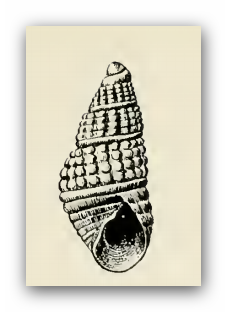 Odostomia promeces
-
 Odostomia calliope
-
 Odostomia canfieldi
-
 Odostomia laevigata
Compare
Questions and answers
What is the shell length of Odostomia plicata?
The shell measures 2.5 mm in length.[2]
Where does Odostomia plicata occur?
It occurs in European waters within the ERMS scope, including the Greek, Irish, Portuguese, Spanish and United Kingdom Exclusive Economic Zones and off the southwest coast of Apulia.[9][10][11][12][13][14][15]
What colour is the shell?
The shell is very pale yellowish white or white, with darker coloration at the suture.[4]
How many whorls does the teleoconch have?
The teleoconch comprises five to six whorls.[5]
Does the fully grown shell have an umbilicus?
Fully grown specimens lack an umbilicus or have only a narrow chink.[7]
Sources
Passages the profile rests on
- The species has a thin, transparent, polished shell. Source passage: “The thin shell is transparent and polished.” — English Wikipedia
- The shell measures 2.5 mm in length. Source passage: “Its length measures 2.5 mm.” — English Wikipedia
- The shell bears microscopic spiral striae. Source passage: “It is marked with microscopic spiral striae.” — English Wikipedia
- The shell is very pale yellowish white or white, with a darker coloration at the suture. Source passage: “Its color is very pale yellowish white or white, darker at the suture.” — English Wikipedia
- The teleoconch comprises five to six whorls. Source passage: “There are 5 to 6 whorls in the teleoconch.” — English Wikipedia
- The shell sutures are moderately impressed. Source passage: “The sutures are moderately impressed.” — English Wikipedia
- Fully grown specimens lack an umbilicus or have only a narrow chink. Source passage: “There is no umbilicus or a narrow chink in full-grown specimens.” — English Wikipedia
- The columellar tooth is small but distinct. Source passage: “The columellar tooth is small, but distinct.” — English Wikipedia
- The species occurs in European waters within the ERMS scope. Source passage: “European waters (ERMS scope)” — English Wikipedia
- The species occurs in the Greek Exclusive Economic Zone. Source passage: “Greek Exclusive Economic Zone” — English Wikipedia
- The species occurs in the Irish Exclusive Economic Zone. Source passage: “Irish Exclusive economic Zone” — English Wikipedia
- The species occurs in the Portuguese Exclusive Economic Zone. Source passage: “Portuguese Exclusive Economic Zone” — English Wikipedia
- The species occurs off the southwest coast of Apulia. Source passage: “South West Coast of Apulia” — English Wikipedia
- The species occurs in the Spanish Exclusive Economic Zone. Source passage: “Spanish Exclusive Economic Zone” — English Wikipedia
- The species occurs in the United Kingdom Exclusive Economic Zone. Source passage: “United Kingdom Exclusive Economic Zone” — English Wikipedia
Data
- Catalogue of Life, 2026-10-16 XR cc by
- Global Biodiversity Information Facility CC BY 4.0
- Wikidata CC0
- GeoNames CC BY 4.0
- Within the Catalogue of Life, this name comes from World Register of Marine Species cc by
References
- Fleming, J. (1813). Conchology. The Edinburgh Encyclopaedia, 7: 55–107, pls. 203–206. where the name was published
This species in other databases
Page built on 28 November 2026. See how the catalog is made and all sources and licences.
Cite this page
ScientificNames.org. (2026). Odostomia plicata. Retrieved November 28, 2026, from https://scientificnames.org/species/odostomia-plicata
“Odostomia plicata.” ScientificNames.org, 2026, scientificnames.org/species/odostomia-plicata. Accessed 28 Nov. 2026.
ScientificNames.org. “Odostomia plicata.” Accessed November 28, 2026. https://scientificnames.org/species/odostomia-plicata.
@misc{scientificnames_odostomia_plicata,
  author = {{ScientificNames.org}},
  title = {Odostomia plicata},
  year = {2026},
  url = {https://scientificnames.org/species/odostomia-plicata},
  note = {Accessed 2026-11-28}
}