Species · Reptiles
Striped Worm Lizard Ophiodes striatus
The scientific name of the Striped Worm Lizard is Ophiodes striatus. It is a species of reptile in the family Diploglossidae (neotropical forest lizards), order Squamata. The name dates from 1824.
- Scientific name
- Ophiodes striatus (Spix, 1824)
- Common name
- Striped Worm Lizard
- Genus
- Ophiodes
- Family
- Diploglossidae (Neotropical Forest Lizards)
- Order
- Squamata
- Class
- Reptilia
- Red List category
- LC Least Concern
- Recorded in
- 5 countries
- Name status
- accepted in the Catalogue of Life

Overview
The Striped Worm Lizard is a limbless lizard. It occurs in Brazil, Paraguay, and Uruguay. Its distinguishing feature is its lack of limbs.
Written 27 November 2026 from the sources listed below. Each statement was checked against the passage it cites; statements that could not be supported were removed.
Appearance
The Striped Worm Lizard is a limbless lizard.[1]
Conservation
The Striped Worm Lizard was most recently assessed for the IUCN Red List in 2014.[2]
Classification of the Striped Worm Lizard
| Kingdom | Animalia |
|---|---|
| Phylum | Chordata |
| Subphylum | Vertebrata |
| Infraphylum | Gnathostomata |
| Parvphylum | Osteichthyes |
| Megaclass | Tetrapoda |
| Class | Reptilia (Reptile) |
| Order | Squamata (Snakes) |
| Suborder | Autarchoglossa |
| Family | Diploglossidae (Neotropical Forest Lizards) |
| Genus | Ophiodes (Worm Lizards) |
| Species | Ophiodes striatus (Spix, 1824) |
Where the Striped Worm Lizard is found
Checklists and occurrence records place Ophiodes striatus in 5 countries across South America. GBIF holds 877 georeferenced records of it.
Countries
Regions and cities with the most records
- Minas Gerais, Brazil 166
- Espírito Santo, Brazil 133
- São Paulo, Brazil 107
- Domingos Martins, Brazil 93
- Marechal Floriano, Brazil 92
- Viana, Brazil 90
- Rio de Janeiro, Brazil 58
- São João del Rei, Brazil 39
- Lavras, Brazil 33
- Santa Catarina, Brazil 31
- Mato Grosso do Sul, Brazil 25
- Santa Teresa, Brazil 22
- Osasco, Brazil 20
- Santa Maria de Jetibá, Brazil 19
- Diadema, Brazil 18
- Goiás, Brazil 18
- Santo André, Brazil 18
- São Bernardo do Campo, Brazil 17
- São Caetano do Sul, Brazil 17
- São Paulo, Brazil 17
- Freguesia do Ribeirao da Ilha, Brazil 16
- Ribeirão da Ilha, Brazil 16
- Vila Galvão, Brazil 16
- Bahia, Brazil 15
- Juiz de Fora, Brazil 15
- Assis, Brazil 14
- Corrientes, Argentina 14
- Guarulhos, Brazil 14
- Acari, Brazil 13
- Cordovil, Brazil 13
- Cândido Mota, Brazil 13
- Duque de Caxias, Brazil 13
- Estácio, Brazil 12
- Freguesia, Brazil 12
- Rio de Janeiro, Brazil 12
- Santa Teresa, Brazil 12
Range as the checklists state it
Brazil (Rio Grande do Sul, Minas Gerais, Espírito Santo, Ceará, Mato Grosso, Goiás ?, Bahia), Paraguay, Uruguay, Bolivia (Beni)
A number beside a place is its count of GBIF occurrence records. A place without a number comes from a checklist alone. Records show where a species has been observed or collected, which can include escapes and vagrants.
Common names
English
- Striped Worm Lizard
Names in 1 other language
- Portuguese
- Alicanço, Aliscanço, Cobra-Lagarto, Cobra-de-Vidro, Cobra-de-Vidro-Comum, Cobra-de-Vidro-Dourada, Cobra-de-Vidro-Grande, Cobra-de-Vidro-Verde
Synonyms
6 other scientific names have been used for this species and are now treated as synonyms of Ophiodes striatus.
- Ophiodes grilli Boulenger, 1913
- Pygopus cariococca Spix, 1824
- Pygopus caryococca Spix, 1825
- Pygopus gronovii Wagler, 1828
- Pygopus striatus Spix, 1824
- Seps fragilis Raddi, 1826 ambiguous synonym
Related species
-
 Jointed Worm LizardOphiodes vertebralis
-
 Silver-lined Worm LizardOphiodes intermedius
- Fragile Worm LizardOphiodes fragilis
- Ophiodes enso
- Lucy’s Worm LizardOphiodes luciae
-
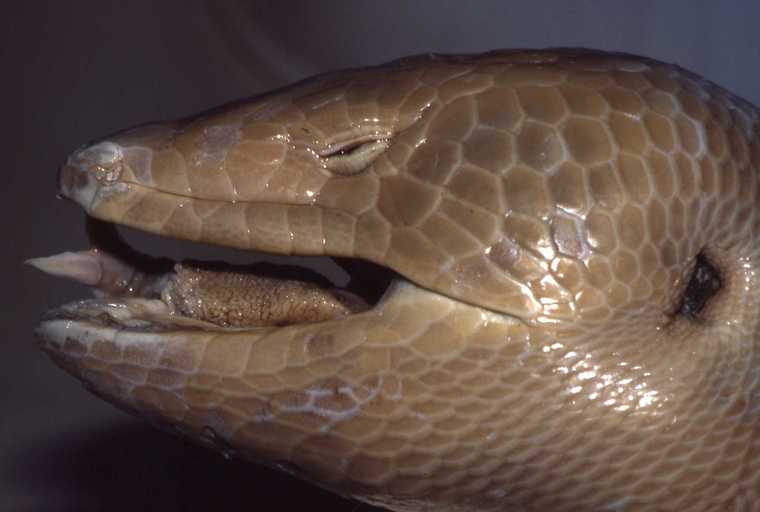 Jamaican Giant GalliwaspCelestus occiduus
-
 Brazilian GalliwaspDiploglossus lessonae
- Montserrat GalliwaspDiploglossus montisserrati
Compare
Questions and answers
What is the scientific name of the Striped Worm Lizard?
The scientific name of the Striped Worm Lizard is Ophiodes striatus. Written with its author, the full name is Ophiodes striatus (Spix, 1824).
Which family does the Striped Worm Lizard belong to?
Ophiodes striatus belongs to the family Diploglossidae, in the order Squamata and the class Reptilia.
Where is the Striped Worm Lizard found?
Checklists and occurrence records place Ophiodes striatus in 5 countries: Brazil, Argentina, Uruguay, Paraguay and Bolivia.
What is the conservation status of the Striped Worm Lizard?
The IUCN Red List category recorded for Ophiodes striatus is Least Concern (LC).
Where do worm lizards live?
The Striped Worm Lizard occurs in Brazil, Paraguay, and Uruguay.[3]
Sources
Passages the profile rests on
- Ophiodes striatus is a limbless lizard. Source passage: “is a species of limbless lizard of the Diploglossidae family.” — inaturalist.org
- Ophiodes striatus was most recently assessed for the IUCN Red List in 2014. Source passage: “Striped Worm Lizard Ophiodes striatus has most recently been assessed for The IUCN Red List of Threatened Species in 2014.” — iucnredlist.org
- Ophiodes striatus occurs in Brazil, Paraguay, and Uruguay. Source passage: “It is found in Brazil, Paraguay, and Uruguay.” — inaturalist.org
Data
- Catalogue of Life, 2026-10-16 XR cc by
- Global Biodiversity Information Facility CC BY 4.0
- Wikidata CC0
- GeoNames CC BY 4.0
- Wikimedia Commons per image; credit shown with each image
- Within the Catalogue of Life, this name comes from The Reptile Database cc by
References
- Spix, J. B. von. (1825). Animalia nova sive species nova lacertarum quas in itinere per Brasiliam annis MDCCCXVII-MDCCCXX jussu et auspicius Maximiliani Josephi I Bavariae Regis suscepto collegit et descripsit Dr. J. B. de Spix. Lipsiae: T. O. Weigel; F. S. Hübschmanni, Monachii, 26 Pp.
- Wagler, J. (1828). Auszüge aus seinem Systema Amphibiorum. Isis von Oken 21: 740-744.
- Duméril, A. M. C. and G. Bibron. (1839). Erpétologie Générale on Histoire Naturelle Complète des Reptiles. Vol. 5. Roret/Fain et Thunot, Paris, 871 Pp.
- Gravenhorst, J. L. C. (1851). Über die im Zoologischen Museum der Universität Breslau Befindlichen Wirtelschleichen (Pseudosaura), Krüppelfüssler (Brachypoda), und einige andere, Denselben verwandte Reptilien aus den Zünften der Schleichen und Dickzüngler [Euprepes striolatus]. Acta Acad. Caes. Leop. Carol. Nat. Cur. 23 (1): 291-394 [1847].
- Peters, W. (1878). Herpetologische Notizen. I. Uber die von Spix in Brasilien gesammelten Eidechsen des Königlichen Naturalien-Kabinets zu München. Monatsber. Preuss. Akad. Wiss. Berlin 1877: 407-415.
- Boettger, O. (1885). Liste von Reptilien und Batrachiern aus Paraguay. Zeitschr. Naturw. 58 (3): 213-248.
- Cope, E. D. (1885). Twelfth contribution to the herpetology of tropical America. Proc. Amer. Philos. Soc. 22: 167-194 [1884].
- Boulenger, G. A. (1885). Catalogue of the lizards in the British Museum (Natural History). Vol. 2, Second edition. London, Xiii+497 Pp.
- Boulenger, G. A. (1886). A synopsis of the reptiles and batrachians of the province Rio Grande do Sul, Brazil. Ann. Mag. Nat. Hist. (5) 18: 423-445.
- Boulenger, G. A. (1913). Descriptions of a new lizard and a new snake from South America. Ann. Mus. Civ. Stor. Nat. Genova (3) 6: 49-50.
- Stokely, & Paul Scott. (1947). Limblessness and correlated changes in the girdles of a comparative morphological series of lizards. American Midland Naturalist 38 (3): 725-754.
- Peters, James A. & Donoso-Barros, Roberto. (1970). Catalogue of the Neotropical Squamata: Part II. Lizards and Amphisbaenians. Bull. US Natl. Mus. 297: 293 Pp.
- Müller, P. (1971). Herpetologische Reiseeindrücke aus Brasilien. Salamandra 7 (1): 9-30.
- Wiens, J. J., and J. L. Slingluff. (2001). How lizards turn into snakes: a phylogenetic analysis of body-form evolution in anguid lizards. Evolution 55: 2303–2318.
- Borges-Nojosa, D. M., & Caramaschi, U. (2003). Composição e análise comparativa da diversidade e das afinidades biogeográficas dos lagartos e anfisbenídeos (Squamata) dos brejos nordestinos. In: I.R. Leal, M. Tabarelli & J.M.C. Silva (eds.). Ecologia e conservação da Caatinga, pp. 181-236. Editora Universitária, Universidade Federal de Pernambuco, Recife, Brasil.
- ROCHA, CARLOS FREDERICO D.; HELENA G.BERGALLO, JOSÉ P. POMBAL JR., LENA GEISE, MONIQUE VAN SLUYS, RONALDO FERNANDES, ULISSES CARAMASCHI. (2004). FAUNA DE ANFÍBIOS, RÉPTEIS E MAMÍFEROS DO ESTADO DO RIO DE JANEIRO, SUDESTE DO BRASIL. Publ. Avul. Mus. Nac., Rio de Janeiro (104): 3-23.
- Uetanabaro, Masao; Franco Leandro Souza, Paulo Landgref Filho,Arlindo Figueira Beda & Reuber Albuquerque Brandão. (2007). Anfíbios e répteis do Parque Nacional da Serra da Bodoquena, Mato Grosso do Sul, Brasil. Biota Neotropica 7 (3).
- Caldeira Costa, H.; Dias Fernandes, V.; Castro Rodrigues, A. & Neves Feio, R. (2009). Lizards and Amphisbaenians, municipality of Viçosa, state of Minas Gerais, southeastern Brazil. Check List 5 (3): 732–745.
- MARQUES, O. A. V.; PEREIRA, D. N.; BARBO, F.E.; GERMANO, V.J. & SAWAYA, R. J. (2009). Os Répteis do Município de São Paulo: diversidade e ecologia da fauna pretérita e atual. Biota Neotropica 9: 1-12.
- Valdujo, Paula Hanna; Cristiano de Campos Nogueira; Leandro Baumgarten; Flavio Henrique Guimarães Rodrigues; Reuber Albuquerque Brandão; André Eterovic; Mário Barroso Ramos-Neto; Otavio A. V. Marques. (2009). Squamate Reptiles from Parque Nacional das Emas and surroundings, Cerrado of Central Brazil. Check List 5 (3): 405–417.
- Oliveira Lula Salles, R. de & Silva-Soares, T. (2010). Répteis do município de Duque de Caxias, Baixada Fluminense, Rio de Janeiro, Sudeste do Brasil. Biotemas, 23 (2): 135-144.
- SOUSA, B. M., NASCIMENTO, A. E. R., GOMIDES, S. C., VARELA RIOS, C. H., HUDSON, A. H., & NOVELLI, I. A. (2010). Reptiles in fragments of Cerrado and Atlantic Forest at the Campo das Vertentes, Minas Gerais State, Southeastern Brazil. Biota Neotropica 10 (2): 129-138.
- ARAUJO, C. O., CONDEZ, T. H., BOVO, R. P., CENTENO, F. C., & LUIZ, A. M. (2010). Amphibians and reptiles of the Parque Estadual Turístico do Alto Ribeira (PETAR), SP: an Atlantic Forest remnant of Southeastern Brazil. Biota Neotrop. 10(4): 257-.
- Oliveira Lula Salles, R. de; Weber, L.N. & Silva-Soares, T. (2010). Reptiles, Squamata, Parque Natural Municipal da Taquara, municipality of Duque de Caxias, state of Rio de Janeiro, Southeastern Brazil. Check List 6 (2): 280-286.
- Vrcibradic, D.; C.F.D. Rocha; M.C. Kiefer; F.H. Hatano; A.F. Fontes; M. Almeida-Gomes; C.C. Siqueira; J.A.L. Pontes; V.N.T. Borges-Junior; L.O. Gil; T. Klaion; E.C.N. Rubião; M. Sluys. (2011). Herpetofauna, Estação Ecológica Estadual do Paraíso, state of Rio de Janeiro, southeastern Brazil. Check List 7 (6): 745-749.
This species in other databases
Page built on 29 November 2026. See how the catalog is made and all sources and licences.
Cite this page
ScientificNames.org. (2026). Ophiodes striatus (Striped Worm Lizard). Retrieved November 29, 2026, from https://scientificnames.org/species/ophiodes-striatus
“Ophiodes striatus (Striped Worm Lizard).” ScientificNames.org, 2026, scientificnames.org/species/ophiodes-striatus. Accessed 29 Nov. 2026.
ScientificNames.org. “Ophiodes striatus (Striped Worm Lizard).” Accessed November 29, 2026. https://scientificnames.org/species/ophiodes-striatus.
@misc{scientificnames_ophiodes_striatus_striped_worm_lizard,
  author = {{ScientificNames.org}},
  title = {Ophiodes striatus (Striped Worm Lizard)},
  year = {2026},
  url = {https://scientificnames.org/species/ophiodes-striatus},
  note = {Accessed 2026-11-29}
}