Species · Flowering plants
Oryctes Oryctes nevadensis
The scientific name of the Oryctes is Oryctes nevadensis. It is a species of flowering plant in the family Solanaceae (nightshades), order Solanales.
- Scientific name
- Oryctes nevadensis S.Watson
- Common name
- Oryctes
- Genus
- Oryctes
- Family
- Solanaceae (Nightshades)
- Order
- Solanales
- Class
- Magnoliopsida
- Recorded in
- 1 country
- Name status
- accepted in the Catalogue of Life
Overview
Oryctes nevadensis S.Watson is an annual herb that grows from a taproot. It has sticky, scaly foliage and purplish flowers shaped like rounded urns.
Written 27 November 2026 from the sources listed below. Each statement was checked against the passage it cites; statements that could not be supported were removed.
Appearance
The oryctes has sticky, scaly foliage. Its leaves are linear to oval, divided into lobes, and may have wavy edges.[1][2]
Its flowers are purplish and rounded into an urn shape. They measure a few millimeters in width.[3][4]
Its fruit is a spherical capsule containing several seeds.[5]
The plant reaches a maximum height of approximately 20 centimeters. Its leaves measure between 1 and 3 centimeters in length.[6][7]
Habitat
The oryctes grows in deep-sand habitat in desert areas. It occurs in dry sites with loose sandy soil in washes and desert foothills.[8][9]
Its recorded habitat types include chenopod scrub and Mojavean desert scrub.[10]
Behaviour
The plant is only observed in years with particular rainfall amounts and temperature ranges.[11]
Reproduction and life cycle
The oryctes is an annual herb that grows from a taproot. Its flowers are arranged in umbels containing a few tiny flowers each.[12][13]
Its inflorescences emerge from leaf axils. The species produces spherical fruit capsules containing several seeds.[14][15]
The species typically flowers during April, May, and June.[16]
Conservation
The oryctes has a global G3 vulnerable conservation classification and an S2 imperiled conservation classification within California. It has a California rare plant ranking of 2B.[17][18][19]
Its restricted range, small population occurrences, population declines, and other impacts contribute to its conservation classifications.[20]
The species has no federal or state government-level species protection status. It is recorded in the California Natural Diversity Database.[21][22]
The species has not been deposited in a seed bank.[23]
Classification of the Oryctes
| Kingdom | Plantae |
|---|---|
| Subkingdom | Pteridobiotina |
| Phylum | Tracheophyta |
| Class | Magnoliopsida |
| Order | Solanales |
| Family | Solanaceae (Nightshades) |
| Subfamily | Solanoideae |
| Tribe | Physalideae |
| Subtribe | Physalidinae |
| Genus | Oryctes |
| Species | Oryctes nevadensis S.Watson |
Where the Oryctes is found
Checklists and occurrence records place Oryctes nevadensis in 1 country across North America. GBIF holds 216 georeferenced records of it.
Countries
Regions and cities with the most records
Range as the checklists state it
USA (California, Nevada)
A number beside a place is its count of GBIF occurrence records. A place without a number comes from a checklist alone. Records show where a species has been observed or collected, which can include escapes and vagrants.
Common names
English
- Oryctes
Related species
-
 PotatoSolanum tuberosum
-
 Indian GinsengWithania somnifera
-
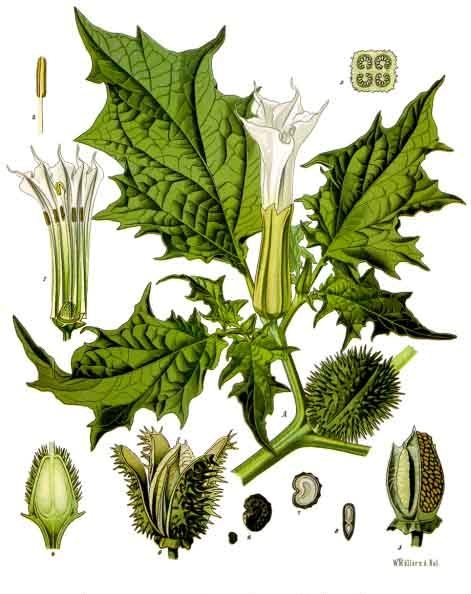 JimsonweedDatura stramonium
-
 EggplantSolanum melongena
-
 TomatilloPhysalis philadelphica
-
 Cape-gooseberryPhysalis peruviana
-
 TamarilloSolanum betaceum
-
 Black NightshadeSolanum nigrum
Compare
Questions and answers
What is the scientific name of the Oryctes?
The scientific name of the Oryctes is Oryctes nevadensis. Written with its author, the full name is Oryctes nevadensis S.Watson.
Which family does the Oryctes belong to?
Oryctes nevadensis belongs to the family Solanaceae, in the order Solanales and the class Magnoliopsida.
Where is the Oryctes found?
Checklists and occurrence records place Oryctes nevadensis in 1 country: United States.
Sources
Passages the profile rests on
- The plant has sticky, scaly foliage. Source passage: “producing sticky, scaly foliage” — English Wikipedia
- Its leaves are linear to oval and divided into lobes, with edges that may be wavy. Source passage: “linear in shape to oval and divided into lobes, sometimes wavy along the edges.” — English Wikipedia
- Its flowers are purplish and rounded into an urn shape. Source passage: “The flower is purplish and rounded into an urn shape” — English Wikipedia
- Its flowers measure a few millimeters in width. Source passage: “measuring a few millimeters wide.” — English Wikipedia
- Its fruit is a spherical capsule containing several seeds. Source passage: “The fruit is a spherical capsule containing several seeds.” — English Wikipedia
- The plant reaches a maximum height of approximately 20 centimeters. Source passage: “growing up to about 20 centimeters in maximum height.” — English Wikipedia
- Its leaves measure between 1 and 3 centimeters in length. Source passage: “The leaves are 1 to 3 centimeters long” — English Wikipedia
- The species grows in deep-sand habitat in desert areas. Source passage: “where it grows in habitat with deep sand.” — English Wikipedia
- The species occurs in dry sites with loose sandy soil in washes and desert foothills. Source passage: “Dry sites in loose sandy soil in washes and desert foothills in the” — nrm.dfg.ca.gov
- Its recorded habitat types include chenopod scrub and Mojavean desert scrub. Source passage: “Chenopod scrub, Mojavean desert scrub.” — nrm.dfg.ca.gov
- The plant is only observed in years with particular rainfall amounts and temperature ranges. Source passage: “the plant is only seen in years with certain rainfall amounts and temperature ranges.” — English Wikipedia
- The species is an annual herb that grows from a taproot. Source passage: “This is a small annual herb growing from a taproot” — English Wikipedia
- Its flowers are arranged in umbels containing a few tiny flowers each. Source passage: “The inflorescences are umbels of a few tiny flowers each” — English Wikipedia
- Its inflorescences emerge from leaf axils. Source passage: “emerging from leaf axils.” — English Wikipedia
- The species produces a spherical fruit capsule containing several seeds. Source passage: “The fruit is a spherical capsule containing several seeds.” — English Wikipedia
- The species typically flowers during April, May, and June. Source passage: “The plant typically flowers in the spring months of April, May and June.” — English Wikipedia
- The species has a global G3 vulnerable conservation classification. Source passage: “recognized globally with G3 - vulnerable status” — English Wikipedia
- The species has an S2 imperiled conservation classification within California. Source passage: “S2 - imperiled status within California state borders” — English Wikipedia
- The species has a California rare plant ranking of 2B. Source passage: “It also has a 2B California rare plant ranking” — English Wikipedia
- Its restricted range, small population occurrences, population declines, and other impacts contribute to its conservation classifications. Source passage: “due to its restricted range, small occurrences of populations, population declines, threats and/or other impacts.” — English Wikipedia
- The species has no federal or state government-level species protection status. Source passage: “This species has neither federal or state government level species protection status” — English Wikipedia
- The species is recorded in the California Natural Diversity Database. Source passage: “has been recorded in the California Natural Diversity Database (CNDDB).” — English Wikipedia
- The species has not been deposited in a seed bank. Source passage: “This species has not been seed banked” — English Wikipedia
Data
- Catalogue of Life, 2026-10-16 XR cc by
- Global Biodiversity Information Facility CC BY 4.0
- Wikidata CC0
- GeoNames CC BY 4.0
- Within the Catalogue of Life, this name comes from Synonymic Checklists of the Vascular Plants of the World cc by
References
- Watson, S. Botany (Fortieth Parallel) 274, t. 28 (1871). where the name was published
This species in other databases
Page built on 28 November 2026. See how the catalog is made and all sources and licences.
Cite this page
ScientificNames.org. (2026). Oryctes nevadensis (Oryctes). Retrieved November 28, 2026, from https://scientificnames.org/species/oryctes-nevadensis
“Oryctes nevadensis (Oryctes).” ScientificNames.org, 2026, scientificnames.org/species/oryctes-nevadensis. Accessed 28 Nov. 2026.
ScientificNames.org. “Oryctes nevadensis (Oryctes).” Accessed November 28, 2026. https://scientificnames.org/species/oryctes-nevadensis.
@misc{scientificnames_oryctes_nevadensis_oryctes,
  author = {{ScientificNames.org}},
  title = {Oryctes nevadensis (Oryctes)},
  year = {2026},
  url = {https://scientificnames.org/species/oryctes-nevadensis},
  note = {Accessed 2026-11-28}
}