Species · Birds
Olive Whistler Pachycephala olivacea
The scientific name of the Olive Whistler is Pachycephala olivacea. It is a species of bird in the family Pachycephalidae (whistlers & allies), order Passeriformes. The name dates from 1827.
- Scientific name
- Pachycephala olivacea Vigors & Horsfield, 1827
- Common name
- Olive Whistler
- Genus
- Pachycephala
- Family
- Pachycephalidae (Whistlers & Allies)
- Order
- Passeriformes
- Class
- Aves
- Red List category
- LC Least Concern
- Recorded in
- 1 country
- Name status
- accepted in the Catalogue of Life

Overview
Pachycephala olivacea inhabits southeastern Australia and Tasmania. It is a heavily built, brownish songbird with predominantly olive-brown plumage and a streaked white throat.
Written 26 November 2026 from the sources listed below. Each statement was checked against the passage it cites; statements that could not be supported were removed.
Appearance
Adults have predominantly olive-brown plumage and a streaked white throat. A pale grey breast band separates the white throat from the olive-coloured underparts.[1][2]
Males have a dark grey head, pale grey breast, and red-tinged buff belly and rump. Females lack the male's red colouration and have brown underparts.[3][4]
Both sexes have brown-black legs, bills, and eyes. Adults measure approximately 18–20 cm in length.[5][6]
Habitat
The Olive Whistler mainly inhabits wet forests and occurs in dense wet forests of southeastern Australia and Tasmania.[7][8]
In northern New South Wales, its habitat includes Antarctic beech forests.[9]
Diet
The Olive Whistler is predominantly insectivorous.[10]
Behaviour
Its melodious vocalisation has been compared to phrases resembling 'I'll wet you' or 'you're cranky'.[11]
Reproduction and life cycle
The Olive Whistler breeds between September and December and raises one brood during its breeding period.[12][13]
Its nest is a fragile bowl constructed from twigs, grasses, and pieces of bark. The lining consists of softer plant material bound with spiderwebs.[14][15]
The nest is placed in a tree fork approximately 2 metres above the ground.[16]
A clutch contains two or three oval eggs. The eggs are shiny cream and marked with brown, black, and lavender spots and blotches.[17][18]
Conservation
Habitat fragmentation, feral cats, and foxes are identified as threats to the species in New South Wales. Its population trend is reported as unknown.[19][20][21]
Similar species
The Olive Whistler can be mistaken for female golden whistlers by inexperienced observers.[22]
Classification of the Olive Whistler
| Kingdom | Animalia |
|---|---|
| Phylum | Chordata |
| Subphylum | Vertebrata |
| Infraphylum | Gnathostomata |
| Parvphylum | Osteichthyes |
| Megaclass | Tetrapoda |
| Class | Aves (Bird) |
| Order | Passeriformes (Passerine) |
| Family | Pachycephalidae (Whistlers & Allies) |
| Genus | Pachycephala (Thickheads) |
| Species | Pachycephala olivacea Vigors & Horsfield, 1827 |
Where the Olive Whistler is found
Checklists and occurrence records place Pachycephala olivacea in 1 country. GBIF holds 29,865 georeferenced records of it.
Countries
Regions and cities with the most records
- Tasmania, Australia 12,298
- Victoria, Australia 11,630
- New South Wales, Australia 3,642
- Hobart, Australia 1,623
- Australian Capital Territory, Australia 688
- Burwood, Australia 412
- Burnie, Australia 395
- South Australia, Australia 356
- Balwyn North, Australia 253
- Devonport, Australia 250
- Queensland, Australia 220
- Tuggeranong, Australia 211
- Warragul, Australia 156
- Torquay, Australia 144
- Melbourne, Australia 133
- Canberra, Australia 117
- Traralgon, Australia 95
- Wallan, Australia 90
- Launceston, Australia 87
- St Albans, Australia 66
- Bairnsdale, Australia 38
- Mount Gambier, Australia 29
- Frankston East, Australia 20
- Wollongong, Australia 17
- Bacchus Marsh, Australia 16
- Batemans Bay, Australia 14
- Geelong, Australia 14
- Maitland, Australia 8
- Liverpool, Australia 7
- Port Macquarie, Australia 7
- Coffs Harbour, Australia 4
- Wangaratta, Australia 4
- Cessnock, Australia 3
- Tamworth, Australia 3
- Taree, Australia 3
A number beside a place is its count of GBIF occurrence records. A place without a number comes from a checklist alone. Records show where a species has been observed or collected, which can include escapes and vagrants.
Common names
English
- Olive Whistler
Names in 24 other languages
- Catalan
- xiuladora olivàcia
- Chinese
- 綠嘯鶲, 绿啸鹟
- Croatian
- pjegavogrla zviždavka
- Czech
- pištec šedohnědý
- Danish
- Oliven Fløjter
- Dutch
- Bruine Fluiter
- Esperanto
- oliveca pakicefalo
- Finnish
- oliiviviheltäjä
- French
- Siffleur olivâtre
- German
- Buchen-Dickkopf, Buchendickkopf, Schuppenkehl-Dickkopf
- Italian
- Zufolatore oliva, Zufolatore olivaceo
- Japanese
- オリーブモズヒタキ
- Lithuanian
- žalsvasis švilpikas
- Norwegian
- olivenplystrer
- Polish
- fletówka oliwkowa
- Portuguese
- assobiadeira-olivácea, sibilante-oliváceo
- Russian
- Оливковый свистун
- Serbian
- Maslinasti zviždač
- Slovak
- hlaváčik olivový
- Spanish
- Silbador oliváceo
- Swedish
- olivvisslare
- Turkish
- Zeytuni Islıkçı
- Ukrainian
- свистун сіроголовий
- Welsh
- chwibanwr melynwyrdd
Subspecies and varieties
- Pachycephala olivacea apatetes (Tasmanian Olive Whistler) subspecies
- Pachycephala olivacea bathychroa (Otway-Gippsland Olive Whistler) subspecies
- Pachycephala olivacea hesperus (Glenelg Olive Whistler) subspecies
- Pachycephala olivacea macphersoniana (Northern Olive Whistler) subspecies
- Pachycephala olivacea olivacea (Southeastern Olive Whistler) subspecies
Related species
-
 Australian Golden WhistlerPachycephala pectoralis
-
 Rufous WhistlerPachycephala rufiventris
-
 Tongan WhistlerPachycephala jacquinoti
-
 Mangrove Golden WhistlerPachycephala melanura
-
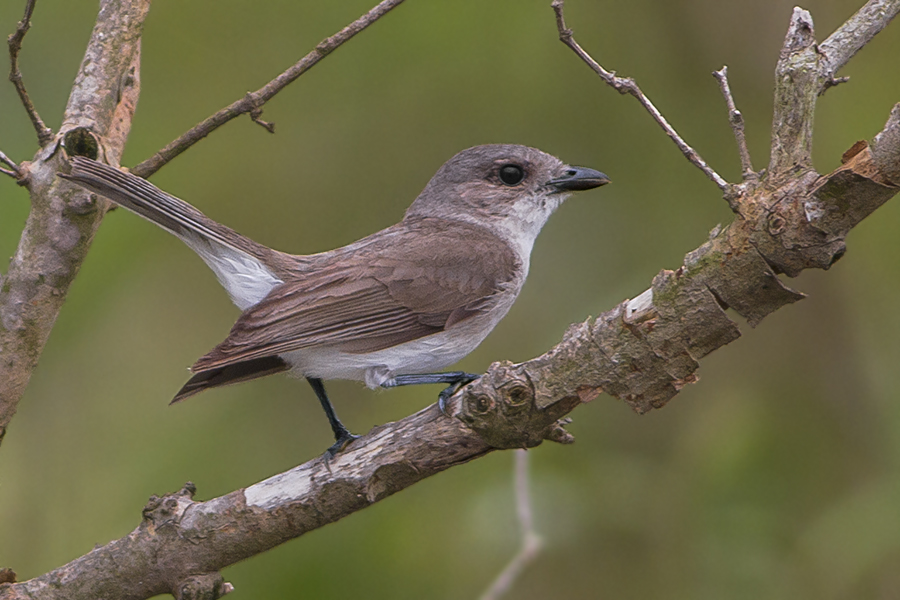 Mangrove WhistlerPachycephala cinerea
-
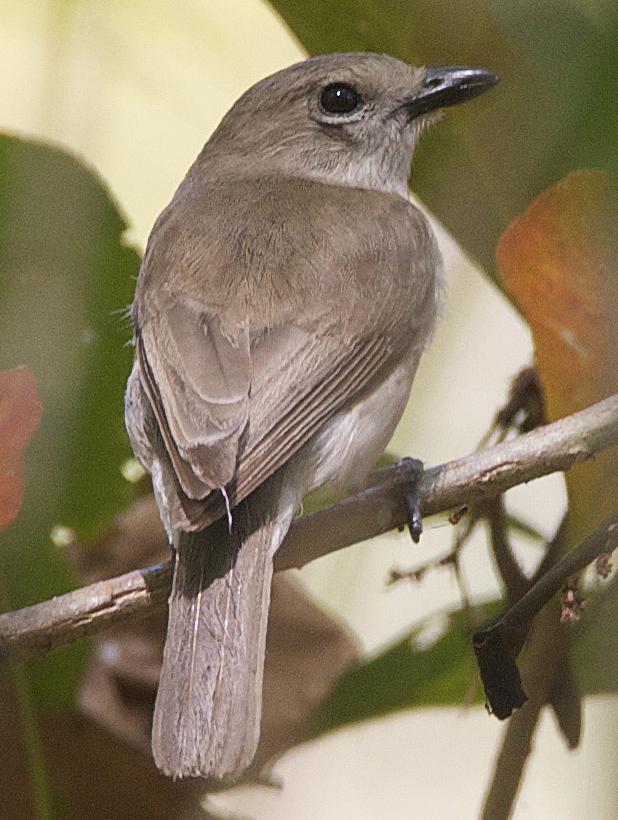 Grey WhistlerPachycephala simplex
-
 Gilbert's WhistlerPachycephala inornata
-
 Regent WhistlerPachycephala schlegelii
Compare
Questions and answers
What is the scientific name of the Olive Whistler?
The scientific name of the Olive Whistler is Pachycephala olivacea. Written with its author, the full name is Pachycephala olivacea Vigors & Horsfield, 1827.
Which family does the Olive Whistler belong to?
Pachycephala olivacea belongs to the family Pachycephalidae, in the order Passeriformes and the class Aves.
Where is the Olive Whistler found?
Checklists and occurrence records place Pachycephala olivacea in 1 country: Australia.
What is the conservation status of the Olive Whistler?
The IUCN Red List category recorded for Pachycephala olivacea is Least Concern (LC).
Where is the Olive Whistler distributed?
It occurs from the McPherson Range in far southeastern Queensland south through New South Wales and Victoria to southeastern South Australia. Its recorded distribution also includes Flinders Island, King Island, and Tasmania.[23][24]
Where does Pachycephala olivacea macphersoniana occur?
The subspecies Pachycephala olivacea macphersoniana occurs in eastern Australia.[25]
When does the Olive Whistler breed?
It breeds between September and December and raises one brood during this period.[12][13]
How many eggs does the Olive Whistler lay?
A clutch contains two or three oval eggs.[17]
Sources
Passages the profile rests on
- Adult birds have predominantly olive-brown plumage and a streaked white throat. Source passage: “Adult birds are around 18–20 cm (7–8 in) long, and have an overall olive brown plumage with a streaked white throat.” — English Wikipedia
- A pale grey breast band separates the white throat from the olive-coloured underparts. Source passage: “pale gray breast band separates white throat from rich olive” — ebird.org
- Male birds have a dark grey head, pale grey breast, and red-tinged buff belly and rump. Source passage: “The male has a dark grey head, pale grey breast and red-tinged buff belly and rump.” — English Wikipedia
- Females lack the male's red colouration and have brown underparts. Source passage: “The female lacks the red tinge, and has brown underparts.” — English Wikipedia
- Adults measure approximately 18–20 cm in length. Source passage: “Adult birds are around 18–20 cm (7–8 in) long” — English Wikipedia
- Both sexes have brown-black legs, bills, and eyes. Source passage: “The legs, bill and eyes of both sexes are a brown-black.” — English Wikipedia
- The species mainly inhabits wet forests. Source passage: “The habitat is mainly wet forest” — English Wikipedia
- The species occurs in dense wet forests of southeastern Australia and Tasmania. Source passage: “found in dense wet forests of southeastern Australia and Tasmania.” — ebird.org
- In northern New South Wales, its habitat includes Antarctic beech forests. Source passage: “Antarctic beech (Nothofagus moorei) forest in northern New South Wales.” — English Wikipedia
- The species is predominantly insectivorous. Source passage: “It is predominantly insectivorous.” — English Wikipedia
- Its melodious vocalisation has been compared to phrases resembling 'I'll wet you' or 'you're cranky'. Source passage: “The melodious call has been likened to I'll wet you or you're cranky” — English Wikipedia
- The species breeds between September and December. Source passage: “Olive whistlers nest from September to December” — English Wikipedia
- The species raises one brood during its breeding period. Source passage: “raising one brood during this period.” — English Wikipedia
- Its nest is a fragile bowl constructed from twigs, grasses, and pieces of bark. Source passage: “The nest is a fragile bowl of twigs, grasses and bits of bark” — English Wikipedia
- The nest lining consists of softer plant material and is bound with spiderwebs. Source passage: “lined with softer plant material and bound with spiderwebs” — English Wikipedia
- The nest is placed in a tree fork approximately 2 metres above the ground. Source passage: “in the fork of a tree around 2 m (6.6 ft) above the ground.” — English Wikipedia
- A clutch contains two or three oval eggs. Source passage: “A clutch of two or three oval eggs is laid” — English Wikipedia
- The eggs are shiny cream and marked with brown, black, and lavender spots and blotches. Source passage: “shiny cream with brown, black and lavender spots and blotches” — English Wikipedia
- Habitat fragmentation is identified as a threat to the species in New South Wales. Source passage: “due to habitat fragmentation” — English Wikipedia
- Feral cats and foxes are identified as threats to the species in New South Wales. Source passage: “and feral cats and foxes.” — English Wikipedia
- The population trend is reported as unknown. Source passage: “Number of mature individuals Unknown Population trend” — datazone.birdlife.org
- The species can be mistaken for female golden whistlers by inexperienced observers. Source passage: “To an untrained eye, they can be mistaken for female golden whistlers.” — English Wikipedia
- The species occurs from the McPherson Range in far southeastern Queensland south through New South Wales and Victoria to southeastern South Australia. Source passage: “found from the McPherson Range in far southeast Queensland south through New South Wales and into Victoria and southeastern South Australia” — English Wikipedia
- Its recorded distribution includes Flinders Island, King Island, and Tasmania. Source passage: “Flinders and King Islands and Tasmania.” — English Wikipedia
- The subspecies Pachycephala olivacea macphersoniana occurs in eastern Australia. Source passage: “P. o. macphersoniana – White, HL, 1920: Found in eastern Australia” — English Wikipedia
Data
- Catalogue of Life, 2026-10-16 XR cc by
- Global Biodiversity Information Facility CC BY 4.0
- Wikidata CC0
- GeoNames CC BY 4.0
- Wikimedia Commons per image; credit shown with each image
- Within the Catalogue of Life, this name comes from The Integrated Taxonomic Information System cc0
References
- Gill, Frank, & and Minturn Wright. (2006). Birds of the World: Recommended English Names.
This species in other databases
Page built on 27 November 2026. See how the catalog is made and all sources and licences.
Cite this page
ScientificNames.org. (2026). Pachycephala olivacea (Olive Whistler). Retrieved November 27, 2026, from https://scientificnames.org/species/pachycephala-olivacea
“Pachycephala olivacea (Olive Whistler).” ScientificNames.org, 2026, scientificnames.org/species/pachycephala-olivacea. Accessed 27 Nov. 2026.
ScientificNames.org. “Pachycephala olivacea (Olive Whistler).” Accessed November 27, 2026. https://scientificnames.org/species/pachycephala-olivacea.
@misc{scientificnames_pachycephala_olivacea_olive_whistler,
  author = {{ScientificNames.org}},
  title = {Pachycephala olivacea (Olive Whistler)},
  year = {2026},
  url = {https://scientificnames.org/species/pachycephala-olivacea},
  note = {Accessed 2026-11-27}
}