Species · Birds
Australian Golden Whistler Pachycephala pectoralis
The scientific name of the Australian Golden Whistler is Pachycephala pectoralis. It is a species of bird in the family Pachycephalidae (whistlers & allies), order Passeriformes. The name dates from 1802.
- Scientific name
- Pachycephala pectoralis (Latham, 1802)
- Common name
- Australian Golden Whistler
- Genus
- Pachycephala
- Family
- Pachycephalidae (Whistlers & Allies)
- Order
- Passeriformes
- Class
- Aves
- Red List category
- LC Least Concern
- Recorded in
- 9 countries
- Name status
- accepted in the Catalogue of Life

Overview
Pachycephala pectoralis occurs in Australia, occupying forests, woodlands, mallee, mangroves and scrub. Adult males have a bright yellow underside and nape, a black head and chest-band, and a white throat.
Written 26 November 2026 from the sources listed below. Each statement was checked against the passage it cites; statements that could not be supported were removed.
Appearance
Adult males have a bright yellow underside and nape, an olive-green back and wings, a black head and chest-band, and a white throat. Females in Australia are predominantly dull brownish-grey, although some have yellowish undertail coverts.[1][2]
Both sexes have black bills, dark legs and red-brown eyes. Australian golden whistlers have a strong, musical voice.[3][4]
The male Lord Howe golden whistler has duller yellow underparts with a slight olive tinge compared with the nominate race. The male Norfolk golden whistler resembles the nominate female, with more olive upperparts and paler yellow on the lower breast and belly.[5][6]
Habitat
The species occupies forests, woodlands, mallee, mangroves and scrub in Australia. It occurs in almost any wooded habitat, with a preference for dense forests.[7][8]
Diet
The species feeds on berries, insects, spiders and other small arthropods.[9]
Behaviour
Individuals generally forage alone but may also forage in mixed-species feeding flocks. They obtain food from the lower to middle levels of trees.[10][11][12]
Reproduction and life cycle
The species breeds between September and January and raises only one brood per breeding season. Both male and female participate in nest construction.[13][14][15]
The nest is a shallow bowl constructed from twigs, grass and bark, bound together with spider web. Both parents share incubation and care of their young.[16][17]
Eggs hatch approximately 15 days after being laid. Young leave the nest approximately 12 days after hatching.[18][19]
Conservation
The Australian golden whistler is classified as a species of least concern and is generally common to fairly common.[20][21]
The Norfolk golden whistler declined over many years because of habitat loss and fragmentation, with introduced predators such as black rats possibly also contributing. Most of its population is now restricted to Norfolk Island National Park.[22][23]
The Norfolk golden whistler is listed as vulnerable by the Australian Government. The Lord Howe golden whistler remains common but was listed as vulnerable by the Australian Government because of its small range.[24][25]
Classification of the Australian Golden Whistler
| Kingdom | Animalia |
|---|---|
| Phylum | Chordata |
| Subphylum | Vertebrata |
| Infraphylum | Gnathostomata |
| Parvphylum | Osteichthyes |
| Megaclass | Tetrapoda |
| Class | Aves (Bird) |
| Order | Passeriformes (Passerine) |
| Family | Pachycephalidae (Whistlers & Allies) |
| Genus | Pachycephala (Thickheads) |
| Species | Pachycephala pectoralis (Latham, 1802) |
Where the Australian Golden Whistler is found
Checklists and occurrence records place Pachycephala pectoralis in 9 countries across Oceania. GBIF holds 654,563 georeferenced records of it.
Countries
- Australia 650,893
- Fiji 199
- Indonesia 774
- New Caledonia 42
- Norfolk Island 1,890
- Papua New Guinea 241
- Samoa 15
- Solomon Islands 198
- Vanuatu 311
Regions and cities with the most records
- New South Wales, Australia 221,383
- Victoria, Australia 156,384
- Queensland, Australia 117,478
- Western Australia, Australia 42,699
- South Australia, Australia 35,598
- Tasmania, Australia 34,214
- Australian Capital Territory, Australia 31,429
- Canberra, Australia 26,888
- Burwood, Australia 23,414
- Tuggeranong, Australia 22,548
- Balwyn North, Australia 22,506
- Brisbane, Australia 21,174
- Hornsby, Australia 15,483
- Melbourne, Australia 14,060
- Parramatta, Australia 14,048
- Sydney, Australia 12,313
- Narangba, Australia 10,319
- Hobart, Australia 9,795
- Logan City, Australia 8,855
- Adelaide Hills, Australia 8,648
- Adelaide, Australia 8,176
- Sunshine Coast, Australia 7,779
- Port Macquarie, Australia 7,666
- Liverpool, Australia 7,654
- Central Coast, Australia 7,063
- St Albans, Australia 7,034
- Frankston East, Australia 6,703
- Wollongong, Australia 6,559
- Mount Barker, Australia 6,526
- Capalaba, Australia 6,160
- Maitland, Australia 5,362
- Newcastle, Australia 5,291
- Geelong, Australia 5,002
- Torquay, Australia 4,881
- Albany, Australia 4,702
- Caloundra, Australia 3,628
1 more country has a few records outside this range
These countries hold a few records of Pachycephala pectoralis but lie outside the range the checklists give for it. Such records are often zoo or garden specimens, museum material or vagrants, so the species is not counted as occurring there.
A number beside a place is its count of GBIF occurrence records. A place without a number comes from a checklist alone. Records show where a species has been observed or collected, which can include escapes and vagrants.
Common names
English
- Australian Golden Whistler
- Golden Whistler
Names in 25 other languages
- Catalan
- xiuladora d'Austràlia
- Chinese
- 金啸鹟, 金嘯鶲
- Croatian
- zlatna zviždavka
- Czech
- pištec zlatý
- Danish
- Almindelig Fløjter, Gylden Fløjter
- Dutch
- Gouden Fluiter
- Esperanto
- ora pakicefalo
- Finnish
- kultavatsaviheltäjä
- French
- Siffleur doré
- German
- Gelbbauch-Dickkopf, Gelbbauchdickkopf
- Hungarian
- aranyhasú légyvadász
- Italian
- Zufolatore dorato, Zufolatore dorato australiano
- Japanese
- キバラモズヒタキ
- Lithuanian
- auksinis švilpikas
- Norwegian
- gullplystrer
- Polish
- fletówka żółtobrzucha
- Portuguese
- assobiadeira-dourada, sibilante-dourado
- Russian
- Золотистый свистун, Золотой свистун
- Serbian
- Zlatni zviždač
- Slovak
- hlaváčik zlatý
- Spanish
- Silbador dorado
- Swedish
- guldvisslare
- Turkish
- Altuni Islıkçı
- Ukrainian
- свистун золотистий
- Welsh
- chwibanwr aur
Subspecies and varieties
- Pachycephala pectoralis balim (Baliem Whistler) subspecies
- Pachycephala pectoralis contempta (Lord Howe Golden Whistler) subspecies
- Pachycephala pectoralis fuliginosa (Western Whistler) subspecies
- Pachycephala pectoralis glaucura (Tasmanian Golden Whistler) subspecies
- Pachycephala pectoralis occidentalis (Western Golden Whistler) subspecies
- Pachycephala pectoralis pectoralis (Eastern Golden Whistler) subspecies
- Pachycephala pectoralis xanthoprocta (Norfolk Golden Whistler) subspecies
- Pachycephala pectoralis youngi (Southeastern Golden Whistler) subspecies
Related species
-
 Rufous WhistlerPachycephala rufiventris
-
 Tongan WhistlerPachycephala jacquinoti
-
 Olive WhistlerPachycephala olivacea
-
 Mangrove Golden WhistlerPachycephala melanura
-
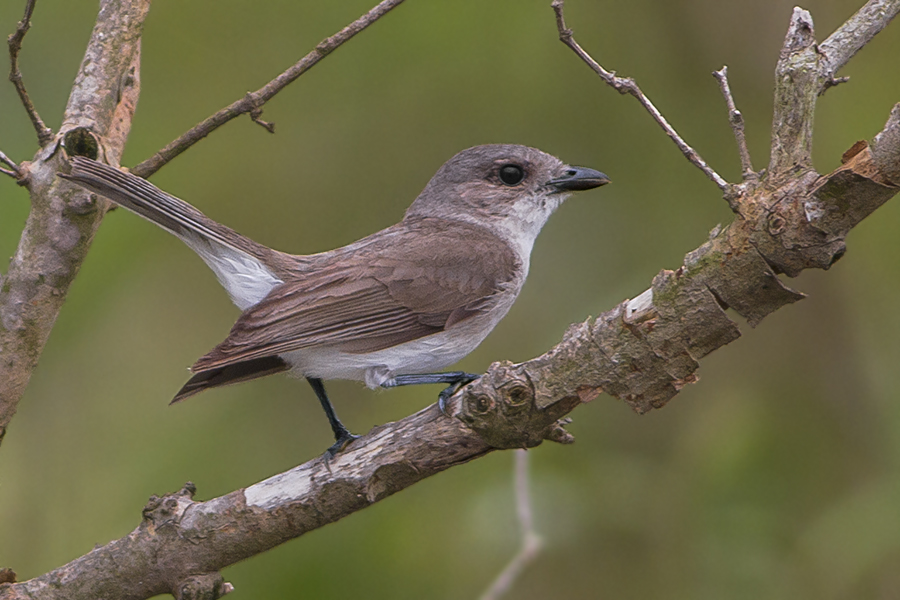 Mangrove WhistlerPachycephala cinerea
-
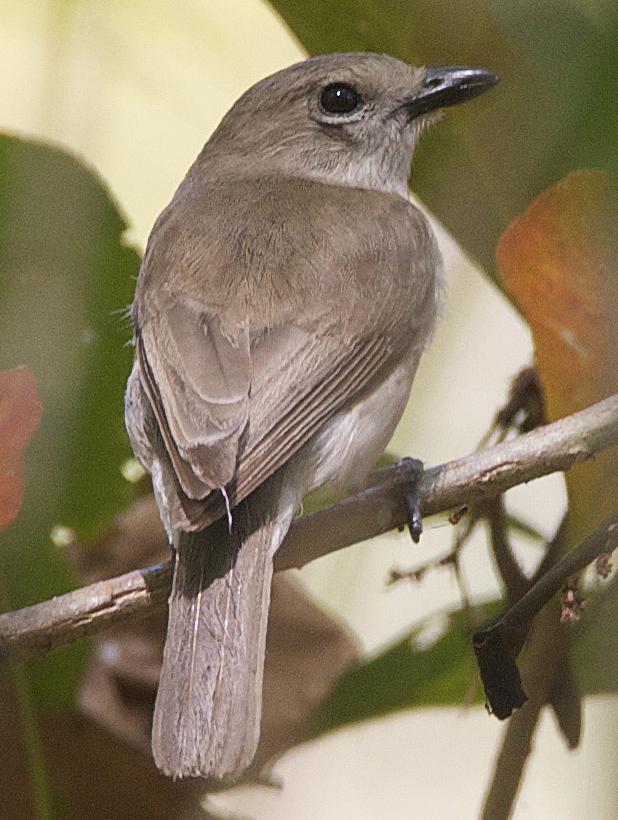 Grey WhistlerPachycephala simplex
-
 Gilbert's WhistlerPachycephala inornata
-
 Regent WhistlerPachycephala schlegelii
Compare
Questions and answers
What is the scientific name of the Australian Golden Whistler?
The scientific name of the Australian Golden Whistler is Pachycephala pectoralis. Written with its author, the full name is Pachycephala pectoralis (Latham, 1802).
Which family does the Australian Golden Whistler belong to?
Pachycephala pectoralis belongs to the family Pachycephalidae, in the order Passeriformes and the class Aves.
Where is the Australian Golden Whistler found?
Checklists and occurrence records place Pachycephala pectoralis in 9 countries, including Australia, Norfolk Island, Indonesia, Vanuatu, Papua New Guinea and Fiji.
What is the conservation status of the Australian Golden Whistler?
The IUCN Red List category recorded for Pachycephala pectoralis is Least Concern (LC).
What other names does the Australian Golden Whistler have?
Pachycephala pectoralis is also known in English as Golden Whistler.
Is the golden whistler native to Australia?
The Australian Golden Whistler occurs in Australia.[26]
Sources
Passages the profile rests on
- Adult males have a bright yellow underside and nape, an olive-green back and wings, a black head and chest-band, and a white throat. Source passage: “The male has a bright yellow underside and nape, olive-green back and wings, a black head and chest-band, and a white throat.” — English Wikipedia
- Females in Australia are predominantly dull brownish-grey, although some have yellowish undertail coverts. Source passage: “In Australia females are overall dull brownish-grey, though some have yellowish undertail coverts.” — English Wikipedia
- Both sexes have black bills, dark legs and red-brown eyes. Source passage: “Both sexes have a black bill, dark legs and red-brown eyes.” — English Wikipedia
- Australian golden whistlers have a strong, musical voice. Source passage: “Australian golden whistlers are described as having a strong, musical voice.” — English Wikipedia
- The male Lord Howe golden whistler has duller yellow underparts with a slight olive tinge compared with the nominate race. Source passage: “For subspecies P. p. contempta, the Lord Howe golden whistler, the male is similar to the male of the nominate race but has a duller yellow below which is slightly tinged with olive.” — English Wikipedia
- The male Norfolk golden whistler resembles the nominate female, with more olive upperparts and paler yellow on the lower breast and belly. Source passage: “For subspecies P. p. xanthoprocta, the Norfolk golden whistler, the male is similar in appearance to the female of the nominate race but the upperparts are more olive and the lower breast and belly are paler yellow.” — English Wikipedia
- The species occupies forests, woodlands, mallee, mangroves and scrub in Australia. Source passage: “It is found in forest, woodland, mallee, mangrove and scrub in Australia (except the interior and most of the north).” — English Wikipedia
- The species occurs in almost any wooded habitat, with a preference for dense forests. Source passage: “The Australian golden whistler can be found in almost any wooded habitat, especially dense forests.” — English Wikipedia
- The species feeds on berries, insects, spiders and other small arthropods. Source passage: “It eats berries, insects, spiders, and other small arthropods.” — English Wikipedia
- Individuals generally forage alone. Source passage: “They usually feed alone” — English Wikipedia
- The species obtains food from the lower to middle levels of trees. Source passage: “obtain food from the lower to middle tree level” — English Wikipedia
- Individuals may also forage in mixed-species feeding flocks. Source passage: “they may alternatively take part in mixed-species feeding flocks.” — English Wikipedia
- The species breeds between September and January. Source passage: “This species breeds between September and January.” — English Wikipedia
- Both male and female participate in nest construction. Source passage: “Male and female both work on the nest” — English Wikipedia
- The species raises only one brood per breeding season. Source passage: “Only one brood is raised per season” — English Wikipedia
- The nest is a shallow bowl constructed from twigs, grass and bark, bound together with spider web. Source passage: “which is a shallow bowl made of twigs, grass, and bark, and bound together with spider web.” — English Wikipedia
- Both parents share incubation and care of their young. Source passage: “both birds share incubation and care of young.” — English Wikipedia
- Eggs hatch approximately 15 days after being laid. Source passage: “Eggs hatch 15 days after they are laid” — English Wikipedia
- Young leave the nest approximately 12 days after hatching. Source passage: “the young leave the nest after 12 days.” — English Wikipedia
- The Australian golden whistler is classified as a species of least concern. Source passage: “The Australian golden whistler is considered to be of least concern” — English Wikipedia
- The species is generally common to fairly common. Source passage: “it is generally described as common to fairly common.” — English Wikipedia
- The Norfolk golden whistler declined over many years because of habitat loss and fragmentation, with introduced predators such as black rats possibly also contributing. Source passage: “The Norfolk golden whistler (P. p. xanthoprocta) declined for many years due to habitat loss and fragmentation and possibly also due to introduced predators such as the black rat.” — English Wikipedia
- Most of the Norfolk golden whistler population is now restricted to Norfolk Island National Park. Source passage: “Most of the population is now restricted to the Norfolk Island National Park.” — English Wikipedia
- The Norfolk golden whistler is listed as vulnerable by the Australian Government. Source passage: “This has resulted in it being listed as vulnerable by the Australian Government.” — English Wikipedia
- The Lord Howe golden whistler remains common but was listed as vulnerable by the Australian Government because of its small range. Source passage: “Another island subspecies, the Lord Howe golden whistler (P. p. contempta) remains common, but was listed as vulnerable by the Australian Government due to its small range.” — English Wikipedia
- The species occurs in Australia but is absent from the interior and most of the north. Source passage: “It is found in forest, woodland, mallee, mangrove and scrub in Australia (except the interior and most of the north).” — English Wikipedia
Data
- Catalogue of Life, 2026-10-16 XR cc by
- Global Biodiversity Information Facility CC BY 4.0
- Wikidata CC0
- GeoNames CC BY 4.0
- Wikimedia Commons per image; credit shown with each image
- iNaturalist per image; credit shown with each image
- Within the Catalogue of Life, this name comes from The Integrated Taxonomic Information System cc0
References
- Gill, Frank, & and Minturn Wright. (2006). Birds of the World: Recommended English Names.
This species in other databases
Page built on 29 November 2026. See how the catalog is made and all sources and licences.
Cite this page
ScientificNames.org. (2026). Pachycephala pectoralis (Australian Golden Whistler). Retrieved November 29, 2026, from https://scientificnames.org/species/pachycephala-pectoralis
“Pachycephala pectoralis (Australian Golden Whistler).” ScientificNames.org, 2026, scientificnames.org/species/pachycephala-pectoralis. Accessed 29 Nov. 2026.
ScientificNames.org. “Pachycephala pectoralis (Australian Golden Whistler).” Accessed November 29, 2026. https://scientificnames.org/species/pachycephala-pectoralis.
@misc{scientificnames_pachycephala_pectoralis_australian_golden_whistler,
  author = {{ScientificNames.org}},
  title = {Pachycephala pectoralis (Australian Golden Whistler)},
  year = {2026},
  url = {https://scientificnames.org/species/pachycephala-pectoralis},
  note = {Accessed 2026-11-29}
}