Species · Flowering plants
Pericopsis angolensis
Pericopsis angolensis has no English name on record in the checklists used here. It is a species of flowering plant in the family Fabaceae (bean), order Fabales.
- Scientific name
- Pericopsis angolensis (Baker) Meeuwen
- Genus
- Pericopsis
- Family
- Fabaceae (Bean)
- Order
- Fabales
- Class
- Magnoliopsida
- Red List category
- LC Least Concern
- Recorded in
- 12 countries
- Name status
- accepted in the Catalogue of Life
Overview
The species occurs in woodlands and wooded grasslands and is native to Central and Tropical Africa.
Written 27 November 2026 from the sources listed below. Each statement was checked against the passage it cites; statements that could not be supported were removed.
Appearance
The bark of young trees is often smooth, whereas mature bark becomes fissured and flaky. Its colour ranges from light grey to brown, and the exposed inner bark is yellowish and fibrous.[1][2]
The leaves are alternate, imparipinnately compound, and have stipules and petioles. The leaflets are ovate to elliptical, can reach 9.5 cm in length and 5 cm in width, and have cuneate to rounded bases and notched to rounded tips.[3][4][5][6]
The inflorescences are often arranged in panicles. The heartwood is greenish brown, while the sapwood is yellow-grey.[7][8]
Habitat
The species occurs in woodlands and wooded grasslands. It is a common timber tree in the Miombo ecoregion.[9][10]
The species is native to Central and Tropical Africa and is recorded as native in a cited study of medicinal Leguminosae plants from Angola.[11][12]
Uses
The wood is hard and heavy and is used for construction and furniture making.[13][14][15]
Classification of Pericopsis angolensis
| Kingdom | Plantae |
|---|---|
| Subkingdom | Pteridobiotina |
| Phylum | Tracheophyta |
| Class | Magnoliopsida |
| Order | Fabales |
| Family | Fabaceae (Bean) |
| Genus | Pericopsis |
| Species | Pericopsis angolensis (Baker) Meeuwen |
Where Pericopsis angolensis is found
Checklists and occurrence records place Pericopsis angolensis in 12 countries across Africa. GBIF holds 1,244 georeferenced records of it.
Countries
- Angola 176
- Botswana 4
- Burundi 54
- Central African Republic 6
- Democratic Republic of the Congo 164
- Malawi 143
- Mozambique 160
- Republic of the Congo 2
- Rwanda 12
- Tanzania 264
- Zambia 166
- Zimbabwe 93
Regions and cities with the most records
- Northern Province, Zambia 37
- Manica, Mozambique 31
- Haut-Katanga, Democratic Republic of the Congo 25
- Katavi, Tanzania 20
- Morogoro, Tanzania 20
- Rukwa, Tanzania 19
- Manicaland, Zimbabwe 17
- Machipanda, Mozambique 16
- Mbeya, Tanzania 16
- Ruyigi, Burundi 15
- Kagera, Tanzania 14
- Mutare, Zimbabwe 13
- Tete, Mozambique 13
- Lubumbashi, Democratic Republic of the Congo 12
- Zambezia Province, Mozambique 12
- Kigoma, Tanzania 11
- Rutana, Burundi 10
- Lualaba, Democratic Republic of the Congo 9
- Mashonaland West, Zimbabwe 9
- Cankuzo, Burundi 8
- Messica, Mozambique 8
- Mzuzu, Malawi 8
- Southern Province, Zambia 8
- Huambo, Angola 7
- Iringa, Tanzania 7
- Katumba, Tanzania 7
- Kiwira, Tanzania 7
- Liwonde, Malawi 7
- Tukuyu, Tanzania 7
- Central Province, Zambia 6
- Malanje, Angola 6
- Manica, Mozambique 6
- Niassa Province, Mozambique 6
- North-Western, Zambia 6
- Ucuma, Angola 6
- Utengule, Tanzania 6
A number beside a place is its count of GBIF occurrence records. A place without a number comes from a checklist alone. Records show where a species has been observed or collected, which can include escapes and vagrants.
Common names
Names in 4 other languages
- Chinese
- 安哥拉柚木豆
- Finnish
- angolanafromosia
- bem
- mubanga
- yao
- Mbanga
Synonyms
3 other scientific names have been used for this species and are now treated as synonyms of Pericopsis angolensis.
- Afrormosia angolensis (Baker) De Wild.
- Afrormosia angolensis (Baker) Harms
- Ormosia angolensis Baker
Subspecies and varieties
Related species
-
 African TeakPericopsis elata
-
 Nandu WoodPericopsis mooniana
-
 Pericopsis laxiflora
-
 PeanutArachis hypogaea
-
 LiquoriceGlycyrrhiza glabra
-
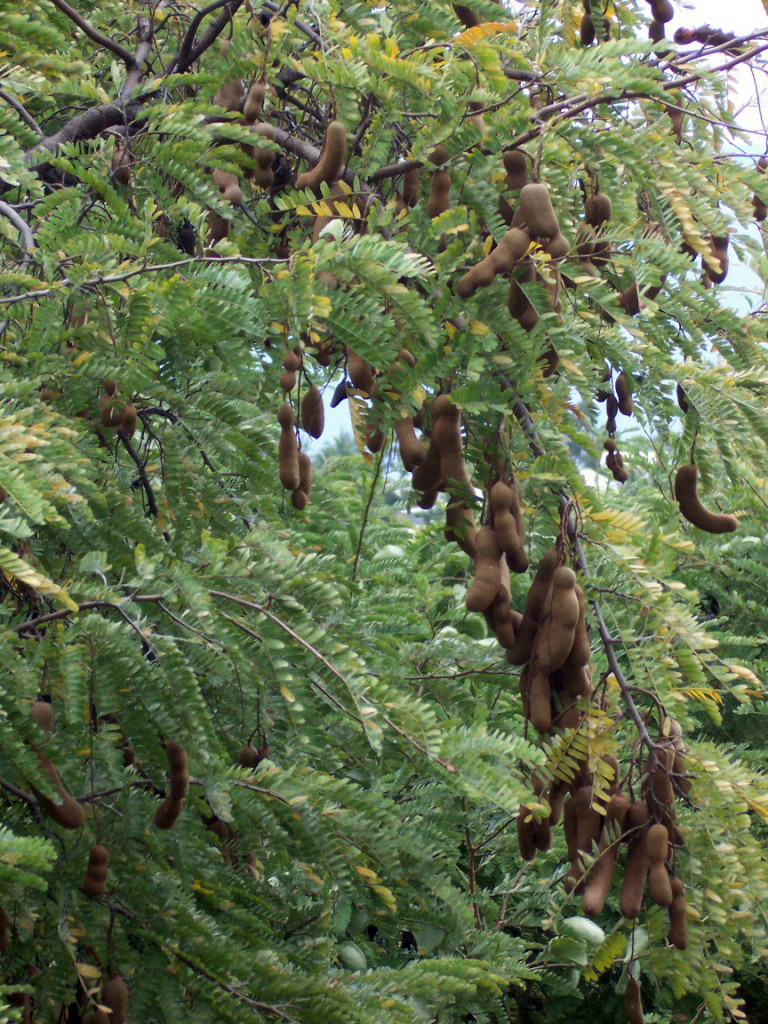 TamarindTamarindus indica
-
 ChickpeaCicer arietinum
-
 SoybeanGlycine max
Compare
Sources
Passages the profile rests on
- The bark of young trees is often smooth, whereas mature bark becomes fissured and flaky. Source passage: “The bark of younger trees is often smooth but becomes fissurred and flaky when mature” — English Wikipedia
- The bark ranges from light grey to brown, and the exposed inner bark is yellowish and fibrous. Source passage: “the bark is light grey to brown in color and the slash is yellowish and fibrous.” — English Wikipedia
- The leaves are alternate, imparipinnately compound, and have stipules and petioles. Source passage: “Leaves are alternate and imparipinnately compound with stipules and petioles present.” — English Wikipedia
- The leaflets are ovate to elliptical in shape. Source passage: “Leaflets are ovate to elliptical in shape” — English Wikipedia
- The leaflets can reach 9.5 cm in length and 5 cm in width. Source passage: “can reach up to 9.5 cm long and 5 cm wide” — English Wikipedia
- The leaflets have cuneate to rounded bases and notched to rounded tips. Source passage: “cuneate to rounded at the base and notched to rounded at the top.” — English Wikipedia
- The inflorescences are often arranged in panicles. Source passage: “The inflorescence is often arranged in panicles.” — English Wikipedia
- The heartwood is greenish brown, while the sapwood is yellow-grey. Source passage: “the heartwood is greenish brown and the sapwood yellow-grey.” — English Wikipedia
- The species occurs in woodlands and wooded grasslands. Source passage: “it is found in woodlands and wooded grassland.” — English Wikipedia
- The species is a common timber tree in the Miombo ecoregion. Source passage: “It is a common timber tree in the Miombo ecoregion.” — English Wikipedia
- The species is native to Central and Tropical Africa. Source passage: “The species is native to Central and Tropical Africa” — English Wikipedia
- The species is recorded as native in the cited study of medicinal Leguminosae plants from Angola. Source passage: “Pericopsis angolensis (Baker) Meeuwen, Papilionoideae, Native” — pmc.ncbi.nlm.nih.gov
- The wood of the species is hard and heavy. Source passage: “Its woods is hard and heavy” — English Wikipedia
- The wood is used for construction. Source passage: “Its wood is used in construction and furniture making.” — English Wikipedia
- The wood is used in furniture making. Source passage: “Its wood is used in construction and furniture making.” — English Wikipedia
Data
- Catalogue of Life, 2026-10-16 XR cc by
- Global Biodiversity Information Facility CC BY 4.0
- Wikidata CC0
- GeoNames CC BY 4.0
- Within the Catalogue of Life, this name comes from The World Checklist of Vascular Plants (WCVP): Fabaceae cc by
References
- Bull. Jard. Bot. État Bruxelles 32: 216 (1962) where the name was published
This species in other databases
- Catalogue of Life 6V4MX
- Wikidata Q11086945
- iNaturalist 428538
- World Flora Online wfo-0000212075
- GRIN 437157
Page built on 29 November 2026. See how the catalog is made and all sources and licences.
Cite this page
ScientificNames.org. (2026). Pericopsis angolensis. Retrieved November 29, 2026, from https://scientificnames.org/species/pericopsis-angolensis
“Pericopsis angolensis.” ScientificNames.org, 2026, scientificnames.org/species/pericopsis-angolensis. Accessed 29 Nov. 2026.
ScientificNames.org. “Pericopsis angolensis.” Accessed November 29, 2026. https://scientificnames.org/species/pericopsis-angolensis.
@misc{scientificnames_pericopsis_angolensis,
  author = {{ScientificNames.org}},
  title = {Pericopsis angolensis},
  year = {2026},
  url = {https://scientificnames.org/species/pericopsis-angolensis},
  note = {Accessed 2026-11-29}
}