Species · Flowering plants
Alpine Phlox Phlox pulvinata
The scientific name of the Alpine Phlox is Phlox pulvinata. It is a species of flowering plant in the family Polemoniaceae (phlox family), order Ericales.
- Scientific name
- Phlox pulvinata (Wherry) Cronquist
- Common name
- Alpine Phlox
- Genus
- Phlox
- Family
- Polemoniaceae (Phlox Family)
- Order
- Ericales
- Class
- Magnoliopsida
- Recorded in
- 1 country
- Name status
- accepted in the Catalogue of Life

Overview
Alpine phlox is a flowering plant in the genus Phlox and the family Polemoniaceae. It grows in mountainous and plateau environments, including rocky subalpine and alpine environments and exposed tundra. It forms dense, flat cushions close to the ground and produces dense carpets of white to pale pink flowers.
Written 27 November 2026 from the sources listed below. Each statement was checked against the passage it cites; statements that could not be supported were removed.
Appearance
Alpine phlox grows as a dense, flat cushion close to the ground. Its short stems bear lance-shaped leaves with fringed hairs along their edges.[1][2]
Its leaves measure no more than one centimeter in length. The flowers are white to pale pink, with tubular throats and flat corollas divided into five lobes.[3][4]
Habitat
Alpine phlox grows in mountainous and plateau environments. It occurs in rocky subalpine and alpine environments, including exposed tundra.[5][6]
The species is native to the western United States.[7]
Behaviour
Alpine phlox is among the earliest plants to flower in spring in many areas. During flowering, it produces dense carpets of flowers.[8][9]
Reproduction and life cycle
The species produces white to pale pink flowers with tubular throats measuring up to one centimeter long.[10]
Similar species
Alpine phlox was originally described as a subspecies of Phlox caespitosa. Arthur Cronquist reclassified it as a distinct species in 1959.[11][12]
Classification of the Alpine Phlox
| Kingdom | Plantae |
|---|---|
| Subkingdom | Pteridobiotina |
| Phylum | Tracheophyta |
| Class | Magnoliopsida |
| Order | Ericales |
| Family | Polemoniaceae (Phlox Family) |
| Subfamily | Polemonioideae |
| Tribe | Phlocideae |
| Genus | Phlox (Phloxes) |
| Species | Phlox pulvinata (Wherry) Cronquist |
Where the Alpine Phlox is found
Checklists and occurrence records place Phlox pulvinata in 1 country across North America. GBIF holds 1,032 georeferenced records of it.
Countries
Regions and cities with the most records
- Utah, United States 195
- Montana, United States 111
- Idaho, United States 110
- Colorado, United States 96
- Nevada, United States 84
- Wyoming, United States 83
- California, United States 38
- Oregon, United States 30
- Cottonwood Heights, United States 19
- Holladay, United States 12
- Cedar City, United States 9
- Draper, United States 9
- Highland, United States 9
- American Fork, United States 8
- Pleasant Grove, United States 8
- Lehi, United States 7
- Orem, United States 7
- Provo, United States 7
- Sandy, United States 6
- East Millcreek, United States 5
- New Mexico, United States 5
- Midvale, United States 4
- Millcreek, United States 3
- Murray, United States 3
- Salt Lake City, United States 3
- South Salt Lake, United States 3
- Washington, United States 1
Range as the checklists state it
USA (California, Colorado, Idaho, Montana, New Mexico, Nevada, Oregon, Utah, Washington State, Wyoming)
A number beside a place is its count of GBIF occurrence records. A place without a number comes from a checklist alone. Records show where a species has been observed or collected, which can include escapes and vagrants.
Common names
English
- Alpine Phlox
Synonyms
3 other scientific names have been used for this species and are now treated as synonyms of Phlox pulvinata.
- Phlox caespitosa subsp. platyphylla Wherry
- Phlox caespitosa subsp. pulvinata Wherry
- Phlox sibirica subsp. pulvinata (Wherry) W.A.Weber
Related species
-
 Creeping PhloxPhlox subulata
-
 Garden PhloxPhlox paniculata
- Cherokee PhloxPhlox stolonifera
-
 Woodland PhloxPhlox divaricata
-
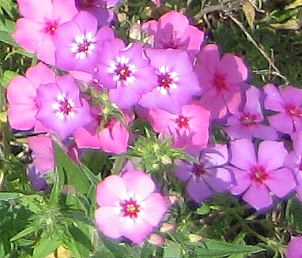 Annual PhloxPhlox drummondii
-
 Spreading PhloxPhlox diffusa
-
 Meadow PhloxPhlox maculata
-
 Downy PhloxPhlox pilosa
Compare
Questions and answers
What is the scientific name of the Alpine Phlox?
The scientific name of the Alpine Phlox is Phlox pulvinata. Written with its author, the full name is Phlox pulvinata (Wherry) Cronquist.
Which family does the Alpine Phlox belong to?
Phlox pulvinata belongs to the family Polemoniaceae, in the order Ericales and the class Magnoliopsida.
Where is the Alpine Phlox found?
Checklists and occurrence records place Phlox pulvinata in 1 country: United States.
Sources
Passages the profile rests on
- The plant grows as a dense, flat cushion close to the ground. Source passage: “It is a perennial herb taking a flat, dense, cushionlike form on the ground.” — English Wikipedia
- Its short stems bear lance-shaped leaves with fringed hairs along their edges. Source passage: “Its very short stems are lined with hair-fringed lance-shaped leaves” — English Wikipedia
- Its leaves measure no more than one centimeter in length. Source passage: “each no more than one centimeter (2⁄5 in) long.” — English Wikipedia
- The flowers are white to pale pink and have tubular throats and flat corollas divided into five lobes. Source passage: “Each white to pale pink flower has a tubular throat up to one centimeter (2⁄5 in) long and a flat five-lobed corolla.” — English Wikipedia
- The species grows in mountainous and plateau environments. Source passage: “where it grows in mountain and plateau habitat” — English Wikipedia
- The species occurs in rocky subalpine and alpine environments, including exposed tundra. Source passage: “in rocky subalpine and alpine climates, including exposed tundra habitat.” — English Wikipedia
- The species is native to the western United States. Source passage: “It is native to the western United States” — English Wikipedia
- The species is among the earliest plants to flower in spring in many areas. Source passage: “The plant is among the first to flower in the spring in many areas.” — English Wikipedia
- During flowering, the plant produces dense carpets of flowers. Source passage: “It blooms densely, forming carpets of flowers.” — English Wikipedia
- The species produces white to pale pink flowers with tubular throats measuring up to one centimeter long. Source passage: “Each white to pale pink flower has a tubular throat up to one centimeter (2⁄5 in) long” — English Wikipedia
- The species was originally described as a subspecies of Phlox caespitosa. Source passage: “Phlox pulvinata was initially described as a subspecies of Phlox caespitosa by Edgar T. Wherry in 1941.” — English Wikipedia
- The species was reclassified as a distinct species in 1959 by Arthur Cronquist. Source passage: “It was reclassified as a species in 1959 by the botanist Arthur Cronquist.” — English Wikipedia
- The species belongs to the genus Phlox and the family Polemoniaceae. Source passage: “It is part of the Phlox genus which is classified in the Polemoniaceae family.” — English Wikipedia
Data
- Catalogue of Life, 2026-10-16 XR cc by
- Global Biodiversity Information Facility CC BY 4.0
- Wikidata CC0
- GeoNames CC BY 4.0
- Wikimedia Commons per image; credit shown with each image
- Within the Catalogue of Life, this name comes from Synonymic Checklists of the Vascular Plants of the World cc by
References
- Cronquist. (Vasc. Pl. Pacif. Northwest, Pt. 4 135). Univ. Wash. Publ. Biol. 17: (Vasc. Pl. Pacif. Northwest, Pt. 4) 135 (1959). where the name was published
This species in other databases
- Catalogue of Life 77BY7
- Wikidata Q7186545
- iNaturalist 78550
- World Flora Online wfo-0001099779
- GRIN 432088
Page built on 27 November 2026. See how the catalog is made and all sources and licences.
Cite this page
ScientificNames.org. (2026). Phlox pulvinata (Alpine Phlox). Retrieved November 27, 2026, from https://scientificnames.org/species/phlox-pulvinata
“Phlox pulvinata (Alpine Phlox).” ScientificNames.org, 2026, scientificnames.org/species/phlox-pulvinata. Accessed 27 Nov. 2026.
ScientificNames.org. “Phlox pulvinata (Alpine Phlox).” Accessed November 27, 2026. https://scientificnames.org/species/phlox-pulvinata.
@misc{scientificnames_phlox_pulvinata_alpine_phlox,
  author = {{ScientificNames.org}},
  title = {Phlox pulvinata (Alpine Phlox)},
  year = {2026},
  url = {https://scientificnames.org/species/phlox-pulvinata},
  note = {Accessed 2026-11-27}
}