Species · Flowering plants
Piper fungiforme
Piper fungiforme has no English name on record in the checklists used here. It is a species of flowering plant in the family Piperaceae (peppers), order Piperales.
- Scientific name
- Piper fungiforme Spokes
- Genus
- Piper
- Family
- Piperaceae (Peppers)
- Order
- Piperales
- Class
- Magnoliopsida
- Recorded in
- 2 countries
- Name status
- accepted in the Catalogue of Life

Overview
Piper fungiforme Spokes is a flowering plant in the family Piperaceae, order Piperales and class Magnoliopsida. It is endemic to northeastern Queensland, Australia, where it occurs in two geographically separate populations. It is distinguished by its root-climbing growth, asymmetric leaves and bright red, fleshy mature infructescences.
Written 27 November 2026 from the sources listed below. Each statement was checked against the passage it cites; statements that could not be supported were removed.
Appearance
Piper fungiforme grows as a root-climbing plant. Its stems reach a maximum diameter of 2 cm.[1][2]
Its leaves range from ovate to narrowly ovate and measure up to 14 cm long and 5 cm wide. The leaf apex is acuminate, while the base is cuneate and asymmetric.[3][4][5]
The leaves have two or three pairs of lateral veins that branch from the midvein near the leaf base.[6]
The inflorescences consist of erect, cylindrical spikes arising from the leaf axils. Male flower spikes reach up to 4.5 cm in length and 0.5 cm in diameter, and are borne on peduncles approximately 0.5 cm long.[7][8][9]
Female flower spikes are shorter and wider than male spikes. They are borne on peduncles reaching up to 1 cm long.[10][11]
The fruiting structure is a cylindrical infructescence that tapers towards its distal end and reaches up to 2.5 cm long and 1.5 cm wide. Mature infructescences are bright red and fleshy.[12][13][14]
Habitat
Piper fungiforme grows in rainforest at elevations between 100 m and 1,100 m.[15]
Behaviour
The plant scrambles over rocks, logs and tree roots, and also climbs tree trunks. It occasionally reaches the forest canopy.[16][17][18]
Reproduction and life cycle
Piper fungiforme is dioecious, with functionally male and female flowers occurring on separate plants.[19]
Flowering occurs between June and September. The fruits ripen between December and March.[20][21]
Conservation
The Queensland Department of Environment and Science lists Piper fungiforme as least concern.[22]
As of 8 March 2023, the species had not been assessed by the International Union for Conservation of Nature.[23]
Classification of Piper fungiforme
| Kingdom | Plantae |
|---|---|
| Subkingdom | Pteridobiotina |
| Phylum | Tracheophyta |
| Class | Magnoliopsida |
| Order | Piperales |
| Family | Piperaceae (Peppers) |
| Subfamily | Piperoideae |
| Genus | Piper (Pepper) |
| Species | Piper fungiforme Spokes |
Where Piper fungiforme is found
Checklists and occurrence records place Piper fungiforme in 2 countries across Oceania. GBIF holds 112 georeferenced records of it.
Countries
Regions and cities with the most records
1 more country has a few records outside this range
These countries hold a few records of Piper fungiforme but lie outside the range the checklists give for it. Such records are often zoo or garden specimens, museum material or vagrants, so the species is not counted as occurring there.
Range as the checklists state it
Australia (NE-Queensland: Table Range S to the Mt Lewis - Julatten area)
A number beside a place is its count of GBIF occurrence records. A place without a number comes from a checklist alone. Records show where a species has been observed or collected, which can include escapes and vagrants.
Related species
-
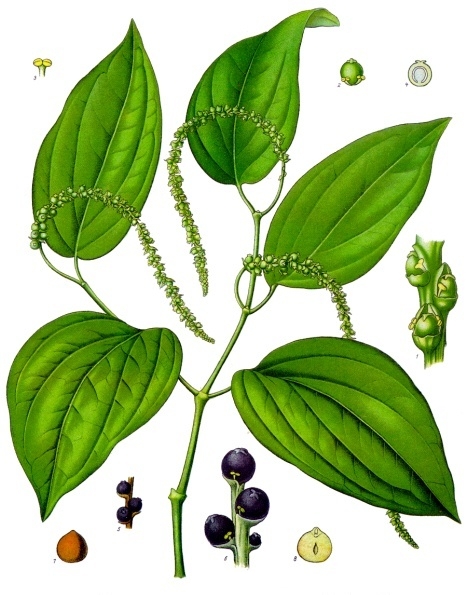 Black PepperPiper nigrum
-
 BetelPiper betle
-
 Long PepperPiper longum
-
 CubebPiper cubeba
-
 Mexican PepperleafPiper auritum
-
 Piper sarmentosum
-
Javanese Long PepperPiper retrofractum
-
 Spiked PepperPiper aduncum
Compare
Questions and answers
Where does Piper fungiforme occur?
It is endemic to northeastern Queensland, Australia, and occurs in two geographically separate populations. One extends from Kutini-Payamu (Iron Range) National Park to the McIlwraith Range, and the second extends from Ngalba Bulal National Park to Mount Lewis National Park.[24][25][26][27]
Where was the type specimen collected?
The type specimen was collected from the Leo Creek area of Cape York Peninsula.[28]
Sources
Passages the profile rests on
- Piper fungiforme grows as a root-climbing plant. Source passage: “Piper fungiforme is a root climber” — English Wikipedia
- Its stems reach a maximum diameter of 2 cm. Source passage: “maximum stem diameter of 2 cm (0.79 in).” — English Wikipedia
- Its leaves range from ovate to narrowly ovate in shape. Source passage: “The leaves are ovate to narrowly ovate” — English Wikipedia
- Its leaves measure up to 14 cm long and 5 cm wide. Source passage: “measuring up to 14 cm (5.5 in) long by 5 cm (2.0 in) wide.” — English Wikipedia
- Its leaf apex is acuminate, while its base is cuneate and asymmetric. Source passage: “The apex is acuminate and the base cuneate and asymmetric.” — English Wikipedia
- Its leaves have two or three pairs of lateral veins that branch from the midvein near the leaf base. Source passage: “There are 2 or 3 pairs of lateral veins, all of which divert from the midvein in the basal portion of the leaf.” — English Wikipedia
- Its inflorescences consist of erect, cylindrical spikes arising from the leaf axils. Source passage: “The inflorescences are erect cylindrical spikes produced in the leaf axils” — English Wikipedia
- Male flower spikes reach up to 4.5 cm in length and 0.5 cm in diameter. Source passage: “male spikes measure up to 4.5 cm (1.8 in) long by 0.5 cm (0.20 in) diameter” — English Wikipedia
- Male flower spikes are borne on peduncles approximately 0.5 cm long. Source passage: “are carried on a peduncle around 0.5 cm (0.20 in) long” — English Wikipedia
- Female flower spikes are shorter and wider than male spikes. Source passage: “female spikes are shorter and wider” — English Wikipedia
- Female flower spikes are borne on peduncles reaching up to 1 cm long. Source passage: “female spikes are shorter and wider on a peduncle up to 1 cm (0.39 in) long.” — English Wikipedia
- Its fruiting structure is a cylindrical infructescence that tapers towards its distal end. Source passage: “It is cylindrical, tapering at the distal end” — English Wikipedia
- Its infructescence reaches up to 2.5 cm long and 1.5 cm wide. Source passage: “measures up to 2.5 cm (0.98 in) long by 1.5 cm (0.59 in) wide.” — English Wikipedia
- Mature infructescences are bright red and fleshy. Source passage: “When mature it is bright red and fleshy.” — English Wikipedia
- The species grows in rainforest at elevations between 100 m and 1,100 m. Source passage: “It grows in rainforest at altitudes from 100 m (330 ft) to 1,100 m (3,600 ft)” — English Wikipedia
- The plant scrambles over rocks, logs and tree roots. Source passage: “scrambling over rocks, logs and tree roots” — English Wikipedia
- The plant also climbs tree trunks. Source passage: “and also climbing tree trunks.” — English Wikipedia
- The plant occasionally reaches the forest canopy. Source passage: “It will occasionally reach the canopy.” — English Wikipedia
- This species is dioecious, with functionally male and female flowers occurring on separate plants. Source passage: “This species is dioecious, meaning that functionally female and functionally male flowers are borne on separate plants.” — English Wikipedia
- Flowering occurs between June and September. Source passage: “Flowering occurs from June to September” — English Wikipedia
- The fruits ripen between December and March. Source passage: “fruit ripen from December to March.” — English Wikipedia
- The Queensland Department of Environment and Science lists this species as least concern. Source passage: “This species is listed by the Queensland Department of Environment and Science as least concern.” — English Wikipedia
- As of 8 March 2023, the species had not been assessed by the International Union for Conservation of Nature. Source passage: “As of 8 March 2023, it has not been assessed by the International Union for the Conservation of Nature (IUCN).” — English Wikipedia
- Piper fungiforme is endemic to northeastern Queensland, Australia. Source passage: “Piper fungiforme is a plant in the family Piperaceae endemic to northeast Queensland, Australia.” — English Wikipedia
- The species occurs in two geographically separate populations in northeastern Queensland. Source passage: “Piper fungiforme is found in northeastern Queensland in two disjunct populations” — English Wikipedia
- One population extends from Kutini-Payamu (Iron Range) National Park to the McIlwraith Range. Source passage: “the first from Kutini-Payamu (Iron Range) National Park to the McIlwraith Range” — English Wikipedia
- The second population extends from Ngalba Bulal National Park to Mount Lewis National Park. Source passage: “the other from Ngalba Bulal National Park (about 30 km (19 mi) south of Cooktown) to the Mount Lewis National Park.” — English Wikipedia
- The type specimen was collected from the Leo Creek area of Cape York Peninsula. Source passage: “The type specimen is a collection made by Bernard Hyland from the Leo creek area of Cape York Peninsula.” — English Wikipedia
- The species was formally described by T.M. Spokes. Source passage: “Piper fungiforme was first formally described by T.M. Spokes” — English Wikipedia
- The formal description of this species was published in the second edition of Flora of Australia in 2007. Source passage: “published in edition 2 of Flora of Australia in 2007.” — English Wikipedia
- The specific epithet fungiforme is Latin for mushroom-headed. Source passage: “The species epithet fungiforme is Latin for "mushroom-headed"” — English Wikipedia
- The species name refers to the shape of the connective in the stamens of its male flower spikes. Source passage: “which is a reference to the "shape of the connective in stamens of the male spikes".” — English Wikipedia
Data
- Catalogue of Life, 2026-10-16 XR cc by
- Global Biodiversity Information Facility CC BY 4.0
- Wikidata CC0
- GeoNames CC BY 4.0
- Wikimedia Commons per image; credit shown with each image
- Within the Catalogue of Life, this name comes from Synonymic Checklists of the Vascular Plants of the World cc by
References
- Spokes. (2007). Fl. Australia 2: 457 (2007). where the name was published
This species in other databases
Page built on 29 November 2026. See how the catalog is made and all sources and licences.
Cite this page
ScientificNames.org. (2026). Piper fungiforme. Retrieved November 29, 2026, from https://scientificnames.org/species/piper-fungiforme
“Piper fungiforme.” ScientificNames.org, 2026, scientificnames.org/species/piper-fungiforme. Accessed 29 Nov. 2026.
ScientificNames.org. “Piper fungiforme.” Accessed November 29, 2026. https://scientificnames.org/species/piper-fungiforme.
@misc{scientificnames_piper_fungiforme,
  author = {{ScientificNames.org}},
  title = {Piper fungiforme},
  year = {2026},
  url = {https://scientificnames.org/species/piper-fungiforme},
  note = {Accessed 2026-11-29}
}