Species · Flowering plants
Piper kelleyi
Piper kelleyi has no English name on record in the checklists used here. It is a species of flowering plant in the family Piperaceae (peppers), order Piperales.
- Scientific name
- Piper kelleyi Tepe
- Genus
- Piper
- Family
- Piperaceae (Peppers)
- Order
- Piperales
- Class
- Magnoliopsida
- Recorded in
- 2 countries
- Name status
- accepted in the Catalogue of Life

Overview
Piper kelleyi is a wild relative of black pepper that grows in Ecuador and Peru. The species is named in honor of American botanist Walter Almond Kelley and is a member of the Macrostachys clade of the pepper genus. Piper kelleyi features long, white, pendulous inflorescences and large leaves. It is mostly restricted to montane elevations and produces secondary compounds that deter most herbivores.
Classification of Piper kelleyi
| Kingdom | Plantae |
|---|---|
| Subkingdom | Pteridobiotina |
| Phylum | Tracheophyta |
| Class | Magnoliopsida |
| Order | Piperales |
| Family | Piperaceae (Peppers) |
| Subfamily | Piperoideae |
| Genus | Piper (Pepper) |
| Species | Piper kelleyi Tepe |
Origin of the name. Etymology. Piper kelleyi is named for Dr. Walter Almond Kelley (1942 - 2010). Dr. Kelley spent a good portion of his career focusing on taxonomy within the genus Cryptantha (Boraginaceae; e. g., Kelley and Wilken 1993), but became fascinated with Piper when he visited Costa Rica in 1997 to work with Piper species at La Selva Biological Station. He was interested generally in angiosperm evolution, evolution of unique morphologies, stem anatomy, and tropical biology and spent years working with Piper from Costa Rica and Ecuador (e. g., Tepe et al. 2009). He examined the unique morphology of Piper, and documented Piper stem anatomy. He had made considerable progress on understanding phyllotaxy and the notoriously complicated stem anatomy in Piper, and produced two substantive manuscripts on Piper biology. His extensive observations on Piper morphology, included the following comments: There are three basic patterns of sympodial stem tip and leaf primordial (STLP) enclosure and protection in Piper. The first common pattern has the sympodial STLP enclosed in a prophyll only. A second common pattern has the sympodial STLP enclosed in a prophyll and a stipular wrap-over of the terminal subtending leaf. A third, rarer pattern occurs when the prophyll has become greatly reduced so that the sympodial STLP appears to be enclosed only by a stipular wrap-over of the terminal subtending leaf (W. A. Kelley, field journal). Piper kelleyi exhibits the third of these patterns. He established the herbarium (MESA) at Colorado Mesa University, Grand Junction, Colorado (CMU), and cultivated a high diversity of Piper species at the CMU greenhouse, including Piper kelleyi. These plants are still used for research today.
Where Piper kelleyi is found
Checklists and occurrence records place Piper kelleyi in 2 countries across South America. GBIF holds 24 georeferenced records of it.
Countries
Regions and cities with the most records
- Napo, Ecuador 13
- Loja, Ecuador 5
- Zamora, Ecuador 5
- Zamora Chinchipe, Ecuador 5
- Orellana Province, Ecuador 3
Range as the checklists state it
Ecuador; Peru
A number beside a place is its count of GBIF occurrence records. A place without a number comes from a checklist alone. Records show where a species has been observed or collected, which can include escapes and vagrants.
Related species
-
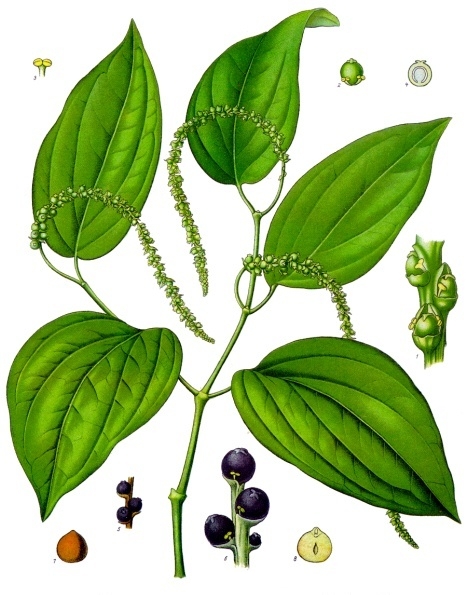 Black PepperPiper nigrum
-
 BetelPiper betle
-
 Long PepperPiper longum
-
 CubebPiper cubeba
-
 Mexican PepperleafPiper auritum
-
 Piper sarmentosum
-
Javanese Long PepperPiper retrofractum
-
 Spiked PepperPiper aduncum
Compare
Sources
Data
- Catalogue of Life, 2026-10-16 XR cc by
- Global Biodiversity Information Facility CC BY 4.0
- Wikidata CC0
- English Wikipedia CC BY-SA 4.0
- GeoNames CC BY 4.0
- Wikimedia Commons per image; credit shown with each image
- Within the Catalogue of Life, this name comes from Synonymic Checklists of the Vascular Plants of the World cc by
References
- Tepe. (2014). PhytoKeys 34: 21 (2014). where the name was published
This species in other databases
Page built on 27 November 2026. See how the catalog is made and all sources and licences.
Cite this page
ScientificNames.org. (2026). Piper kelleyi. Retrieved November 27, 2026, from https://scientificnames.org/species/piper-kelleyi
“Piper kelleyi.” ScientificNames.org, 2026, scientificnames.org/species/piper-kelleyi. Accessed 27 Nov. 2026.
ScientificNames.org. “Piper kelleyi.” Accessed November 27, 2026. https://scientificnames.org/species/piper-kelleyi.
@misc{scientificnames_piper_kelleyi,
  author = {{ScientificNames.org}},
  title = {Piper kelleyi},
  year = {2026},
  url = {https://scientificnames.org/species/piper-kelleyi},
  note = {Accessed 2026-11-27}
}