Species · Flowering plants
Indian Mesquite Prosopis cineraria
The scientific name of the Indian Mesquite is Prosopis cineraria. It is a species of flowering plant in the family Fabaceae (bean), order Fabales.
- Scientific name
- Prosopis cineraria (L.) Druce
- Common name
- Indian Mesquite
- Genus
- Prosopis
- Family
- Fabaceae (Bean)
- Order
- Fabales
- Class
- Magnoliopsida
- Recorded in
- 13 countries
- Name status
- accepted in the Catalogue of Life

Overview
Indian mesquite is a small tree with bipinnate leaves, thorned branches and small creamy-yellow flowers. It is native to arid parts of Western Asia and the Indian subcontinent and is established as an introduced species in parts of Southeast Asia, including Indonesia. It can survive extreme drought and tolerates highly alkaline and saline environments.
Written 26 November 2026 from the sources listed below. Each statement was checked against the passage it cites; statements that could not be supported were removed.
Appearance
Indian mesquite is classified as either a shrub or a tree. It grows to a height of 3–5 metres and has thorned branches and small creamy-yellow flowers.[1][2][3]
Its bipinnate leaves have seven to fourteen leaflets arranged on each of one to three pinnae.[1][4]
Habitat
Indian mesquite occurs in extremely arid environments receiving as little as 15 centimetres of annual rainfall. Its presence indicates a deep water table.[5][6]
It tolerates highly alkaline and saline environments and can survive extreme drought.[7][8]
Uses
The pods of Indian mesquite, known as singhri or sangri, are used in traditional dishes such as bhaaji and kadhi in the Thar Desert. Singhri is a traditional food of the Thar Desert.[9][10]
Indian mesquite is used as a source of fuel and fodder. Its leaves are traditionally used to relieve mouth ulcers by chewing them to release their juice in the mouth.[11][12][13]
Indian mesquite is the state tree of Rajasthan, where it is called khejri, and of Telangana, where it is called jammi.[14][15]
Conservation
The Al Ghaf Conservation Reserve is located in the desert village of Nazwa in the United Arab Emirates.[16]
Classification of the Indian Mesquite
| Kingdom | Plantae |
|---|---|
| Subkingdom | Pteridobiotina |
| Phylum | Tracheophyta |
| Class | Magnoliopsida |
| Order | Fabales |
| Family | Fabaceae (Bean) |
| Genus | Prosopis (Mesquite) |
| Species | Prosopis cineraria (L.) Druce |
Where the Indian Mesquite is found
Checklists and occurrence records place Prosopis cineraria in 13 countries across Asia. GBIF holds 666 georeferenced records of it.
Countries where it is native or its origin is not stated
- Afghanistan
- Bahrain 6
- India 351
- Iran 21
- Kuwait 1
- Oman 43
- Pakistan 44
- Qatar 5
- Saudi Arabia 9
- United Arab Emirates 175
- Yemen 11
Countries where it has been introduced
Regions and cities with the most records
- Rajasthan, India 120
- Dubai, United Arab Emirates 90
- Warīsān, United Arab Emirates 47
- Bur Dubai, United Arab Emirates 43
- Sharjah, United Arab Emirates 41
- Gujarat, India 38
- Halwan, United Arab Emirates 37
- Sharjah, United Arab Emirates 33
- Dubai, United Arab Emirates 31
- The Palm Jumeirah, United Arab Emirates 31
- Jaipur, India 29
- Al Sajaah, United Arab Emirates 23
- Jebel Ali, United Arab Emirates 22
- Ajman, United Arab Emirates 21
- Abu Dhabi, United Arab Emirates 20
- Ahmedabad, India 16
- Bopal, India 14
- Fujairah, United Arab Emirates 14
- Sarkhej, India 14
- Telangana, India 13
- Hyderabad, India 12
- Kukatpally, India 12
- Maharashtra, India 12
- Malkajgiri, India 12
- Punjab, Pakistan 12
- Sānand, India 12
- Quthbullapur, India 11
- Amīnpur, India 10
- Bolārum, India 10
- Bāspalli, India 10
- Bīdāsar, India 10
- Chhāpar, India 10
- Fujairah, United Arab Emirates 10
- Khawr Fakkān, United Arab Emirates 10
- Kompalli, India 10
- Lahbab, United Arab Emirates 10
1 more country has a few records outside this range
These countries hold a few records of Prosopis cineraria but lie outside the range the checklists give for it. Such records are often zoo or garden specimens, museum material or vagrants, so the species is not counted as occurring there.
A number beside a place is its count of GBIF occurrence records. A place without a number comes from a checklist alone. Records show where a species has been observed or collected, which can include escapes and vagrants.
Common names
English
- Indian Mesquite
- Jandi
Names in 9 other languages
- Arabic
- ghaf
- Chinese
- 牧豆樹
- Gujarati
- ખીજડો
- Hebrew
- ינבוט מאפיר
- Hindi
- jand, janum-chettu, khejri, खेजड़ी
- Malayalam
- വന്നി
- Marathi
- शमी
- Tamil
- வன்னி (மரம்)
- san
- वह्नि
Synonyms
8 other scientific names have been used for this species and are now treated as synonyms of Prosopis cineraria.
- Acacia cineraria (L.) Willd.
- Adenanthera aculeata (J.Koenig ex Roxb.) W.Hunter
- Adenanthera aculeata Roxb.
- Mimosa cineraria L.
- Prosopis aculeata J.Koenig ex Roxb.
- Prosopis spicata Burm.f.
- Prosopis spicigera L.
- Mimosa cinerea L. ambiguous synonym
Related species
-
 Syrian MesquiteProsopis farcta
- Prosopis koelziana
-
 PeanutArachis hypogaea
-
 LiquoriceGlycyrrhiza glabra
-
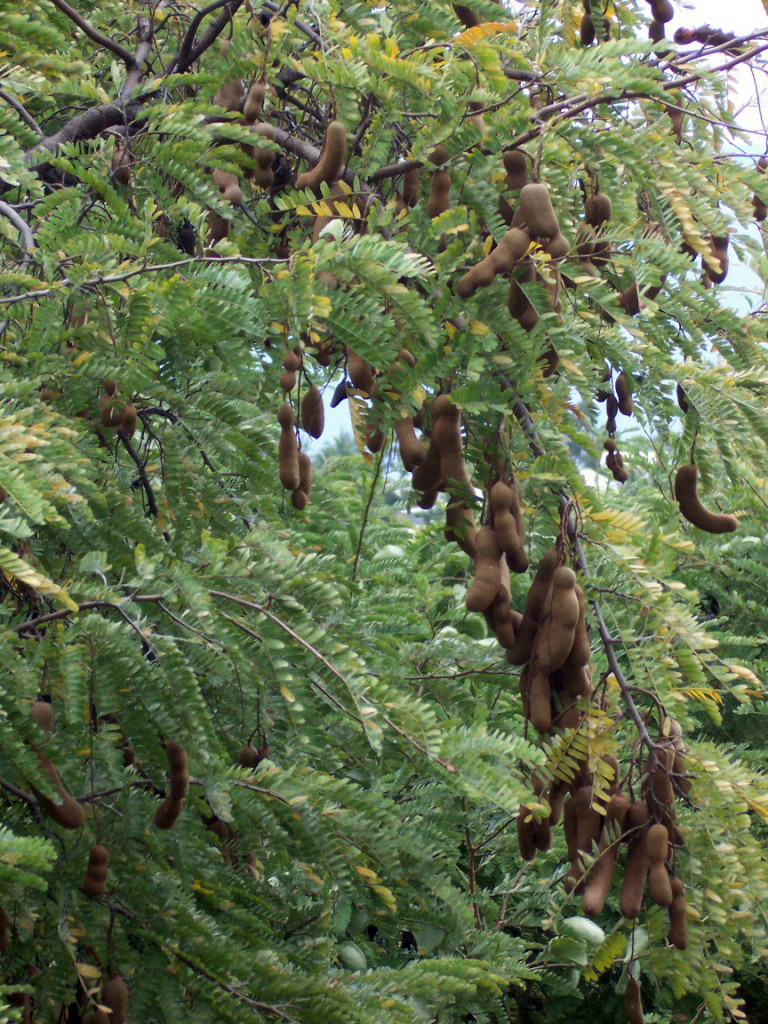 TamarindTamarindus indica
-
 ChickpeaCicer arietinum
-
 SoybeanGlycine max
-
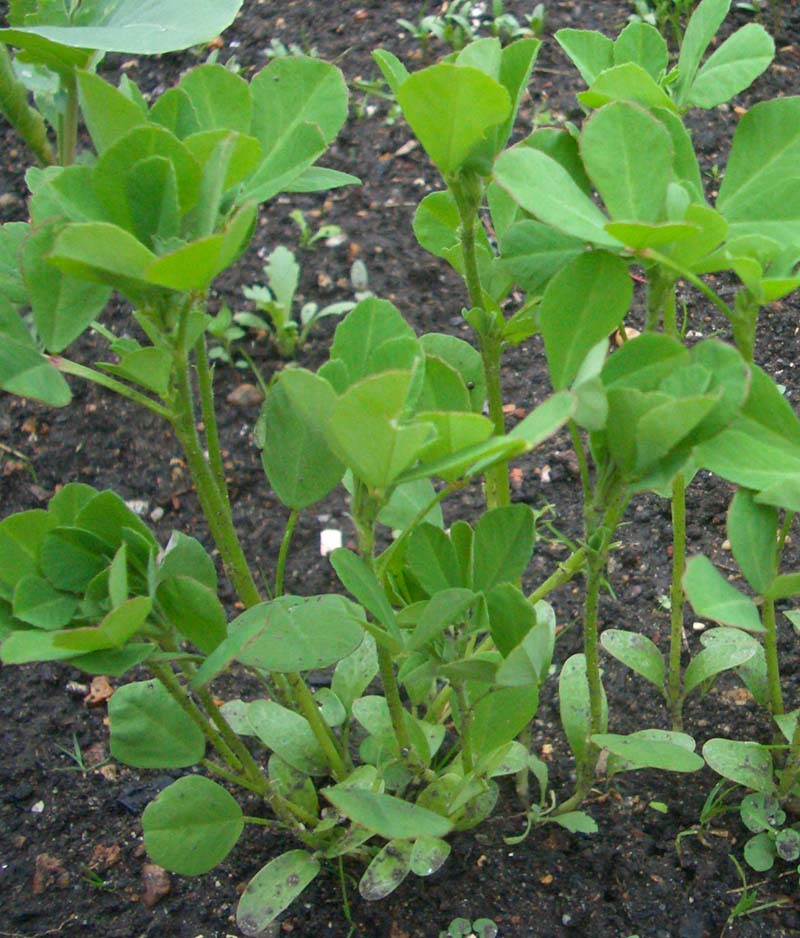 FenugreekTrigonella foenum-graecum
Compare
Questions and answers
What is the scientific name of the Indian Mesquite?
The scientific name of the Indian Mesquite is Prosopis cineraria. Written with its author, the full name is Prosopis cineraria (L.) Druce.
Which family does the Indian Mesquite belong to?
Prosopis cineraria belongs to the family Fabaceae, in the order Fabales and the class Magnoliopsida.
Where is the Indian Mesquite found?
Checklists and occurrence records place Prosopis cineraria in 13 countries, including India, United Arab Emirates, Pakistan, Oman, Iran and Yemen.
What other names does the Indian Mesquite have?
Prosopis cineraria is also known in English as Jandi.
Sources
Passages the profile rests on
- Prosopis cineraria is a small tree with bipinnate leaves, thorned branches and small creamy-yellow flowers. Source passage: “P. cineraria is a small tree, ranging in height from 3–5 m (9.8–16.4 ft). The leaves are bipinnate, with seven to fourteen leaflets on each of one to three pinnae. Branches are thorned along the internodes. Flowers are small and creamy-yellow and followed by seeds in pods.” — English Wikipedia
- Prosopis cineraria grows to a height of 3–5 metres. Source passage: “P. cineraria is a small tree, ranging in height from 3–5 m (9.8–16.4 ft).” — English Wikipedia
- Prosopis cineraria is classified as either a shrub or a tree. Source passage: “It is a shrub or tree” — powo.science.kew.org
- The leaves of Prosopis cineraria have seven to fourteen leaflets arranged on each of one to three pinnae. Source passage: “The leaves are bipinnate, with seven to fourteen leaflets on each of one to three pinnae.” — English Wikipedia
- Prosopis cineraria occurs in extremely arid environments receiving as little as 15 centimetres of annual rainfall. Source passage: “The tree is found in extremely arid conditions, with rainfall as low as 15 cm (5.9 in) annually;” — English Wikipedia
- The presence of Prosopis cineraria indicates a deep water table. Source passage: “but is indicative of the presence of a deep water table.” — English Wikipedia
- Prosopis cineraria tolerates highly alkaline and saline environments. Source passage: “P. cineraria has demonstrated a tolerance of highly alkaline and saline environments.” — English Wikipedia
- Prosopis cineraria can survive extreme drought. Source passage: “It can survive extreme drought.” — English Wikipedia
- The pods of Prosopis cineraria, known as singhri or sangri, are used in traditional dishes such as bhaaji and kadhi in the Thar Desert. Source passage: “In Thar Desert the singhri or sangri pods growing on Prosopis cineraria are used in various types of bhaaji and kadhi.” — English Wikipedia
- Singhri made from Prosopis cineraria is a traditional food of the Thar Desert. Source passage: “Singhri is one of the traditional cuisines of the Thar Desert.” — English Wikipedia
- Prosopis cineraria is used as a source of fuel and fodder. Source passage: “diet in the desert of Rajasthan, besides its use as fuel and fodder.” — academia.edu
- Prosopis cineraria leaves are used traditionally to relieve mouth ulcers. Source passage: “Leaves of this tree can ameliorate mouth ulcers.” — English Wikipedia
- Chewing Prosopis cineraria leaves releases their juice in the mouth and can relieve mouth ulcers. Source passage: “Chewing its leaves for a few minutes, so releasing the juice of the leaves in the mouth can relieve the ulcers.” — English Wikipedia
- Prosopis cineraria is the state tree of Rajasthan, where it is called khejri. Source passage: “Prosopis cineraria is also the state tree of Rajasthan (where it is known as khejri)” — English Wikipedia
- Prosopis cineraria is the state tree of Telangana, where it is called jammi. Source passage: “and Telangana (where it is known as jammi) in India.” — English Wikipedia
- The Al Ghaf Conservation Reserve is located in the desert village of Nazwa in the United Arab Emirates. Source passage: “The desert village of Nazwa in the UAE is home to the Al Ghaf Conservation Reserve.” — English Wikipedia
Data
- Catalogue of Life, 2026-10-16 XR cc by
- Global Biodiversity Information Facility CC BY 4.0
- Wikidata CC0
- GeoNames CC BY 4.0
- Wikimedia Commons per image; credit shown with each image
- Within the Catalogue of Life, this name comes from The World Checklist of Vascular Plants (WCVP): Fabaceae cc by
References
- Rep. Bot. Exch. Club Soc. Brit. Isles 3: 422 (1913 publ. 1914) where the name was published
This species in other databases
- Catalogue of Life 77XK8
- Wikidata Q1136117
- iNaturalist 131133
- World Flora Online wfo-0000185047
- GRIN 29749
Page built on 27 November 2026. See how the catalog is made and all sources and licences.
Cite this page
ScientificNames.org. (2026). Prosopis cineraria (Indian Mesquite). Retrieved November 27, 2026, from https://scientificnames.org/species/prosopis-cineraria
“Prosopis cineraria (Indian Mesquite).” ScientificNames.org, 2026, scientificnames.org/species/prosopis-cineraria. Accessed 27 Nov. 2026.
ScientificNames.org. “Prosopis cineraria (Indian Mesquite).” Accessed November 27, 2026. https://scientificnames.org/species/prosopis-cineraria.
@misc{scientificnames_prosopis_cineraria_indian_mesquite,
  author = {{ScientificNames.org}},
  title = {Prosopis cineraria (Indian Mesquite)},
  year = {2026},
  url = {https://scientificnames.org/species/prosopis-cineraria},
  note = {Accessed 2026-11-27}
}