Species · Reptiles
Speckled Sand Racer Psammophis punctulatus
The scientific name of the Speckled Sand Racer is Psammophis punctulatus. It is a species of reptile in the family Psammophiidae (sand snakes), order Squamata. The name dates from 1854.
- Scientific name
- Psammophis punctulatus Duméril, Bibron & Duméril, 1854
- Common name
- Speckled Sand Racer
- Genus
- Psammophis
- Family
- Psammophiidae (Sand Snakes)
- Order
- Squamata
- Class
- Reptilia
- Red List category
- LC Least Concern
- Recorded in
- 8 countries
- Name status
- accepted in the Catalogue of Life

Overview
Psammophis punctulatus inhabits dry savanna, semi-desert and scrubland. It has a reddish or orange head and three longitudinal black stripes.
Written 26 November 2026 from the sources listed below. Each statement was checked against the passage it cites; statements that could not be supported were removed.
Appearance
The Speckled Sand Racer has a long, slender, cylindrical body. Its head is dull red or orange on the upper surface and white underneath.[1][2]
Adults have a yellow body, while juveniles may be grey. Three black longitudinal stripes run along the body, and the white or grey underside and flanks are marked with black speckles.[3][4]
Adults typically measure between 1 and 1.4 metres in total length. The largest recorded specimens reach 1.9 metres, and the tail accounts for approximately one third of the total length.[5][6][7]
Habitat
The Speckled Sand Racer inhabits dry savanna, semi-desert and scrubland, from sea level to approximately 1,400 metres in elevation.[8][9]
It tolerates some human-modified environments, including agricultural land and urban gardens or hedges.[10]
Diet
The Speckled Sand Racer primarily feeds on lizards, including agamas, lacertids and skinks. Its diet can also include other small vertebrates.[11][12]
Behaviour
The Speckled Sand Racer is active during daylight hours, moves rapidly and is partially arboreal. During daylight, it actively pursues prey on the ground.[13][14][15]
It also hunts by waiting in trees and bushes to ambush prey. At night, it typically rests beneath groundcover or in holes, and sometimes sleeps in tree branches or hollows.[16][17]
Reproduction and life cycle
The Speckled Sand Racer is oviparous and reproduces by laying eggs. Females lay clutches containing between three and twelve eggs.[18][19]
Classification of the Speckled Sand Racer
| Kingdom | Animalia |
|---|---|
| Phylum | Chordata |
| Subphylum | Vertebrata |
| Infraphylum | Gnathostomata |
| Parvphylum | Osteichthyes |
| Megaclass | Tetrapoda |
| Class | Reptilia (Reptile) |
| Order | Squamata (Snakes) |
| Suborder | Serpentes (Snakes) |
| Infraorder | Alethinophidia |
| Family | Psammophiidae (Sand Snakes) |
| Genus | Psammophis (Old World Sand Snakes) |
| Species | Psammophis punctulatus Duméril, Bibron & Duméril, 1854 |
Where the Speckled Sand Racer is found
Checklists and occurrence records place Psammophis punctulatus in 8 countries across Africa. GBIF holds 57 georeferenced records of it.
Countries
Regions and cities with the most records
- Kitui County, Kenya 5
- Balbala, Djibouti 3
- Djibouti, Djibouti 3
- Hargeysa, Somalia 3
- Woqooyi Galbeed, Somalia 3
Range as the checklists state it
S Egypt, Sudan (Jumhūriyyat), Republic of South Sudan (RSS), N Ethiopia, Eritrea, Djibouti, N Somalia
A number beside a place is its count of GBIF occurrence records. A place without a number comes from a checklist alone. Records show where a species has been observed or collected, which can include escapes and vagrants.
Common names
English
- Speckled Sand Racer
- Sand Snake
Names in 4 other languages
- German
- Gepunktete Sandrennnnatter
- Portuguese
- Corredora-da-areia-pintada
- Russian
- Крапчатая песчаная змея
- dav
- ndezi ya ng'ombe
Subspecies and varieties
- Psammophis punctulatus punctulatus subspecies
Related species
-
 Schokari Sand RacerPsammophis schokari
-
 Steppe Ribbon RacerPsammophis lineolatus
-
 Olive Grass SnakePsammophis mossambicus
-
 Western Yellow-bellied Sand SnakePsammophis subtaeniatus
-
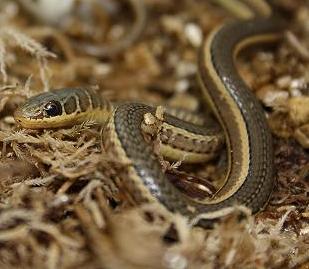 Hissing Sand SnakePsammophis sibilans
-
 Cape Sand SnakePsammophis leightoni
-
 Indian Sand SnakePsammophis condanarus
- Pakistan Sand RacerPsammophis leithii
Compare
Questions and answers
What is the scientific name of the Speckled Sand Racer?
The scientific name of the Speckled Sand Racer is Psammophis punctulatus. Written with its author, the full name is Psammophis punctulatus Duméril, Bibron & Duméril, 1854.
Which family does the Speckled Sand Racer belong to?
Psammophis punctulatus belongs to the family Psammophiidae, in the order Squamata and the class Reptilia.
Where is the Speckled Sand Racer found?
Checklists and occurrence records place Psammophis punctulatus in 8 countries, including Kenya, Djibouti, Ethiopia, Somalia, Sudan and Tanzania.
What is the conservation status of the Speckled Sand Racer?
The IUCN Red List category recorded for Psammophis punctulatus is Least Concern (LC).
What other names does the Speckled Sand Racer have?
Psammophis punctulatus is also known in English as Sand Snake.
Sources
Passages the profile rests on
- The species has a long, slender, cylindrical body with a reddish or orange head and three longitudinal black stripes. Source passage: “The body is slim and cylindrical with a very long, thin tail making up one third of the total length.” — English Wikipedia
- The head is dull red or orange on its upper surface and white underneath. Source passage: “The elongate head is dull red or orange above and white below with rounded pupils and golden-yellow irises.” — English Wikipedia
- The body is yellow in adults and may be grey in juveniles, with three black longitudinal stripes. Source passage: “The body is yellow, or grey in juveniles, with three black longitudinal stripes.” — English Wikipedia
- The underside and flanks are white or grey and marked with black speckles. Source passage: “The underside and flanks are white or grey with black speckles.” — English Wikipedia
- Adults typically measure between 1 and 1.4 metres in total length. Source passage: “Adults typically grow to 1–1.4 m (3 ft 3 in – 4 ft 7 in) long” — English Wikipedia
- The largest recorded specimens reach 1.9 metres in length. Source passage: “with the largest specimens reaching 1.9 m (6 ft 3 in) long.” — English Wikipedia
- The tail accounts for approximately one third of the snake's total length. Source passage: “a very long, thin tail making up one third of the total length.” — English Wikipedia
- The species inhabits dry savanna, semi-desert and scrubland. Source passage: “It inhabits dry savanna, semi-desert, and scrubland habitats” — English Wikipedia
- Its habitat range extends from sea level to approximately 1,400 metres in elevation. Source passage: “from sea level to altitudes of around 1,400 m (4,600 ft).” — English Wikipedia
- The species tolerates some human-modified environments, including agricultural land and urban gardens or hedges. Source passage: “It is somewhat tolerant of human-modified habitats such as agricultural land and urban areas with gardens or hedges.” — English Wikipedia
- The species primarily feeds on lizards, including agamas, lacertids and skinks. Source passage: “It primarily feeds on lizards such as agamas, lacertids, and skinks” — English Wikipedia
- Its diet can also include other small vertebrates. Source passage: “but is also capable of hunting other small vertebrates.” — English Wikipedia
- The species is active during daylight hours. Source passage: “It is a large and fast-moving diurnal species” — English Wikipedia
- The species is partially arboreal and moves rapidly. Source passage: “Psammophis punctulatus is a fast-moving and partially arboreal diurnal species.” — English Wikipedia
- During daylight, the snake actively pursues prey on the ground. Source passage: “During the day it is known to actively hunt prey on the ground as a pursuit predator” — English Wikipedia
- The snake also hunts by waiting in trees and bushes to ambush prey. Source passage: “and to wait in trees and bushes as an ambush predator.” — English Wikipedia
- At night, the species typically rests beneath groundcover or in holes, and sometimes sleeps in tree branches or hollows. Source passage: “At night it typically sleeps under groundcover, in holes, or sometimes in tree branches or hollows.” — English Wikipedia
- The species is oviparous and reproduces by laying eggs. Source passage: “It is an oviparous species” — English Wikipedia
- Females lay clutches containing between three and twelve eggs. Source passage: “laying clutches of three to twelve eggs at a time.” — English Wikipedia
Data
- Catalogue of Life, 2026-10-16 XR cc by
- Global Biodiversity Information Facility CC BY 4.0
- Wikidata CC0
- GeoNames CC BY 4.0
- Wikimedia Commons per image; credit shown with each image
- Within the Catalogue of Life, this name comes from The Reptile Database cc by
References
- Duméril, A. M. C., Bibron, G. & DUMÉRIL, A. H. A.,. (1854). Erpétologie générale ou histoire naturelle complète des reptiles. Tome septième. Deuxième partie, comprenant l’histoire des serpents venimeux. Paris, Librairie Encyclopédique de Roret: I-Xii + 781-1536.
- Peters, W. C. H. (1878). Über die von Hrn. J. M. Hildebrandt während seiner letzten ostafrikanischen Reise gesammelten Säugethiere und Amphibien. Mber. Akad. Wiss. Berlin 1878: 194-209.
- Boulenger, G. A. (1895). Rettili e Batraci. in, Esplorazione del Giuba e dei suoi Affluenti compiuta dal Cap. V. Bottego durante gli Anni 1892-93 sotto gli auspicii della Società Geografica Italiana. Annali Mus. Civ. Stor. Nat. Giacomo Doria (2) 15: 9-18.
- Werner, F. (1919). Wissenschaftliche Ergebnisse der mit Unterstützung der Kaiserlichen Akademie der Wissenschaften in Wien aus der Erbschaft Treitl von F. Werner unternommenen zoologischen Expedition nach dem Anglo-Aegyptischen Sudan (Kordofan) 1914. IV. Bearbeitung der Fische, Amphibien und Reptilien. Denkschr. Akad. Wiss Wien, Math.-Naturw. Klasse 96: 437-509.
- Scortecci, G. (1929). Rettili dell’Eritrea esistenti nelle Collezioni del Museo Civico de Milano. Atti Della Società Italiana Di Scienze Naturali, E Del Museo Civico Di Storia Naturale, Milano 67 (3-4): 290-339 [1928].
- Scortecci, G. (1939). Spedizione zoologica del Marchese Saverio patrizi nel Basso Giuba e nell’Oltre Giuba. Giugno-agosto 1934. XII. Rettili Ofidi. Annali Mus. Civ. Stor. Nat. Giacomo Doria 58: 263-291.
- Corkill, N. L. and Cochrane, J. A. (1966). The snakes of the Arabian Peninsula and Socotra. J. Bombay Nat. Hist. Soc. 62 (3): 475-506 (1965).
- Pitman, C. R. S. (1974). A guide to the snakes of Uganda. Codicote, Wheldon & Wesley, L., 290 Pp.
- Lanza, B. (1990). Amphibians and reptiles of the Somali Democratic Republic: check list and biogeography. Biogeographia, 14: 407-465 [1988].
- Broadley, D. G., & HOWELL, K. M. (1991). A check list of the reptiles of Tanzania, with synoptic keys. Syntarsus 1: 1—70.
- Largen, M. J., & Rasmussen, J. B. (1993). Catalogue of the snakes of Ethiopia (Reptilia Serpentes), including identification keys. Tropical Zoology 6: 313-434.
- Largen, M. J. (1997). An annotated checklist of the amphibians and reptiles of Eritrea, with keys for their identification. Tropical Zoology 10: 63-115.
- Ineich, I. (1999). Reptiles & Amphibiens de la République de Djibouti. BNDB, UICN, PNUD, Djibouti & MNHN, Paris, 60 Pp.
- Spawls, S.; Howell, K.; Drewes, R.C. & Ashe, J. (2002). A field guide to the reptiles of East Africa. Academic Press, 543 Pp. [Reviews in HR 34: 396 and Afr. J. Herp. 51; 147].
- Baha El Din, & Sherif and Osama Fathalla Ghazali. (2005). On the occurrence of Psammophis punctulatus Bibron & Duméril 1854 in Egypt. Herpetological Bulletin 94: 4-5.
- Cimatti, E. (2005). Scaly encounters in Kenya. Reptilia (GB) (42): 65-69.
- Largen, M. J., & Spawls, S. (2010). Amphibians and Reptiles of Ethiopia and Eritrea. Edition Chimaira, Frankfurt, 694 Pp.
- Mazuch, & Tomáš. (2013). Amphibians and Reptiles of Somaliland and Eastern Ethiopia. Tomáš Mazuch Publishing, 80 Pp. ISBN: 978-80-905439-0-4.
- Wallach, Van; Kenneth L. Williams, Jeff Boundy. (2014). Snakes of the World: A Catalogue of Living and Extinct Species. [type catalogue]. Taylor and Francis, CRC Press, 1237 Pp.
- Kirchhof, S; Losogo, L B & Malonza, P K. (2018). Psammophis punctulatus trivirgatus (Southern Speckled Sand Snake) Diet. Herpetological Review 49 (3): 552-553.
- Spawls, Steve; Kim Howell, Harald Hinkel, Michele Menegon. (2018). Field Guide to East African Reptiles. Bloomsbury, 624 Pp.
- Trape, J.-F. (2023). Guide des serpents d’Afrique occidentale, centrale et d’Afrique du Nord. IRD Éditions, Marseille, 896 Pp.
- Šmíd J, Fernández SM, Elmi HSA, & Mazuch T. (2023). Diversity of Sand Snakes (Psammophiidae, Psammophis) in the Horn of Africa, with the description of a new species from Somalia. Zoosystematics and Evolution 99(2): 345-361.
- Kirchhof S, Wasonga V, Mazuch T, Spawls S, Malonza KP. (2023). An annotated checklist of the herpetofauna of the Sibiloi National Park in northern Kenya based on field surveys. Amphibian & Reptile Conservation 17(1/2) [General Section]: 1–18 (E324).
- Spawls, Stephen; Tomáš Mazuch & Abubakr Mohammad. (2023). Handbook of Amphibians and Reptiles of North-east Africa. Bloomsbury, 640 Pp.
This species in other databases
Page built on 29 November 2026. See how the catalog is made and all sources and licences.
Cite this page
ScientificNames.org. (2026). Psammophis punctulatus (Speckled Sand Racer). Retrieved November 29, 2026, from https://scientificnames.org/species/psammophis-punctulatus
“Psammophis punctulatus (Speckled Sand Racer).” ScientificNames.org, 2026, scientificnames.org/species/psammophis-punctulatus. Accessed 29 Nov. 2026.
ScientificNames.org. “Psammophis punctulatus (Speckled Sand Racer).” Accessed November 29, 2026. https://scientificnames.org/species/psammophis-punctulatus.
@misc{scientificnames_psammophis_punctulatus_speckled_sand_racer,
  author = {{ScientificNames.org}},
  title = {Psammophis punctulatus (Speckled Sand Racer)},
  year = {2026},
  url = {https://scientificnames.org/species/psammophis-punctulatus},
  note = {Accessed 2026-11-29}
}